💰 Click here to see Spain Budget Breakdown
💰 Prices updated: October, 2026. Budget figures are estimates — always verify before travel.
Exchange Rate: $1 USD = €0.88
Daily Budget (per person)
Shoestring: €60.00 – €90.00 ($68.18 – $102.27)
Mid-range: €120.00 – €180.00 ($136.36 – $204.55)
Comfortable: €220.00 – €470.00 ($250.00 – $534.09)
Accommodation (per night)
Hostel/guesthouse: €15.00 – €50.00 ($17.05 – $56.82)
Mid-range hotel: €70.00 – €130.00 ($79.55 – $147.73)
Food (per meal)
Budget meal: €7.00 ($7.95)
Mid-range meal: €25.00 ($28.41)
Upscale meal: €80.00 ($90.91)
Transport
Single metro/bus trip: €3.00 ($3.41)
Monthly transport pass: €24.00 ($27.27)
Toledo has been on every Madrid day-trip list for decades, and in 2026 that popularity is showing. The city now requires advance booking for several of its major monuments, a Regional tourist tax came into effect in Castilla-La Mancha in late 2024, and summer weekend trains sell out days ahead. None of that makes Toledo less worth visiting — it absolutely is — but it does mean that showing up unprepared, as so many visitors still do, guarantees frustration at the cathedral door. This guide cuts through the noise and tells you exactly how to make it work.
What Makes Toledo Worth the Trip
Toledo sits on a rocky promontory above a loop of the River Tagus, roughly 70 kilometres south of Madrid. The old city is almost entirely encircled by water and medieval walls, which gives it an immediately dramatic profile — you see the whole thing rising like a set piece the moment your train pulls into the valley below.
What sets Toledo apart from most Spanish day-trip destinations is the sheer density of history packed into a small area. For a few hundred years in the early medieval period, Christians, Muslims, and Jews genuinely coexisted here, producing a city that carries all three cultures in its architecture, street layout, and craft traditions. The term convivencia gets romanticised and oversimplified in travel writing, but the physical evidence in Toledo is real: a mosque that became a church that still has Mudéjar brickwork in its walls, synagogues that survived when almost none elsewhere in Europe did, and a Gothic cathedral so ambitious it took 250 years to finish.
Toledo was also the capital of Spain’s Habsburg empire before Madrid took that role in 1561, which is why it still carries the title “Imperial City.” El Greco spent most of his working life here, and several of his paintings remain in the city where they were made — including The Burial of the Count of Orgaz in the small church of Santo Tomé, which is one of the most affecting paintings you will see anywhere in Spain.
The old city is compact enough to cover the main points in a full day, but rich enough that people return repeatedly and still find new details. Narrow streets of worn stone, the smell of marzipan drifting from a bakery doorway, the echo of your own footsteps on a quiet lane between towering walls — Toledo has a texture that photographs do not capture well.
Day Trip or Overnight?
This is the most practical question most visitors face, and the honest answer depends on what you want from the city.
A day trip works well if you focus on three or four specific monuments, eat lunch at a sit-down restaurant rather than chasing multiple spots, and catch a mid-morning train so you arrive before the coach groups crowd the cathedral. You will have enough time to feel the city rather than just photograph it, provided you resist the urge to tick every attraction.
An overnight stay changes the experience completely. Toledo empties dramatically after 6pm. The coach groups leave, the souvenir shops close, and the streets go quiet in a way that reveals the city’s actual character. Walking the old lanes after dark, with the cathedral illuminated and almost nobody around, is genuinely one of the better experiences in central Spain. You also get the morning to yourself before the day-trippers arrive on the first trains.
If you are travelling with someone who is serious about art, architecture, or medieval history, an overnight stay is the right call. Two days gives you time to explore the parts of the city — the Jewish quarter, the outer convents, the Tagus gorge walks — that day-trippers consistently miss.
For most solo travellers or couples on a standard Madrid trip, however, a well-planned day trip is entirely satisfying. The train connection is so fast and easy that there is no strong logistical case for staying unless you genuinely want to.
Getting There from Madrid in 2026
By High-Speed Train (AVE / Avant)
The train is the most straightforward option. Renfe’s Avant service runs from Madrid Puerta de Atocha to Toledo in roughly 33 minutes. Services run throughout the day, starting early and finishing late. In 2026, single tickets on the Avant typically cost between €14 and €18, depending on how far ahead you book and the time of day. The full round trip is usually under €35 if booked in advance through Renfe’s website or app.
Toledo’s train station is a short walk from the old city — about 20 minutes on foot — or a quick taxi or bus ride (line 5 or 61 takes you up to Plaza de Zocodover, the main square, for around €1.50). The station building itself, completed in 1919, is worth a pause: it is a Mudéjar revival fantasy with horseshoe arches and ceramic tile work throughout.
By Bus
Alsa runs direct buses from Madrid Estación Sur (Méndez Álvaro) to Toledo approximately every 30 minutes during peak hours. Journey time is around 1 hour to 1 hour 15 minutes depending on traffic. Tickets cost roughly €6–€7 one way. The bus drops you closer to the old city than the train station does, which some travellers prefer. The downside is that the return journey can be slower if there is afternoon traffic on the A-42 motorway.
By Car
The drive from central Madrid takes about 45 minutes to 1 hour with normal traffic via the A-42. Parking inside Toledo’s old city is extremely limited. The most practical option is one of the Safont car parks on the outskirts, from where escalators and walkways take you directly into the city — a genuinely clever piece of infrastructure that has been running since 2000 and still impresses first-time visitors. Expect to pay €8–€12 for a full day of parking.
The Old City on Foot — Where to Actually Go
Toledo’s old city is small enough to walk everywhere, but hilly enough that the routing matters. Most visitors enter from the north through the Puerta de Bisagra, the grand Habsburg gateway, and work their way upward toward Plaza de Zocodover. That direction is fine, but it puts you on the main tourist corridor immediately. If you arrive by train, consider walking up through the quieter eastern lanes first.
Toledo Cathedral
The cathedral is the centrepiece and rightly so. Construction began in 1226 and the building accumulates five centuries of Gothic, Renaissance, and Baroque additions without feeling incoherent. The Transparente — a Baroque altarpiece that punches a hole through the roof to let in light — is one of the more audacious things ever done to a Gothic church. Standard entry in 2026 is €12 for adults. Go early in the day or after 4pm to avoid peak congestion inside.
Santo Tomé and El Greco’s Masterpiece
The small church of Santo Tomé holds The Burial of the Count of Orgaz, painted by El Greco in 1586. The painting is enormous — over four metres tall — and the setting is dark and intimate. Standing in front of it in that small room, with the natural light from a single window, is very different from seeing a reproduction in a textbook. Entry is €3.50. Arrive when it opens at 10am to have the room to yourself for a few minutes.
The Two Synagogues
Santa María la Blanca and El Tránsito are both in the Jewish quarter, about 10 minutes’ walk from Santo Tomé. Santa María la Blanca is the older and stranger of the two — built in the 12th century, it looks unmistakably like a mosque inside, with horseshoe arches on octagonal pillars. El Tránsito houses the Sephardic Museum and has exceptional Mudéjar plasterwork. Together they tell the story of Toledo’s Jewish community in a way that no other Spanish city can. Combined entry to both is around €6.
The Alcázar
The fortress at Toledo’s highest point now houses the Army Museum. The building itself — reconstructed after near-total destruction in the Spanish Civil War — is less interesting than the view from the surrounding terrace, which is the best panorama of the city. Entry to the museum is €5, but the exterior terrace is free. If your time is limited, skip the interior and spend 10 minutes on the terrace instead.
The Streets Themselves
Some of the best time in Toledo is spent not inside any monument but on the streets of the Judería (Jewish quarter) and the narrow lanes around the Mosque of Cristo de la Luz — a 10th-century mosque that is still structurally intact and one of the most complete examples of Moorish architecture in Castile. The lanes around it are steep, quiet, and largely free of souvenir shops. This is where Toledo’s medieval texture is most legible.
Toledo’s Food Scene — What and Where to Eat
Toledo’s cuisine is Castilian in character — heavy, earthy, built around game, cured meat, and pulses. The city also has two genuinely local specialities that you will not find with the same quality elsewhere.
Carcamusas is the dish most associated with Toledo: a stew of pork, peas, tomato, and white wine, typically served as a tapa or a shared starter. It originated in Toledo’s bars and is still done best in the city’s older establishments rather than the tourist-facing restaurants around Zocodover.
Marzipan (mazapán) is the other obsession. Toledo has been making it since at least the 13th century, and the local version — made from only almonds and sugar, no artificial flavourings — is genuinely different from what you find elsewhere. The best places to buy it are the convents where nuns still make it by hand: Convento de San Clemente and Convento de las Comendadoras both sell through their door hatches. A small box costs around €6–€8.
Where to Eat
- Bar Ludeña (Plaza de la Magdalena) — the city’s most famous carcamusas, served at the bar for under €4. Packed at lunchtime, worth the wait.
- Restaurante Adolfo (Calle de la Granada) — the finest table in Toledo, serving updated Castilian cuisine in a 14th-century building with an internal patio. Budget around €60–€80 per person. Booking essential.
- Taberna El Botero (Calle Sierpes) — reliable mid-range option, good roast partridge and venison stew, pleasant wine list focused on Castilla-La Mancha producers.
- Mercado de San Agustín — the covered market near Zocodover has a decent mix of food stalls and is a practical option if you want something quick and varied without sitting down for a full meal.
One sensory note: the best lunch routine in Toledo involves finding a bar on a side street, ordering carcamusas and a glass of local Tempranillo, and sitting with no particular agenda for 45 minutes. The city rewards that pace.
2026 Budget Reality — What a Toledo Visit Actually Costs
Toledo is not expensive by major European city standards, but costs have risen noticeably since 2023. The Castilla-La Mancha regional tourist tax, introduced in late 2024, adds €1–€2 per night to hotel stays, which is minimal but worth knowing about if you are staying over.
Getting There and Back
- Budget: Bus from Méndez Álvaro — €6–€7 each way (€12–€14 return)
- Mid-range: Avant train booked a few days ahead — €14–€16 each way (€28–€32 return)
- Comfortable: Avant train with flexible ticket — €18–€22 each way
Monuments
- Budget route (Cathedral + Santo Tomé + Cristo de la Luz): approximately €20 per person
- Mid-range route (add both synagogues + Alcázar museum): approximately €30 per person
- Full access (Toledo Card, 48-hour pass): €30–€40 depending on tier — covers most monuments and includes transport within the city
Food and Drink
- Budget day: Bar tapas lunch, marzipan from a convent, coffee — €15–€20 per person
- Mid-range day: Sit-down lunch at a tavern, afternoon drink, snacks — €30–€45 per person
- Comfortable day: Lunch at Adolfo or similar, wine, dessert — €70–€90 per person
Accommodation (if staying overnight)
- Budget: Hostel or basic guesthouse in the old city — €30–€50 per night
- Mid-range: 3-star hotel inside the walls — €80–€120 per night
- Comfortable: Parador de Toledo (outside the walls, exceptional views) — €160–€220 per night
Practical Tips for 2026
Book monuments in advance. The cathedral, Santo Tomé, and the Alcázar all offer — and in high season effectively require — online pre-booking. Toledo’s tourist website and individual monument sites handle this. The Toledo Card also now includes a time-slot reservation system that streamlines entry to multiple sites.
Come on a weekday. Toledo is noticeably calmer Monday through Thursday. Weekend crowds in July and August are dense enough to make the cathedral feel genuinely unpleasant. If your Madrid trip is flexible, a Tuesday or Wednesday visit is significantly more enjoyable.
Avoid the midday heat in summer. Toledo sits in a river valley and gets hot — July and August regularly reach 38–40°C. The old city offers limited shade on its main routes. Arriving on an early train, covering monuments until about 1pm, having a long lunch, and then doing a late afternoon walk is the most comfortable approach.
Wear proper footwear. The streets are cobblestone and steep. This is not a city for sandals or new shoes. Trainers or walking shoes make a real difference over a full day.
The tourist tax for overnight stays is collected at check-in by your hotel or guesthouse. It is currently €1 per person per night for 1–2 star accommodation and €2 for 3 stars and above. Keep small change ready if your hotel is cash-only for this charge — a few older guesthouses still handle it separately.
Getting back: If you are catching the train, leave the old city at least 40 minutes before your scheduled departure. The walk to the station takes 20–25 minutes, and the last stretch is downhill but can be slow in a crowd. Bus line 5 runs regularly but can be packed late afternoon.
Frequently Asked Questions
Is Toledo worth visiting as a day trip from Madrid?
Yes, without question. The 33-minute train journey makes it one of the most accessible and rewarding day trips in Spain. A well-planned day gives you enough time for three or four major monuments, a proper lunch, and unhurried time in the streets. Overnight stays add a different quality — a quieter, more atmospheric experience — but a day trip is entirely satisfying if organised properly.
How much time do you need in Toledo?
Six to eight hours covers the main highlights comfortably. That means arriving by 10am and leaving at 5–6pm. Rushing through in four hours is possible but unsatisfying. Two full days is the right allocation if you want to see the full scope of monuments, eat well, and explore the quieter outer neighbourhoods beyond the main tourist circuit.
What is the best way to get from Madrid to Toledo?
The Avant high-speed train from Atocha is the best option for most travellers — fast at 33 minutes, comfortable, and reliable. Tickets cost €14–€18 one way when booked in advance. The bus from Méndez Álvaro is cheaper at around €6–€7 but takes over an hour and is more susceptible to traffic delays on the return journey.
Do you need to book Toledo attractions in advance?
In 2026, yes — especially in spring and summer. The cathedral, Santo Tomé, and the Alcázar all experience capacity pressure on weekends and in July and August. Online tickets for the cathedral sell out several days ahead on busy weekends. Booking two to three days ahead is generally sufficient on weekdays; aim for five to seven days ahead for weekend visits in peak season.
What is Toledo famous for, besides El Greco?
Toledo is known for its medieval three-culture heritage (Christian, Muslim, Jewish architecture in one city), its UNESCO World Heritage old town, its marzipan — one of Spain’s oldest confectionery traditions — and historically for its steel-making and sword craftsmanship. Ornate Toledo swords and knives are still made and sold here, and the craft is genuinely centuries old rather than a tourist invention.
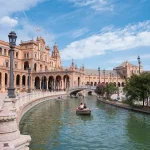
📷 Featured image by Tanel A. Lind on Unsplash.