On this page
- What Granada Actually Feels Like
- Which Neighborhood Is Right for You
- The Unmissable Sights
- Where and What to Eat and Drink
- Getting Around Granada
- Day Trips Worth Making
- Nights Out: Flamenco, Rooftops, and Late Bars
- Shopping in Granada
- Where to Stay: Neighborhoods by Budget
- When to Visit Granada
- Practical Things to Know
- What a Day in Granada Actually Costs
- Frequently Asked Questions
💰 Click here to see Spain Budget Breakdown
💰 Prices updated: October, 2026. Budget figures are estimates — always verify before travel.
Exchange Rate: $1 USD = €0.88
Daily Budget (per person)
Shoestring: €60.00 – €90.00 ($68.18 – $102.27)
Mid-range: €120.00 – €180.00 ($136.36 – $204.55)
Comfortable: €220.00 – €470.00 ($250.00 – $534.09)
Accommodation (per night)
Hostel/guesthouse: €15.00 – €50.00 ($17.05 – $56.82)
Mid-range hotel: €70.00 – €130.00 ($79.55 – $147.73)
Food (per meal)
Budget meal: €7.00 ($7.95)
Mid-range meal: €25.00 ($28.41)
Upscale meal: €80.00 ($90.91)
Transport
Single metro/bus trip: €3.00 ($3.41)
Monthly transport pass: €24.00 ($27.27)
Granada has a problem — a good one, mostly, but a problem nonetheless. Since the Spanish government tightened Alhambra ticket allocations again in early 2026, the palace complex sells out weeks in advance, and visitors who arrive without pre-booked tickets are turned away at the gate every single day. If that’s why you’re reading this guide, you’re already ahead. Granada rewards the prepared traveler like almost no other city in Spain: the food is extraordinary (and often free with your drink), the history is layered and strange, and the city sits at the foot of mountains you can ski in the morning and hike in the afternoon. Here’s everything you need to plan it properly.
What Granada Actually Feels Like
Granada is the only city in Spain where you can stand on a medieval Moorish hilltop, look across at a Renaissance cathedral, and hear flamenco drifting up from a cave carved into the rock below. It’s not a polished city. Parts of it are rough around the edges, the streets in the Albaicín twist and dead-end without warning, and the student population — Granada has one of Spain’s largest universities — gives the centre a lived-in energy that keeps it from feeling like a museum.
The Moorish past is not background decoration here. The Alhambra dominates the skyline physically and culturally. Arabic script appears on tea house walls in the Albaicín. The smell of cardamom and mint wafts out of the teterías along Calle Calderería Nueva. Granada was the last Moorish kingdom to fall to the Catholic Monarchs in 1492, and that weight still shapes how the city presents itself to the world.
Which Neighborhood Is Right for You
Albaicín
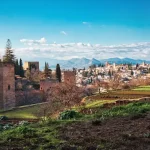
The old Moorish quarter climbs the hill opposite the Alhambra in a tangle of whitewashed houses, narrow cobbled lanes, and small plazas. It’s atmospheric and beautiful but physically demanding — the streets are steep, uneven, and car-free in most sections. Best for travelers who want maximum immersion and don’t mind the walk. The Mirador de San Nicolás here gives the most photographed view of the Alhambra at sunset.
Sacromonte
Adjoining the Albaicín but wilder, Sacromonte is the traditional home of Granada’s gitano community. Families still live in cave houses carved into the hillside. It’s quieter than the Albaicín, slightly more remote, and best suited to travelers seeking flamenco venues and an unconventional base. Some caves have been converted into small guesthouses.

Centro / Bib-Rambla
The flat, commercial heart of the city. Plaza de Bib-Rambla and the streets around the Cathedral are busy, walkable, and full of mid-range hotels. This is the easiest base for first-time visitors — central to everything, with good transport links and a wide range of restaurants.
Realejo
The former Jewish quarter, southwest of the Cathedral. Realejo has a younger, more local feel than the tourist-heavy centre. It’s flat, has excellent tapas bars, and is where many Granada residents actually go to eat and drink. Good value accommodation here too.
The Unmissable Sights
The Alhambra and Generalife
Everything else in Granada is context. The Alhambra is the reason. This 13th-century Nasrid palace complex is one of the finest surviving examples of Moorish architecture in the world — intricate tilework, carved stucco ceilings, reflecting pools, and shaded courtyards that feel impossibly cool even in midsummer. The Palacio de los Leones, with its famous lion fountain and honeycomb muqarnas ceiling, is the visual highlight. The adjacent Generalife gardens slope up the hillside above the palace with water channels, roses, and cypress trees.
In 2026, the ticketing system requires you to select a timed entry slot for the Nasrid Palaces specifically. General grounds tickets (which don’t include the palaces) are easier to get but miss the point. Book directly through the official Alhambra website at least three weeks ahead in spring and summer, further in advance for Easter week.
Granada Cathedral and Capilla Real
The Cathedral is enormous — started in 1523 on the site of the city’s main mosque — and its Renaissance interior is cool and dim even in August. The Capilla Real next door holds the tombs of Ferdinand and Isabella, the monarchs who completed the Reconquista. Their actual coffins are in a crypt below, small and plain in contrast to the elaborate marble effigies above.
Sacromonte Abbey and Cave Museum
The Abbey of Sacromonte sits at the top of the hill above the cave district and offers panoramic views over the Albaicín and Alhambra. The Cave Museum (Museo Cuevas del Sacromonte) is an ethnographic site that shows how cave-dwelling communities lived and worked. It’s undervisited and genuinely interesting — far less crowded than the Alhambra hill.
Where and What to Eat and Drink
Granada holds onto one tradition that almost every other Spanish city has abandoned: free tapas with every drink. Order a beer or a glass of wine at most bars in the city centre and a small plate arrives with it — unrequested, uncharged. Repeat this two or three times and you’ve essentially had lunch for the cost of drinks alone.

Calle Elvira and Calderería Nueva
These two streets running north from Gran Vía de Colón are the densest stretch of teterías and North African-influenced cafes in the city. Mint tea arrives in small glasses, the air is sweet with shisha smoke, and the pastries — honey-soaked and almond-heavy — are sold by the piece. Good for an afternoon break, not serious food.
Mercado San Agustín
The city’s main covered market sits just behind the Cathedral. It’s a working market, not a tourist food hall. Go in the morning to see the stalls at their best — fresh fish from the coast, jamón legs hanging above the charcutería counters, and a vegetable section with produce from the Vega de Granada, the fertile plain surrounding the city. A few bar counters inside serve breakfast and early tapas.
Realejo Tapas Bars
The streets around Campo del Príncipe square in Realejo — particularly Calle Molinos and the small lanes off it — concentrate some of Granada’s best free-tapa bars. The formula is the same across all of them but the quality varies enormously. Look for bars packed with locals at 2pm and follow them in.
Getting Around Granada
Granada’s historic core is compact and mostly walkable, but the terrain makes a difference. The Albaicín and Sacromonte involve significant uphill walking on cobblestones — comfortable shoes are not optional.
City Buses
The local bus network (Transportes Rober) covers the whole city. Routes C1 and C2 are the most useful tourist routes, circling the Albaicín and connecting to the city centre. A single fare is €1.40 in 2026. The small electric minibuses on the C1/C2 routes navigate the narrow Albaicín lanes where normal buses can’t go.
Airport Transfer
Federico García Lorca Granada-Jaén Airport is around 17 kilometres west of the city. The Alsa airport bus (Line 245) connects the airport to Granada bus station and the city centre for around €3. Journey time is 45 minutes. Taxis run around €25–30. There is no rail connection to the airport.

AVE High-Speed Rail
Granada’s high-speed rail connection — delayed for years — is now fully operational as of 2025. The AVE runs to Madrid in under 3.5 hours and to Málaga in around 1 hour, opening up significantly better connections than the old conventional rail service. The new Granada train station is located on Avenida de Andaluces, about 1.5 kilometres from the city centre.
Bikes and Scooters
Cycling is practical in the flat Centro and Realejo areas but not in the Albaicín or Sacromonte. The city has a public bike-share scheme (Mobike and several private operators) with docking stations in the lower city. Electric scooter rentals are available but restricted from the historic pedestrian zones.
Day Trips Worth Making
Sierra Nevada
Europe’s southernmost ski resort is 32 kilometres from Granada. In winter (typically December to April), you can ski on the slopes of Mulhacén — mainland Spain’s highest peak at 3,479 metres — and be back in Granada for dinner. In summer, the same roads lead to excellent high-altitude hiking. Regular buses run from Granada bus station to Pradollano (the ski resort village) in around 45 minutes.
Las Alpujarras
The valley villages on the southern slopes of the Sierra Nevada — Lanjarón, Órgiva, Capileira, Bubión — are unlike anywhere else in Andalusia. The architecture has a Berber influence, with flat-roofed houses and distinctive chimneys. The air smells of pine and running water. Several Alsa buses daily connect Granada to the main Alpujarras towns. Allow a full day.
Guadix Cave Town
About 58 kilometres east of Granada, Guadix has the largest troglodyte community in Europe — an entire neighborhood of around 2,000 people still living in cave houses carved into the clay badlands. The cave district (Barrio de las Cuevas) is extraordinary to walk through. Trains and buses connect Granada to Guadix in under an hour. Half a day is enough.
Nerja and the Costa Tropical
Granada province has its own coastline — the Costa Tropical — less developed than the Costa del Sol to the west. Almuñécar and Salobreña are the main resort towns. Nerja, technically in Málaga province but easily reached, is known for its balcony viewpoint (Balcón de Europa) and nearby sea caves. Alsa buses run regularly from Granada. Journey time to Nerja is around 1.5 hours.

Córdoba
With the new AVE connection now making Córdoba reachable from Granada in around 2 hours (change at Antequera), this UNESCO city with its extraordinary Mezquita-Cathedral is a viable long day trip. It’s also a natural extension if you’re traveling between Granada and Seville.
Nights Out: Flamenco, Rooftops, and Late Bars
Sacromonte Flamenco
The cave flamenco shows in Sacromonte — called zambras — are Granada’s most distinctive night-out option. Performed in actual cave venues carved into the hillside, the shows combine flamenco with Romani musical traditions specific to Granada. Cueva de la Rocío and Venta El Gallo are among the longer-established venues. Shows typically start at 9:30pm or later, run 75–90 minutes, and cost €25–35 per person including one drink. The cave walls amplify sound in a way that no theatre can replicate — the stomp of a dancer’s heel on stone reverberates through the floor.
Calle Pedro Alarcón and Zona de Bares
The main student nightlife strip runs along Calle Pedro Alarcón in the southwestern part of the city. Bars open around 10pm and stay busy until 3am or later. The crowd is young, the drinks are cheap, and the music leans toward Spanish pop and reggaeton. Not the most atmospheric part of Granada but reliably lively.
Rooftop Terraces
Several hotels in the centre and around the Alhambra hill have rooftop bars open to non-guests. The view of the illuminated Alhambra at night — its warm sandstone walls glowing against the dark Sierra Nevada — is one of those travel experiences that earns its cliché status. The rooftop bar at the Hotel Alhambra Palace is the most dramatic position, though prices reflect the view.
Shopping in Granada
Alcaicería
The old Moorish silk market — now rebuilt after a 19th-century fire — sits immediately south of the Cathedral. It’s small and touristy but still sells genuine items: hand-painted ceramics, marquetry boxes (Granada is famous for its taracea woodwork), leather goods, and silk scarves. Quality varies widely; compare prices before buying.
Calle Recogidas and Calle Mesones
These are where Granada residents actually shop. Calle Recogidas runs south from the city centre and has a mix of Spanish chain stores and independent fashion boutiques. Calle Mesones (also called Zacatín in its northern section) is the main pedestrian shopping street connecting the Cathedral area to Gran Vía.
Artisan Workshops
The streets around the Albaicín — particularly Cuesta de Gomérez and Calle Almería — have small workshops selling hand-tooled leather, pottery, and metalwork made in Granada. These are the best places to buy something genuinely local rather than imported craft goods.

Where to Stay: Neighborhoods by Budget
Budget
Realejo and the areas around Gran Vía de Colón have the best concentration of budget hostels and cheap guesthouses. Expect to pay €18–35 per night for a hostel dorm, €45–70 for a private room in a basic guesthouse. The neighborhood is flat, central, and has excellent tapas bars — good value overall.
Mid-Range
The Centro area around Plaza Nueva and the Cathedral suits mid-range travelers well. Three-star hotels here run €80–140 per night in 2026. Location is excellent — you’re within walking distance of the Alhambra ticket office and the main sights. Several boutique hotels occupy converted historic buildings in this zone.
Luxury
The Alhambra hill itself and the upper Albaicín have Granada’s most atmospheric high-end options — small paradores, converted carmen houses (traditional Granada walled garden homes), and design hotels with Alhambra views. Prices run €180–350+ per night. The Parador de Granada, actually inside the Alhambra complex, books out months ahead.
When to Visit Granada
Granada’s climate is more extreme than coastal Andalusia. Summers are genuinely hot — July and August regularly hit 38–40°C — and winters are cold enough that the Sierra Nevada has reliable snowfall from December onwards. The city sits at 680 metres altitude, which amplifies both.
- Spring (March–May): The best time. Temperatures are 18–25°C, the Generalife gardens are in bloom, and the city is busy but not unbearable. Semana Santa (Holy Week) brings spectacular processions but also maximum crowds and hotel prices — book four to six months ahead if you want to visit during Easter.
- Early June: Corpus Christi is Granada’s biggest local festival, with bullfights, flamenco events, and street fairs. The city is festive and the atmosphere is genuinely local rather than tourist-driven.
- Summer (July–August): Hot and busy. The International Festival of Music and Dance runs through late June and July, bringing world-class performers to the Alhambra’s outdoor venues — a genuinely exceptional experience if you can handle the heat.
- Autumn (September–November): Underrated. Temperatures drop to a comfortable 20–28°C in September, crowds thin after mid-September, and hotel prices fall sharply. The light in October is extraordinary.
- Winter (December–February): Quiet, cold (3–10°C), but with a ski season running nearby. Christmas in Granada is atmospheric, and the city is almost entirely free of tourist pressure.

Practical Things to Know
Alhambra tickets: Book only through the official website (alhambra-patronato.es). Third-party resellers charge premiums of €10–25 and some are fraudulent. If you arrive without tickets, the morning queue for cancellations starts at the ticket office at 8am — arrive by 7:30am for any realistic chance.
Tourist tax: Andalusia introduced a regional tourist accommodation tax in 2024, expanded in scope in 2026. Depending on your accommodation type and star rating, expect to pay €0.50–€2.00 per person per night. This is charged at the hotel and is not included in most online booking prices.
Tipping: Not mandatory. Rounding up or leaving €1–2 on a restaurant bill is appreciated but not expected. At tapas bars, leaving small change is common.
Water: Granada’s tap water is safe to drink and comes from the Sierra Nevada snowmelt. It tastes noticeably good compared to coastal cities. Carry a refillable bottle.
Siesta hours: Smaller shops and family restaurants still close between roughly 2pm and 5pm. The major tourist sites operate continuous hours, but if you’re shopping or looking for lunch outside the tourist zone, plan around this.
Language: Spanish is the language of the city. In the main tourist areas, English is widely spoken, but in Realejo, Sacromonte, and local markets, Spanish is necessary. A few words go a long way.
SIM cards: Spanish SIM cards (Orange, Movistar, Vodafone, or cheaper alternatives like Simyo) are available at the airport and phone shops around Gran Vía. EU roaming rules still apply for most European visitors in 2026, so check your home plan before buying a local SIM.
What a Day in Granada Actually Costs
Budget Traveler (€50–70/day)
- Hostel dorm: €20–30
- Meals using free-tapa bars for lunch, cheap set menu (menú del día) for dinner: €10–15
- Alhambra ticket (booked in advance): €14 general / €19 full access
- City buses and incidentals: €5–10
Mid-Range Traveler (€120–180/day)
- Three-star hotel: €90–130
- Sit-down lunches and dinners with wine: €30–50
- Alhambra and one other paid attraction: €25
- Transport and miscellaneous: €15
Comfortable Traveler (€250–400/day)
- Boutique hotel or carmen with views: €180–300
- Full restaurant dinners, wine, and a Sacromonte flamenco show: €80–100
- Guided Alhambra tour plus Generalife: €45–60
- Transport, shopping, incidentals: €30+
Frequently Asked Questions
How far in advance should I book Alhambra tickets?
In 2026, booking three to four weeks ahead is the minimum for spring and summer visits. During Semana Santa and July, tickets can sell out six to eight weeks in advance. Check the official site (alhambra-patronato.es) on Tuesday and Wednesday mornings when cancellations are most commonly released back into the system.

Is Granada worth visiting for more than one day?
Absolutely. Two full days covers the Alhambra properly and lets you explore the Albaicín and Realejo without rushing. Three days adds a day trip to the Sierra Nevada or Alpujarras. Anything shorter than two days means you’ll miss most of what makes Granada genuinely exceptional compared to other Andalusian cities.
Can I get free tapas everywhere in Granada?
Not everywhere, but in most traditional bars away from the main tourist plazas. The free-tapa tradition is strongest in Realejo, parts of the Albaicín, and local bars around Calle Pedro Alarcón. Some bars in the Plaza Nueva and Cathedral area have moved to a paid-tapa model. You’ll know immediately — if a tapa menu appears, tapas are not free there.
What is the best way to get from Granada to Seville?
In 2026, the fastest option is the AVE to Antequera-Santa Ana (about 45 minutes), then change to the Seville AVE (around 1 hour). Total journey time is roughly 2 hours 15 minutes. Direct long-distance buses (Alsa) take around 3 hours and are cheaper — around €15–22 versus €35–60 for the train depending on booking time.
Is the Albaicín safe to walk around at night?
Generally yes. The Albaicín is well-patrolled and busy with tourists and residents until around 10–11pm. The lanes are poorly lit in places, so watch your footing on the cobblestones. Keep standard city precautions — don’t leave bags unattended, be aware in quieter alleys after midnight. Sacromonte is similarly fine when visiting flamenco venues; the walk back down late at night is worth sharing with other visitors.
Explore more
Exploring the Albaicín: Granada’s Historic Moorish Quarter Unveiled
How to Get Around Granada: Your Complete Transport Guide
Top Nightclubs in Granada for an Unforgettable Party
📷 Featured image by David Lázaro on Unsplash.