On this page
- What Makes Cádiz Different From Other Andalusian Cities
- The Old Town on a Peninsula — How to Navigate It
- The Best Beaches in and Around Cádiz
- What to Eat and Where to Eat It
- Getting to Cádiz in 2026
- Day Trip or Overnight? How Long You Actually Need
- 2026 Budget Reality — What Things Cost
- Practical Tips Before You Go
- Frequently Asked Questions
💰 Click here to see Spain Budget Breakdown
💰 Prices updated: October, 2026. Budget figures are estimates — always verify before travel.
Exchange Rate: $1 USD = €0.88
Daily Budget (per person)
Shoestring: €60.00 – €90.00 ($68.18 – $102.27)
Mid-range: €120.00 – €180.00 ($136.36 – $204.55)
Comfortable: €220.00 – €470.00 ($250.00 – $534.09)
Accommodation (per night)
Hostel/guesthouse: €15.00 – €50.00 ($17.05 – $56.82)
Mid-range hotel: €70.00 – €130.00 ($79.55 – $147.73)
Food (per meal)
Budget meal: €7.00 ($7.95)
Mid-range meal: €25.00 ($28.41)
Upscale meal: €80.00 ($90.91)
Transport
Single metro/bus trip: €3.00 ($3.41)
Monthly transport pass: €24.00 ($27.27)
Cádiz keeps coming up in conversations about Andalusia in 2026, and for good reason. While Seville swells with cruise passengers and Málaga’s old town gets harder to navigate without bumping into a selfie stick, Cádiz sits at the end of its own narrow peninsula, geographically incapable of being swallowed whole by mass tourism. The city has a natural crowd limit. It also has some of the best fried fish in Spain, a carnival that genuinely rivals Rio in spirit, and an atmosphere that feels more like a living neighbourhood than a stage set. If you are planning an Andalusia trip and Cádiz is not on your list, it should be.
What Makes Cádiz Different From Other Andalusian Cities
Cádiz is widely cited as the oldest continuously inhabited city in Western Europe, with Phoenician roots going back more than 3,000 years. That history is real, but it is not what you notice first. What you notice is the light. The city is surrounded by Atlantic water on three sides, and the reflection off the sea gives everything a bleached, silvery quality unlike the warm ochre tones of Seville or Córdoba. The air smells of salt, not orange blossom.
The architecture is its own story. Cádiz grew wealthy during the 18th century when the Spanish crown moved the monopoly on American trade here from Seville. That money built a city of tall, narrow townhouses with watchtowers — called torres miradores — that merchants used to watch their ships come in. The skyline is unusually vertical for Andalusia, with the yellow-tiled dome of the cathedral rising above rooftops that taper off into sea horizon on every side.
There is also a genuine local culture here that resists being hollowed out. Gaditanos — as locals are called — are famously proud, quick-witted, and protective of their traditions. The February carnival, the Carnaval de Cádiz, is not a tourist event with barriers and viewing platforms. It is a city-wide satire festival where groups of locals rehearse for months to perform original songs mocking politicians, scandals, and whatever absurdity defined the previous year. In 2026, after a particularly chaotic year in Spanish regional politics, the performances were reportedly sharper than ever.
The Old Town on a Peninsula — How to Navigate It
The old city sits on a narrow spit of land barely 1.5 kilometres wide at its broadest point. This makes it one of the most walkable historic centres in Spain. You can cross it on foot in under 20 minutes. The street grid is tight and old, built before the idea of cars existed, and most of the inner lanes are pedestrianised or practically impassable by vehicle anyway.
The logical anchor points are:
- Plaza de San Juan de Dios — the main square near the port, where the town hall sits and most visitors arrive. Lively in the evenings, manageable in the mornings.
- The Cathedral and its surroundings — the baroque-neoclassical cathedral took 116 years to build, and its crypt holds the tomb of composer Manuel de Falla. Climb the tower for one of the best panoramic views in southern Spain.
- Barrio del Pópulo — the oldest surviving neighbourhood, wedged between the cathedral and the sea walls. Medieval alleyways, peeling plaster walls, cats on windowsills. Almost no tourists at 9am.
- Mercado Central de Abastos — the covered market on Plaza de las Flores, which is the real social hub of the city, not a tourist attraction. Go on a weekday morning.
Walking the sea wall — the muralla — that runs along the Atlantic side of the peninsula is one of the better free things you can do in any Spanish city. The wind off the ocean hits hard even in summer. The sound of Atlantic waves breaking against centuries-old stone is something you feel as much as hear.
The Best Beaches in and Around Cádiz
The city itself has three main urban beaches. Playa de la Caleta is the most famous — a small, sheltered bay in the old town flanked by two 18th-century sea forts. It faces west, which means spectacular sunsets. It is also the most crowded and gets busy from June onwards. Playa de la Victoria is a long Atlantic beach on the newer side of the city, stretching around 4 kilometres. It is wider, less romantic, but far more swimmable with calmer surf in summer. Playa de Santa María del Mar sits between the two in character and is often a good compromise for families.
If you have a car or are willing to take a bus, the beaches south of Cádiz along the Costa de la Luz are among the best in Spain. Bolonia, about 70 kilometres south near Tarifa, is next to Roman ruins and has remained relatively uncommercialized in 2026. El Palmar is popular with surfers and has a low-key beach bar scene that does not feel like a franchise.
What to Eat and Where to Eat It
Cádiz has one of the strongest food identities in Andalusia, which is saying something. The city’s signature dish is pescaíto frito — small fish fried in chickpea flour and served in a paper cone. The texture is light, the oil hot, the fish sweet and fresh. You find it everywhere, but the quality varies. The best versions come from El Faro, a long-standing restaurant near the city walls, and from the no-frills freidurías scattered around the market area.
Other things to eat in Cádiz:
- Tortillitas de camarones — lacy, thin fritters made with tiny shrimp and spring onion. Almost translucent when done properly, crispy at the edges.
- Urta a la roteña — a local fish (red-banded sea bream) baked with tomatoes, peppers, and onion. Order it anywhere near the port.
- Chicharrones — fried pork crackling, a bar snack that costs almost nothing and goes dangerously well with a cold manzanilla from Sanlúcar.
For tapas, concentrate on the streets around Calle Plocia and Calle Virgen de la Palma in the old town. The bars here are small, genuinely local, and cheap. A glass of manzanilla — the light, saline sherry that Cádiz people drink like water — costs €1.50 to €2.50 in most of them.
Getting to Cádiz in 2026
Cádiz has no airport. The closest international hub is Jerez de la Frontera Airport, around 35 kilometres away, with connections to several UK and European cities. Seville Airport (about 120 kilometres) offers significantly more routes and is worth considering for transatlantic or long-haul connections.
By train, Cádiz is connected to Seville by regular Renfe Media Distancia services. The journey takes roughly 1 hour 45 minutes and costs around €13–€18 depending on timing and booking window. In 2026, Renfe’s app-based ticketing is well-established and works reliably — buy in advance for the best prices. There is no high-speed AVE service into Cádiz itself, though the line between Seville and Jerez was upgraded, marginally cutting travel times from Madrid to Jerez.
From Madrid, the most practical route is a medium-haul AVE to Seville (around 2.5 hours, from €35 booked early) and then a connecting regional train to Cádiz. Budget a full day for the journey if coming from the capital.
By bus, ALSA and regional operators run services from Seville and Málaga. The Seville–Cádiz bus is often cheaper than the train and takes around 1 hour 45 minutes to 2 hours depending on stops.
Day Trip or Overnight? How Long You Actually Need
This is a real debate. Cádiz is frequently visited as a day trip from Seville, and it works — you can see the cathedral, walk the sea wall, eat fried fish, and be back on the evening train. But you miss the point somewhat.
The city changes after 6pm. The day-trippers leave. The Gaditanos come out. The bar noise spills onto the narrow streets. The light goes gold and then pink over the Atlantic. If you can stay one night, you experience an entirely different city. Two nights is comfortable and gives you time for a beach day plus exploring the old town properly.
2026 Budget Reality — What Things Cost
Cádiz remains one of the more affordable cities in Andalusia, which is part of its appeal. Prices have risen since 2023–24 alongside general Spanish inflation, but less steeply than coastal resorts in Málaga or Alicante provinces.
- Budget traveller (€60–€80/day): Hostel dormitory around €20–€28/night in high season. Eat at market bars and freidurías. Entry to free sights. One paid attraction (cathedral: €7, tower: €8).
- Mid-range (€120–€160/day): Boutique hotel in the old town, €80–€110/night. Sit-down meals at local restaurants, €15–€25 per person for a full meal with wine. A couple of paid attractions.
- Comfortable (€200+/day): A renovated historic hotel with sea views. Restaurant like El Faro for dinner (€40–€55 per person with wine). Private guided tours run around €20–€30 per person in a group.
The tourist tax in Cádiz province was standardised across Andalusia in 2025 at €1–€2 per person per night depending on accommodation category. This is added at checkout and was confirmed to remain at this level through 2026.
Practical Tips Before You Go
A few things that save confusion when you arrive:
- You do not need a car in the city. The old town is pedestrian-friendly and tiny. Driving in is a frustrating exercise in one-way streets and full car parks. Park at the edge of the new city near the train station if you arrive by car.
- Summer afternoons are brutal. July and August temperatures hit 35–38°C and the Atlantic wind drops. Plan beach or sea wall time for early morning or evening. Reserve the 2–5pm window for a long lunch and shade.
- Carnival dates are February 2026 (first two weeks). Accommodation triples in price and books up months in advance. Book by October 2025 at the latest if you want to attend. The city is also genuinely packed in a way that tests even patient travellers.
- Most museums are closed on Mondays. The Museo de Cádiz, which holds important Phoenician artefacts including twin sarcophagi, follows standard Spanish museum hours.
- Tap water is safe to drink, but locals often complain of a chlorine taste. Bottled water is cheap. Most restaurants bring it automatically.
Frequently Asked Questions
Is Cádiz worth visiting or is it just a day trip destination?
Cádiz is worth at least one overnight stay. As a day trip from Seville it is absolutely doable and enjoyable, but the city’s real personality — its bars, its light at dusk, its locals — only appears after the day visitors leave. Two nights gives you a beach day plus proper exploration of the old town without rushing.
What is the best time of year to visit Cádiz?
Late April through June and mid-September through October are the sweet spots. Temperatures are 20–27°C, the sea is warm enough to swim, and crowds are manageable. July and August are very hot and busy. February is for Carnival — extraordinary but logistically demanding. Winter is quiet and mild, around 14–17°C.
How do I get from Seville to Cádiz?
The simplest option is the Renfe regional train from Seville Santa Justa station, taking around 1 hour 45 minutes and costing €13–€18. Buses are slightly cheaper and take roughly the same time. Book train tickets on the Renfe app in advance for the best fares. Both services run frequently throughout the day.
Is Cádiz safe for solo travellers?
Yes. Cádiz has a low crime rate compared to larger Andalusian cities and is a tight-knit urban community. The old town is well-lit and active in the evenings. Standard precautions apply — watch bags in crowded areas like the market — but solo travellers, including women travelling alone, consistently report feeling comfortable here.
What language do people speak in Cádiz — is English widely understood?
Spanish is the language of daily life, and the Gaditano accent is one of the faster, softer accents in Andalusia. English is understood in hotels, major tourist sites, and many restaurants, but less so in neighbourhood bars and the market. Learning a few basic Spanish phrases goes a long way and is warmly received by locals.
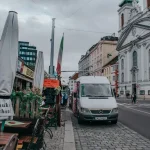
📷 Featured image by Hari Nandakumar on Unsplash.