On this page
- What Makes Asturias Different From the Rest of Spain
- Picos de Europa — The Mountain Landscape You Won’t Believe Is Still Spain
- The Asturian Coast — Sea Cliffs, Hidden Coves & Fishing Villages
- What to Eat in Asturias (and Where)
- Getting to Asturias in 2026
- Getting Around — Why You Need a Car Here
- Day Trip or Overnight?
- 2026 Budget Reality — What Things Actually Cost
- Practical Tips Before You Go
- Frequently Asked Questions
💰 Click here to see Spain Budget Breakdown
💰 Prices updated: October, 2026. Budget figures are estimates — always verify before travel.
Exchange Rate: $1 USD = €0.88
Daily Budget (per person)
Shoestring: €60.00 – €90.00 ($68.18 – $102.27)
Mid-range: €120.00 – €180.00 ($136.36 – $204.55)
Comfortable: €220.00 – €470.00 ($250.00 – $534.09)
Accommodation (per night)
Hostel/guesthouse: €15.00 – €50.00 ($17.05 – $56.82)
Mid-range hotel: €70.00 – €130.00 ($79.55 – $147.73)
Food (per meal)
Budget meal: €7.00 ($7.95)
Mid-range meal: €25.00 ($28.41)
Upscale meal: €80.00 ($90.91)
Transport
Single metro/bus trip: €3.00 ($3.41)
Monthly transport pass: €24.00 ($27.27)
While the beaches of the Costa del Sol and the streets of Barcelona hit record visitor numbers again in 2026, Asturias sits quietly in the north of Spain, doing almost none of the things that make Spanish tourism feel exhausting. No sun-lounger queues. No entrance-fee reservations booked out three months ahead. No cruise-ship crowds rolling through a historic centre. What Asturias offers instead is something harder to find in modern Spain: space, silence, and landscapes that feel genuinely wild. If you have been putting off “Green Spain” because it seems complicated to reach or because you assumed it rains constantly — this guide will change your mind on both counts.
What Makes Asturias Different From the Rest of Spain
Asturias is an autonomous community on the Cantabrian Sea, wedged between Galicia to the west and Cantabria to the east, with the Cantabrian Mountains — including the Picos de Europa — forming its southern wall. The result is a landscape of dramatic vertical contrasts: you can stand on a sea cliff in the morning and be looking up at snowcapped peaks by afternoon.
The culture here feels distinct too. Asturias was never fully conquered by the Moors, which gave it a different historical trajectory from most of the peninsula. The Asturian people are fiercely proud of their identity, their language (Asturian, known locally as bable), their cider, and their cheese. This is not a region performing its identity for tourists. It is just how things are here.
The climate gets an unfair reputation. Yes, Asturias is greener and wetter than Andalusia — that is why the pastures look like Ireland and the rivers run clear and cold. But July and August bring reliable stretches of warm, dry weather along the coast. Spring and September are often spectacular: fewer people, mild temperatures, and the mountains at their sharpest.
Picos de Europa — The Mountain Landscape You Won’t Believe Is Still Spain
The Picos de Europa National Park is one of Spain’s oldest and most dramatic protected areas, covering roughly 646 square kilometres across Asturias, Cantabria, and Castilla y León. The Asturian side is the most visited and the most accessible, centred on the village of Cangas de Onís and the gorge town of Arenas de Cabrales.
The single most iconic experience in the park is the cable car at Fuente Dé — technically just inside Cantabria but accessed easily from the Asturian side. It lifts you 753 metres in under four minutes, depositing you on a high limestone plateau where chamois graze between the rocks and the silence is so complete you notice your own breathing. The cable car runs year-round, costs around €18 return in 2026, and queues in summer can be long — go at 9am or after 5pm.

For hikers, the Cares Gorge (Ruta del Cares) is the park’s most famous trail: 12 kilometres along a narrow path carved into the cliff face above the Río Cares, connecting Poncebos with Caín. It is not technical — no ropes, no scrambling — but it is dramatic in a way that photographs do not capture. The path hangs above the river with walls of limestone rising several hundred metres on both sides. Allow five to six hours return. Start early in summer.
Cangas de Onís makes the best base. It has the famous Roman bridge draped with a hanging cross, a decent range of hotels and rural casas rurales, and it sits at the gateway to the park. The town itself smells of woodsmoke and cider in the evenings, especially around the old market square.
The Asturian Coast — Sea Cliffs, Hidden Coves & Fishing Villages
The Costa Verde — Asturias’ green coast — stretches roughly 340 kilometres from the Galician border to Cantabria. It is nothing like the coasts of the south or east. There are no hotel towers, no beach clubs pumping music at noon, no plastic sun-lounger empires. What you get instead is a succession of small beaches tucked between headlands, fishing ports that still smell of diesel and fresh catch, and cliffs that drop straight into cold Atlantic water.
Llanes is the coastal town most worth your time. It is a medieval walled town with a small harbour, excellent seafood restaurants, and easy access to several beaches in both directions. The Bufones de Pría — blowhole formations on the coast east of Llanes — are extraordinary when the sea is rough: jets of spray firing metres into the air through holes in the limestone. You hear them before you see them.

Cudillero is the other essential coastal stop: a tiny fishing village built in a near-vertical amphitheatre around a small port. The houses climb the hillside in layers of ochre, yellow, and faded red. It is genuinely picturesque in a way that feels earned rather than staged.
The surf beaches around Salinas and Luanco attract a quieter crowd than the Basque Country’s breaks, and water temperatures are cold year-round — 16–20°C in summer — so a wetsuit is standard.
What to Eat in Asturias (and Where)
Asturian food is hearty, honest, and rooted in the landscape. The region’s two signature products are sidra (cider) and cheese, and both are world-class.
Fabada asturiana is the dish you must eat here. A slow-cooked stew of large white fabes beans with chorizo, morcilla (blood sausage), and lacón (cured pork shoulder). It is rich enough to end your appetite for hours. Every casa de comidas and traditional restaurant in Asturias does a version — the quality benchmark is high.
Queso Cabrales is the blue cheese produced in the villages of the eastern Picos de Europa, aged in mountain caves. It is strong, crumbly, and intensely flavoured. Buy it directly in Arenas de Cabrales, where there is a small cheese museum and several producers selling direct.
For sidra, the ritual matters as much as the drink. In a traditional sidrería, the waiter pours from high above the glass, aerating the cider as it falls. The culture is communal and loud. In Oviedo, the Calle Gascona — known as the Boulevard of Cider — is lined with sidrerías and is the best place to experience this properly. Order the sidra natural (unfiltered, dry) and pair it with a cachopo: two large slices of veal stuffed with ham and cheese, battered and fried. It is not a subtle dish.
In Llanes, Sidrería El Molín de la Pedrera does excellent traditional food in a converted mill. In Cangas de Onís, the market on Sundays has local cheese, honey, and charcuterie worth stopping for.
Getting to Asturias in 2026
Asturias is not the easiest region to reach, but it is more connected than it used to be. The Aeropuerto de Asturias (OVD), near Avilés, has expanded its routes since 2024. In 2026, Vueling, Ryanair, and Iberia all operate direct services from major Spanish cities, and there are direct seasonal flights from London, Dublin, Amsterdam, and Brussels. Flight time from Madrid is under an hour.

By train, the journey from Madrid to Oviedo takes just under four hours on the Alvia service (Renfe). This is not AVE high-speed — the Cantabrian Mountains make full high-speed rail through the region unlikely in the near term — but the Alvia is comfortable and the mountain sections of the route are genuinely scenic. Fares start around €30 if booked early through Renfe’s app.
From the coast (Bilbao, Santander), driving the coastal road into Asturias is one of the more beautiful road trips in northern Spain. Allow around two and a half hours from Bilbao.
Getting Around — Why You Need a Car Here
There is no way around this: to explore Asturias properly, you need your own transport. The Picos de Europa villages, the coastal coves, and the inland valleys are not served by frequent public transport. Buses between major towns exist, but schedules are limited and connections require planning.
Car hire from Oviedo or Asturias Airport is straightforward. Road conditions in the Picos can be narrow and winding — the road into the Covadonga lakes (Lagos de Covadonga) is one-lane in sections and in high summer is closed to private vehicles on weekends, replaced by a shuttle bus from Cangas de Onís. Factor this in when planning.
Within Oviedo itself, the city is compact and walkable. The historic centre — with its Gothic cathedral, covered market, and the sculpture-lined Calle de la Rúa — is easily covered on foot in an afternoon.
Day Trip or Overnight?
Asturias is not a practical day trip from anywhere. The closest major hub is Bilbao (around three hours by road), and even from there, a day trip only scratches the surface. This is a destination that rewards time.
A minimum of three nights gives you one day in the Picos (Cares Gorge or Fuente Dé), one day on the coast (Llanes, Cudillero, or the beaches near Ribadesella), and one day in or around Oviedo. Five to seven nights is better — especially if you plan to hike or want to slow down and eat your way through the sidrerías properly.
If you are combining Asturias with a broader northern Spain trip, the logical route is: Bilbao → San Sebastián → Santander → Asturias → Galicia. This works well by car along the coastal road, or partially by train with car hire at each stop.

2026 Budget Reality — What Things Actually Cost
Asturias is significantly cheaper than the major Spanish tourism hotspots. Prices have risen since 2024, in line with general Spanish inflation, but the region remains good value.
- Budget accommodation (hostels, basic casas rurales): €25–€50 per person per night
- Mid-range (comfortable rural hotels, guesthouses with breakfast): €70–€120 per night for a double room
- Comfortable/boutique (rural manor houses, hotel with spa): €140–€220 per night
- Menú del día (three courses, bread, drink): €13–€16 in most towns
- Fabada asturiana (as a main course): €12–€16
- Cachopo: €16–€22 depending on size and restaurant
- Sidra natural (bottle in a sidrería): €4–€6
- Fuente Dé cable car: €18 return (2026 price)
- Car hire (compact, per day from Oviedo airport): €35–€55 depending on season
There is no regional tourist tax in Asturias as of 2026 — unlike Barcelona or the Balearic Islands. This is one of the few parts of Spain where that is still the case.
Practical Tips Before You Go
- Best months: June, July, August, and September for coast and mountains. October and May for hiking in mild conditions with fewer people.
- Rain: Expect it at any time of year, especially inland. Pack a waterproof layer regardless of when you visit. Mountain weather changes fast.
- Booking accommodation early: Summer (especially August) sees domestic Spanish tourism fill rural casas rurales quickly. Book at least six to eight weeks ahead for July and August.
- Language: English is less widely spoken here than in Barcelona or Madrid, especially in villages. Basic Spanish goes a long way and is genuinely appreciated.
- Covadonga Lakes: The shuttle bus from Cangas de Onís to Lagos de Covadonga operates July–September on weekends and costs around €6 return. Worth it to avoid the road chaos.
- Mobile coverage: Patchy in the Picos valleys. Download offline maps before heading into the mountains.
Frequently Asked Questions
Is Asturias worth visiting if you only have two days?
Two days is tight but workable if you focus on one area rather than trying to do everything. Choose either the Picos de Europa (base in Cangas de Onís) or the coast (base in Llanes). Trying to cover both in two days means long drives and rushed experiences. Three nights is the realistic minimum for a satisfying visit.
When is the best time to visit Asturias for good weather?
July, August, and early September offer the most reliable dry weather along the coast, with temperatures of 22–26°C. June and September are excellent for hiking — cooler and quieter. Avoid February and March if you dislike extended grey, wet periods. Winter visits can still work for Oviedo city breaks and off-season rural prices.

Do I need to speak Spanish to visit Asturias?
Not fluently, but some basic Spanish is genuinely helpful here. English is spoken in hotels and tourist offices, but in rural villages, sidrerías, and local restaurants, staff often speak little or none. A phrasebook app or even a few key phrases will make a real difference to how welcome you feel.
Is the Cares Gorge hike suitable for children?
Yes, for children aged roughly eight and above who are comfortable walking for several hours on an uneven path. There are no technical sections, but the drop into the gorge below the path is significant. The path has no railings in most sections. Younger children can do the first kilometre or two from Poncebos, which is still impressive. Good walking shoes are essential for everyone.
How does Asturias compare to the Basque Country for a first-time visitor to northern Spain?
The Basque Country has more international infrastructure, easier English communication, and a bigger food reputation (especially San Sebastián). Asturias is wilder, cheaper, and less touristed — better if you want genuine landscape immersion and fewer crowds. Ideally, visit both on the same trip by following the northern coast road west from Bilbao into Asturias.
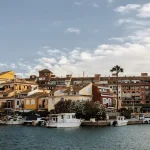
📷 Featured image by Stijn te Strake on Unsplash.