On this page
- Madrid in 2026: A City That Still Surprises
- The Unmissable Icons (And How to Actually Enjoy Them)
- Art Beyond the Prado
- Madrid’s Historic Heart
- Green Spaces and the River Corridor
- Hidden Madrid: Off the Beaten Path
- Food Markets and Culinary Stops
- Day Trips Within Easy Reach
- Madrid After Dark
- How to Sequence These 25 Things Without Burning Out
- 2026 Budget Breakdown: What Madrid Actually Costs
- Frequently Asked Questions
💰 Click here to see Spain Budget Breakdown
💰 Prices updated: July, 2026. Budget figures are estimates — always verify before travel.
Exchange Rate: $1 USD = €0.88
Daily Budget (per person)
Shoestring: €50.00 – €140.00 ($56.82 – $159.09)
Mid-range: €90.00 – €240.00 ($102.27 – $272.73)
Comfortable: €220.00 – €450.00 ($250.00 – $511.36)
Accommodation (per night)
Hostel/guesthouse: €15.00 – €50.00 ($17.05 – $56.82)
Mid-range hotel: €70.00 – €130.00 ($79.55 – $147.73)
Food (per meal)
Budget meal: €7.00 ($7.95)
Mid-range meal: €25.00 ($28.41)
Upscale meal: €80.00 ($90.91)
Transport
Single metro/bus trip: €3.00 ($3.41)
Monthly transport pass: €23.00 ($26.14)
Madrid in 2026: A City That Still Surprises
Madrid is one of those cities people think they understand before they arrive. Museums, tapas, flamenco, late nights — yes, all of that is true. But the traveler who arrives in 2026 with a rigid checklist is going to miss the version of Madrid that actually matters: the one hiding behind the grand boulevard, in the courtyard behind the church, in the bar that has no sign on the door. The bigger challenge right now is tourist saturation at the top five sites. The Prado alone saw record queues in 2025, and the Royal Palace introduced timed entry slots that now sell out three weeks ahead in summer. This guide is built for people who want to see the classics without losing half their trip to queuing, and who want enough texture to make the city feel real rather than curated.
The Unmissable Icons (And How to Actually Enjoy Them)
No honest Madrid guide skips these. But context changes everything.
1. Museo del Prado
The Prado is one of the greatest painting collections in the world — full stop. Velázquez’s Las Meninas, Goya’s Black Paintings, Bosch’s Garden of Earthly Delights. The problem is that most visitors try to see all of it in three hours and remember almost none of it. Book your timed entry slot online as early as possible (€15 standard adult ticket in 2026). Go on a Tuesday or Wednesday morning. Free entry runs from 18:00–20:00 daily — good for a focused second visit to one room you want to revisit, but too crowded for a first look. Give yourself a minimum of two hours and pick two or three rooms to go deep rather than sprinting through all 128.
2. Parque del Retiro
Madrid’s great park is a city within the city. The Crystal Palace — a 19th-century iron-and-glass pavilion — is the photograph everyone wants, but the real pleasure is in the hour you spend doing nothing in particular: watching rowing boats drift across the lake, listening to a busker playing classical guitar near the rose garden, buying a cold drink from one of the kiosks and sitting on the grass in the shade of a stone pine. Free entry, open every day. Get there before 10:00 on weekends if you want it quiet.
3. Palacio Real
The Royal Palace is the largest functioning royal palace in Western Europe by floor area, and the state rooms are genuinely spectacular — all gilded ceilings, Flemish tapestries, and rooms so large they feel theatrical. Tickets are €14 in 2026 for the general visit. Timed slots book out fast in July and August. Book at least two to three weeks ahead in peak season. The changing of the guard happens on the first Wednesday of each month — free to watch from outside.

4. Puerta del Sol
The geographic and symbolic center of Spain — kilometre zero for all national roads is marked here by a bronze plaque in the pavement. It’s busy, loud, and surrounded by chain stores, but it’s also the pulse of the city. Stand here on New Year’s Eve and the tradition of eating twelve grapes at midnight is one of the most chaotic and joyful things you’ll experience anywhere in Europe.
5. Plaza Mayor
The great arcaded square, built in the 17th century, is best experienced at the margins rather than the center. Sit under the arches with a coffee in the morning before the tour groups arrive — the light on the painted facades is extraordinary at 09:00. The cafés here charge tourist prices (a café con leche can run €3.50–€4), but you’re paying for the setting.
Art Beyond the Prado
6. Museo Reina Sofía
Guernica is here. Picasso’s vast antiwar painting sits in Room 405 and it stops people in their tracks — the scale, the grey and black palette, the compressed horror of it. The building also holds excellent permanent collections of Dalí and Miró. Ticket: €12 in 2026. Free on Monday afternoons and Sunday afternoons. One practical note: the free queues on Sunday afternoons are long; if your time is limited, pay and book ahead.
7. Museo Thyssen-Bornemisza
Often the most enjoyable of the three big museums because it’s more manageable in scale and covers an extraordinary breadth — from 13th-century Italian panels to 20th-century American pop art. Ticket: €13. The temporary exhibitions here are consistently among the best in the city. Located on the Paseo del Prado, making a three-museum day in the Golden Triangle of Art entirely feasible if you’re disciplined about time.
8. CaixaForum Madrid
Free entry, extraordinary architecture. Herzog & de Meuron converted a former power station and the result — a building that appears to float above a vertical garden — is worth seeing just from the outside. The interior hosts rotating contemporary art exhibitions. A quieter alternative on busy museum days.
9. Real Academia de Bellas Artes de San Fernando
Consistently overlooked despite holding works by Goya, Rubens, and Zurbarán. It’s on Calle de Alcalá, a five-minute walk from Sol. Ticket: €8 in 2026. You’ll often have rooms to yourself. For anyone serious about Spanish painting, this is non-negotiable.

Madrid’s Historic Heart
10. El Rastro (Sunday Flea Market)
Every Sunday morning, the streets around Calle de la Ribera de Curtidores fill with hundreds of stalls selling vintage clothing, antiques, tools, vinyl records, jewelry, and more random objects than you can categorize. It runs roughly 09:00–15:00. Arrive by 10:00 for the best picks. Watch your pockets in the crowd — this is the most pickpocket-heavy spot in Madrid.
11. La Latina and Lavapiés
These two adjoining neighborhoods on the south side of the old city are where Madrid feels most alive at street level. La Latina is the tapas heartland — Calle de la Cava Baja is the main drag, lined with tabernas where you can eat jamón, queso, and croquetas from bar to bar. Lavapiés is more multicultural and rough-edged, with a strong arts and independent music scene. Walking between them on a Sunday afternoon, when El Rastro has just closed and the bars are filling up, is one of the best free experiences in the city.
12. Catedral de la Almudena
Directly adjacent to the Royal Palace, Madrid’s main cathedral was only consecrated in 1993 — making it one of the newest major cathedrals in Europe despite its classical appearance. The crypt is worth visiting and the rooftop terrace (small fee, separate ticket) gives views across the Casa de Campo and the Guadarrama mountains on a clear day.
13. Gran Vía
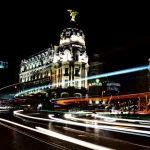
Madrid’s great early-20th-century boulevard is more interesting than its current function as a shopping street suggests. Look up: the architecture is exceptional, a mix of American-influenced high-rises and Beaux-Arts palaces. The Edificio Metrópolis at the corner with Calle de Alcalá, capped with its bronze winged figure, is one of the most photographed buildings in the city.
Green Spaces and the River Corridor
14. Madrid Río
The transformation of the Manzanares River corridor from a motorway into a 10-kilometre linear park was one of the great urban projects of the 21st century in Spain. In 2026 the park is fully mature and heavily used by locals — cyclists, runners, families, dog walkers. Rent a bike at one of the BiciMAD Go electric bike stations (€2 for 30 minutes) and ride the whole length from the Matadero cultural center in the south up toward the Puente del Rey near the palace. The view back toward the city from the riverside is one that visitors almost never see.

15. Real Jardín Botánico
Adjacent to the Prado, the Royal Botanical Garden is a peaceful escape that most tourists walk straight past. Ticket: €4. The garden holds over 5,000 plant species across formally arranged terraces. The greenhouse section with tropical plants is particularly good in winter when the rest of the garden is spare.
16. Casa de Campo
Madrid’s enormous western park — larger than Central Park in New York — is mostly wild pine forest. Most tourists never go. Take the Teleférico cable car from Paseo del Pintor Rosales (€6 one way, €8 return in 2026) to cross over the valley to the park, which gives a genuinely dramatic aerial view of the Royal Palace and city skyline. The park itself has a zoo and an amusement park, but the forest walks are the real draw.
Hidden Madrid: Off the Beaten Path
17. Templo de Debod
An actual ancient Egyptian temple, gifted to Spain in 1968 after Spanish engineers helped save Abu Simbel from flooding. It sits in Parque del Oeste, a few minutes walk from Plaza de España. Free to enter the park and see the exterior at any time. The temple is small but surreal in this context — standing in a Madrid park, surrounded by families having picnics, with its hieroglyphs and ancient stone looking entirely out of place. The views west at sunset are among the best in the city.
18. Barrio de las Letras
The literary quarter, between the Prado and Sol, where Cervantes, Lope de Vega, and Quevedo all lived in the 17th century. The streets are still cobbled, the buildings are low, and the neighborhood has a calm, bookish atmosphere that contrasts with the noise of the tourist center nearby. Lope de Vega’s actual house, the Casa de Lope de Vega on Calle de Cervantes, is open for tours (small fee, book ahead) and is one of the best-preserved 17th-century domestic interiors in Spain.

19. Mercado de San Fernando
In Lavapiés, this is the local market the tourist-facing Mercado de San Miguel is not. Stalls selling fresh produce sit alongside small food and drink operators: a natural wine bar, a Malaysian street food stand, a counter selling Spanish cheeses. Minimal signage, maximum character. Open Tuesday to Sunday.
20. Círculo de Bellas Artes Rooftop
The Círculo de Bellas Artes is a private cultural club on Calle de Alcalá that opens its rooftop bar to the public for a €4 entry fee. The 360-degree view of Madrid’s rooftops and the skyline of the Gran Vía is exceptional. In 2026 it remains one of the best value viewpoints in the city, especially at dusk. The bar serves reasonably priced drinks and the terrace is open until late in summer.
Food Markets and Culinary Stops
21. Mercado de San Miguel
The glass and iron market near Plaza Mayor is a food destination in its own right — oysters, cured meats, vermouth, pintxos, freshly shucked clams, patatas bravas. It’s busy and prices are higher than elsewhere, but the quality is consistent. Best visited mid-morning (around 11:00) when it’s busy but not unbearable, or for a late tapas stop around 19:00. Expect to spend €15–€25 per person grazing through several stalls.
22. Calle de Ponzano
Madrid’s best bar street in 2026. In the Almagro neighborhood north of the center, Ponzano is a single street lined with bars and tabernas that fill up from 20:00 onward with locals. No tourist menus, no hawkers standing outside. The smell of fresh tortilla española drifts out of every second doorway. This is the Madrid that residents actually inhabit, and a few hours here tells you more about the city than a day on the tourist trail.
23. Mercado de Antón Martín
A working neighborhood market in Barrio de las Letras with a cluster of excellent food stalls. The Japanese-influenced counter Kulto al Plato draws long queues for a reason. The market also has a strong fresh fish and produce section used by locals from the surrounding streets. The ground floor café has been serving the same café con leche and tostada con tomate combination since the 1980s — the bread arrives crisp from the plancha, with a sharp tomato oil that stains your fingers orange.
Day Trips Within Easy Reach
24. Toledo
One hour south by high-speed train from Madrid Atocha (from €11 one way, book ahead). Toledo is the former capital of Castile and one of the most visually dramatic small cities in Spain — a medieval walled hill town rising above a river bend, its skyline of cathedral towers and alcázar visible from kilometres away. The El Greco museum and the city’s unusually preserved Jewish quarter are the highlights. Go on a weekday; weekend crowds in 2026 have become intense and the old city streets are narrow.

25. Segovia
Thirty minutes from Madrid Chamartín on the high-speed train (from €8 one way). Segovia’s Roman aqueduct — 163 arches, no mortar, built around 50 AD — still stands in the middle of the city. The cathedral and the fairy-tale Alcázar castle (which partly inspired the Disney logo) are both within walking distance of the aqueduct. The city is compact and very manageable as a half-day trip, though staying for lunch gives you time to try the local roast suckling pig at one of the traditional mesones near the aqueduct.
Madrid After Dark
Madrid’s nightlife reputation is not exaggerated. The city genuinely operates on a different clock — dinner rarely starts before 21:30, bars fill up after 23:00, and clubs don’t hit full capacity until 02:00 or later. The neighborhood of Malasaña around Plaza del Dos de Mayo is the center of indie bars, live music venues, and late-night culture. Chueca, immediately to the east, is the LGBTQ+ heartland and one of the most energetic nightlife zones in Europe. For flamenco, the tablaos in Barrio de las Letras and near Sol offer tourist-facing shows (budget €35–€60 per person for a show with a drink); for something more authentic, check listings for Casa Patas on Calle de Cañizares, which books serious performers rather than choreographed tourist productions. The rooftop bars at the Hotel Riu Plaza and the Barceló Torre de Madrid on Plaza de España give views over the city at night that are genuinely spectacular — both have walk-in access to their bars.
How to Sequence These 25 Things Without Burning Out
The single biggest mistake Madrid visitors make is museum-stacking. Three major art museums in one day leaves you unable to remember any of them. A better framework for a five-day visit:
- Day 1: Prado in the morning, Retiro in the afternoon, La Latina tapas in the evening
- Day 2: Reina Sofía, Barrio de las Letras, Mercado de San Miguel, Círculo de Bellas Artes rooftop at sunset
- Day 3: Day trip to Toledo or Segovia
- Day 4: Royal Palace, Templo de Debod, Madrid Río by bike, Ponzano Street evening
- Day 5: El Rastro Sunday market (if applicable), Thyssen, Malasaña afternoon, late night in Chueca

Book timed entry for the Prado, Reina Sofía, and Royal Palace before you travel. Everything else is walk-in or free. Pre-booking these three will save you an average of two to three hours of queuing per visit in peak season.
2026 Budget Breakdown: What Madrid Actually Costs
Madrid remains one of the more affordable major European capitals, but prices have risen noticeably since 2023. Here’s a realistic daily cost breakdown for 2026:
Budget Tier (hostels, self-catering, free sights)
- Accommodation: €25–€45 per night (hostel dorm or budget private room)
- Food: €20–€30 per day (mercado lunches, supermarket breakfasts, budget tabernas)
- Sightseeing: €0–€15 (using free museum hours and parks)
- Transport: €5–€8 (metro day pass or single tickets)
- Total: approximately €50–€100 per day
Mid-Range Tier
- Accommodation: €80–€150 per night (three-star hotel or quality apartment)
- Food: €40–€60 per day (one sit-down lunch, tapas evenings)
- Sightseeing: €30–€50 (two to three paid museum entries)
- Transport: €8–€15
- Total: approximately €160–€275 per day
Comfortable Tier
- Accommodation: €180–€350+ per night (four-star hotel, central location)
- Food: €80–€120 per day (quality restaurants, vermouth bars, wine)
- Sightseeing: €50–€80 (premium entry, guided tours, flamenco show)
- Transport: €15–€30 (taxis, private transfers)
- Total: approximately €330–€580 per day
Madrid’s tourist tax, introduced citywide in 2025, adds €3.75 per person per night in 2026 for most hotel categories. This is automatically included in hotel bills but worth factoring into your accommodation budget.
Frequently Asked Questions
How many days do you need to see the top 25 things in Madrid?
Five days is the practical minimum to cover the main sights without rushing. Four days is possible if you’re focused and pre-book museum entry, but you’ll have to skip some of the slower, more rewarding experiences. Anything under three days means making hard choices about which major museums to skip entirely.
Is the Madrid tourist card worth buying in 2026?
For most visitors, no. The Madrid Tourist Travel Pass covers unlimited metro and bus travel but doesn’t include museum entry. If you’re doing more than three separate metro trips per day, it saves money on transport. Most of Madrid’s best sights are clustered closely enough together that you’ll walk between them, which reduces the transport pass’s value significantly.
What is the best area to stay in Madrid for sightseeing?
For first-time visitors focused on the top sights, staying in or near Barrio de las Letras or Sol puts you within walking distance of the Prado, Reina Sofía, Thyssen, Plaza Mayor, and La Latina. Malasaña is better if you want nightlife within walking distance of your hotel. Salamanca suits visitors who want quieter streets and upscale shopping alongside easy metro access to the sights.

Do you need to book Madrid’s top attractions in advance?
In 2026, yes — for the Prado, Reina Sofía, and Palacio Real, advance booking is strongly recommended from April through October and during Christmas and Easter. The Prado in particular sells out its best morning slots weeks ahead in summer. The Thyssen and smaller museums like the Real Academia de Bellas Artes can generally be visited without booking.
Is Madrid safe for tourists?
Madrid is generally a very safe city for tourists. The main risk is petty theft — pickpocketing operates heavily around El Rastro, Puerta del Sol, Gran Vía, and on crowded metro lines, particularly the Line 1 corridor and the Aeropuerto T4 line. Keep your phone in a front pocket or zipped bag, and use a money belt for cards and cash in crowded areas. Violent crime targeting tourists is rare.
📷 Featured image by Hernan Gonzalez on Unsplash.