On this page
💰 Click here to see Spain Budget Breakdown
💰 Prices updated: August, 2026. Budget figures are estimates — always verify before travel.
Exchange Rate: $1 USD = €0.86
Daily Budget (per person)
Shoestring: €50.00 – €90.00 ($58.14 – $104.65)
Mid-range: €90.00 – €180.00 ($104.65 – $209.30)
Comfortable: €220.00 – €450.00 ($255.81 – $523.26)
Accommodation (per night)
Hostel/guesthouse: €15.00 – €50.00 ($17.44 – $58.14)
Mid-range hotel: €70.00 – €130.00 ($81.40 – $151.16)
Food (per meal)
Budget meal: €7.00 ($8.14)
Mid-range meal: €25.00 ($29.07)
Upscale meal: €80.00 ($93.02)
Transport
Single metro/bus trip: €1.50 ($1.74)
Monthly transport pass: €30.00 ($34.88)
Spain’s most-visited Cities are buckling under the weight of 2026’s tourist numbers. Barcelona’s short-term rental crackdowns, Seville’s summer heat advisories, and Granada’s queues stretching back from the Alhambra ticket office — travellers are actively looking for alternatives that still deliver the real Spain. Murcia keeps coming up in those conversations, and for good reason. It’s a full-sized Spanish city with a serious food culture, a baroque cathedral, a working port coast, and almost no tourist crowds. The catch? Most people still aren’t sure what it actually offers. This guide fixes that.
What Kind of Place Is Murcia, Really?
Murcia is the capital of its own autonomous region in southeastern Spain, sitting inland in the Segura river valley, surrounded by one of Europe’s most productive agricultural plains. It has a population of around 460,000, which makes it one of Spain’s larger cities — bigger than Bilbao, bigger than Valladolid — yet it rarely appears on travel shortlists.
The city has an unhurried confidence about it. Locals eat late (dinner before 9pm is unusual), socialise loudly in taperias that haven’t changed their décor since the 1980s, and treat the evening paseo along the Glorieta gardens as a genuine social ritual rather than something performed for tourists. Walking through the old quarter on a Tuesday evening, you’ll hear the scrape of chairs on terracotta tiles, the knock of dominoes at a bar table, and the sound of a football match leaking from a ground-floor flat.
It’s a university city too, which keeps the energy young without making it feel contrived. The Universidad de Murcia has around 30,000 students, and their presence shapes the café culture, the nightlife, and the general tempo of the place. Murcia isn’t trying to be cool. It just is, on its own terms.
The Old City on Foot
The historic centre of Murcia is compact enough to cover thoroughly in a single day on foot, but interesting enough to reward a slower approach over two.
The Catedral de Santa María is the obvious starting point and it earns the attention. Construction began in 1394 and continued in stages for centuries, which means the building is a genuine architectural timeline — Gothic foundations, a Renaissance interior, and one of the most ornate baroque façades in Spain, completed in 1754. The bell tower, at 93 metres, is something you climb rather than just admire: the views across the terracotta rooftops and the Segura river are worth every step.
Two minutes on foot from the cathedral sits the Casino de Murcia, which is not a gambling house but a private social club opened in 1847. It’s now open to visitors, and the interior is one of the most extraordinary rooms in Spain outside of the Alhambra. The Arabic patio with its horseshoe arches and tilework, the ballroom with its painted ceiling, and the ladies’ powder room designed to resemble the Hall of Mirrors at Versailles — all of it is genuinely unexpected in a city that doesn’t market itself.
The Museo Salzillo is worth an hour of anyone’s time even if religious art isn’t your usual interest. Francisco Salzillo was a local sculptor who lived from 1707 to 1783, and his polychrome wooden figures — carried through the streets of Murcia during Semana Santa each year — are technically and emotionally remarkable. The Good Friday procession in Murcia is considered one of the finest in Spain, and seeing Salzillo’s originals up close explains why.
Around these anchors, the streets of the barrio del Carmen reward aimless wandering. Narrow lanes open unexpectedly onto small plazas, convents with half-open doors reveal tiled cloisters, and the smell of fresh bread from a corner bakery at 8am makes the whole thing feel genuinely lived-in.
Murcia’s Food Scene: More Than Just Vegetables
The region of Murcia is sometimes called the huerta de Europa — Europe’s market garden — and the produce quality is extraordinary. But the local food culture goes well beyond fresh ingredients.
The signature dish is zarangollo, a scrambled egg preparation with courgette and onion that sounds humble and tastes like the sum of everything good about Spanish home cooking. Marinera (a single round cracker topped with Russian salad and an anchovy, balanced upright and eaten in one) is the city’s bar snack of choice. Pastel de carne is a savoury pastry filled with minced meat, hard-boiled egg, and spices — it’s sold from pastry shops throughout the city and eaten at almost any hour.
For fresh produce and an honest look at what the region actually grows, the Mercado de Verónicas near the river is the place. It’s not a tourist market — it’s where Murcia residents buy their food. Stalls sell artichokes from the Campo de Cartagena, enormous tomatoes, pimentón from the local harvest, and fresh fish trucked up from the coast an hour away.
For sit-down meals, a few specific addresses worth knowing in 2026:
- El Pasaje on Calle Apostoles — a long-running tapas bar with outstanding marineras and a house vermut that regulars order without looking at the menu.
- Pura Cepa in the old city — serious wine list focused on regional Jumilla and Bullas D.O. wines, paired with intelligent modern raciones.
- La Pequeña Taberna — a neighbourhood spot that does zarangollo, rice dishes, and slow-cooked stews at prices that feel almost impossible given the quality.
Jumilla, a wine-producing town about 60 kilometres north of Murcia city, produces Monastrell (Mourvèdre) wines that have gained serious recognition internationally since 2023. Ordering a glass of local Jumilla red with any meat dish in Murcia is the correct move.
The Mar Menor and the Coast
Murcia’s coastline sits about 45–60 kilometres east of the city, and it includes two very different types of coast worth understanding before you go.
The Mar Menor is a shallow saltwater lagoon separated from the Mediterranean by a narrow sand strip called La Manga. It was once one of Europe’s great resort areas, but suffered severe ecological damage from agricultural runoff in 2019 and again in 2021, with mass fish deaths making international news. The recovery effort has been significant: new water quality monitoring, restrictions on fertiliser runoff from nearby farms, and reduced motorboat access have improved conditions considerably since 2023. By 2026, water quality in most areas of the Mar Menor has returned to acceptable bathing standards, though the lagoon’s ecology is still considered fragile.
La Manga del Mar Menor itself — the 22-kilometre sand strip — is built up with apartment blocks and has a 1970s resort character that you either find charming in a retro way or don’t. The water on the lagoon side is genuinely calm and shallow, which makes it excellent for families with young children or anyone who wants warm, flat water for paddleboarding or kayaking.
For a more natural Mediterranean experience, the Calblanque Regional Park is the standout option. This protected stretch of coast south of La Manga has fine-sand coves, dramatic headlands, and almost no development. Access is by car or by bicycle from Los Belones — the park’s vehicle quota system introduced in 2024 means booking an entry slot online in advance during July and August is mandatory. The effort is worth it: Calblanque feels like the Spanish coast that the 1960s development boom never touched.
Águilas, at the southern end of Murcia’s coast, has grown in profile since 2024 as visitors look beyond the Mar Menor. It has genuine fishing-port character, uncrowded beaches, and a carnival in February that locals consider among the best in Spain.
Day Trip or Overnight?
This depends almost entirely on where you’re coming from and what you want from the visit.
From Alicante: Murcia city is about 80 kilometres and around 50 minutes by regional train. A day trip is genuinely feasible — you could cover the cathedral, the Casino, lunch at Verónicas market, and an afternoon in the barrio del Carmen, and be back in Alicante by evening. That said, Murcia is a city that rewards staying for at least one night. The evening atmosphere — the paseo, dinner at 9:30pm, a late vermouth at a standing bar — is a significant part of what makes it feel like a real Spanish city rather than a curated experience.
From Cartagena: Cartagena is only 50 kilometres from Murcia and many visitors combine the two. Cartagena deserves at least a full day on its own — its Roman theatre, Punic walls, and naval museum are substantial — so the two cities together logically fill two to three days.
From Madrid or Barcelona: As a standalone destination, Murcia rewards two nights minimum in the city plus a day on the coast. Three to four nights if you want to include Cartagena, Lorca, and a coastal day at Calblanque.
The honest case for an overnight is this: Murcia’s best moments happen after 8pm. The city comes alive in a way that a day tripper arriving at 10am and leaving at 6pm simply won’t experience.
Getting to Murcia in 2026
Murcia’s transport connections improved significantly with the opening of the Región de Murcia International Airport (RMU) in Corvera in 2019, which replaced the old San Javier airport. By 2026, the airport handles a solid range of European routes, with direct flights from London (Stansted and Gatwick), Manchester, Dublin, Brussels, Amsterdam, and several German cities. Ryanair and Jet2 are the dominant carriers on UK routes. Flight times from London are around 2 hours 45 minutes.
By high-speed rail (AVE): The long-awaited AVE connection between Murcia and Madrid became fully operational in 2025, reducing journey time from around 4 hours (on the old medium-speed Alvia service) to approximately 2 hours 20 minutes. This changes Murcia’s position significantly as a city-break destination from Madrid. Renfe prices vary considerably — booking two to three weeks ahead typically gives you fares in the €40–€70 range each way.
From Alicante: Regional Cercanías trains run frequently (around every 30–45 minutes during the day), taking about 50 minutes to Murcia del Carmen station, the main city terminus. Fares are around €4–€7.
From Barcelona: A direct AVE service via Valencia runs the route in around 3 hours 30 minutes, with fares from €50 upward depending on timing and booking lead time.
By car: Murcia sits on the AP-7 Mediterranean motorway and the A-30 from Madrid. From Madrid, allow 4 hours. From Valencia, around 2 hours 30 minutes. Tolls on the AP-7 section can add €15–€25 depending on your entry and exit points.
Getting Around Once You’re There
The historic centre of Murcia is walkable. The cathedral, the Casino, the main tapas streets, Verónicas market, and the university area can all be reached on foot from any central hotel in under 20 minutes. This is not a city where you need a car for the urban part of your visit.
Murcia launched an expanded public bicycle sharing scheme (MurciBici) in 2024, and coverage across the central districts is now reasonably good. Day passes cost around €2. It’s a practical option for the riverside path and for reaching neighbourhoods slightly outside the old centre.
For the coast, a car hire is the most practical option. Buses do connect Murcia city to La Manga and Los Alcázares, but frequency is limited outside peak summer, and reaching places like Calblanque without a car is genuinely difficult. Car hire from Murcia airport or city centre costs from around €30–€55 per day in 2026 for a small vehicle booked in advance.
Taxis are plentiful, licensed, and metered. A city-centre journey typically costs €5–€10. Rideshare apps (Cabify operates in Murcia; Uber has limited presence) provide an alternative.
2026 Budget Reality
Murcia is significantly cheaper than Spain’s major tourist cities. This isn’t a consolation prize — it reflects local pricing for a city where residents, not tourists, are the primary customers.
Accommodation
- Budget: Hostels and basic guesthouses in the centre from €22–€35 per person per night.
- Mid-range: Three-star hotels in or near the historic centre from €65–€95 per night for a double room.
- Comfortable: Four-star hotels including the NH Murcia and the Occidental Murcia Siete Coronas (with river views) from €110–€160 per night.
Food and Drink
- Budget: A menú del día (three courses with drink) at a local restaurant: €12–€15.
- Mid-range: Dinner for two with wine at a quality tapas bar: €35–€55 total.
- Comfortable: Dinner for two at a serious restaurant with a full wine pairing: €80–€120.
Attractions
- Cathedral bell tower entry: approximately €5.
- Casino de Murcia guided visit: approximately €5.
- Museo Salzillo: approximately €5, free on Sundays.
- Calblanque Regional Park: no entry fee, but parking/vehicle slot booking may involve a small administrative fee (€2–€3) during summer 2026.
A realistic daily budget for a solo traveller covering accommodation, food, entry fees, and local transport sits at around €75–€100 at mid-range. Couples travelling together will find per-person costs drop to €60–€85 per day at the same comfort level.
Practical Tips Before You Go
Tourist tax: Murcia Region does not currently charge a regional tourist tax (unlike Catalonia and the Balearics). As of 2026, no such tax has been introduced, which means your hotel bill won’t carry a per-night surcharge. This could change — several Spanish regions are debating the measure — but it isn’t in place yet.
Climate: Murcia has one of the hottest and driest climates in Europe. July and August regularly reach 38–42°C, and the city can feel genuinely exhausting in peak summer heat. The best months to visit are October through November and March through May — warm, manageable, and with the added advantage of lower accommodation prices. Spring brings the Semana Santa processions (carrying Salzillo’s figures) and the Bando de la Huerta festival in late April, a Murcian celebration of the agricultural heritage that fills the streets with traditional costume and noise.
Language: Spanish is the language of Murcia — there is no regional co-official language as in Catalonia or the Basque Country. English is understood in hotels and many restaurants, but Murcia is less geared toward English-speaking tourists than the coastal resorts, so a few phrases of Spanish will be appreciated and useful.
Digital nomad context: Murcia’s cost of living and quality of life have made it increasingly attractive to remote workers since Spain’s Digital Nomad Visa was updated in 2025 to allow easier access for non-EU workers earning above €2,646 per month. Several coworking spaces have opened in the city centre since 2024, and the university area has reliable café wifi culture.
Siesta hours: Still observed in Murcia more strictly than in Madrid or Barcelona. Many smaller shops close from 2pm–5pm. Plan your sightseeing accordingly — this is the time to eat a long lunch, not browse shops.
Frequently Asked Questions
Is Murcia worth visiting for a short trip?
Yes, genuinely. The historic centre, food scene, and proximity to both the coast and Cartagena make it rewarding even on a two-night visit. The city is compact, affordable, and free of the overtourism that makes some Spanish cities feel exhausting in 2026. It’s best experienced at its own pace, which means staying at least one night to catch the evening culture.
What is Murcia most famous for?
Murcia is best known within Spain for three things: its Semana Santa processions featuring the baroque sculptures of Francisco Salzillo, its agricultural produce (the region supplies much of Europe’s vegetables), and its food culture. Internationally it’s less well known, which is precisely why it retains an authenticity that heavily touristed cities have lost.
How far is Murcia from the beach?
The closest beaches are around 45–60 kilometres from Murcia city centre, depending on which stretch of coast you choose. The Mar Menor lagoon and La Manga are around 50 kilometres east. The protected beaches of Calblanque Regional Park are approximately 60 kilometres. By car, you’re looking at 45–60 minutes. Public bus connections exist but are slow and infrequent outside summer.
Can I visit Murcia as a day trip from Alicante?
A day trip from Alicante is doable — regional trains run the 50-minute journey regularly and cost around €4–€7 each way. You can comfortably cover the cathedral, Casino de Murcia, a market visit, and lunch in a day. That said, staying overnight transforms the experience: Murcia’s evenings — late dinner, bar culture, the paseo — are when the city shows its best side.
What has changed in Murcia for 2026 visitors?
The biggest practical change is the AVE high-speed rail connection from Madrid, fully operational since 2025 and cutting the journey to around 2 hours 20 minutes. The Mar Menor’s water quality has improved significantly following post-2021 ecological recovery measures. Calblanque Regional Park now requires advance vehicle booking in summer. No tourist tax currently applies in the Murcia region.
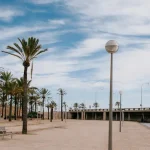
📷 Featured image by Veronica H on Unsplash.