On this page
- Zaragoza’s Hidden Architectural Wonders
- The Revolutionary Food Scene That’s Redefining Aragonese Cuisine
- How the High-Speed Rail Revolution Changed Everything in 2026
- Beyond the Basilica: Zaragoza’s Unexpected Cultural Treasures
- Day Trip or Overnight? Planning Your Perfect Zaragoza Visit
- 2026 Budget Breakdown: What You’ll Actually Spend
- Frequently Asked Questions
While Barcelona draws the Instagram crowds and Madrid commands the headlines, Zaragoza quietly maintains its status as one of Spain’s most authentic urban experiences. With the 2026 AVE expansion cutting travel time from Madrid to just 75 minutes and new direct flights from major European cities, this Aragonese capital is finally getting the recognition it deserves—but without the overwhelming tourist masses that plague other Spanish Destinations.
Zaragoza’s Hidden Architectural Wonders
The Basílica del Pilar dominates every postcard of Zaragoza, but the city’s architectural story runs much deeper than its famous riverside landmark. Walk through the narrow streets of the old quarter and you’ll discover the Mudéjar towers that earned Zaragoza its UNESCO World Heritage designation. The Torre de San Martín and Torre de San Salvador rise from the medieval streetscape like ancient lighthouses, their intricate brick patterns catching the Aragonese sunlight.
The scent of orange blossoms drifts through the Alfajería Palace courtyards, where Islamic, Christian, and Jewish architectural influences merge in ways you won’t find anywhere else in Spain. The palace’s carved wooden ceilings whisper secrets from the 11th century, when Zaragoza was the capital of an independent taifa kingdom. Unlike the Alhambra in Granada, you can walk through these halls without fighting crowds for the perfect photo.
The Roman Theatre, discovered only in 1972 beneath a cluster of houses, offers a glimpse into Caesaraugusta—ancient Zaragoza’s Roman name. The museum built around the excavation site uses cutting-edge holographic projections to recreate gladiatorial scenes, making history feel tangible rather than academic.
The Revolutionary Food Scene That’s Redefining Aragonese Cuisine
Zaragoza’s culinary landscape exploded in 2026 when three local restaurants earned their first Michelin stars, transforming this industrial city into an unexpected gastronomic destination. The traditional ternasco (young lamb) and migas (fried breadcrumbs) that once defined Aragonese cuisine now share menu space with innovative interpretations that respect tradition while embracing creativity.

El Tubo, the old town’s tapas district, buzzes with energy every evening as locals crowd around tiny bars ordering jamón from Teruel, the sweetest ham in Spain. The sound of ceramic plates clinking against marble bar tops creates a symphony that’s distinctly Zaragozan. At Casa Lac, a century-old establishment, they still serve ternasco al horno in the same wood-fired oven their great-grandparents used.
The Mercado Central, renovated in 2025, houses 50 vendors selling everything from saffron grown in nearby fields to Borja wine that rivals anything from Rioja at half the price. The market’s tapas bars offer chorizo de Cantimpalos and longaniza de Graus—sausages that exist nowhere else in Spain. Friday afternoons bring the ritual of the “vermú,” where office workers gather for vermouth and olives before heading home.
For dessert, seek out the frutas de Aragón at Fantoba, candied fruits covered in chocolate that have been a local specialty since 1856. The recipe remains unchanged, a sweet testament to Zaragoza’s respect for culinary tradition.
How the High-Speed Rail Revolution Changed Everything in 2026
The completion of the high-speed rail connection to Barcelona in early 2026 fundamentally altered Zaragoza’s position on Spain’s travel map. What was once a 3.5-hour journey became a comfortable 90-minute ride, making day trips from either Madrid or Barcelona not just possible, but appealing. The sleek Alvia trains depart every hour during peak times, with spacious seats and reliable Wi-Fi that actually works.
Delicias Station underwent a major renovation to handle the increased passenger flow, adding underground shopping areas and improved connections to the city’s tram system. The station itself became an architectural statement, with glass walls offering views of the Ebro River and the distant Pyrenees on clear days.

This improved connectivity sparked a hotel construction boom. Five new boutique properties opened in 2026 alone, concentrated around the old town and near the station. Room rates remain significantly lower than Madrid or Barcelona—expect to pay €80-120 for a quality four-star hotel versus €200-300 in the capital cities.
The rail improvements also benefited Zaragoza’s emerging conference and business tourism sector. The WiZink Center expansion and new convention facilities positioned the city as a meetings destination for eastern Spain, bringing international visitors who might never have discovered Zaragoza otherwise.
Beyond the Basilica: Zaragoza’s Unexpected Cultural Treasures
While tour groups file through the Basílica del Pilar, savvy travelers explore Zaragoza’s lesser-known cultural gems. The Centro de Arte y Tecnología Etopia pushes boundaries with interactive digital art installations that change monthly. The converted industrial space houses artists’ studios alongside exhibition areas where visitors can manipulate projections with hand gestures—a playground for the Instagram generation.
The Goya Museum houses the world’s largest collection of works by Francisco Goya, Zaragoza’s most famous son. Unlike the Prado’s crowded Goya rooms, here you can study the “Disasters of War” series in contemplative silence. The museum’s audio guide, narrated by Spanish actors, brings Goya’s dark period to life with theatrical flair.
Thursday evenings transform the Pablo Gargallo Museum into an unlikely social hub during their “Noches de Escultura” events. Local wine flows freely as visitors wander among the sculptor’s iron and bronze creations, many seeing Gargallo’s work for the first time despite his influence on Picasso and other 20th-century masters.
The contemporary dance scene thrives at Arbolé Teatro, where companies from across Europe premiere experimental works. The intimate 200-seat venue creates an intensity between performers and audience that’s impossible to replicate in larger theaters. Check their schedule—tickets rarely exceed €25, a fraction of what similar performances cost in major capitals.

Day Trip or Overnight? Planning Your Perfect Zaragoza Visit
The high-speed rail connections make Zaragoza an easy day trip from Madrid (75 minutes) or Barcelona (90 minutes), but staying overnight reveals the city’s true character. Day-trippers can cover the major sites—Basílica del Pilar, Alfajería Palace, and the old town—with time for lunch in El Tubo. However, they miss the evening paseo along the Ebro River when locals emerge for their daily stroll.
The sound of church bells echoing across the Plaza del Pilar at sunset creates a moment of magic that day-trippers never experience. Evening brings a different energy as families gather in the squares and friends meet for drinks in the historic quarter. The city’s pace slows, conversation flows, and you understand why locals rarely leave Zaragoza despite opportunities elsewhere.
If you choose to stay overnight, book accommodation in the Casco Histórico (old town) to walk to major sites and restaurants. The Hotel Reina Petronila offers modern comfort in a converted 19th-century palace, while smaller properties like Pension La Torre provide clean, basic rooms for budget travelers.
Consider Zaragoza as a two-night stop when traveling between Madrid and Barcelona. This allows a relaxed first day exploring the historic center, a second day visiting museums and parks, with time to discover neighborhoods beyond the tourist core. Two nights also justify the train ticket cost and provide better value than rushing through in a single day.
2026 Budget Breakdown: What You’ll Actually Spend
Zaragoza offers exceptional value compared to Spain’s tourist magnets, with costs roughly 30-40% lower than Barcelona or Madrid across most categories. Budget travelers can explore the city comfortably on €40-50 per day, mid-range visitors should plan for €70-90 daily, while those seeking comfortable experiences need €120-150 per day.

Accommodation (per night):
- Budget: Pension or hostel bed €18-30
- Mid-range: Three-star hotel €45-70
- Comfortable: Four-star hotel with amenities €80-120
Food and drink (per day):
- Budget: Market meals, tapas, supermarket supplies €15-20
- Mid-range: Mix of casual restaurants and quality tapas bars €25-35
- Comfortable: Restaurant meals, local wines, specialty dishes €40-60
Transportation and activities:
- AVE train from Madrid: €25-45 (advance booking)
- Local tram day pass: €4.50
- Museum entries: €3-8 each (many offer combined tickets)
- Guided tours: €12-25 per person
The city’s compact size means walking covers most attractions, eliminating daily transport costs. Many churches and historic sites charge no admission, while the excellent municipal museums cost less than equivalent attractions in major Spanish cities.
Frequently Asked Questions
How many days do I need to see Zaragoza properly?
Two days allow you to see major attractions without rushing, experience the local food scene, and enjoy evening activities. Day trips work but miss the city’s authentic character after dark.
Is Zaragoza worth visiting if I’ve already been to Seville and Granada?
Absolutely. Zaragoza offers a different perspective on Spanish culture—less touristy, more industrial heritage, and unique Mudéjar architecture. It feels like real Spain rather than a museum city.
What’s the best way to get to Zaragoza in 2026?
High-speed AVE trains from Madrid (75 minutes) or Barcelona (90 minutes) are most convenient. Budget flights from European cities land at Zaragoza Airport, 10 kilometers from downtown.
Can I visit Zaragoza without speaking Spanish?
Yes, though less English is spoken than in major tourist cities. Download a translation app and learn basic phrases. Most restaurant menus include English translations, and hotel staff typically speak multiple languages.
What makes Zaragoza different from other Spanish cities?
Zaragoza combines authentic local culture with significant historical importance without overwhelming crowds. The mix of Roman, Islamic, and Christian heritage creates unique architecture, while modern amenities serve residents rather than tourists.
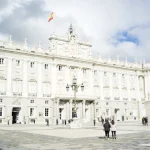
📷 Featured image by Alba Calbetó on Unsplash.