On this page
- What Makes Zaragoza Different From Other Spanish Cities
- The Old City: Where to Start and What to See
- The Food Scene: Eating and Drinking Like a Zaragozano
- 2026 Budget Reality: What Things Actually Cost
- Getting to Zaragoza (By AVE, Bus, and Plane)
- Getting Around the City
- Day Trip or Overnight? How Long You Actually Need
- The Best Time to Visit Zaragoza in 2026
- Practical Tips Before You Go
- Frequently Asked Questions
💰 Click here to see Spain Budget Breakdown
💰 Prices updated: October, 2026. Budget figures are estimates — always verify before travel.
Exchange Rate: $1 USD = €0.88
Daily Budget (per person)
Shoestring: €60.00 – €90.00 ($68.18 – $102.27)
Mid-range: €120.00 – €180.00 ($136.36 – $204.55)
Comfortable: €220.00 – €470.00 ($250.00 – $534.09)
Accommodation (per night)
Hostel/guesthouse: €15.00 – €50.00 ($17.05 – $56.82)
Mid-range hotel: €70.00 – €130.00 ($79.55 – $147.73)
Food (per meal)
Budget meal: €7.00 ($7.95)
Mid-range meal: €25.00 ($28.41)
Upscale meal: €80.00 ($90.91)
Transport
Single metro/bus trip: €3.00 ($3.41)
Monthly transport pass: €24.00 ($27.27)
Zaragoza keeps getting recommended by people who’ve been — and overlooked by people who haven’t. That’s the strange paradox of Spain’s fifth-largest city. In 2026, with Barcelona tightening tourist caps and Madrid hotel prices showing no signs of dropping, Zaragoza makes a compelling case as a city break that delivers real Spain without the performance. The old centre is compact, the food scene is genuinely excellent, and the AVE gets you there in under two hours from Madrid or Barcelona. Yet hotel rooms rarely sell out and you won’t be queue-managing your way through the streets. If that sounds like exactly what you need, here’s everything you need to know.

What Makes Zaragoza Different From Other Spanish Cities
Zaragoza sits in the middle of the Ebro valley, almost perfectly equidistant between Madrid and Barcelona — around 300 kilometres from each. That geography has shaped the city in ways that go Beyond transport logistics. For centuries it was a crossroads where Roman, Moorish, Jewish, and Christian cultures overlapped and left behind layers of architecture that you can still walk through today. The result is a city with genuine depth but no dominant tourist identity — it’s never been reduced to a single postcard image.
What you get instead is a city that functions on its own terms. The locals are proud of their food, fiercely attached to their basilica, and tend to be direct in a way that feels refreshing after the performance of more tourist-heavy cities. Zaragoza doesn’t try to seduce you. It just gets on with being itself, and if you’re paying attention, that’s a rare thing in modern Spain.
The city also has a strong university population, which keeps the bar scene and cultural calendar alive year-round — not just in peak summer when everywhere else in Spain gets artificially animated. On a Wednesday evening in October, the tapas bars off Calle del Temple fill up with people who actually live there. That’s not nothing.
The Old City: Where to Start and What to See
The historic centre of Zaragoza is walkable in a day, but you’d be shortchanging yourself if that’s all you gave it. The obvious anchor point is the Basílica del Pilar, which sits right on the Ebro riverbank and dominates the skyline with eleven baroque domes. Inside, the scale is genuinely overwhelming — the nave runs to nearly 130 metres and the ceilings press down with gilded decoration. Go in the early morning when the light through the windows hits the main altar, and when the tour groups from the cruise buses haven’t yet arrived. The basilica is free to enter, though there’s a small fee (around €3) to take the lift up one of the towers for views over the river and old city.
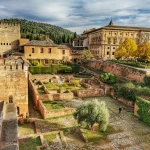
A short walk away, the Aljafería Palace is one of the most underrated Moorish buildings in Spain. Built in the 11th century as a pleasure palace for the Taifa kings of Zaragoza, it later became a residence for Ferdinand and Isabella and then housed the Spanish Inquisition. That history is written into the architecture — you move through rooms that shift from intricate Islamic geometric patterns to Gothic vaulting within a few steps. Compared to the Alhambra in Granada, entry queues here are almost nonexistent, and tickets cost around €5.
The La Seo Cathedral stands at the opposite end of the Plaza del Pilar from the basilica. Architecturally it’s the more interesting of the two — a hybrid of Romanesque, Gothic, Mudéjar, and Baroque that accumulated over centuries. The Mudéjar exterior brickwork is particularly striking. Combined ticket with the tapestry museum inside costs around €4.
The Museo del Foro de Caesaraugusta is worth an hour of your time even if Roman history isn’t your usual thing. The museum is built over the actual excavated ruins of the Roman forum — you walk on glass walkways above the original floors. Zaragoza was a major Roman colony (Caesaraugusta) and the archaeological remains are substantial. There are three other Roman sites nearby — the baths, the river port, and the theatre — and a combined ticket covering all four costs around €7.
The Food Scene: Eating and Drinking Like a Zaragozano
Aragonese food is honest, ingredient-led, and built around things the region actually produces. Lamb from the Pyrenean foothills, white asparagus from the Ebro valley, Ternasco de Aragón (milk-fed lamb with Protected Geographical Indication status), and the city’s own variation on tapas culture — here they call them tapas but the format leans toward generous pintxo-style portions served at the bar.
The best street for an evening crawl is Calle del Temple and the streets branching off it toward the Jewish quarter. The bars here are small, loud, and serious about their food. El Broquel on Calle del Boggiero is a reliable favourite — their croquetas de bacalao have a crisp shell and a filling that’s genuinely liquid inside. La Republicana nearby leans into natural wines and creative montaditos (small open sandwiches). The ritual is the same as in the Basque Country: order a drink, take a tapa from the counter or order from the board, and move on after one or two rounds.
For a sit-down meal, Taberna Doña Casta in the old town serves straightforward Aragonese cooking at honest prices — the ternasco al horno (roast lamb) is the thing to order. For something more considered, La Prensa near the Paseo de la Independencia has been producing serious regional cooking for years without chasing trends. A full dinner there runs to around €35–45 per person with wine.

The Mercado Central de Zaragoza, the city’s main covered market, reopened after a comprehensive renovation in 2024 and is now worth visiting as a destination in itself, not just for shopping. The stalls selling local cheeses, cured meats, and the region’s distinctive wines (Cariñena, Campo de Borja, Calatayud — all from Aragonese DOs) are well stocked and the vendors know their products.
One sensory detail worth knowing: on a Sunday morning, the smell of migas — a traditional Aragonese dish of fried breadcrumbs with chorizo and peppers — drifts out of family restaurants in the old quarter from about 11am. It’s heavy, fragrant, and completely at odds with anything a modern menu would serve you. Order it at least once.
2026 Budget Reality: What Things Actually Cost
Zaragoza remains one of the better-value Spanish cities for visitors in 2026. It doesn’t have a tourist surcharge mentality, and while prices have risen since 2023 in line with Spanish inflation, they haven’t jumped the way Barcelona or San Sebastián have.
Accommodation
- Budget: Hostel dorm beds in the old town run €18–25 per night. Basic one-star and two-star guesthouses (pensiones) offer private doubles for €50–70.
- Mid-range: A solid three-star hotel in or near the historic centre costs €80–120 per night. The NH Zaragoza and Hotel Sauce both sit in this range and are reliably decent.
- Comfortable: The Palafox Hotel, the closest thing Zaragoza has to a luxury option, runs €160–200 per night depending on season. The Gran Hotel, a restored Art Nouveau landmark on Plaza de las Catedrales, is in a similar bracket and has more character.
Food and Drink
- Café con leche at a local bar: €1.50–1.80
- Tapa at the bar with a drink: €1.50–3 (the drink often comes with a free tapa in this city)
- Menú del día (three courses with wine): €12–16
- Full dinner at a mid-range restaurant: €25–40 per person with wine
- Glass of local Aragonese wine at a bar: €2–3
Sightseeing
- Basílica del Pilar (entry): Free. Tower lift: €3
- Aljafería Palace: €5
- Combined Roman sites ticket: €7
- Zaragoza Card (48 hours): around €20
Overall, a comfortable two-night visit including accommodation, food, sightseeing, and local transport should cost a single traveller in the range of €200–280. A couple travelling together can expect to share fixed costs and come in slightly lower per person.
Getting to Zaragoza (By AVE, Bus, and Plane)
Zaragoza sits on the main AVE high-speed rail corridor between Madrid and Barcelona, which is both its greatest practical advantage and the reason many people treat it as a day trip rather than a destination. That’s a mistake, but it does mean getting there is easy.
By AVE from Madrid
Renfe runs AVE services from Madrid Puerta de Atocha to Zaragoza Delicias roughly every 30–45 minutes through most of the day. Journey time is around 1 hour 20 minutes. Ticket prices vary significantly — book two to three weeks ahead and you can find Promo fares for as little as €14–19 each way. Standard flexible fares are typically €40–60. In 2026, Renfe’s new dynamic pricing system means the cheapest fares sell out quickly, so setting a booking alert through the Renfe app is worth doing.
By AVE from Barcelona
Services from Barcelona Sants take around 1 hour 35 minutes. The same pricing logic applies — early booking gets you Promo fares in the €14–22 range, while last-minute tickets can climb to €50–70. There are typically 10–15 daily services in each direction.
By Bus
ALSA operates long-distance coaches from Madrid, Barcelona, Valencia, and other cities. Journey times are roughly twice those of the AVE, but fares are significantly cheaper — often €10–18 from Madrid. The bus station (Estación Intermodal Delicias) is next to the AVE station on the western edge of the city.
By Plane
Zaragoza Airport (ZAZ) is a small international airport around 10 kilometres west of the centre. Ryanair operates routes to London Stansted, Brussels Charleroi, and several other European destinations. In 2026 Ryanair added a Milan Bergamo route (seasonal, summer only). Fares can be very cheap — the catch is that the airport is inconvenient to get to without a car or taxi (around €25–30). For travellers coming from the UK or northern Europe, flying directly into Zaragoza rather than Madrid or Barcelona and then taking the train is worth calculating.

Getting Around the City
Zaragoza is a walkable city for most sightseeing purposes. The old centre is compact — you can walk from the Aljafería to the Basílica del Pilar in about 20 minutes, and most of the key sites are within that radius. What makes walking particularly pleasant is the Paseo de la Independencia, a wide tree-lined boulevard that runs from the modern city into the historic core, with pavement cafés and a generally unhurried pace.
For longer journeys, the tram system (Tranvía de Zaragoza) is clean, frequent, and cheap. A single journey costs €1.35; a 10-trip card is around €8. The main tram line runs east–west through the city centre, connecting the Delicias station to the university district. It doesn’t cover everywhere but it covers the most useful routes for visitors.
The city bike-sharing scheme (Bizi Zaragoza) has expanded its network in the past two years and now covers the main residential and tourist areas well. A 24-hour pass costs €2. The city has invested consistently in cycling infrastructure, so using a bike doesn’t feel like a conflict with traffic the way it does in some Spanish cities.
Taxis are available but you rarely need one within the old town. The main app used locally is Free Now, which works reliably in Zaragoza. A ride from Delicias station to the city centre costs around €8–10.
Day Trip or Overnight? How Long You Actually Need
The honest answer is: if you’re coming from Madrid or Barcelona, go overnight. A day trip is possible — the train journey is short enough — but you’ll spend most of the day managing logistics and you’ll miss the part of Zaragoza that’s actually worth experiencing: the evenings.
A single night gets you the following: one evening doing the tapas crawl on Calle del Temple, the following morning at the Basílica and La Seo, the Aljafería in the afternoon, and a sit-down dinner before the late train or an early checkout the next morning. That’s tight but doable.
Two nights is the better option. It gives you time for the Roman museums, the Mercado Central, a slower morning at a local café watching the city wake up, and an evening that doesn’t feel rushed. Two nights is roughly what it takes to form an actual impression of a place rather than a checklist of it.
For anyone basing themselves in Zaragoza to explore the wider region, the city also serves as a practical hub for day trips to Calatayud (monastery of Piedra with its frozen waterfalls, 90 minutes by regional train), Huesca (gateway to the Pyrenees, 50 minutes by train), and the surreal clay badlands of Los Monegros — though the latter requires a car.
The Best Time to Visit Zaragoza in 2026
Zaragoza has a continental climate with sharp extremes. Summers are genuinely hot — July and August regularly hit 36–38°C, and the cierzo, a cold dry wind that tunnels down the Ebro valley from the Pyrenees, makes March and November feel colder than the temperature alone suggests. Spring (April–June) and autumn (September–October) are the obvious sweet spots: temperatures in the 18–25°C range, low chance of rain, and the city functioning at normal pace.
The single biggest event in the Zaragoza calendar is the Fiestas del Pilar, held every October around the 12th (Spain’s national holiday). For nine days the city fills with concerts, processions, giant puppet parades (gigantes y cabezudos), street markets, and the famous ofrenda de flores — a flower offering to the Virgin of Pilar that turns the Plaza del Pilar into a carpet of blooms several metres deep. The crowds are significant and hotel prices roughly double, but if you want to see Zaragoza fully alive, this is the time. Book accommodation at least two months ahead if you’re planning to visit during the Pilar festival in 2026.
January through March is the quietest and cheapest period. The city doesn’t shut down — it has too large a local population for that — but you’re in the minority as a tourist and some smaller restaurants may keep reduced hours. The cierzo wind can be biting in February. That said, hotel prices drop noticeably and the sights are calm in a way that has its own appeal.
Practical Tips Before You Go
- Language: English is spoken in hotels, at major tourist sites, and in the newer restaurants. In traditional bars and local shops, Spanish is the working language. A few words go a long way — locals are generally warm toward visitors who make the effort.
- Meal times: Lunch is the main meal of the day, typically 2–4pm. Dinner rarely starts before 9pm and 10pm is normal for locals. If you arrive at a restaurant at 7:30pm expecting dinner, you’ll either find it empty or closed. This is real Spain, not a tourist-adjusted schedule.
- Tourist tax: As of 2026, Zaragoza city does not charge a tourist accommodation tax (unlike Barcelona, which increased its rate again in late 2025). This is a minor but genuine saving over multiple nights.
- Tap water: Safe to drink and tastes fine in Zaragoza. No need to buy bottled water for drinking purposes.
- Sunday hours: Most small shops close on Sunday. The Mercado Central is open Sunday mornings until 2pm. Restaurants and bars operate largely as normal.
- Emergency number: 112 works across Spain for police, ambulance, and fire. The main hospital is Hospital Universitario Miguel Servet, around 3 kilometres from the old centre.
- Digital nomad context: Zaragoza has grown quietly as a base for remote workers on Spain’s Digital Nomad Visa (updated in 2025 to allow stays of up to five years with renewal). Co-working spaces have expanded — Zaragoza Activa operates several and day passes are around €10–15. The cost of living is significantly lower than Barcelona or Madrid, which is the main draw for visa holders.
Frequently Asked Questions
Is Zaragoza worth visiting?
Absolutely. It’s one of Spain’s most undervisited cities, which works in your favour. The old town is architecturally rich, the food scene is excellent, and prices are noticeably lower than in Madrid or Barcelona. If you want an authentic Spanish city break without the tourist crowds, Zaragoza delivers consistently.
How many days do you need in Zaragoza?
Two nights and two full days is enough to see the main highlights — the Basílica del Pilar, Aljafería Palace, Roman museums, and the old town — and still have time for the tapas bars in the evenings. A single day is possible from Madrid or Barcelona, but you’ll miss the best of it.
What is Zaragoza best known for?
The Basílica del Pilar is the city’s most iconic landmark — one of the largest baroque basilicas in the world and an important pilgrimage site. Zaragoza is also known for its Fiestas del Pilar celebrations in October, its Mudéjar architecture (UNESCO-listed), and Aragonese cuisine, particularly ternasco lamb.
How do I get from Madrid to Zaragoza?
The AVE high-speed train from Madrid Puerta de Atocha takes around 1 hour 20 minutes and runs frequently throughout the day. Book ahead on Renfe’s website or app for the cheapest Promo fares, which can be as low as €14 each way. The bus is cheaper but takes around 3.5 hours.
When is the best time to visit Zaragoza?
April to June and September to October offer the most comfortable temperatures (18–25°C) and manageable crowds. October’s Fiestas del Pilar (around the 12th) is the most spectacular time to visit but hotels book out fast and prices rise. July and August are very hot — regularly above 36°C.
📷 Featured image by Chris Curry on Unsplash.