On this page
- What Makes Salamanca Different From Every Other Spanish City
- The Plaza Mayor and Old City — What to Actually See
- The University Quarter — More Than a Pretty Façade
- Salamanca’s Food Scene — Where Locals Actually Eat
- Day Trip or Overnight?
- Getting to Salamanca in 2026
- Getting Around Once You’re There
- 2026 Budget Reality — What Salamanca Costs
- Practical Tips Before You Go
- Frequently Asked Questions
💰 Click here to see Spain Budget Breakdown
💰 Prices updated: October, 2026. Budget figures are estimates — always verify before travel.
Exchange Rate: $1 USD = €0.88
Daily Budget (per person)
Shoestring: €60.00 – €90.00 ($68.18 – $102.27)
Mid-range: €120.00 – €180.00 ($136.36 – $204.55)
Comfortable: €220.00 – €470.00 ($250.00 – $534.09)
Accommodation (per night)
Hostel/guesthouse: €15.00 – €50.00 ($17.05 – $56.82)
Mid-range hotel: €70.00 – €130.00 ($79.55 – $147.73)
Food (per meal)
Budget meal: €7.00 ($7.95)
Mid-range meal: €25.00 ($28.41)
Upscale meal: €80.00 ($90.91)
Transport
Single metro/bus trip: €3.00 ($3.41)
Monthly transport pass: €24.00 ($27.27)
What Makes Salamanca Different From Every Other Spanish City
Spain’s overcrowded tourist hotspots are a genuine problem in 2026. Barcelona’s Gràcia neighbourhood has now introduced timed entry zones. Seville’s Alcázar queues stretch past two hours on peak days. More travellers are waking up to the fact that the best version of Spain is often found somewhere slightly off the main trail — and Salamanca is one of the clearest examples of that.
Salamanca sits in the region of Castile and León, about 200 kilometres northwest of Madrid. It is not undiscovered — Spanish visitors have always loved it — but international tourist numbers remain far below those of the coastal Cities, which means you can still walk across the Plaza Mayor on a Tuesday morning without being shoulder to shoulder with a tour group. That is increasingly rare in Spain.
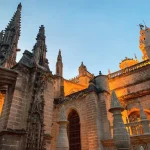
The city is built almost entirely from a warm golden limestone called piedra de Villamayor. At sunset, the entire old city glows amber. It sounds like marketing language until you actually see it — the cathedral towers, the university facade, the convent walls all burning the same deep honey colour in the late afternoon light. It is a genuinely striking thing, and no photograph quite captures the effect of being inside it.
Salamanca also has a functioning university that has been operating since 1218, making it one of the oldest in the world. The student population — around 26,000 — keeps the city young and energetic without making it feel like a resort. There are proper bars, independent bookshops, late-night cafés, and debate happening in the streets. It feels like a place with actual daily life, not a theme park preserved for visitors.
The Plaza Mayor and Old City — What to Actually See
Salamanca’s Plaza Mayor is widely considered the finest baroque square in Spain. Designed by Alberto Churriguera and completed in 1755, it is a closed rectangle of golden arcades, each one lined with medallion portraits of Spanish royalty and famous historical figures. Unlike Madrid’s Plaza Mayor, which now functions largely as a tourist trap, Salamanca’s version is still used by locals — you will see university students reading under the arches, older residents taking a slow coffee, and children running across the paving stones in the afternoon.
From the plaza, the old city fans out in every direction and almost everything worth seeing is within a 15-minute walk. Highlights to prioritise:
- The Old Cathedral (Catedral Vieja): Built in the 12th century, it is a smaller, darker, more intimate space than the New Cathedral next door. The Byzantine dome — called the Torre del Gallo — is one of Spain’s architectural oddities. The altarpiece inside contains 53 painted panels from the 15th century. Entry is around €6.
- The New Cathedral (Catedral Nueva): Construction began in 1513 and continued for centuries, which means the building mixes Gothic, Renaissance, and Baroque in an unexpected way. Look closely at the detailed stone carvings on the Ramos doorway — locals added an astronaut and a dragon eating an ice cream cone during 1990s restoration work. They are still there.
- Casa de las Conchas: A 15th-century palace covered in over 300 carved stone scallop shells. It now functions as a public library, which means you can walk inside for free. The interior courtyard is beautiful and almost always quiet.
- Convento de San Esteban: A Dominican convent with a remarkable Plateresque facade that took nearly 60 years to carve. Less visited than the cathedrals but arguably more impressive up close. Entry around €4.
- Huerto de Calixto y Melibea: A small garden perched on the city walls with views down to the Tormes river. Named after characters from the 15th-century novel La Celestina. Entry is free and it is often empty even in high season.
Give yourself a full day for the old city. The distances are short but the detail rewards slow walking. Stop often. Look up at the facades. Salamanca is a city best experienced at a pace most travellers do not allow themselves.
The University Quarter — More Than a Pretty Façade
The University of Salamanca’s main building faces a small square off Calle Libreros. The facade is one of the most celebrated pieces of Plateresque architecture in Spain — a dense, three-tiered wall of carved stone that took decades to complete in the early 16th century. Most visitors photograph it, find the famous hidden frog (carved on a skull on the right pillar — spotting it is said to bring good luck in exams), and move on. That is a mistake.
Buy a combined ticket (around €10 in 2026) and go inside. The historic lecture rooms are open to the public, including the Aula de Fray Luis de León, where the theologian and poet returned to teaching after five years in a Spanish Inquisition prison and reportedly began his first lecture with the words: “As we were saying yesterday…” The room is tiny, wood-panelled, and completely unchanged. Standing in it is a strange experience — the benches look like they might still be in use.
The university library is one of the most important medieval libraries in Europe. It holds over 2,800 manuscripts and incunabula (books printed before 1500). The reading room, with its carved wooden ceiling and vaulted ceiling decoration, is visible on the tour route.
The broader university quarter — the streets around Calle Libreros, Calle Serranos, and Calle Bordadores — functions as the intellectual heart of the city. Independent bookshops sit between student bars. There is a particular smell to this neighbourhood: old paper, coffee, and the faint chalky dust of the sandstone buildings warming in the sun. Walk it in the early evening when the students are heading out and the light is going golden.
Salamanca’s Food Scene — Where Locals Actually Eat
Salamanca’s food identity is rooted in Castilian tradition. This is not a city for avant-garde tasting menus. It is a city for roast suckling pig (cochinillo), slow-cooked lamb (cordero asado), bean stews from the nearby La Armuña region, and generous plates of air-cured Iberian pork products. If you eat meat, you will eat well here without trying very hard.
A few specific places worth knowing about:
- El Mesón de Gonzalo (near the Plaza Mayor): One of the older traditional restaurants in the centre. The roast lamb is cooked in a wood oven and comes out with crackling skin and soft interior. Lunch menú del día around €16–18.
- Taberna La Rayuela (Calle Prior): A smaller, noisier bar popular with locals. The tostas (open-faced sandwiches) are loaded and cheap. Order the one with Iberian ham and a soft-boiled egg. Beer costs €2–2.50.
- Mercado Central de Salamanca: The covered market on Plaza del Mercado has been partially renovated. Go in the morning for fresh produce, jamón, and cheese. Some stalls have added small tasting counters in recent years — a good way to sample regional products without committing to a full meal.
- Restaurante Victor Gutiérrez: The one exception to the traditional rule. This is a Michelin-starred restaurant run by a Peruvian-born chef who has lived in Salamanca for decades. The tasting menu runs to around €90–110 per person and blends Castilian ingredients with South American technique. Booking weeks ahead is essential.
For breakfast, find any bar that makes its own bocadillos (filled rolls) and order one with tortilla or jamón. Pair it with a café con leche. The university quarter has dozens of these bars charging €2–3 for a proper breakfast. Avoid anywhere near the Plaza Mayor that has a laminated English menu in the window — prices are inflated and quality drops.
Salamanca also produces its own wines under the Denominación de Origen Arribes, a small wine region in the far west of the province near the Portuguese border. The wines are not widely exported, which makes trying them here feel genuinely local. Ask for a glass of Arribes red with your lunch.
Day Trip or Overnight?
Salamanca is close enough to Madrid (roughly 2.5 hours by fast train) that many visitors treat it as a day trip. That works if your schedule demands it — you can see the Plaza Mayor, the university facade, and the cathedrals in a long day. But you will miss the best version of the city.
Salamanca at night is a different place. The golden stone picks up the artificial lighting and glows in a way the daylight does not fully replicate. The university students fill the bars in the old quarter from about 22:00 onward. The plaza is quieter but more atmospheric. If you eat dinner at a proper Castilian restaurant — a slow two-hour affair — you will understand why Spaniards rarely rush travel.
Recommendation: Stay at least one night, ideally two. One full day to cover the major sights at a thoughtful pace. A second day to explore the outer neighbourhoods, take a walk along the Tormes river, visit the Convento de San Esteban properly, and spend an evening eating and drinking without a train to catch. If you genuinely only have a day, arrive on a morning train and take the last departure back — but accept that you are getting the outline, not the full picture.
Salamanca also works well as a base for exploring the wider region. Ciudad Rodrigo, a walled medieval town with a well-preserved historic centre, is 90 kilometres to the southwest. Alba de Tormes, with its convent containing the tomb of Saint Teresa of Ávila, is 23 kilometres away by bus. Neither requires a car.
Getting to Salamanca in 2026
Salamanca does not have a high-speed AVE station, which surprises many visitors. The city is served by conventional Renfe intercity trains. From Madrid’s Chamartín station, trains take approximately 1 hour 45 minutes to 2 hours on the faster services, with tickets from around €15–30 each way depending on the booking window. Check the Renfe website directly — advance booking reduces prices significantly.
From other cities, the bus is often a better option. Avanza operates regular coach services from Madrid (Estación Sur), with a journey time of around 2.5 hours and fares often under €15 each way. The bus drops you at Salamanca’s bus station on Avenida Filiberto Villalobos, which is about a 20-minute walk or a short taxi ride from the old city.
From Valladolid (1.5 hours by train), Zamora (45 minutes by train), and Ávila (around 1.5 hours), Salamanca is easily connected. If you are building a Castile and León itinerary, Salamanca fits naturally as either a starting or ending point.
There is no commercial airport in Salamanca. The nearest is Valladolid Airport (with limited routes) or Madrid Barajas, making the train or bus from Madrid the standard approach for international arrivals. In 2026, Renfe has added a small number of additional peak-hour departures on the Madrid–Salamanca corridor following demand pressure — check the timetable as options have improved since 2024.
Getting Around Once You’re There
The old city is entirely walkable. Almost everything you will want to see is contained within a compact area that takes about 20 minutes to cross on foot. Flat shoes are helpful — the streets in the historic centre are cobbled and uneven in places.
Taxis are cheap by Spanish city standards. A ride from the train or bus station to the old city costs €5–8. There is a small urban bus network but visitors rarely need it unless heading to the newer parts of the city or outlying areas.
Cycling is possible — the city has improved its bike infrastructure in recent years — but the cobbled streets make it impractical in the historic core. Cycle hire is available if you want to explore the river paths along the Tormes.
The old city is best experienced on foot. Leave luggage at your hotel and spend your time walking slowly, stopping frequently, and resisting the urge to cover everything in a single loop. Salamanca rewards exploration more than efficiency.
2026 Budget Reality — What Salamanca Costs
Salamanca is notably cheaper than Spain’s main tourist cities. Prices have risen since 2024 in line with broader Spanish inflation, but the gap with Madrid and Barcelona remains significant. Here is a realistic breakdown for 2026:
Accommodation (per night, double room)
- Budget: €45–70 — Hostels and simple hostales (family-run guesthouses) in the old city. Clean, basic, well-located.
- Mid-range: €80–130 — Small boutique hotels and 3-star hotels within walking distance of the Plaza Mayor. Good quality for the price.
- Comfortable: €150–250 — The NH Palacio de Castellanos (a 15th-century palace converted to a hotel) and similar high-end properties. Full service, historic buildings.
Food and drink
- Budget: €10–15 per day — Breakfast at a local bar (€2–3), menú del día lunch (€12–14 for three courses with wine), evening tapas at a university-quarter bar.
- Mid-range: €30–50 per day — A proper sit-down lunch or dinner at a traditional restaurant, drinks included.
- Comfortable: €80–120 per day — Including one dinner at a quality restaurant and drinks freely.
Sightseeing
- Combined university ticket: approximately €10
- Old Cathedral entry: approximately €6
- New Cathedral: free entry (donations welcome)
- Convento de San Esteban: approximately €4
- Most city squares, streets, and viewpoints: free
A realistic two-day visit for two people — mid-range hotel, proper meals, all entry fees — comes to roughly €350–450 total. That is substantially less than the equivalent experience in Seville or Barcelona.
Practical Tips Before You Go
- Tourist tax: Salamanca introduced a modest tourist accommodation tax in 2025 — currently €1–2 per person per night depending on accommodation category. It is added to your hotel bill automatically.
- Language: English is spoken in tourist-facing businesses but less reliably in local bars and markets. A handful of basic Spanish phrases will go a long way. Locals genuinely appreciate the effort.
- Weather: Salamanca has an extreme continental climate. Summers reach 35–38°C with very low humidity — hot but dry. Winters are cold, sometimes below freezing, with clear skies. Spring and autumn are the most comfortable seasons. Pack layers in March and October — the temperature can swing dramatically between morning and afternoon.
- Siesta hours: Still observed seriously here. Many smaller shops close between 14:00 and 17:00. Plan sightseeing around this — it is actually a good time to be inside a cathedral or museum.
- Sunday: The Plaza Mayor market on Sunday mornings is worth building your schedule around if timing allows — local produce, artisan goods, and a lively atmosphere.
- Photography: The cathedrals are photogenic at any time, but the golden hour before sunset — particularly from the river bridge (Puente Romano) looking back toward the old city — is genuinely exceptional. Allow time for it.
Frequently Asked Questions
Is Salamanca worth visiting or is it just for students?
Salamanca is absolutely worth visiting as a traveller. The university gives the city energy and keeps prices honest, but the real draws — the architecture, the food, the relaxed pace — are there for everyone. The student atmosphere is actually part of what makes it feel more alive than a purely heritage-focused city.
How many days do you need in Salamanca?
Two days is the sweet spot. One day covers the major sights at a comfortable pace: the Plaza Mayor, the university, both cathedrals, and the Casa de las Conchas. A second day allows for slower exploration, a proper Castilian lunch, and the river walk. One day works as a minimum but leaves you with a sense of unfinished business.
Is Salamanca easy to visit without a car?
Yes. The train and bus connections from Madrid are straightforward and reliable. Once in Salamanca, the old city is entirely walkable. You do not need a car for the main sights. A car becomes useful only if you want to explore the surrounding countryside or smaller villages in the province.
What is the best time of year to visit Salamanca?
April to June and September to November offer the best combination of comfortable temperatures, good light, and an active student population. July and August are hot and quieter — not unpleasant, but different. The Semana Santa (Holy Week) celebrations in March or April are notable, though the city gets busier during this period.
How does Salamanca compare to other Spanish university cities like Granada or Santiago de Compostela?
Each has a distinct character. Granada has the Alhambra and a stronger Moorish influence. Santiago de Compostela is shaped by pilgrimage culture. Salamanca is the most purely academic of the three — its identity is built around the university in a more complete way. The architecture is arguably the finest, and the city’s scale makes it easier to feel at home quickly.
📷 Featured image by KOBU Agency on Unsplash.