💰 Click here to see Spain Budget Breakdown
💰 Prices updated: November, 2026. Budget figures are estimates — always verify before travel.
Exchange Rate: $1 USD = €0.89
Daily Budget (per person)
Shoestring: €50.00 – €70.00 ($56.18 – $78.65)
Mid-range: €130.00 – €180.00 ($146.07 – $202.25)
Comfortable: €200.00 – €350.00 ($224.72 – $393.26)
Accommodation (per night)
Hostel/guesthouse: €15.00 – €50.00 ($16.85 – $56.18)
Mid-range hotel: €70.00 – €130.00 ($78.65 – $146.07)
Food (per meal)
Budget meal: €7.00 ($7.87)
Mid-range meal: €25.00 ($28.09)
Upscale meal: €80.00 ($89.89)
Transport
Single metro/bus trip: €1.50 ($1.69)
Monthly transport pass: €60.00 ($67.42)
By 2026, the big Spanish favourites are crowded, and prices in Barcelona, Seville and Málaga keep climbing. Many travellers now want the same sun, tapas and history without the queues. Murcia, in Spain‘s southeast, delivers that. It is a real working city with a baroque cathedral, an orchard-fed food culture and a coastline within an hour’s drive, and you can still get a table without booking three weeks ahead.
Why Murcia Feels Different
Murcia sits on the Segura river in a flat green valley called the huerta, often nicknamed “Europe’s orchard”. Lemons, artichokes, tomatoes and peppers grow right up to the edge of town, so the food is fresh and cheap. About 470,000 people live in the city, and you notice it in the evenings, when families fill the squares and the pace is relaxed.
This is not a city built around tourists. Locals still outnumber visitors in every bar, and prices reflect that. Murcia also has around 300 days of sunshine a year and a long Moorish and Roman past, which shows in the street layout, the irrigation channels and the food.
What to See in Murcia City
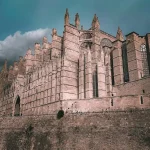
Start at Plaza del Cardenal Belluga, where the cathedral’s curved baroque façade faces the town hall. The bell tower, about 90 m high, can be climbed by ramps and a few steps, and the view across the terracotta rooftops to the mountains is worth the effort. Sunday-morning bells carry across the whole old town.
A few minutes away is the Real Casino de Murcia, a 19th-century social club with a Moorish-style patio, a ballroom and a grand library. Entry is usually around €5. The Museo Salzillo houses the carved Holy Week figures of Francisco Salzillo, an 18th-century sculptor whose work is still carried through the streets every Easter. Tickets cost about €6.
Finish with a slow walk along Calle Trapería and Calle Platería, the old shopping streets, and the riverside promenade. You can see everything important in one full day, on foot.
What to Eat in Murcia and Where
Murcia’s cooking is built on vegetables, and many dishes are cheap. Order these:
- Zarangollo: courgette, onion and egg, scrambled soft in olive oil.
- Marinera: a ring of bread topped with Russian salad and an anchovy. Murcia’s classic tapa.
- Michirones: a salty broad-bean stew with cured ham.
- Caldero: rice cooked in fish stock, a Mar Menor speciality, best eaten on the coast.
- Paparajotes: lemon leaves dipped in sweet batter, fried and dusted with sugar and cinnamon. Eat the batter, not the leaf.
For tapas, head to the bars around Plaza de las Flores and the streets near Santa Catalina. Terraces fill by 9 p.m., and in spring the air smells of orange blossom and frying oil. The Mercado de Verónicas is the place to see the local produce. For wine, ask for a glass of Monastrell from the Jumilla, Yecla or Bullas regions. All three are within about 100 km of the city.
Beyond the City: Cartagena, the Coast and the Mountains
Cartagena, about 50 km away, is the region’s highlight. Its Roman Theatre was rediscovered in the 1980s and now sits behind a museum you walk through to reach the stage. Tickets cost around €7. The port also has a naval history, a Spanish Civil War shelter and good seafood. Cartagena has been joined more closely to the high-speed network in recent years, which makes it easier to reach.
The coast is varied. Calblanque Regional Park has wild beaches with no hotels. Cabo de Palos is popular for diving near the Islas Hormigas marine reserve. The Mar Menor, Europe’s largest saltwater lagoon at about 135 km², is shallow and warm, but it has suffered from pollution. Spain gave it legal personhood in 2022. Check local beach notices before you swim.
Inland, Lorca has a hilltop fortress and a famously embroidered Holy Week. Sierra Espuña offers pine-forest hiking, and in February the peach blossom around Cieza turns whole valleys pink.
Getting to Murcia in 2026
By train: The AVE from Madrid takes around three hours, with advance fares from roughly €25 to €70 depending on the day. Regional trains run from Alicante in about an hour. Murcia’s station is Murcia del Carmen, a short walk or short bus ride from the centre. Check whether Iryo or Ouigo serve your route, as competition on Spanish high-speed lines has kept some fares lower since 2024.
By air: Región de Murcia International Airport (RMU, at Corvera) opened in 2019 and has direct flights from the UK and parts of Europe. It is about 30 km from the city. A taxi costs roughly €35 to €45, and buses run to the centre. Alicante airport, about 80 km away, has far more routes and is a good backup.

By bus: ALSA runs frequent coaches from Alicante, Valencia, Granada and Almería. They are slower than the train but often cheaper.
Getting Around
Murcia’s old centre is flat and compact, so you will walk almost everywhere. City buses cost about €1.40 a ride if you need them. For the region, trains link Murcia with Cartagena for under €10, and buses reach Lorca and coastal towns. A rental car, though, makes Calblanque, Sierra Espuña and the wine villages far easier. Expect to pay about €30 to €55 a day in 2026, more in July and August.
Day Trip or Overnight?
It depends where you start. From Alicante, a day trip works well: an hour each way, a morning in the cathedral area and a long tapas lunch. From Madrid, a day trip is possible but means six hours on trains, so stay at least one night.
For the full experience, give Murcia three nights: one day in the city, one in Cartagena and the coast, and one in the mountains or wine country. If you only have two nights, split them between Murcia and Cartagena.
2026 Budget Reality
Murcia costs noticeably less than Spain’s top cities. Typical daily prices for 2026:
- Budget: hostel bed or simple hostal €45–70 for a double; menú del día €12–15; tapas and drinks €10–15. Around €60–90 per person per day.
- Mid-range: three- or four-star hotel €75–120; dinner with wine €25–35; a few paid sights. Around €110–160 per person per day.
- Comfortable: boutique or five-star hotel €130–220; tasting menus from €50; rental car and winery visits. Around €200–300 per person per day.
Murcia region does not charge a tourist tax, unlike Catalonia or the Balearic Islands, but check before you book, as local rules can change.
When to Go and Local Tips
The best months are March to May and October to November, when daytime highs sit around 22–28°C. July and August regularly pass 38°C in the city, so do your sightseeing before noon. Winters are mild, with highs near 17°C.
Two festivals stand out. Semana Santa brings Salzillo’s figures into the streets, and the creak of heavy floats and the beat of drums echo off the old walls. The Bando de la Huerta and the Entierro de la Sardina follow in the week after Easter, and the whole city celebrates in traditional costume.
Frequently Asked Questions
Is Murcia worth visiting?
Yes. Murcia offers a baroque cathedral, strong regional food, mild weather for most of the year and low prices compared with Spain’s top destinations. It also gives easy access to Cartagena, Roman ruins, wine country and beaches, so it works well as a base for three or four days.
How many days do you need in Murcia?
One full day covers the city’s main sights, but three nights is ideal. That gives you time for Murcia, a day in Cartagena and the coast, and a day in the mountains or wine villages. Two nights is enough if you focus on the city and Cartagena only.
How far is Murcia from the beach?
Murcia city is inland, but the coast is close. Mar Menor beaches are about 45 to 60 km away, and Cabo de Palos and Calblanque are around an hour’s drive. Cartagena, with beaches nearby, takes about 50 minutes by car or under an hour by regional train.
How do you get from Madrid to Murcia?
The AVE high-speed train is the easiest option, taking around three hours. Advance tickets start around €25 and rise closer to departure. Buses are cheaper but take longer, and driving the roughly 400 km takes about four hours. Most visitors choose the train for comfort and speed.
What is Murcia famous for?
Murcia is known for its huerta farmland, its baroque cathedral, Salzillo’s Holy Week sculptures and dishes like zarangollo, marinera and paparajotes. The region also produces Monastrell wines and has the Mar Menor lagoon, Roman Cartagena and over 300 days of sunshine a year.
📷 Featured image by Christian Hergesell on Unsplash.