On this page
- The Seven Islands at a Glance
- Sun, Crowds, and Trade-Offs: Tenerife vs Gran Canaria
- Lanzarote and Fuerteventura: Volcano Rock vs Wind and Sand
- The Quiet Three: La Palma, La Gomera, El Hierro
- Which Island Suits Your Travel Style?
- Getting to the Canary Islands in 2026
- Island-Hopping: How to Connect Them Realistically
- 2026 Budget Reality
- Food Across the Islands: What to Eat and Where
- Day Trip or Overnight?
- Frequently Asked Questions
💰 Click here to see Spain Budget Breakdown
💰 Prices updated: October, 2026. Budget figures are estimates — always verify before travel.
Exchange Rate: $1 USD = €0.88
Daily Budget (per person)
Shoestring: €60.00 – €90.00 ($68.18 – $102.27)
Mid-range: €120.00 – €180.00 ($136.36 – $204.55)
Comfortable: €220.00 – €470.00 ($250.00 – $534.09)
Accommodation (per night)
Hostel/guesthouse: €15.00 – €50.00 ($17.05 – $56.82)
Mid-range hotel: €70.00 – €130.00 ($79.55 – $147.73)
Food (per meal)
Budget meal: €7.00 ($7.95)
Mid-range meal: €25.00 ($28.41)
Upscale meal: €80.00 ($90.91)
Transport
Single metro/bus trip: €3.00 ($3.41)
Monthly transport pass: €24.00 ($27.27)
Choosing a Canary Island used to feel straightforward. In 2026, it feels overwhelming. The archipelago now draws over 16 million visitors a year, several islands have introduced or increased tourist taxes, and the debate about overtourism — particularly in Tenerife and Gran Canaria — has changed how locals receive visitors and how the islands manage access to natural spaces. Some hiking trails in Teide National Park now require advance permits that book out weeks ahead. La Palma, still rebuilding its tourism identity after the 2021 Tajogaite volcanic eruption, has emerged as a genuinely compelling alternative. If you are trying to work out which island actually fits your trip, this guide cuts through the noise.
The Seven Islands at a Glance
There are seven main inhabited islands in the Canary Islands. Each one has a distinct personality, climate, and crowd level. Here is the short version:
- Tenerife — The biggest and busiest. Mount Teide, two distinct coastlines, a genuine city in Santa Cruz, and the most flight connections from anywhere in Europe.
- Gran Canaria — Called a “continent in miniature” for good reason. Desert dunes in the south, green mountains in the centre, a buzzing capital in Las Palmas.
- Lanzarote — Volcanic moonscape. Black lava fields, white cubic architecture, and a strong artistic identity shaped by César Manrique. Very little natural shade.
- Fuerteventura — The wind island. Long white beaches, world-class kitesurfing, and a relaxed pace that suits people who want nothing but sea and sun.
- La Palma — The green island. Dense laurisilva forest, dramatic cliffs, and some of the clearest skies in the world for stargazing. Still quietly rebuilding post-eruption.
- La Gomera — Small, rugged, and surprisingly wild. A UNESCO-listed forest and a traditional whistle language called Silbo Gomero that locals still use across the valleys.
- El Hierro — The smallest and least visited. A UNESCO Biosphere Reserve with zero mass tourism infrastructure. For people who genuinely want to be left alone by the travel industry.
Sun, Crowds, and Trade-Offs: Tenerife vs Gran Canaria
These two islands handle the bulk of Canary Islands tourism, and the comparison matters because they are not interchangeable.
Tenerife splits into two very different worlds. The north is cooler, greener, and more culturally interesting — towns like La Orotava and Garachico have cobbled streets, historic churches, and restaurants where you sit next to local families rather than tour groups. The south, anchored by Playa de las Américas and Los Cristianos, is the mass-market resort zone: warm, reliable, relentlessly commercial. The beach of El Médano in the southeast is a better middle ground — a real Canarian town with consistent wind, popular with windsurfers and people who want a beach without the full resort experience.
Standing at the base of Mount Teide on a clear morning, the silence is almost physical. The volcano rises to 3,715 metres above sea level — the highest point in Spain — and the landscape around it looks genuinely extraterrestrial. The orange and ochre rock fields stretch in every direction under a sky that turns from pale blue at sea level to a deep violet at the summit. Getting to the top by cable car requires booking the upper section permit weeks in advance in 2026, sometimes months in peak season.
Gran Canaria rewards people willing to get off the coast. The Roque Nublo, a volcanic monolith at 1,813 metres in the central highlands, is reached by a short walk from a car park and gives views across the whole island. The dunes of Maspalomas in the south are spectacular — rolling sand dunes abutting the Atlantic — but the resort strip around them has expanded considerably. Las Palmas, the capital, is a genuine city of 380,000 people. The Vegueta old town has some of the best colonial architecture in the Atlantic, and the food scene here is better than anything in the southern resorts.
Lanzarote and Fuerteventura: Volcano Rock vs Wind and Sand
Both islands sit closest to the African coast — Fuerteventura is just 97 kilometres from Morocco — and both feel drier and more North African than the western islands. But they deliver completely different experiences.
Lanzarote is the most architecturally coherent island in the archipelago. César Manrique, the local artist and architect who died in 1992, essentially designed the island’s visual identity: building codes he championed still prohibit high-rises and mandate white buildings with green or dark-wood window details. The result is an island that feels considered. Timanfaya National Park, a vast lava field from eruptions in the 1730s, allows access only by guided bus — no independent hiking — which preserves the landscape but limits the experience. The geothermal heat under the surface is still strong enough that park staff cook food over a natural ground vent, which you can watch from a short distance away. The smell of warm volcanic earth mixed with Atlantic salt air follows you around the park all day.
Fuerteventura is flatter, windier, and less visually dramatic but has the best beaches in the archipelago. Sotavento beach in the south stretches for kilometres of pale sand and turquoise shallow water. Corralejo in the north has excellent nightlife by Canarian standards, and the natural park there protects extensive dunes that push right into the town’s edge. Fuerteventura is the right island if your priority is beach time, water sports, and low stress. It is not the island for culture, food, or dramatic scenery.
The Quiet Three: La Palma, La Gomera, El Hierro
These western islands share one quality the eastern islands cannot offer: genuine quiet. They receive a fraction of the visitor numbers, infrastructure is simpler, and nature is the main event.
La Palma has recovered more than most people realise from the 2021 eruption. The lava flow destroyed around 3,000 homes in the south of the island and created a new lava delta on the coast. That delta is now accessible via a marked trail and has become — unexpectedly — one of the most striking landscapes in the entire archipelago. New black rock meeting turquoise sea, entirely raw and geologically recent. The rest of the island is unaffected and as beautiful as ever: the Caldera de Taburiente, a massive volcanic crater, has trails running through ancient laurel forests where the light filters green and the air is cool even in summer. La Palma also holds a UNESCO Starlight Reserve designation. On a clear night, away from the few small towns, the Milky Way is visible as a literal band of light across the sky.
La Gomera is reachable by ferry from Los Cristianos in Tenerife in around 40 minutes. The Garajonay National Park covers a third of the island and is one of the best-preserved laurisilva forests in the world — a type of subtropical forest that once covered much of southern Europe before the Ice Age. Walking through it on a misty morning, with the tree ferns dripping and the path soft underfoot, is one of the genuinely unique natural experiences in Spain. The island’s capital, San Sebastián de La Gomera, is small and unhurried. Christopher Columbus stopped here in 1492 before crossing the Atlantic — a detail that the town notes with quiet pride.
El Hierro is for serious solitude seekers. It became the first island in the world to run entirely on renewable energy in 2013, and it remains a low-impact destination by design. Diving around the Mar de las Calmas on the south coast, where the water is unusually calm and visibility can exceed 30 metres, is the main draw for active visitors. There are no large hotels. Accommodation is mostly rural casas and small guesthouses. This is not a gap year party island — it is an island for people who want to reset.
Which Island Suits Your Travel Style?
Every island works for someone. Here is a direct match by what kind of traveller you are:
- First-time visitor to the Canaries: Tenerife. Most flight options, most variety, and you can move between very different environments within a single island.
- Beach holiday, nothing else: Fuerteventura for long white beaches, or Gran Canaria’s south coast for more facilities alongside the sand.
- Hiking and nature: La Palma or La Gomera. Both have serious trail networks and landscapes that reward slow exploration on foot.
- Culture and food: Gran Canaria, specifically Las Palmas. The city has genuine museums, architecture, a working port culture, and restaurants that cook for residents rather than tourists.
- Photography and visual drama: Lanzarote for the volcanic architecture and Manrique legacy, or La Palma for the contrast between ancient forest and new lava.
- Complete switch-off: El Hierro. No argument.
- Water sports: Fuerteventura for kite and wind, El Hierro for diving, Tenerife’s El Médano for windsurfing.
- Families with young children: Tenerife south or Gran Canaria south — calm water, reliable warmth, resort facilities designed for exactly this.
Getting to the Canary Islands in 2026
All seven inhabited islands have airports. Tenerife has two — Tenerife Norte (TFN), which handles mostly inter-island and domestic Spanish flights, and Tenerife Sur (TFS), which handles the mass of international arrivals. Gran Canaria (LPA) and Lanzarote (ACE) have strong direct connections from across northern Europe. Fuerteventura (FUE) has expanded its routes from the UK and Germany significantly since 2024.
La Palma (SPC), La Gomera (GMZ), and El Hierro (VDE) receive fewer direct international flights. La Gomera’s airport handles limited scheduled services; most visitors fly into Tenerife Sur and take the Fred Olsen or Naviera Armas ferry from Los Cristianos. El Hierro is most commonly reached via a connection through Gran Canaria or Tenerife Norte on Binter Canarias, the main inter-island airline.
In 2026, Binter Canarias has expanded its electric and hybrid regional aircraft fleet, reducing both ticket prices and emissions on inter-island hops. A same-day connection from any major European hub to El Hierro — flying via Las Palmas — is now realistic without an overnight stop in Gran Canaria.
There are no high-speed rail connections to the Canary Islands. The islands are part of Spain but sit off the northwest coast of Africa, roughly 1,700 kilometres from the Spanish mainland. Flying is the only practical way in from Europe.
Island-Hopping: How to Connect Them Realistically
The most practical island-hopping circuit for a two-week trip is Tenerife + La Gomera, or Gran Canaria + Lanzarote. Both pairings have easy ferry or flight connections and offer genuine contrast without excessive travel time.
Fred Olsen Express and Naviera Armas operate most ferry routes between the eastern and central islands. The Tenerife Sur to La Gomera crossing takes about 40 minutes on the fast ferry. Gran Canaria to Lanzarote or Fuerteventura takes roughly two to three hours. Booking in advance during July and August is essential — the ferries fill with local families on holiday.
Trying to visit all seven islands in two weeks is possible but leaves you spending more time in transit than on the islands. Three islands is a more honest maximum for a 14-day trip if you want to actually settle in somewhere.
2026 Budget Reality
Costs across the Canaries are lower than mainland Spain on average, but the gap has narrowed. The tourist tax, introduced or increased across several islands in 2025–2026, adds a small per-night charge that varies by island and accommodation category.
Accommodation (per room per night)
- Budget — Hostel dorm or basic guesthouse: €20–€40. Most available in Las Palmas, Santa Cruz de Tenerife, and Arrecife (Lanzarote).
- Mid-range — 3-star hotel or apartment rental: €70–€130. Consistent across most islands outside the peak package-tour resorts.
- Comfortable — 4-star hotel or rural casa with sea view: €140–€250. La Palma and El Hierro tend to be cheaper at this tier than Tenerife south.
Daily food and transport costs
- Budget — Eating at local menú del día (lunch), cooking breakfast and dinner: €25–€40 per person per day.
- Mid-range — Eating out twice daily at non-resort restaurants: €55–€80 per person per day including local transport.
- Comfortable — Dining at good local restaurants, hiring a car: €100–€150 per person per day.
Hiring a car is strongly recommended on Tenerife, Gran Canaria, La Palma, and Lanzarote. Public bus networks (TITSA on Tenerife, Global on Gran Canaria) are functional but slow for reaching remote spots. On La Gomera and El Hierro, a car is essentially mandatory unless you are based in one place for your entire stay.
Food Across the Islands: What to Eat and Where
Canarian food has a stronger identity than most visitors expect. The staple is papas arrugadas — small wrinkled potatoes boiled in heavily salted water, served with mojo sauces. The red mojo (mojo rojo) is made from dried chillies, garlic, and cumin; the green (mojo verde) uses coriander or parsley and is cleaner and brighter on the palate. Both are spooned generously at the table and the smell of them — warm garlic and earthy pepper — comes out of every kitchen on every island.
In Las Palmas, the Mercado del Puerto is the right place to eat fresh seafood at lunch. Stalls inside do grilled fish at market prices, and the noise of the fish market behind it gives the whole space an energy that the resort restaurants cannot replicate. In Santa Cruz de Tenerife, the Mercado de Nuestra Señora de África is one of the best food markets in the archipelago — produce, cheese, and prepared food from the whole island in one building.
Gofio — a flour made from toasted grain — appears across the islands in soups, desserts, and bread. On La Gomera, it is used more widely than anywhere else and local restaurants will serve it in ways that go well beyond the token jar on a tourist restaurant table. Canarian cheeses, particularly the smoked goat cheese from Gran Canaria, are excellent and drastically underpriced compared to similar quality cheeses in mainland Spain.
Day Trip or Overnight?
Several islands work well as day trips from the main bases, though overnight stays always give a truer picture.
La Gomera from Tenerife is the classic day trip — 40 minutes by fast ferry, a bus up to Garajonay for a forest walk, lunch in San Sebastián, ferry back by evening. It works logistically but the island deserves more time. Two nights lets you walk deeper trails and see it in the morning mist rather than the midday tourist rush.
Lanzarote from Fuerteventura is possible as a day trip by ferry (around 35 minutes from Corralejo to Playa Blanca) but the island is large enough that a single day leaves most of it unseen. Timanfaya, the Jameos del Agua cave system, and the Manrique Foundation in Tahíche each take half a day.
El Hierro does not work as a day trip. The island’s character only appears after you’ve slept there at least once, when the quiet stops feeling like absence and starts feeling deliberate.
La Palma is reachable as a long day trip from Tenerife by air but the journey eats most of the day. Two nights minimum makes sense, four nights if you want to walk the Caldera de Taburiente properly.
Frequently Asked Questions
Which Canary Island has the best weather year-round?
Tenerife and Gran Canaria have the most consistent weather, with average temperatures between 20°C in winter and 28°C in summer. The south coasts of both islands receive the most sunshine. Lanzarote and Fuerteventura are slightly warmer and drier but significantly windier, which can affect beach comfort in spring.
Is it safe to visit La Palma after the 2021 volcanic eruption?
Yes. The eruption ended in December 2021 and there has been no volcanic activity since. The affected zone in the south of the island is accessible via marked trails. The rest of La Palma — the Caldera de Taburiente, the north coast, the capital Santa Cruz de La Palma — was entirely unaffected and operates normally.
Do I need a visa to visit the Canary Islands?
The Canary Islands are part of Spain and the European Union, so standard EU/Schengen entry rules apply. Citizens of most Western countries do not need a visa for stays under 90 days. The ETIAS electronic travel authorisation system, which became mandatory for non-EU visitors in 2025, applies here just as it does for mainland Spain.
Which Canary Island is the cheapest to visit?
El Hierro and La Gomera tend to have the lowest accommodation and food prices due to limited tourism infrastructure and fewer visitors. La Palma is similarly affordable. The southern resort areas of Tenerife and Gran Canaria can be surprisingly expensive due to resort pricing, though budget package deals remain available from northern European departure points.
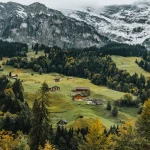
📷 Featured image by Antoine Schibler on Unsplash.