On this page
- Why Your Neighborhood Choice Defines Your Valencia Trip
- El Carmen – The Historic Heart for Culture Seekers
- Russafa – The Creative Hub for Foodies and Night Owls
- The City of Arts and Sciences Area – Modern Valencia for Design Lovers
- Malvarrosa & Cabanyal – Beach-Side Living on Valencia’s Coast
- Ciutat Vella Beyond El Carmen – Quieter Old Town Corners
- L’Eixample – The Upscale Middle Ground
- Best Budget Hotels and Hostels in Valencia (2026)
- Best Mid-Range Hotels in Valencia (2026)
- Best Luxury Hotels in Valencia (2026)
- Accommodation Price Breakdown by Tier
- Practical Tips for Booking in Valencia in 2026
- Frequently Asked Questions
💰 Click here to see Spain Budget Breakdown
💰 Prices updated: October, 2026. Budget figures are estimates — always verify before travel.
Exchange Rate: $1 USD = €0.88
Daily Budget (per person)
Shoestring: €60.00 – €90.00 ($68.18 – $102.27)
Mid-range: €120.00 – €180.00 ($136.36 – $204.55)
Comfortable: €220.00 – €470.00 ($250.00 – $534.09)
Accommodation (per night)
Hostel/guesthouse: €15.00 – €50.00 ($17.05 – $56.82)
Mid-range hotel: €70.00 – €130.00 ($79.55 – $147.73)
Food (per meal)
Budget meal: €7.00 ($7.95)
Mid-range meal: €25.00 ($28.41)
Upscale meal: €80.00 ($90.91)
Transport
Single metro/bus trip: €3.00 ($3.41)
Monthly transport pass: €24.00 ($27.27)
Valencia’s accommodation scene shifted noticeably in 2026. The city introduced a revised tourist tax in January, short-term rental regulations tightened across several districts, and new hotel inventory opened near the Cabanyal waterfront following years of urban regeneration. What this means for you: prices are higher in peak months than they were two years ago, some Airbnb options that existed in 2024 have disappeared, and choosing the wrong neighborhood can cost you 20 minutes of walking or a taxi every time you want to eat, drink, or sightsee. This guide cuts through that noise and tells you exactly where to stay based on how you actually want to spend your time.
Why Your Neighborhood Choice Defines Your Valencia Trip
Valencia is a medium-sized city that feels walkable until it doesn’t. The historic center, the beach, the City of Arts and Sciences, and the Turia Gardens are all genuinely different zones — and they’re spread out enough that staying in the wrong one will add friction to every single day. A family wanting beach mornings and museum afternoons needs a different base than a couple chasing tapas bars and live music until 2am. A digital nomad on a three-week stay needs something else entirely.
The city also has a real local personality. Valencians eat late, take their Sunday market culture seriously, and are quietly proud that their city doesn’t try to be Barcelona. That attitude filters into the neighborhoods. Each one has a distinct character — not a tourist board character, but an actual one — and understanding that before you book makes the difference between a good trip and a great one.
El Carmen – The Historic Heart for Culture Seekers
El Carmen is Valencia’s oldest barrio, a tight grid of medieval streets tucked inside what used to be the city walls. Walking through it at dusk, when the stone buildings catch the last of the light and the smell of garlic drifts from a dozen restaurant kitchens, you understand immediately why it’s the most requested area for first-time visitors.
The neighborhood sits at the northern end of Ciutat Vella and borders the Torres de Serranos — one of the original city gates — to the north and the Torres de Quart to the west. You’re within ten minutes on foot of the Cathedral, the Mercado Central, and the IVAM contemporary art museum. Nightlife arrives late and loudly on weekends, with bar terraces filling from 11pm onward.
Best for: First-timers, culture-focused travelers, couples, and anyone who wants to walk to the main sights without planning.

Watch out for: Noise. Streets near Calle Alta and Plaza del Tossal can be genuinely loud on Friday and Saturday nights. Ask for a room facing a courtyard if you’re a light sleeper.
- Walking distance to the Cathedral, Mercado Central, IVAM, and Torres de Serranos
- Dense concentration of tapas bars and wine bars
- Narrow streets — no car access in most of the quarter
- Excellent metro access at Àngel Guimerà or Turia stations
Russafa – The Creative Hub for Foodies and Night Owls
Russafa (spelled Ruzafa in Castilian) is the neighborhood that locals recommend when visitors ask where Valencians actually go. It sits just south of the old town and Gran Via, and over the past decade it has transformed from a working-class immigrant district into one of the most compelling neighborhoods in Spain — without losing its edge in the process.
The streets around Calle Dénia, Calle Sueca, and Calle Cuba are packed with independent restaurants, specialty coffee shops, natural wine bars, and vintage boutiques. On Saturday mornings the energy is particularly good: the sound of coffee grinders and conversations mixing in the warm air, market stalls selling ceramics and local produce along the side streets.
Best for: Food lovers, couples, solo travelers, digital nomads, repeat visitors who want something beyond the postcard version of Valencia.
Watch out for: Russafa’s popularity means accommodation prices have climbed. Budget options are limited here — it’s primarily a mid-range to comfortable-tier area now.
- Best restaurant density of any Valencia neighborhood
- 15-minute walk to the City of Arts and Sciences
- Good nightlife that runs late without the tourist-bar atmosphere of El Carmen
- Xàtiva metro station connects quickly to the train station and city center
The City of Arts and Sciences Area – Modern Valencia for Design Lovers
The cluster of hotels around the Palau de les Arts Reina Sofía and the Oceanogràfic sits in a different emotional register from the rest of the city. This is Valencia’s architectural showpiece — Santiago Calatrava’s futuristic complex stretched along the old Turia riverbed — and staying here puts you inside that visual drama every morning when you step outside.

It’s not a neighborhood in the traditional sense. There are no corner stores or local bars. But for families with children (the Oceanogràfic and the interactive science museum are here), for architecture enthusiasts, or for travelers attending events at the Palau de les Arts, it’s an entirely logical base. The Turia Gardens running north connect you to the city center by bike in about 20 minutes.
Best for: Families, architecture enthusiasts, event attendees, travelers who prioritize space and modern amenities over neighborhood character.
Watch out for: You’ll need wheels — bike rental, metro, or taxi — to reach the historic center regularly. It’s not a walkable-to-everything location.
Malvarrosa & Cabanyal – Beach-Side Living on Valencia’s Coast
If your trip is built around beach time, staying in Malvarrosa or the adjacent Cabanyal neighborhood eliminates the daily metro commute that central-hotel guests face. The beach itself is wide, well-maintained, and genuinely pleasant outside the peak July–August crush — and in 2026, the ongoing regeneration of Cabanyal has added several new accommodation options along the streets closest to the waterfront.
Cabanyal has its own distinct identity: a former fishing village with a grid of colorful tiled houses, a local market, and a growing restaurant scene that’s increasingly interesting without being overrun. The contrast between a morning swim and an afternoon walking through Cabanyal’s backstreets is one of Valencia’s quietly great pleasures.
Best for: Beach-focused travelers, families in summer, anyone staying more than five days who wants coastal living without losing city access.
Watch out for: The tram connection (Line 4 and Line 6) to the city center runs regularly but takes about 25–30 minutes to reach the old town. Factor that into your daily rhythm.
- Direct beach access — no commute
- Cabanyal market for fresh produce and local breakfast culture
- Paella restaurants along Malvarrosa seafront (this is the traditional location)
- Tram Line 4/6 to city center; cycling along the beach path is also possible
Ciutat Vella Beyond El Carmen – Quieter Old Town Corners
Ciutat Vella (the Old City) contains several sub-districts besides El Carmen, and they suit travelers who want historic surroundings without the weekend noise. The area around the Cathedral and Mercado Central — sometimes called La Seu or El Mercat — is slightly more composed during evenings. Streets like Calle del Mar and the blocks around the Llotja de la Seda (the stunning 15th-century silk exchange) offer hotels in genuinely beautiful historic buildings.

The Sant Francesc area, just south of the Cathedral toward the Town Hall square (Plaza del Ayuntamiento), has good transport links and a slightly more business-traveler feel. It’s clean, central, and efficient — good for short stays where you want maximum sightseeing convenience without being in the thick of El Carmen’s social scene.
Best for: Couples seeking romance, short-stay visitors, business travelers, those sensitive to noise who still want a central location.
L’Eixample – The Upscale Middle Ground
Valencia’s Eixample (the grid-planned expansion district built in the late 19th and early 20th centuries) runs south of Gran Via and north of Russafa. It lacks the medieval atmosphere of Ciutat Vella and the creative buzz of Russafa, but it compensates with wide tree-lined boulevards, excellent transport connections, and the city’s most consistent concentration of mid-range and upscale hotels.
The area around Colón metro station and the Mercado de Colón — a beautiful modernist market building converted into an upscale food and drink hall — anchors the upper end of the Eixample. It’s a genuinely pleasant place to stay: quieter than the old town at night, with good restaurants, designer shops on Calle Jorge Juan, and easy metro access everywhere.
Best for: Business travelers, couples who want elegance without historic-center prices, travelers who prioritize a quiet night’s sleep.
- Colón metro station — central hub connecting all metro lines
- Mercado de Colón for breakfast and evening drinks
- Calle Jorge Juan for upscale shopping and dining
- Quieter at night than El Carmen or Russafa
Best Budget Hotels and Hostels in Valencia (2026)
Valencia’s budget accommodation scene is healthier than Barcelona’s or Madrid’s at the same price point. You can find a clean, well-located bed without the grim compromises that budget travel forces in other Spanish cities.
What to expect at the budget tier in 2026
Dorm beds in quality hostels in El Carmen and Russafa run €22–€35 per night. Private rooms in budget hostels and guesthouses (pensiones) typically fall between €55–€85 for a double. The best budget options are concentrated in El Carmen and the streets just south of the train station near Xàtiva.
- El Carmen area: Several well-reviewed hostels along Calle Bolsería and nearby streets — social atmosphere, central location, some noise on weekends
- Near Estació del Nord (train station): A cluster of pensiones and budget hotels — less atmosphere but excellent transport connections and fair prices
- Russafa: Limited true budget options, but worth checking for deals mid-week or in shoulder season

Best Mid-Range Hotels in Valencia (2026)
The mid-range bracket is where Valencia genuinely shines. The city has a strong supply of boutique hotels — often in restored historic buildings — that offer real character at prices that would buy you something generic in Madrid.
What to expect at the mid-range tier in 2026
Mid-range doubles run €100–€175 per night in shoulder season (March–May, October–November) and €150–€220 during peak periods including Las Fallas (March) and summer. For this price you can access hotels with rooftop terraces, design interiors, and good breakfast options.
- El Carmen boutiques: Several small hotels in converted palaces — exposed stone, wooden beams, courtyard layouts
- Russafa boutiques: The new wave of small hotels opened 2024–2026 on quieter residential streets, generally excellent value
- L’Eixample: Good concentration of three and four-star business-friendly hotels with reliable quality
- Cabanyal waterfront: New-build boutique properties opened as part of the regeneration project — modern design, beach access
Best Luxury Hotels in Valencia (2026)
Valencia is not Madrid or Barcelona in terms of five-star hotel density, but the luxury options that exist are genuinely impressive — and less crowded than equivalent properties in those cities.
What to expect at the luxury tier in 2026
Luxury doubles start at €220 per night and rise to €400–€600+ during Las Fallas and July–August peak season. The top properties are clustered in the Eixample (particularly around Colón and Alameda), in restored Ciutat Vella palaces, and along the Malvarrosa beachfront.
- Eixample / Alameda area: Large four and five-star properties with full spa facilities, restaurants, and rooftop pools — the most consistent luxury experience
- Ciutat Vella palaces: Smaller, more atmospheric — think 30–60 rooms in a 16th-century building with a central patio, rooftop bar, and curated design
- Malvarrosa beachfront: A small number of seafront hotels offering genuine sea-view rooms and direct beach access — premium pricing justified by location
Accommodation Price Breakdown by Tier
The following ranges reflect 2026 real-world pricing across Valencia’s main accommodation types. Prices are per room per night for a standard double.
- Budget — Hostel dorm: €22–€35
- Budget — Private room / pensión: €55–€85
- Mid-range — Boutique or 3-star hotel: €100–€175 (shoulder); €150–€220 (peak)
- Comfortable — 4-star hotel: €175–€260 (shoulder); €220–€350 (peak)
- Luxury — 5-star or premium boutique: €220–€400+ (shoulder); €350–€600+ (peak)
- Tourist tax (2026 rate): €2–€4 per person per night, depending on property category — paid separately at check-in or via the booking platform

Practical Tips for Booking in Valencia in 2026
A few things have changed in 2026 that directly affect how you should approach booking accommodation in Valencia.
Short-term rental changes
Valencia’s city council implemented tighter licensing restrictions on short-term rentals in residential buildings starting in early 2026. The practical result: the supply of Airbnb-style apartments in El Carmen, Russafa, and L’Eixample has decreased compared to 2024. Listings still exist, but prices are higher and availability more limited. If you were planning to rent an apartment, book earlier than you would have two years ago.
Tourist tax
Valencia’s tourist tax increased in 2026. The current rate is €2 per person per night for budget and mid-range properties, and €4 per person per night for four and five-star hotels. Children under 16 are exempt. This is charged in addition to your room rate — factor it into your budget calculations.
When to book
- Las Fallas (March 15–19): Book 5–6 months in advance minimum
- July–August peak: Book 2–3 months in advance for beachside properties
- Shoulder season (March–May, October–November): 4–6 weeks in advance is generally sufficient, though popular boutiques fill faster
- January–February, December: Good availability; last-minute deals are realistic
Noise and room selection
In El Carmen and parts of Russafa, weekend nights run loud until at least 3am. When booking, check whether the property has double-glazed windows and whether your specific room faces the street or a courtyard. This detail matters more in Valencia than in quieter cities — and most hotels will tell you honestly if you ask.
Airport transfer
Valencia Airport (VLC) is 8 kilometres from the city center. The metro Line 5 connects the airport to the Alameda and Colón stations in about 25 minutes for €4.90 (2026 rate). Taxis to the city center cost approximately €20–€25. No new direct transport infrastructure was added in 2026, so the metro remains the most efficient option for single travelers and couples traveling light.
Frequently Asked Questions
What is the best neighborhood to stay in Valencia for first-time visitors?
El Carmen is the most practical choice for a first visit. You’re within walking distance of the Cathedral, Mercado Central, and the main historic sights. The trade-off is weekend noise — request a courtyard-facing room if you’re sensitive to sound. Russafa is an excellent second choice if you prioritize food and atmosphere over pure sightseeing convenience.
Is Valencia’s beach area (Malvarrosa) worth staying in, or is it better to stay central?

It depends on your priorities. If beach time is a core part of your trip, Malvarrosa and Cabanyal make obvious sense and eliminate the daily tram commute. For trips shorter than four nights where you want to maximize sightseeing, staying central and taking the tram out to the beach is more practical. The tram ride from the old town takes about 25–30 minutes.
How much does a mid-range hotel in Valencia cost per night in 2026?
Expect to pay €100–€175 per night for a quality mid-range or boutique hotel during shoulder season (spring and autumn). In peak summer and during Las Fallas in March, the same properties charge €150–€220 or more. The 2026 tourist tax adds €2–€4 per person per night on top of the room rate.
When should I avoid booking accommodation in Valencia?
The third week of March (Las Fallas, March 15–19) is the tightest accommodation period of the year. Prices spike dramatically and rooms sell out months in advance. July and August are expensive and busy around Malvarrosa. If flexibility exists, April, May, October, and November offer the best combination of good weather, reasonable prices, and manageable crowds.
Are there good family-friendly accommodation options in Valencia?
Yes. The area around the City of Arts and Sciences has several larger hotels with family rooms and easy access to the Oceanogràfic and science museum. Malvarrosa also suits families well in summer, with beach access and more apartment-style properties available. El Carmen is fun but can feel cramped and noisy for families with young children, particularly on weekends.
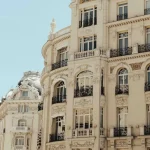
📷 Featured image by Northleg Official on Unsplash.