On this page
- What Makes Bilbao Different From the Rest of Spain
- The Guggenheim and Beyond — Bilbao’s Art Scene in 2026
- Eating and Drinking Like a Local — Pintxos, Txakoli, and Where to Go
- The Old Town (Casco Viejo) — How to Navigate It Without Wasting Time
- Day Trip or Overnight? How Long You Actually Need
- Getting to Bilbao — Trains, Flights, and Road Options in 2026
- Getting Around the City — Metro, Tram, and on Foot
- 2026 Budget Reality — What Things Actually Cost
- Practical Tips — Weather, Crowds, and What to Know Before You Go
- Frequently Asked Questions
💰 Click here to see Spain Budget Breakdown
💰 Prices updated: October, 2026. Budget figures are estimates — always verify before travel.
Exchange Rate: $1 USD = €0.88
Daily Budget (per person)
Shoestring: €60.00 – €90.00 ($68.18 – $102.27)
Mid-range: €120.00 – €180.00 ($136.36 – $204.55)
Comfortable: €220.00 – €470.00 ($250.00 – $534.09)
Accommodation (per night)
Hostel/guesthouse: €15.00 – €50.00 ($17.05 – $56.82)
Mid-range hotel: €70.00 – €130.00 ($79.55 – $147.73)
Food (per meal)
Budget meal: €7.00 ($7.95)
Mid-range meal: €25.00 ($28.41)
Upscale meal: €80.00 ($90.91)
Transport
Single metro/bus trip: €3.00 ($3.41)
Monthly transport pass: €24.00 ($27.27)
San Sebastián gets all the food headlines, Barcelona gets the crowds, and Madrid gets the business travellers. Bilbao, meanwhile, has quietly become one of the most rewarding cities in Spain — and in 2026, with tourist taxes rising across the Balearics and a new cap on daily visitors to the Alhambra tightening further, travellers looking for genuine culture without the queuing-for-two-hours experience are landing here in growing numbers. The challenge now is knowing how to do Bilbao properly before it tips from “well-kept secret” into “next Barcelona.”
What Makes Bilbao Different From the Rest of Spain
Bilbao is a Basque city first, and a Spanish city second. That distinction matters. The Basque Country (Euskadi) has its own language — Euskera — its own tax system, its own food culture, and a collective identity that runs deeper than Regional pride. When you walk into a bar in Bilbao and the bartender greets you with “kaixo,” you’re not in Andalusia.
The city itself sits in a valley carved by the Nervión river, surrounded by green hills that get genuinely grey and rainy through winter. Until the 1980s, Bilbao was an industrial port city — steel mills, shipyards, heavy manufacturing. The famous “Bilbao Effect” refers to the urban transformation that followed: the Guggenheim Museum opened in 1997 and essentially rewrote the city’s identity. But what makes Bilbao interesting in 2026 isn’t just the museum. It’s the fact that the city didn’t stop there. The riverfront has continued to evolve, the food scene has matured on its own terms, and the locals have maintained a fierce sense of what their city actually is.
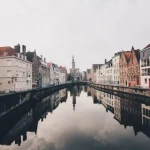
There’s a physical texture to Bilbao that you feel immediately — the stone bridges over the river, the covered market in the old quarter, the fog that rolls in over the hills on November mornings. It doesn’t feel designed for tourists the way parts of Seville or Granada sometimes do. That’s both its challenge and its appeal.
The Guggenheim and Beyond — Bilbao’s Art Scene in 2026
The Guggenheim Bilbao remains the centrepiece, and it still earns its reputation. Frank Gehry’s titanium-clad building is one of those rare cases where the architecture genuinely is the experience — the way the curved panels catch morning light differently depending on cloud cover is something you can’t replicate in a photograph. In 2026, the museum is running a major retrospective focused on post-industrial European art alongside its permanent collection, which includes Richard Serra’s monumental steel installation The Matter of Time — eight enormous sculptures that fill an entire gallery and create an almost physical sensation of weight and movement as you walk between them.
Tickets in 2026 cost €18 for adults, €10 for students and over-65s. Booking online at least 48 hours ahead is now effectively mandatory during spring and summer — walk-up queues have become genuinely long since the post-pandemic travel surge settled into a new normal. Friday evenings the museum opens until 20:00 and is noticeably less crowded than weekend mornings.
Beyond the Guggenheim, the Museo de Bellas Artes (Fine Arts Museum) sits just a short walk away in the Doña Casilda park and is consistently underrated. It covers Basque and Spanish art from the 12th century through to the 20th, and entry is €10. On Sunday mornings it’s free, which means it fills up — go on a weekday afternoon instead.
The Azkuna Zentroa (formerly the Alhóndiga) is worth an hour of your time even if you have no interest in its temporary exhibitions. It’s a converted wine warehouse redesigned by Philippe Starck, and the interior atrium — with its 43 individually designed columns — is genuinely strange and striking. There’s a rooftop pool open to the public in summer (€5–8 depending on the session), and the café on the ground floor does a solid lunch menu.
Eating and Drinking Like a Local — Pintxos, Txakoli, and Where to Go
Pintxos (pronounced “peen-chos”) are the Basque version of tapas, but calling them tapas in Bilbao will earn you a mild but noticeable correction. They’re small portions — usually a slice of bread topped with something, skewered with a toothpick — displayed along the bar counter, and you take what you want and settle up at the end based on how many toothpicks you’ve accumulated. The difference from tapas culture is that pintxos bars tend to be noisier, faster, and more democratic. You’re standing at the bar, glass in hand, elbow to elbow with people who work nearby.
The Casco Viejo (old quarter) has the highest concentration of pintxos bars, particularly along Calle del Jardín (known locally as “the strip”) and the streets around Plaza Nueva. For an intro to the style, try Bar Gatz on Calle Santa María — their anchovy and pepper combinations are textbook examples of why Basque food has the reputation it does. Berton Sasibil on the same street does excellent hot pintxos that they refresh every half hour.
For a step up in formality, Restaurante Mina on the riverbank near the Casco Viejo holds a Michelin star and does an affordable lunch tasting menu at around €65. It’s one of the better fine dining deals in northern Spain, and booking several weeks ahead in spring and summer is necessary.
Txakoli is the local wine — a slightly sparkling, very dry white made from grapes grown in the surrounding hills. It’s poured from a height to aerate it, which creates a small theatre at the bar. A glass costs €2.50–€4 in most places. It pairs well with seafood pintxos and it pairs poorly with sitting down and doing nothing, because it makes you want another one almost immediately.
The Mercado de la Ribera, right on the riverbank in the Casco Viejo, is one of the largest covered markets in Europe. It’s had a renovation in recent years and now has a good mix of traditional food stalls and a small pintxos bar area on the upper floor. Mornings from 08:00–13:00 are when it’s genuinely operating as a food market. Come here before the Guggenheim, not after.
The Old Town (Casco Viejo) — How to Navigate It Without Wasting Time
The Casco Viejo is compact — you can walk across it in about ten minutes — but it’s dense with things worth slowing down for. It’s built on the medieval “Seven Streets” (Siete Calles), and the grid-like layout makes it easier to navigate than most old quarters in Spain.
The main square, Plaza Nueva, is a neoclassical arcaded square that functions as the social centre of the old town. Sunday mornings there’s an antiques and book market here worth a browse. The bars under the arcades are good but priced slightly above the surrounding streets — you’re paying for the square. The Cathedral of Santiago, nearby, is a 14th-century Gothic structure that’s open for visits most mornings; the cloister is the highlight.
The neighbourhood of Bilbao La Vieja, just across the bridge from the Casco Viejo, is worth knowing about. It was long considered rough and was largely ignored by visitors, but over the past decade it’s become genuinely interesting — a mix of immigrant communities, artist studios, independent bookshops, and a growing number of good small restaurants. It doesn’t have the polish of the Casco Viejo, which is exactly the point. Walking across the Puente de la Merced at dusk and hearing the mix of languages spilling out of the bar doorways gives you a better sense of what contemporary Bilbao actually is than any amount of time in the more tourist-facing streets.
One thing to avoid: getting lured into the souvenir shops on Calle del Correo. They exist primarily to extract money from people who didn’t realise there were better streets two minutes away.
Day Trip or Overnight? How Long You Actually Need
Bilbao is about 1 hour 20 minutes from San Sebastián by bus, roughly 2.5 hours by direct train from Madrid on the Alvia service, and about 5 hours from Barcelona. Those journey times make it theoretically possible as a day trip from San Sebastián — and many people do exactly that. But a day trip to Bilbao is a compromise.
If you’re doing a day trip from San Sebastián, you can realistically do the Guggenheim, a walk through the Casco Viejo, and a pintxos lunch. That’s a solid day. But you’ll miss the evening pintxos crawl, which is when the bars are busiest, noisiest, and most alive — and that’s when Bilbao feels most like itself. You’ll also miss the Museo de Bellas Artes and the neighbourhood of Bilbao La Vieja.
The honest recommendation is two full days and two nights. That gives you a full day for the art museums and the riverfront, a second day for the Casco Viejo, the market, and Bilbao La Vieja, with evenings free for the food and bar culture that defines the city. Three days works if you want to do a day trip of your own — the coastal town of Getaria (45 minutes by bus) or the medieval walled town of Laguardia in the Rioja Alavesa wine region (1 hour by bus) are both excellent options.
Getting to Bilbao — Trains, Flights, and Road Options in 2026
Bilbao’s airport, Bilbao Airport (BIO), sits about 12 kilometres north of the city centre. In 2026 it has direct routes from London Heathrow and Gatwick, Dublin, Paris Charles de Gaulle, Amsterdam, Frankfurt, and several other European hubs, primarily operated by Iberia, Vueling, Ryanair, and EasyJet. From the airport, the Bizkaibus A3247 runs directly to the city centre (Termibus bus station) every 20–30 minutes for €3. A taxi costs approximately €25–35 depending on traffic.
From Madrid, the fastest option is the Alvia high-speed-compatible train, which takes approximately 4 hours 45 minutes and costs €30–€75 depending on how far in advance you book. There’s no full AVE service to Bilbao yet — the high-speed line extension through the Basque Country has faced delays and as of early 2026 the complete connection is not yet operational, though Renfe’s timetable improvements have reduced journey times compared to 2023.
From San Sebastián, the Renfe Euskotren regional service runs regularly and takes about 2.5 hours (€12–16). The direct bus operated by ALSA is faster at around 1 hour 15 minutes and costs €8–12. Most travellers moving between the two Basque cities use the bus.
From Barcelona, a direct train is the most comfortable option — around 6 hours on the Alvia — but budget flights via Vueling (Barcelona El Prat to Bilbao BIO) take just over an hour and can be cheaper if booked ahead.
Getting Around the City — Metro, Tram, and on Foot
Bilbao has an excellent metro system, designed by Norman Foster, which is one of the genuinely good pieces of infrastructure in any Spanish city. The metro entrances — nicknamed “Fosteritos” locally — are glass canopies that emerge from the pavement like something from a science fiction film. The metro connects the city centre, the Guggenheim area, and the coast (including the resort town of Getxo) efficiently. A single fare is €1.65; a ten-journey card (Barik card) reduces this significantly and is worth buying if you’re staying more than two days.
The tram (EuskoTran) runs a single line through the city centre along the riverbank, connecting the Casco Viejo to the Guggenheim and the Basque Health Service hospital. It’s useful and clean, but for most tourist purposes, walking is faster within the centre itself.
The city is very walkable between its main points of interest. The Guggenheim to the Casco Viejo is about 15 minutes on foot along the riverbank — this walk, past the Jeff Koons Puppy sculpture (the giant floral dog outside the museum) and across the Puente del Arenal, is one of the better urban walks in northern Spain. Bilbao is not flat — the hills surrounding the centre mean some streets involve stairs or steep climbs — but the main tourist circuit doesn’t require serious elevation change.
2026 Budget Reality — What Things Actually Cost
Bilbao is more expensive than Seville or Valencia but noticeably cheaper than San Sebastián or Madrid’s premium neighbourhoods. Here’s what to expect in 2026:
- Budget (under €80/night accommodation, pintxos meals, public transport): Achievable. Hostel dorms run €25–40/night in the centre; pintxos and txakoli at a bar will cost €10–18 per person for a full evening of eating and drinking if you’re selective. Daily budget of €60–80 is realistic.
- Mid-range (hotel, sit-down meals, one museum per day): A 3-star hotel or boutique guesthouse near the Guggenheim runs €90–150/night. A lunch menu at a good restaurant (three courses with wine) costs €20–35. Two museum tickets, one sit-down lunch, pintxos evening, metro: expect €80–120 per day.
- Comfortable (4-star hotel, tasting menu dinners, private tours): Good 4-star hotels cost €160–260/night. A tasting menu dinner at a Michelin-starred restaurant runs €80–130 per person without wine. Budget €200+ per day per person at this level.
The tourist tax in the Basque Country is currently €2 per person per night in Bilbao — significantly lower than what Barcelona now charges for similar category accommodation. This was confirmed unchanged as of early 2026.
Pintxos in the Casco Viejo are typically €2–4 each. A glass of txakoli is €2.50–4. A café con leche costs €1.50–2.20 in most bars away from the tourist streets. Coffee is not yet the luxury item it has become in some Western European cities, which is one of Spain’s enduring practical advantages.
Practical Tips — Weather, Crowds, and What to Know Before You Go
Bilbao’s weather is the thing most visitors underestimate. The Basque Country is in the wet corner of Spain — the mountains to the south and east trap Atlantic moisture, and Bilbao averages around 1,200mm of rain per year, most of it spread across autumn and winter. June, July, and August are the driest and warmest months (average highs of 23–26°C), but even in summer a light rain jacket is sensible. October through February can be genuinely grey and wet for days at a time. This isn’t necessarily a reason to avoid those months — the city is less crowded, accommodation is cheaper, and the Guggenheim is never busier than in fine summer weather — but pack accordingly.
The annual Semana Grande (Aste Nagusia in Basque) runs for nine days in mid-August and is the city’s biggest festival — fireworks, open-air concerts, street parties. It’s a genuine local event, not a tourist spectacle, and if you’re in the city during this period the atmosphere is electric. Hotels fill up and prices rise; book several months in advance if you’re planning to be here then.
Most restaurants in the Casco Viejo are closed on Sunday evenings and Mondays — this is standard across the Basque Country and catches a lot of visitors off-guard. Plan your best dinner for Tuesday through Saturday.
The Basque language, Euskera, is on signage everywhere and is the first language of a significant portion of the population. Learning a few words — kaixo (hello), eskerrik asko (thank you), agur (goodbye) — is received warmly. Spanish works perfectly well in all practical situations. English is widely spoken in the tourist-facing parts of the city, though less so in the outer neighbourhoods.
Frequently Asked Questions
Is Bilbao worth visiting beyond the Guggenheim Museum?
Absolutely. The Guggenheim is excellent, but Bilbao’s pintxos bar culture, the Mercado de la Ribera, the Museo de Bellas Artes, and the neighbourhood of Bilbao La Vieja all stand on their own merits. Most visitors who come only for the museum leave wishing they had more time for the city around it.
How many days do you need in Bilbao?
Two full days is the minimum to feel like you’ve actually experienced the city rather than just passed through. Three days works well if you want to include a day trip to the Basque coast or the Rioja Alavesa wine region. A single day from San Sebastián is possible but leaves you with an incomplete picture.
Is Bilbao expensive compared to other Spanish cities?
It sits in the mid-range — more expensive than Seville or Valencia, cheaper than San Sebastián. A mid-range daily budget of €100–120 per person covers a good hotel, museum entries, public transport, and decent meals including an evening pintxos crawl. Budget travellers can manage on €60–80.
When is the best time to visit Bilbao?
Late spring (May–June) and early autumn (September–October) offer the best balance of reasonable weather, manageable crowds, and lower hotel prices. July and August are the driest months but peak season. Mid-August brings the Semana Grande festival — vibrant but crowded. Winter is wet but atmospheric and very affordable.
Do you need to speak Spanish or Basque to visit Bilbao?
No — English is widely spoken in hotels, museums, and most restaurants and bars in the central tourist areas. Spanish works everywhere. Knowing a few words of Basque (Euskera) like kaixo and eskerrik asko is appreciated by locals but entirely optional. Menu translations in English are standard in most places.
📷 Featured image by Joshi Milestoner on Unsplash.