On this page
- The North Coast: Spain’s Green, Rainy, Rewarding Secret
- Seville and Andalucía’s Interior — More Than a Flamenco Postcard
- Valencia and the Levante Coast — Sun, Rice, and Real City Life
- Castile and León — Cathedrals, Meseta, and Medieval Silence
- The Basque Country Beyond San Sebastián
- Aragón — The Region Most Tourists Fly Over (Literally)
- Extremadura — Spain’s Least-Visited Region and Why That’s Changing
- The Canary Islands — Year-Round Sun Without the Balearic Price Tag
- Day Trip or Overnight? How to Plan Multi-City Spain in 2026
- 2026 Budget Reality — What 15 Destinations Actually Cost
- Getting There — AVE, Regional Rail, and What’s New in 2026
- Frequently Asked Questions
💰 Click here to see Spain Budget Breakdown
💰 Prices updated: October, 2026. Budget figures are estimates — always verify before travel.
Exchange Rate: $1 USD = €0.88
Daily Budget (per person)
Shoestring: €60.00 – €90.00 ($68.18 – $102.27)
Mid-range: €120.00 – €180.00 ($136.36 – $204.55)
Comfortable: €220.00 – €470.00 ($250.00 – $534.09)
Accommodation (per night)
Hostel/guesthouse: €15.00 – €50.00 ($17.05 – $56.82)
Mid-range hotel: €70.00 – €130.00 ($79.55 – $147.73)
Food (per meal)
Budget meal: €7.00 ($7.95)
Mid-range meal: €25.00 ($28.41)
Upscale meal: €80.00 ($90.91)
Transport
Single metro/bus trip: €3.00 ($3.41)
Monthly transport pass: €24.00 ($27.27)
Barcelona’s tourist cap system, introduced in late 2025, now limits the number of visitors who can enter the Gothic Quarter and Park Güell on any given day — and in summer 2026, those slots are filling weeks in advance. If you’ve been putting off exploring Spain because Barcelona keeps ending up on your itinerary by default, this is the year to change that. Spain has 17 autonomous communities, dozens of cities with genuine personality, and coastal stretches that see a fraction of the foot traffic of the Costa Brava. What follows is a practical, opinionated guide to 15 Destinations worth your time, your euros, and your days off.
The North Coast: Spain’s Green, Rainy, Rewarding Secret
The Cantabrian coast — stretching from the Basque Country through Cantabria, Asturias, and into Galicia — is the version of Spain that surprises people most. It’s genuinely green. There are cliffs. It rains. The seafood is extraordinary, and the crowds are almost entirely Spanish.
Galicia
Santiago de Compostela is the obvious anchor, and the cathedral’s baroque facade rising above the fog on a cool morning is one of those sights that stops you mid-step. But the region runs deeper. The Rías Baixas coastline — the same zone that produces Albariño wine — is lined with fishing towns like Cambados and O Grove where a plate of percebes (barnacles) costs around €18–€25 and tastes like the Atlantic itself. Pontevedra, Galicia’s most walkable city, banned cars from its old town decades ago and remains one of urban planning’s great quiet success stories.
Asturias
Oviedo is compact, university-animated, and has a sidrerías culture — traditional cider houses — unlike anywhere else in Spain. Cider is poured from height, the bartender lifting the bottle above their head, a thin stream of liquid hitting the glass with a sharp crack. You stand at the bar, you drink it fast, and you repeat. The Picos de Europa mountains sit less than an hour south by car and offer some of the most dramatic walking in the entire country.
Cantabria
Santander has beaches within the city limits and a ferry connection to Plymouth (UK) that makes it an underused entry point for British travellers. Inland, Comillas and Santillana del Mar are genuinely medieval towns, not reconstructions — the kind of places where a wrong turn leads you to a Romanesque church with an unlocked door.
Seville and Andalucía’s Interior — More Than a Flamenco Postcard
Seville is covered in depth elsewhere on this site, but Andalucía’s interior deserves its own mention because most visitors treat it as a backdrop to a coastal holiday and miss the substance entirely.
Córdoba
The Mezquita-Catedral is one of the most architecturally disorienting buildings in Europe — a forest of red-and-white striped arches built by the Umayyad Caliphate in the 8th century, with a full Catholic cathedral constructed inside it centuries later. The effect is genuinely strange and genuinely brilliant. The Jewish quarter around it, the Judería, is dense and quiet and best explored before 9am when the tour groups haven’t arrived yet. Córdoba as a city is easier to handle than Seville — smaller, flatter, with a more student-inflected energy.
Jaén and the Olive Oil Route
Jaén province produces more olive oil than Greece, Portugal, and Italy combined. The landscape — kilometres of silver-green olive trees rolling over red hills — is one of the most visually singular in Spain. The town of Úbeda, a UNESCO World Heritage Site, has a Renaissance square that architectural historians rank among the best in the country. Most people have never heard of it.
Ronda
The Puente Nuevo bridge across the El Tajo gorge is photographed constantly and still impressive in person. The drop is roughly 120 metres. Less photographed: the old town of La Ciudad, where Moorish bathhouses and a Collegiate Church sit within a few minutes’ walk of each other, and where the bull-fighting museum offers a genuinely uncomfortable and historically honest account of the corrida tradition.
Valencia and the Levante Coast — Sun, Rice, and Real City Life
Valencia’s City of Arts and Sciences gets the photos, but the city’s real identity is older and more edible. The Mercat Central — arguably the most beautiful market building in Spain — is the right place to start any visit. It opened in 1928 and the stained glass and wrought iron are still entirely intact. A bag of local oranges from a market stall costs €1–€2. A glass of horchata at a granddad-era horchatería in the Cabanyal neighbourhood costs under €2.
The Levante coast north and south of Valencia — the Costa del Azahar and the Costa Blanca — offers quieter resort options than the Costa del Sol. Peñíscola, a castle town jutting into the Mediterranean on a rocky promontory, and Xàbia (Jávea), a low-rise town with three distinct beach areas, both reward slower visits. The train from Valencia to Alicante now takes under an hour on the upgraded Cercanías and regional rail links updated in 2025, making day trips genuinely practical.
Castile and León — Cathedrals, Meseta, and Medieval Silence
The central plateau of Spain — the meseta — has a scale that disorients people used to European geography. Standing outside the walls of Ávila or looking across the plain from the cathedral towers of Burgos, you understand why this landscape shaped the people who built these cities. Everything here feels proportioned for eternity.
Salamanca
The Plaza Mayor is the finest square in Spain — a bold claim, but defensible. Built in the 18th century in Churrigueresque baroque style, it’s ringed by uniform sandstone arcades that glow amber in afternoon light. The university, founded in 1218, gives the city a density of student life that keeps it lively year-round. The food market off Calle Libreros sells jamón ibérico at prices noticeably lower than Madrid.
Burgos and León
Both cities have Gothic cathedrals of extraordinary quality. Burgos Cathedral has a central spire that was under renovation for years and is now fully revealed in 2026 — the carved stonework on the exterior is almost hallucinatory in its detail. León’s cathedral is built for light: the stained glass windows cover nearly 1,800 square metres and on a clear morning the interior turns colours you don’t expect inside a stone building.
Segovia
The Roman aqueduct is two millennia old and still standing in the middle of the city without mortar — just stone laid on stone. The roast suckling pig at Mesón de Cándido, served with a wooden plate and sliced tableside with the edge of a plate to prove how tender it is, has been the ritual dish of the city for generations.
The Basque Country Beyond San Sebastián
San Sebastián (Donostia) consistently ranks as one of the world’s great food cities and is covered separately. But the Basque Country is three provinces, and two of them — Vizcaya and Álava — are seriously undervisited by international travellers.
Bilbao
The Guggenheim Bilbao, Frank Gehry’s titanium curves reflecting the Nervión river, remains one of the few modern buildings that genuinely changed the city around it. The Bilbao effect — the idea that a single landmark cultural building can regenerate an urban economy — was named after this place. The Casco Viejo (old town) is dense with pintxos bars where €2.50 gets you a piece of bread topped with something improbable and delicious. The city’s metro system, designed by Norman Foster, is worth riding even if you have nowhere specific to go.
Vitoria-Gasteiz
The capital of the Basque Country and the seat of the regional government is almost entirely unknown to foreign tourists. It has a medieval old town built on a small hill, a ring of parks that encircle the entire city, and a restaurant scene that punches well above its size. It was named European Green Capital in 2012 and has continued building on that infrastructure — cycling here is genuinely practical, not aspirational.
Aragón — The Region Most Tourists Fly Over (Literally)
Zaragoza sits at the centre of Spain’s high-speed rail network — almost every AVE train between Madrid and Barcelona stops here — and yet the vast majority of passengers stay on the train. That’s a missed opportunity. The Basílica del Pilar, a massive 17th-century baroque church on the banks of the Ebro river, is one of the most visited pilgrimage sites in Spain and somehow still not on the international tourist radar in the way it deserves to be.
North of Zaragoza, the Pyrenean foothills contain the Ordesa y Monte Perdido National Park — serious mountain terrain with walking routes that rival anything in the Alps but with a fraction of the visitor numbers. The medieval villages of the Hecho and Ansó valleys, accessible by car from Jaca, are the kind of place where you can have an entire Romanesque church to yourself on a Tuesday afternoon. The drive itself, through narrow gorges and beech forests, is worth the journey.
Extremadura — Spain’s Least-Visited Region and Why That’s Changing
Extremadura has always been the Spain that Spain forgot to market. In 2026, that’s starting to shift. The regional government launched a sustained campaign targeting digital nomads and slow travellers in late 2025, and the infrastructure — particularly in Cáceres and Mérida — has noticeably improved in terms of accommodation options and connectivity.
Cáceres
The old city of Cáceres is a UNESCO World Heritage Site where towers built by competing noble families in the 15th and 16th centuries still stand intact. Walk through the Arco de la Estrella at dusk and the streets beyond are genuinely medieval — not restored, not themed, just old and still inhabited. It’s been used as a filming location for Game of Thrones and House of the Dragon, which has brought some additional visitors, but the numbers remain manageable.
Mérida
Roman Emerita Augusta — modern Mérida — has the most complete Roman infrastructure of any city in Spain: a theatre, an amphitheatre, a circus, a temple, several bridges, and an exceptional archaeological museum all within walking distance of each other. Admission to the main complex costs €15 in 2026 (reduced from a combined ticket of €18 in 2024 after lobbying from local tourism bodies). The theatre hosts a classical drama festival every summer that has run since 1933.
The Canary Islands — Year-Round Sun Without the Balearic Price Tag
The Canary Islands sit off the coast of West Africa and have a climate that delivers warmth every month of the year. In 2026, they’ve become an increasingly serious alternative to the Balearics for travellers priced out of Ibiza and Mallorca in peak season.
Gran Canaria and Tenerife handle the bulk of the package holiday traffic. For independent travellers, Lanzarote — shaped by volcanic eruptions in the 18th century and managed as a giant art project by local architect César Manrique — offers a landscape unlike anywhere else in Europe. La Palma, badly affected by the 2021 Cumbre Vieja eruption, has rebuilt its tourism infrastructure substantially and the new lava fields alongside the surviving forests and banana plantations create an environment that feels genuinely frontier. Fuerteventura remains the best option for beach quality, with consistent Atlantic wind making it the top kite-surfing destination on the continent.
Budget flights from the UK, Germany, and the Netherlands reach the islands throughout winter, and hotel rates from November to February can be dramatically lower than summer — around €60–€90 per night for a mid-range option in most island capitals.
Day Trip or Overnight? How to Plan Multi-City Spain in 2026
The honest answer to “day trip or overnight” depends entirely on your base city and your mode of transport. With AVE access, some cities that feel far away on a map are actually very manageable.
- Córdoba from Seville: 45 minutes by AVE. A full day trip is viable, though an overnight lets you see the Mezquita before the queues form at 9am.
- Segovia from Madrid: 30 minutes by high-speed train. Day trip is the standard approach and works well.
- Salamanca from Madrid: 1 hour 30 minutes by train. Day trip possible, overnight preferable to catch the evening student atmosphere.
- Bilbao from San Sebastián: 1 hour 15 minutes by bus (Alsa) or roughly 1 hour by car. Day trip works perfectly.
- Ronda from Málaga or Seville: Around 2 hours by road or scenic train from Málaga. Overnight recommended — the town is best at night and morning, not midday.
- Zaragoza from Barcelona or Madrid: 1 hour 15 minutes–1 hour 30 minutes by AVE. Overnight is worthwhile if you plan to continue into the Pyrenees.
- Mérida from Madrid: Around 3 hours by car or 4+ hours by train with a change. This one needs an overnight stay — Extremadura generally rewards slower travel.
2026 Budget Reality — What 15 Destinations Actually Cost
Prices across Spain have risen noticeably since 2023, driven by domestic inflation, higher energy costs, and increased demand. The following figures reflect 2026 reality.
Accommodation (per night, double room)
- Budget: Hostel private room or basic pension — €35–€55 in most regional cities; €65–€85 in Bilbao and San Sebastián
- Mid-range: 3-star hotel — €75–€110 in Córdoba, Salamanca, Zaragoza; €90–€140 in Bilbao
- Comfortable: 4-star hotel or boutique option — €130–€200 in most regional cities; €180–€280 in Bilbao and Canary Islands resort areas
Food and drink
- Menú del día (3 courses with wine): €12–€16 in Extremadura and Castile; €14–€18 in Basque Country and Valencia
- Pintxos/tapas per piece: €1.80–€3.50 depending on city and bar tier
- Coffee: €1.40–€2.20 (espresso/cortado)
- Beer (caña): €1.50–€2.80
Attractions
- Córdoba Mezquita-Catedral: €13 (2026 rate, free entry 8am–9am for worship)
- Guggenheim Bilbao: €18 general admission
- Mérida Roman complex: €15
- Burgos Cathedral: €8
- León Cathedral: €7
Tourist taxes vary significantly. Bilbao introduced a €2 per night city tax in 2025. Zaragoza charges €1 per night. Most of Castile and León and Extremadura still charge no tourist tax as of mid-2026, which is part of their competitive appeal for budget-conscious travellers.
Getting There — AVE, Regional Rail, and What’s New in 2026
Spain’s AVE high-speed network is the most extensive in Europe and continues to expand. Several routes became significantly faster or newly operational between 2024 and 2026:
- Extremadura AVE line: The Madrid–Badajoz high-speed corridor opened its full Cáceres section in late 2025, cutting journey times from over 4 hours to under 2 hours 30 minutes. This is the single biggest change for regional accessibility in 2026 and makes Extremadura genuinely feasible as a long weekend destination from Madrid.
- Murcia–Madrid: The new AVE connection via Murcia del Carmen, operational since early 2025, now puts Murcia around 2 hours from Madrid — previously it was one of the worst-connected major Spanish cities by rail.
- Asturias: The Variante de Pajares tunnel, years in the making, opened for high-speed services in early 2025 and now connects Oviedo to Madrid in around 3 hours rather than the old 5+ hours. Northern Spain’s accessibility problem is largely solved.
For budget inter-city travel, Alsa buses remain the most economical option and reach destinations the AVE doesn’t. BlaBlaCar is still widely used for shorter regional routes. Domestic flights make sense for the Canary Islands and for routes like Madrid–Santiago de Compostela where the drive through mountains is long even by car.
Renfe’s digital booking platform received a full rebuild in 2025 and is now far more reliable than it was, with clearer fare classes and a functional English-language interface. Regional trains (Media Distancia) remain the most cost-effective option for short hops between nearby cities.
Frequently Asked Questions
Which Spanish city is the best alternative to Barcelona for a first visit?
Seville and Valencia are the two most recommended alternatives. Seville delivers the most distinctly Andalusian experience — tapas culture, flamenco, architecture — in the most concentrated form. Valencia offers similar sunshine and culture with lower prices, better beaches within the city, and a food scene built around the original paella.
Is Spain safe to travel independently outside the main tourist cities?
Yes. Regional Spanish cities and rural areas are generally very safe for solo and independent travellers. The main practical challenges are language — English is less widely spoken outside Madrid, Barcelona, and coastal resorts — and transport, since some smaller towns require a car or careful bus planning. Petty theft risk drops significantly outside the main tourist zones.
Do I need to book the AVE in advance for regional Spanish cities?
For popular routes like Madrid–Seville, Madrid–Barcelona, or Madrid–Valencia on weekends and public holidays, booking 2–3 weeks ahead is strongly advised. For less-travelled routes like Madrid–Cáceres or Madrid–Oviedo, booking 3–5 days ahead is usually sufficient and last-minute tickets are frequently available.
What’s the best time of year to visit inland Spain — Castile, Extremadura, Aragón?
Spring (late March to May) and autumn (September to October) are ideal. Summer on the Spanish meseta is genuinely brutal — Mérida and Cáceres regularly hit 40°C in July and August. Winter is cold and clear, with visitor numbers very low and hotel prices reduced, which suits travellers focused on museums, architecture, and food rather than outdoor activity.
Has Spain introduced any new entry requirements for tourists in 2026?
Yes. The EU’s ETIAS (European Travel Information and Authorisation System) is now fully operational for non-EU visitors including UK, US, Canadian, and Australian citizens. It requires pre-registration online (expected to cost €7) and must be completed before arrival. It’s valid for multiple trips over 3 years and is straightforward to apply for, but travellers need to account for processing time — apply at least 72 hours before travel, ideally earlier.
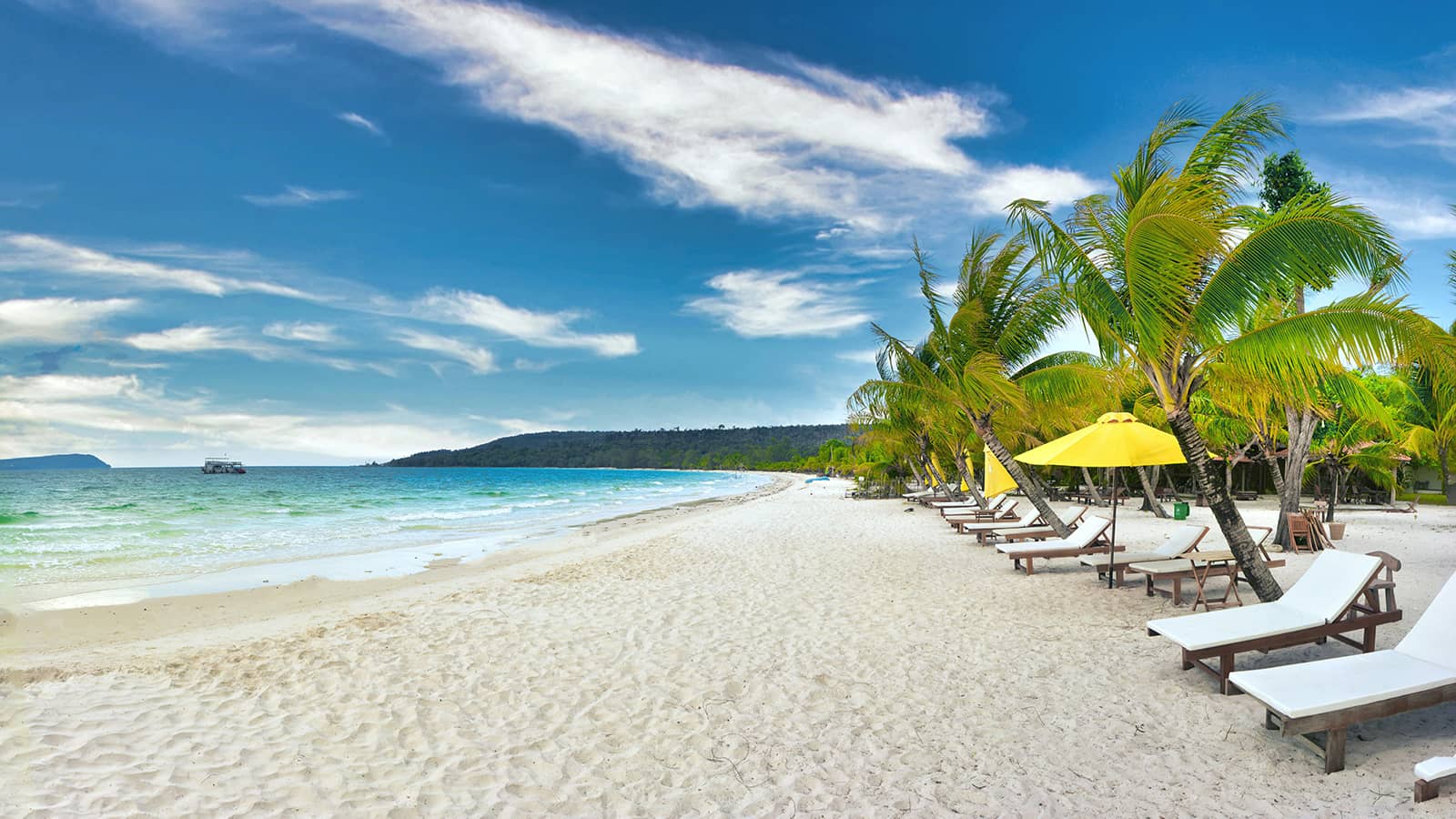
📷 Featured image by Joshi Milestoner on Unsplash.