On this page
- Why Santiago Works as a City Break
- Inside the Cathedral Quarter
- Beyond the Cathedral: Museums, Parks and Viewpoints
- Where to Eat and Drink in Santiago
- Getting There and Getting Around
- Day Trip or Overnight?
- 2026 Budget Reality
- What’s Changing in 2026: The Run-Up to the 2027 Holy Year
- Frequently Asked Questions
💰 Click here to see Spain Budget Breakdown
💰 Prices updated: October, 2026. Budget figures are estimates — always verify before travel.
Exchange Rate: $1 USD = €0.88
Daily Budget (per person)
Shoestring: €60.00 – €90.00 ($68.18 – $102.27)
Mid-range: €120.00 – €180.00 ($136.36 – $204.55)
Comfortable: €220.00 – €470.00 ($250.00 – $534.09)
Accommodation (per night)
Hostel/guesthouse: €15.00 – €50.00 ($17.05 – $56.82)
Mid-range hotel: €70.00 – €130.00 ($79.55 – $147.73)
Food (per meal)
Budget meal: €7.00 ($7.95)
Mid-range meal: €25.00 ($28.41)
Upscale meal: €80.00 ($90.91)
Transport
Single metro/bus trip: €3.00 ($3.41)
Monthly transport pass: €24.00 ($27.27)
Santiago de Compostela is usually sold as the finish line of an 800-kilometre walk, so if you arrive by train or plane, you might wonder what is left for you. A lot, as it turns out. In 2026, with the next Holy Year (Xacobeo) arriving in 2027, hotel prices and cathedral queues are already creeping up, which makes it smart to plan your visit around the city’s other strengths: granite lanes, student life, serious Galician food, and an Atlantic coast within easy reach.
Why Santiago Works as a City Break
Santiago is small, with around 100,000 residents and a historic centre you can cross on foot in 15 minutes. It is also a university town, so the lanes fill with students at night, not just pilgrims by day. That mix gives the city a character you won’t find in Seville or Granada: grey stone, green hills, and a soft drizzle the locals call orballo.
Stand under the Arco do Arcebispo near the cathedral and you will often hear a lone gaita (Galician bagpipe) echoing off the wet granite. It is the sound of the city, and it has nothing to do with whether you walked here or took the train.
Inside the Cathedral Quarter
Start at the Praza do Obradoiro, the vast square in front of the cathedral. Arrive early and you will see walkers reaching the end of their journey, some lying flat on the stones. Then look at the Baroque facade itself, which glows gold in late afternoon.
Entering the cathedral is free. Inside, the Pilgrim’s Mass at noon is the main event, and the giant silver incense burner, the botafumeiro, swings only on major feast days and some scheduled dates. Check the cathedral’s official calendar before you plan around it.
Paid extras are worth choosing carefully:
- Cathedral museum: cloister, crypt and terraces, with views over the old town.
- Pórtico da Gloria: the carved Romanesque doorway, with limited timed access to protect it.
- Roof tour: a walk over the cathedral’s stone roof, with the best skyline views in the city.
Expect to pay roughly €12–€20 for each of these. Timed slots sell out on summer weekends, so book online a few days ahead.
Beyond the Cathedral: Museums, Parks and Viewpoints
Most visitors leave once the cathedral is ticked off. Stay longer and Santiago gets more interesting.
- Museo do Pobo Galego: housed in a former convent, it explains Galician life, and its triple spiral staircase is worth the visit alone.
- Parque da Alameda: a shaded park with a famous view of the cathedral. Locals walk the Paseo da Ferradura at sunset.
- Cidade da Cultura: a huge modern complex on Monte Gaiás, just outside the centre. It is an unexpected contrast to the medieval core.
- Monte Pedroso: a short climb or taxi ride up for a wide view of the city and the green hills around it.
Then just wander the Rúa do Franco and the quieter lanes around San Martiño Pinario, a monastery so large it seems to take over a whole corner of town.
Where to Eat and Drink in Santiago
Galicia has some of Spain’s best seafood and is one of the cheaper regions to eat it in. Focus on the classics:
- Pulpo á feira: octopus with paprika and olive oil on a wooden plate.
- Empanada gallega: a pie filled with tuna, cod or pork.
- Pimientos de Padrón: small fried green peppers, some mild and some spicy.
- Tarta de Santiago: an almond cake dusted with sugar, usually marked with the St James cross.
- Albariño: the crisp local white wine, poured generously.
For where to go, begin at the Mercado de Abastos, a stone market hall where fishmongers, cheese sellers and produce stalls fill the morning. The streets Rúa do Franco and Rúa da Raíña are lined with taverns for tapas and wine, and tend to be busiest from 8 pm. For a calmer meal, look in the lanes around Praza de Cervantes and Rúa Nova.
Getting There and Getting Around
By train: Renfe runs direct services from Madrid Chamartín to Santiago. They use the high-speed AVE line as far as Ourense, then conventional track, for a total of roughly 3 hours 30 minutes to 4 hours. Trains from A Coruña (about 35–45 minutes), Pontevedra and Vigo (about an hour) are frequent and cheap. Santiago station is a 15-minute walk from the old town.
By air: Santiago-Rosalía de Castro airport (SCQ) has direct flights from Madrid, Barcelona, other Spanish cities, and a range of European destinations. An airport bus to the centre costs around €3.
By bus: Long-distance buses connect Santiago with Porto (about 4 hours), Madrid, and all the main Galician towns. The bus station is about 1.5 km from the centre, close to a local bus line.
On the ground: You do not need a car in Santiago. The old town is largely pedestrian, and everything central is walkable. Bring shoes with good grip, because the granite is slippery in the rain.
Day Trip or Overnight?
It depends on where you start.
- From A Coruña, Pontevedra or Vigo: a day trip works well. You can see the cathedral, eat lunch at the market and be back by evening.
- From Porto: possible, but about 4 hours each way makes for a long day. Stay one night.
- From Madrid or Barcelona: do not do it as a day trip. Stay at least two nights so you are not spending most of your time on trains.
If you have three days, use the third for the coast. Buses run to Fisterra and Muxía, where the Atlantic crashes against the rocks at the old “end of the world.” Or head to Cambados and the Rías Baixas for albariño tastings in family-run wineries.
2026 Budget Reality
Santiago is cheaper than Barcelona or Madrid, but prices are rising in the build-up to 2027. Approximate daily costs per person in 2026:
- Budget (€60–€80): hostel dorm €25–€40, menú del día €12–€15, free sights, local bus or walking.
- Mid-range (€130–€180): three-star hotel €90–€140 per room, tapas dinner €30–€45, one paid cathedral visit, a train day trip.
- Comfortable (€280+): four-star hotel or parador from around €180–€350, tasting-menu dinner €60–€90 or more, private tours and taxis.
A plate of octopus usually costs €14–€20, and a glass of albariño is typically a few euros. Galicia has opened the door for local councils to charge tourist taxes, and Santiago has discussed one, so check your booking for added fees.
What’s Changing in 2026: The Run-Up to the 2027 Holy Year
A Holy Year happens when 25 July, St James’s Day, falls on a Sunday. The last was 2021–22, and the next is 2027. Expect more visitors, more events, and fuller hotels already in late 2026, especially in summer and early autumn. Book accommodation early for those months, and consider May, June or October for better prices and fewer crowds.
Frequently Asked Questions
Is Santiago de Compostela worth visiting if you’re not walking the Camino?
Yes. The cathedral, granite old town, university atmosphere and Galician food stand on their own. Many visitors arrive by train or plane and never walk a step of the Camino. Two full days cover the main sights comfortably, and three lets you add a coast or wine-country day trip.
How do I get from Madrid to Santiago by train?
Renfe runs direct trains from Madrid Chamartín to Santiago, using the high-speed line to Ourense and then conventional track. Expect roughly 3 hours 30 minutes to 4 hours. Fares start around €40 if you book early; last-minute tickets can pass €80. Book a few weeks ahead for the best prices.
Can you see the Botafumeiro without walking the Camino?
Yes. Anyone can attend the Pilgrim’s Mass in the cathedral, which is free. The giant incense burner swings only on major feast days and some scheduled dates, or when a group pays for it. Check the cathedral’s official calendar before your trip, and arrive at least 45 minutes early for a seat.
What is the best time of year to visit Santiago?
Santiago is one of Spain’s wettest cities, with rain possible any month. The best weather is usually June to September, with highs around 22–25°C. May and October are quieter and cheaper, though you should pack a waterproof jacket. Winter is mild, around 10–13°C, but grey and wet.
Do I need to book cathedral tickets in advance?
The cathedral itself is free to enter. The museum, Pórtico da Gloria access and roof tour need tickets, which are limited and timed. In summer and on weekends, book a few days ahead online through the official cathedral site. Off-season, you can often buy on the day.
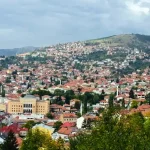
📷 Featured image by Mack Ramirez on Unsplash.