On this page
- What Santiago Actually Feels Like
- The Cathedral and the Botafumeiro — Without the Crowds
- Beyond the Cathedral: The Old City Block by Block
- Where to Eat in Santiago de Compostela
- Day Trip or Overnight?
- Getting to Santiago de Compostela in 2026
- Getting Around the City
- 2026 Budget Reality
- Frequently Asked Questions
💰 Click here to see Spain Budget Breakdown
💰 Prices updated: October, 2026. Budget figures are estimates — always verify before travel.
Exchange Rate: $1 USD = €0.88
Daily Budget (per person)
Shoestring: €60.00 – €90.00 ($68.18 – $102.27)
Mid-range: €120.00 – €180.00 ($136.36 – $204.55)
Comfortable: €220.00 – €470.00 ($250.00 – $534.09)
Accommodation (per night)
Hostel/guesthouse: €15.00 – €50.00 ($17.05 – $56.82)
Mid-range hotel: €70.00 – €130.00 ($79.55 – $147.73)
Food (per meal)
Budget meal: €7.00 ($7.95)
Mid-range meal: €25.00 ($28.41)
Upscale meal: €80.00 ($90.91)
Transport
Single metro/bus trip: €3.00 ($3.41)
Monthly transport pass: €24.00 ($27.27)
Most travel articles about Santiago de Compostela talk about the Camino as if the city itself is just a finish line. It isn’t. In 2026, the city is handling record pilgrim numbers — the Holy Year (Año Santo Compostelano) falls again in 2027, meaning 2026 is the build-up year with infrastructure upgrades already visible and crowds already creeping up. If you’re visiting without a pilgrim passport, or you’ve just arrived and want to know what to do after the cathedral, this guide is for you.
What Santiago Actually Feels Like
Santiago de Compostela sits in inland Galicia, and Galicia does not feel like the rest of Spain. The light is softer, greener, and more likely to disappear behind low cloud at any moment. The city itself is small — around 100,000 people — but the historic centre is dense, granite-heavy, and genuinely beautiful in a way that isn’t trying too hard.
Walk through the old city on a Tuesday morning and you’ll catch the smell of damp stone after overnight rain, the particular scent of moss and granite that defines this part of Galicia. Street musicians are a constant presence — not just buskers, but often trained musicians playing gaita (Galician bagpipes), which sounds jarring the first time and haunting by the third. This is a Celtic corner of Spain, and the culture feels it.
The locals — Compostelanos — have a complicated relationship with pilgrims. They’re proud of the Camino’s global reach, but they live around it year-round. Venture two streets off the main tourist path and you’re in a completely ordinary Galician city: university students, market vendors, elderly women in black coats arguing about vegetables. That dual identity is part of what makes Santiago interesting to spend real time in.
The Cathedral and the Botafumeiro — Without the Crowds
Yes, you need to visit the Cathedral of Santiago de Compostela. It’s one of the great Romanesque buildings in Europe, and the interior — especially the Pórtico de la Gloria — is extraordinary. But how you time that visit matters more than almost any other decision you’ll make here.
The Pilgrim Mass is held daily at noon and draws the largest crowds. The famous Botafumeiro — the enormous silver incense burner that swings across the transept like a pendulum — only runs at specific masses, not every day. In 2026, the schedule remains tied to liturgical feast days and donor-sponsored masses; check the cathedral’s official website before arriving because the days change seasonally. It is not guaranteed at the noon Pilgrim Mass.
For the interior without the crush, arrive when the cathedral opens at 7:00 on a weekday morning. The stone is golden in early light filtering through the high windows, and you’ll have sections of the nave almost entirely to yourself. The rooftop tour, which requires a separate timed ticket (around €12 in 2026), gives you views across the old city’s stone spires and is worth doing before 9:00 when tour groups begin arriving.
Beyond the Cathedral: The Old City Block by Block
Santiago’s old city is compact enough to walk entirely in an afternoon, but rewarding enough to take two days over if you slow down. Here’s what to prioritise beyond the obvious.
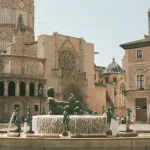
Praza das Praterías is the southern face of the cathedral and the quietest of the main squares. It has a central fountain, carved stone horses mid-leap, and feels less staged than the main Obradoiro square. Sit here with a coffee and watch the pigeons and pilgrims without feeling like you’re in a postcard.
Rúa do Franco runs south from the cathedral and is Santiago’s main eating street — more on the food below — but it also passes the 15th-century Colegio de Fonseca, now part of the University of Santiago, whose courtyard is open to visitors and usually empty.
Mercado de Abastos is the city’s covered market and one of the best in Galicia. Open Tuesday to Sunday mornings, it sells octopus, Galician cheeses, fresh tetilla (a soft, cone-shaped local cheese), sea urchins, and vegetables you won’t recognise. Vendors will let you taste most things if you show genuine interest. Go before 12:30 — by early afternoon the stalls are closing.
Alameda Park, a short walk from the old city, is where locals actually go. The tree-lined promenade offers the only view in the city where you can photograph the cathedral’s twin towers from a distance. The park has a quiet, slightly melancholy quality that suits Galician weather perfectly.
Where to Eat in Santiago de Compostela
Galician food is seafood-first, wine-forward, and heavy enough to warrant a walk after. The tourist trap zone is Rúa do Franco — not entirely, but approach it with your eyes open. Better options exist one or two streets away.
Pulpería Ezequiel near the Mercado de Abastos is the standard-bearer for pulpo á feira (octopus with paprika and olive oil on wooden boards). It’s basic, loud, and correct. Expect to queue at lunch. A full ración of pulpo costs around €18–€22 in 2026.
Casa Marcelo on Rúa das Hortas has evolved into one of Santiago’s most interesting restaurants — chef Marcelo Tejedor does a daily sharing-plate menu rooted in Galician produce but not bound by tradition. Reservations are essential.
O Gato Negro is the kind of old-school tapas bar that tourists walk past because it looks like nothing. Dark wood, no menu on the wall, wine served in ceramic bowls (cunca). Order the empanada Gallega (a thick pastry filled with tuna or meat) and whatever they say is fresh. Around €15–€20 per person with wine.
For Albariño, the white wine of Galicia — crisp, slightly mineral, pairs with everything — ask any bar to recommend something from the Rías Baixas DO. A glass costs €2.50–€4 in most local bars. Avoid the first wine you see listed on a laminated tourist menu.
Day Trip or Overnight?
If you’re arriving from A Coruña (45 minutes by train) or Porto in Portugal (around 2.5 hours by bus), Santiago can work as a long day trip — but only if you come on a weekday and focus exclusively on the cathedral and market. You’ll feel rushed.
For most travellers, one night is the honest minimum. Two nights lets you do the cathedral properly, eat well twice, visit the market in the morning, and explore the Alameda and university area without stress. Three nights is comfortable if you want to add a day trip to the nearby coast — the Rías Baixas beaches, particularly around O Grove or Cambados, are 45–60 minutes by car and completely different in character from the grey-stone city.
Non-pilgrim travellers from Madrid or Barcelona are unlikely to make this a standalone trip. It works best combined with Porto, A Coruña, or the Rías Baixas wine region into a longer Galicia itinerary.
Getting to Santiago de Compostela in 2026
Santiago de Compostela Airport (SCQ) now has direct connections to more European cities than before 2024, including expanded seasonal routes from the UK, Germany, and the Netherlands. Ryanair and Vueling are the main low-cost operators. The airport is 11 km from the city centre.
By train, Santiago is connected to Madrid via the AVE high-speed line. The journey from Madrid Chamartín takes around 5 hours 30 minutes; Renfe has been expanding frequency on this route ahead of the 2027 Holy Year, so 2026 timetables show more daily departures than two years ago. From A Coruña, regional trains run frequently and take under an hour.
From Porto (Portugal), the most common option is the Rede Expressos or Alsa bus, which takes around 2.5–3 hours depending on route and costs roughly €15–€25. No high-speed rail connection crosses this border yet, though the Vigo–Porto rail upgrade remains in discussion for post-2027.
Getting Around the City
The historic centre is entirely walkable — almost aggressively so. Most of what you want to see is within 1 km of the cathedral. The old city streets are pedestrianised and uneven underfoot (granite cobblestones), so sensible shoes are not optional.
From the airport, a taxi costs around €20–€25 and takes 15–20 minutes. There is also a Empresa Freire bus service (line C line) that connects the airport to the city centre for around €3; journey time is 30–45 minutes depending on traffic and stops.
Within the city, you won’t need public transport unless you’re staying outside the historic centre or heading to the train station, which is a manageable 15-minute walk from the old city or a short taxi ride (€6–€8).
2026 Budget Reality
Santiago is more affordable than Barcelona or Madrid but has seen steady price increases since 2023 — partly driven by pilgrim demand and partly by Spain-wide inflation. Here’s what to expect:
- Budget (€60–€90/day): Hostel or guesthouse bed (€25–€40), market lunches and mid-range menú del día (€12–€15), walking everywhere, free sights.
- Mid-range (€100–€160/day): En-suite hotel room (€70–€110 per night in the old city), one sit-down dinner, cathedral museum entry, one café per day.
- Comfortable (€180–€260/day): Boutique hotel or Parador de Santiago (from €180/night), two restaurant meals, rooftop tour, taxi use.
The Parador de Santiago — located directly on the Praza do Obradoiro in a 15th-century pilgrim hospital — is one of the most atmospheric hotels in Spain. Prices fluctuate significantly by season; 2026 summer rates start around €220/night for a standard double. Off-season (November–February), you can find rooms from €130.
Frequently Asked Questions
How many days do you need in Santiago de Compostela?
Two nights gives you enough time to visit the cathedral properly, explore the old city, eat well, and visit the Mercado de Abastos. One night works if you’re combining with a wider Galicia itinerary. Three nights is comfortable if you want a day trip to the coast or the Rías Baixas wine country.
Is Santiago de Compostela worth visiting if you’re not doing the Camino?
Absolutely. The cathedral is one of Europe’s great Romanesque buildings. The Galician food scene — pulpo, empanada, Albariño — is excellent. The old city is compact and genuinely beautiful. Non-pilgrims can have a completely satisfying visit by treating it as a cultural and food destination rather than a religious one.
When is the best time to visit Santiago de Compostela?
May, June, and September offer the best balance of manageable crowds and reasonable weather. July and August are busy and can be warm (20–25°C). Winter is quiet, atmospheric, and very wet. Avoid the week before and after a major saint’s day (July 25th) unless you want maximum festival energy and maximum crowds.
Does the Botafumeiro run at every Pilgrim Mass?
No. The Botafumeiro swing is not guaranteed at the daily noon Pilgrim Mass. It runs on specific liturgical feast days and at specially funded masses. Check the cathedral’s official schedule online before your visit — the exact dates change year to year and are updated seasonally.
What’s the easiest way to get from Porto to Santiago de Compostela?
The most straightforward option in 2026 is the direct bus from Porto’s Campanhã station via Alsa or Rede Expressos, costing roughly €15–€25 and taking 2.5–3 hours. There is no high-speed rail connection yet between Porto and Santiago. Flying is possible but rarely logical given the short distance and transfer time required.
📷 Featured image by Richard James on Unsplash.