On this page
- What Makes Salamanca Different from Other Spanish Cities
- The Old City on Foot — A Logical Walking Order
- Salamanca’s Food Scene — Where Locals Actually Eat
- Day Trip or Overnight? Making the Right Call
- Getting to Salamanca in 2026
- 2026 Budget Reality — What Things Actually Cost
- Practical Tips Before You Go
- Frequently Asked Questions
💰 Click here to see Spain Budget Breakdown
💰 Prices updated: October, 2026. Budget figures are estimates — always verify before travel.
Exchange Rate: $1 USD = €0.88
Daily Budget (per person)
Shoestring: €60.00 – €90.00 ($68.18 – $102.27)
Mid-range: €120.00 – €180.00 ($136.36 – $204.55)
Comfortable: €220.00 – €470.00 ($250.00 – $534.09)
Accommodation (per night)
Hostel/guesthouse: €15.00 – €50.00 ($17.05 – $56.82)
Mid-range hotel: €70.00 – €130.00 ($79.55 – $147.73)
Food (per meal)
Budget meal: €7.00 ($7.95)
Mid-range meal: €25.00 ($28.41)
Upscale meal: €80.00 ($90.91)
Transport
Single metro/bus trip: €3.00 ($3.41)
Monthly transport pass: €24.00 ($27.27)
Barcelona and Madrid are louder than ever in 2026, with tourist caps, timed entry systems, and accommodation shortages pushing many visitors to rethink their itineraries. Salamanca keeps coming up as the answer — and for good reason. It is compact, deeply historic, genuinely beautiful, and still nowhere near overwhelmed. The challenge is that most people give it four hours when it deserves two days. This guide fixes that.
What Makes Salamanca Different from Other Spanish Cities
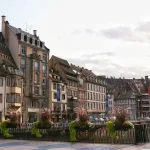
Salamanca is built almost entirely from a local sandstone called piedra de Villamayor. In direct sunlight, particularly in the late afternoon, the stone glows a deep amber-gold. It is not a postcard exaggeration — the city genuinely looks like it is lit from within. That is where the nickname “La Dorada” (The Golden City) comes from, and it earns it every evening.
The other defining quality is the university. Founded in 1218, the University of Salamanca is one of the oldest in the world and has never stopped functioning. This is not a heritage site preserved behind glass — it is an active campus with around 25,000 students. Their presence shapes everything: the bar prices, the energy after dark, the rhythm of the streets. Salamanca does not feel like a museum town.
The city also sits in Castile — the linguistic heartland of Spain. The Spanish spoken here is considered the clearest and most neutral in the country. If you are learning Spanish, or travelling with someone who is, that alone makes Salamanca worth the detour.
The Old City on Foot — A Logical Walking Order
The UNESCO-listed old city is small enough to cover in a full day on foot, but do not try to rush everything before lunch. Start early and work through it in this order.
Morning: The University Quarter
Begin at the University of Salamanca’s historic facade on Calle Libreros. The carved Plateresque stonework is extraordinary up close — dense, layered, almost obsessive in its detail. The famous challenge hidden in the facade is to find a carved frog sitting on a skull. Locals say finding it brings good luck in exams. You will hear students repeating this legend so often it becomes background noise, but the facade itself rewards slow looking regardless of the legend.
Inside, pay the small entrance fee (around €10 in 2026) to walk through the historic classrooms and the old library. The 16th-century lecture hall where Fray Luis de León famously returned to his class after years of imprisonment — reportedly beginning with “As I was saying yesterday…” — is genuinely moving.
Midday: Plaza Mayor
Walk ten minutes north to Plaza Mayor, which is widely considered the most beautiful civic square in Spain. It is not a matter of debate worth having — just stand in it. The sandstone arcades run in a perfect rectangle, the proportions feel correct in a way that is hard to explain. Come here for coffee, not for lunch — the restaurants directly on the plaza charge tourist prices. Sit outside, order a cortado, and stay for longer than you planned.
Afternoon: The Cathedrals
Salamanca has two cathedrals sharing a wall: the old Romanesque cathedral (Catedral Vieja) from the 12th century and the new Gothic-Baroque cathedral (Catedral Nueva) built from the 16th century onward. Entry to both is combined. The old cathedral is the real draw — its Byzantine dome and 15th-century altarpiece are exceptional. In the cloister, look at the carved column capitals for a face added by a stonemason in the 1990s during restoration: it depicts an astronaut. Absurd and real.
Climb to the cathedral rooftop via the Ieronimus route (separate ticket, around €5) for the best elevated view of the city. The sound of the cathedral bells up close at the hour is something you will remember.
Salamanca’s Food Scene — Where Locals Actually Eat
The area immediately around Plaza Mayor is best avoided for actual meals. Move two or three streets away and the quality improves sharply while the prices drop.
Mercado Central de Abastos on Plaza del Mercado is the city’s main food market. Go in the morning to see it functioning properly — the jamón ibérico from the surrounding Castilian region is outstanding, and several stalls serve breakfast with fresh bread and local cheese.
For a sit-down lunch, the streets around Calle Van Dyck and Calle Prior are where university staff and local professionals eat during the week. The menú del día — a two or three-course set lunch with wine or water — runs between €12 and €16 here. Hornazo is the dish to know: a dense, baked pastry filled with chorizo, pork loin, and hard-boiled egg. It is extremely local and extremely good.
Salamanca’s tapas culture is modest compared to Granada or Bilbao — bars do not automatically serve food with drinks the way they do in Andalucía. Order pintxos or raciones separately. The university district bars on Calle Bordadores are lively from around 21:00 and reasonably priced, with the warm smell of fried patatas bravas drifting out onto the cobblestones.
For something more considered, Víctor Gutiérrez restaurant holds a Michelin star and focuses on Castilian produce with modern technique. Book well in advance — the tasting menu runs around €95–€110 per person in 2026.
Day Trip or Overnight? Making the Right Call
Salamanca is 212 kilometres from Madrid and frequently marketed as a day trip. It can be done in a day, but it should not be. Here is why.
The city’s best quality — the golden stone in late afternoon and evening light — only exists if you stay past 17:00. Day-trippers who catch a morning train back typically miss the most beautiful hours entirely. The evening paseo (the slow early-evening walk along the streets and through the plaza) and the late-night university bar scene are also impossible to experience on a day trip schedule.
Recommended minimum: one overnight stay. Two nights gives you a relaxed first day in the historic centre and a second day to visit the Casa de las Conchas, the Convento de San Esteban, and potentially a half-day trip to Alba de Tormes (the small town 20 kilometres south where Saint Teresa of Ávila is buried).
If a day trip is genuinely your only option, take the earliest train from Madrid, prioritise the university and cathedrals, have lunch in the market area, and push your return train to at least 20:00.
Getting to Salamanca in 2026
Salamanca does not have an AVE high-speed rail connection — this has been a long-running infrastructure debate in Spain and remained unresolved as of early 2026. The existing train service from Madrid Chamartín takes approximately 1 hour 40 minutes on the best services. Check Renfe’s updated timetable before you travel, as service frequency improved on this route following the 2025 Castile-León regional rail agreement.
From Madrid, ALSA coaches run frequently from the Estación Sur bus station and take around 2.5 hours. They are slightly cheaper than the train (around €15–€22 one way) and deposit you at Salamanca’s bus station, which is a 15-minute walk or short bus ride from the old city.
From Seville or Valencia, the practical route involves a connection through Madrid. Salamanca has a small airport but no regular commercial scheduled flights as of 2026.
2026 Budget Reality — What Things Actually Cost
- Budget (per person/day): €60–€85. Hostel bed (€20–€30), menú del día lunch (€13), self-catering or cheap bar dinners, cathedral entry. Very achievable.
- Mid-range (per person/day): €130–€180. Three-star hotel (€70–€100/night), sit-down lunch and dinner with wine, museum entries, rooftop access. Comfortable without splurging.
- Comfortable (per person/day): €220–€320+. Boutique hotel in the old city (€150–€200+/night), lunch at Víctor Gutiérrez or similar, private walking tour (around €80 for 2 hours).
Salamanca does not have Catalonia’s tourist tax surcharge system. As of 2026, there is no additional municipal tourist levy on accommodation in the city, which keeps overnight costs genuinely lower than Barcelona or Seville equivalents.
Practical Tips Before You Go
When to visit: April to June and September to October are the most comfortable months. July and August can reach 38°C and the student population largely disappears, which changes the city’s energy significantly. Winter is cold and sometimes foggy, but the Christmas lighting in Plaza Mayor is genuinely spectacular.
Getting around: The old city is entirely walkable. You will not need a car or taxi for any of the main sites. Comfortable walking shoes on cobblestones are essential — the historic streets are uneven throughout.
Language: English is spoken at hotels and major tourist sites, but less reliably in local restaurants and markets. A few words of Spanish go a long way and are genuinely appreciated in Castile.
Free entry times: The Catedral Nueva is free to enter (not the old cathedral or rooftop) if you arrive before 10:00 on weekdays. Worth knowing if you are budget-conscious.
Frequently Asked Questions
How many days do you need in Salamanca?
Two days is the ideal minimum. One full day covers the main historic sites — the university, both cathedrals, and Plaza Mayor. A second day lets you explore at a slower pace, visit the Convento de San Esteban, and experience the evening atmosphere that makes Salamanca genuinely special rather than just efficiently ticked off.
Is Salamanca worth visiting without a car?
Completely. The entire historic centre is compact and walkable, and the train and bus connections from Madrid are straightforward. A car is only useful if you plan to combine Salamanca with rural Castile or the Sierra de Francia natural park to the south. For the city itself, a car creates more parking problems than it solves.
What is the best time of year to visit Salamanca?
April, May, September, and October offer the best combination of mild temperatures (18–24°C), manageable visitor numbers, and a functioning student population that keeps the city lively. Summer is very hot and quieter than you might expect. Spring is when the sandstone looks warmest in the longer afternoon light.
Is Salamanca expensive compared to other Spanish cities?
No — it is noticeably more affordable than Madrid, Barcelona, or Seville. Accommodation, restaurant meals, and entry fees all run lower than the major tourist cities. The mid-range daily budget here would be considered budget-level in Barcelona.
Can you visit Salamanca as a day trip from Madrid?
Technically yes, but you will miss the best of it. The golden sandstone light in late afternoon, the evening paseo, and the student bar scene are all lost on a day trip schedule. If you must do it in a day, take the earliest train available and delay your return until at least 20:00 to catch the city in its best light.