💰 Click here to see Spain Budget Breakdown
💰 Prices updated: November, 2026. Budget figures are estimates — always verify before travel.
Exchange Rate: $1 USD = €0.89
Daily Budget (per person)
Shoestring: €50.00 – €70.00 ($56.18 – $78.65)
Mid-range: €130.00 – €180.00 ($146.07 – $202.25)
Comfortable: €200.00 – €350.00 ($224.72 – $393.26)
Accommodation (per night)
Hostel/guesthouse: €15.00 – €50.00 ($16.85 – $56.18)
Mid-range hotel: €70.00 – €130.00 ($78.65 – $146.07)
Food (per meal)
Budget meal: €7.00 ($7.87)
Mid-range meal: €25.00 ($28.09)
Upscale meal: €80.00 ($89.89)
Transport
Single metro/bus trip: €1.50 ($1.69)
Monthly transport pass: €60.00 ($67.42)
Ronda has a crowd problem. Between 11:00 and 16:00 the bridge viewpoints fill with tour groups, and many visitors leave with photos of other people’s heads. A smarter plan in 2026 is to know which angles matter, when to be there, and how to get from the coast without losing half your day on the road.
The Bridge That Spans a 120-Metre Gorge
The Puente Nuevo (“New Bridge”) joins the two halves of Ronda across the El Tajo gorge. On one side is the whitewashed old Moorish town. On the other is the newer Mercadillo district. The gorge drops roughly 120 metres, and the bridge itself stands about 98 metres tall.
It is not as new as the name suggests. The architect José Martín de Aldehuela finished it in 1793, after an earlier bridge collapsed in 1741 and killed dozens of people. Builders worked for decades, lowering stone blocks by hand into a space where one slip could be fatal.
Inside the central arch is a small chamber that once served as a prison. Today it is an interpretation centre with a modest ticket price. From its window you look straight down into the gorge, and the river Guadalevín can be heard long before you see it. In spring the water roars. Swifts scream in circles around the stone, and the air near the rim is noticeably cooler than in the square.
Three Ways to See the Bridge
Most visitors stand on the bridge itself, which is the weakest view because you cannot see the bridge. Use these three instead.
From the Top: Plaza de España and the Parador
The terrace near the Parador gives you the classic straight-on look at the arch and the cliff below. Go early. By 10:30 the rail is crowded.
From the Side: Jardines de Cuenca
These cliff-edge gardens in the old town show the bridge from the west, with the full height of the stone arch against the valley. They are quieter, and the paths are easy.
From Below: Camino de los Molinos
This is the view that makes people go silent. The path drops from the old town toward the valley floor, where the bridge towers above you. Allow 20 to 30 minutes down, longer back up. The climb is steep and the surface is uneven, so wear proper shoes. The bridge from below feels almost unreal, the stone glowing gold in late afternoon.
Beyond the Bridge: What Else Fits Into One Day

The old town, known as La Ciudad, is a short walk from the bridge. Its narrow lanes smell of woodsmoke in winter and orange blossom in spring, and the cathedral-style bells of Santa María la Mayor mark every quarter hour.
- Baños Árabes: These 13th-century baths are among the best preserved in Spain, with star-shaped skylights in the vaulted roof. A visit takes about 30 minutes.
- Plaza de Toros: Built in 1785, this is one of Spain’s oldest bullrings and the home of Ronda’s famous Romero bullfighting tradition. The small museum and arena are worth an hour even if bullfighting is not for you.
- Casa del Rey Moro: The house is closed to the public, but the gardens and the steep water mine, a staircase cut into the cliff, are open and give a different angle on the gorge.
- Palacio de Mondragón: A quieter stop with Moorish courtyards and a small local history museum.
A realistic one-day plan is: bridge and viewpoints, old town, Arab Baths, lunch, then the bullring or the walk down to the Camino de los Molinos viewpoint. Trying to add more usually means rushing.
Where to Eat in Ronda
Ronda’s cooking comes from the mountains: hearty, slow-cooked, and meat-heavy. Look for rabo de toro (oxtail stew), conejo al ajillo (rabbit with garlic), and migas on cooler days. Local cheeses and cured meats are common starters. The wines of the Serranía de Ronda are worth trying by the glass. They are small-production reds that rarely travel far outside Andalusia.
- Bodega San Francisco: A reliable, no-fuss tapas spot with a busy local lunchtime crowd.
- Tragatá: A modern tapas bar from chef Benito Gómez, known for creative small plates that still taste of the region.
- Restaurante Almocábar: Traditional Andalusian cooking in a relaxed setting, good for a sit-down meal.
Opening days and hours shift by season, so check before you go. Many places stop serving lunch around 16:00.
Getting to Ronda in 2026
Ronda has no AVE high-speed service. It sits on the slower Bobadilla–Algeciras line, so the experience is scenic rather than fast. The main routes:
- From Málaga by train: Renfe regional services usually involve a change at Bobadilla or Antequera, and the trip takes about 2 to 2.5 hours. Check the timetable on Renfe or in the app, because frequencies are limited.
- From Málaga by bus: Direct coaches take roughly 1 hour 45 minutes to 2 hours and are often simpler than the train.
- From Seville: The bus takes about 2.5 hours. The train takes longer once you add transfers.
- By car: Málaga is about 100 km (around 1.5 hours), Seville about 130 km (around 2 hours), and Marbella around 60 km on a winding mountain road. A car gives you the most flexibility, and the scenery along the way is part of the trip.

Ronda’s train station and bus station are both in the Mercadillo district. From either one, the bridge is a flat walk of about 15 minutes. There is no need for a taxi.
Day Trip or Overnight?
A day trip works well if you leave early and accept that you will see the highlights, not the whole town. From Málaga, a morning bus puts you in Ronda by about 10:00, leaving you enough time for the bridge, the Baths, lunch and a walk below the gorge before an evening return.
Stay overnight if any of these apply:
- You are coming from Seville and want to avoid a five-hour round trip in one day.
- You want to see the bridge floodlit at night and again in the quiet of early morning.
- You plan to explore the Serranía de Ronda, which includes nearby villages like Setenil de las Bodegas and local wineries.
One night is enough. Evenings are the real reward, when the day-trippers leave and the stone turns amber.
2026 Budget Reality
Prices below are approximate for a single traveller in 2026 and can vary by season.
- Budget (about €40–60): Bus from Málaga (around €12–15 each way), a menu del día at a local restaurant (€13–16), and one or two monument tickets. Plenty of the viewpoints are free.
- Mid-range (about €90–130): Train or bus, entry to several monuments (Arab Baths and Plaza de Toros are each roughly €5–10), a tapas lunch with wine, and a coffee-and-cake stop.
- Comfortable (€200+): Car rental or private transfer, a long lunch at a well-known restaurant, a wine tasting, and the option of an overnight stay in a boutique hotel.

An overnight stay generally runs from around €60 for a simple guesthouse to €150 or more for a boutique hotel, with higher rates on spring and autumn weekends. Underground parking is usually €15–20 per day.
Practical Tips for Walking Ronda
- Shoes matter: The old town is cobbled, so trainers or light walking shoes are the right choice.
- Weather: Ronda sits at around 740 metres. Summer afternoons are hot, but evenings cool quickly. Winter can be cold and damp, so bring a layer all year.
- Timing: Spring and autumn offer the best balance of light, temperature and manageable crowds. July and August are busy and hot.
- Pace: Distances are short, but hills add up. Build in a coffee stop in the Plaza del Socorro or by the bullring.
Frequently Asked Questions
Is Ronda worth a day trip from Málaga?
Yes. It is one of the best day trips in Andalusia. The bridge, the gorge views and the old town can all be covered in a single day. Leave early to avoid the busiest tour-group hours, and plan on roughly 2 hours each way.
How tall is the Puente Nuevo in Ronda?
The Puente Nuevo stands about 98 metres high and spans the El Tajo gorge, which drops around 120 metres. It was completed in 1793 after an earlier bridge collapsed. It remains the best-known landmark in Ronda and one of the most photographed bridges in Spain.
Is there a high-speed train to Ronda?
No. Ronda is not on the AVE network. Renfe regional services run on the slower Bobadilla–Algeciras line, usually with a change at Bobadilla or Antequera. For many travellers, a direct bus from Málaga is simpler, and a car gives the most flexibility.
What is the best viewpoint for photographing the Puente Nuevo?
The Camino de los Molinos path below the old town gives the most dramatic view, looking up at the full height of the bridge. The Jardines de Cuenca and the Parador terrace are easier alternatives. Go early or late for better light and fewer people.
How much time do you need in Ronda?
Five to seven hours covers the bridge, main viewpoints, the Arab Baths, lunch and the bullring. If you also want the walk below the gorge and an unhurried evening, stay one night. Two nights are only needed if you plan to explore nearby villages and wineries.
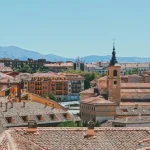
📷 Featured image by Blair Vermette on Unsplash.