On this page
- Why Málaga Works So Well for Families
- Best Neighbourhoods for Families
- Top Attractions and Highlights by Age Group
- Beach Days: Where to Swim and Play
- Where to Eat with Children
- Getting Around with Strollers and Tired Legs
- Day Trips from Málaga
- Evenings and Entertainment for All Ages
- Shopping with the Family in Tow
- Accommodation Areas by Budget
- Best Time to Visit
- Practical Tips for Families
- 2026 Budget Breakdown for a Family of Four
- Frequently Asked Questions
Planning a family trip to southern Spain in 2026 means dealing with three problems: summer heat that regularly reaches 38–40°C, crowds at the headline sights, and the challenge of keeping a toddler, a ten-year-old and a bored teenager happy in the same week. Málaga handles all three better than most Spanish cities. It is compact, it has a real beach inside the city, and its museums and parks give you somewhere cool or shady when the sun is at its worst. This guide shows you how to put it together by age group, with real prices and the timing tricks locals use.
Why Málaga Works So Well for Families
Málaga is a working Andalusian city that happens to have a Moorish fortress, a Roman theatre, a Picasso museum and a Mediterranean beach within a 20-minute walk of each other. You do not need a car. You do not need to book a day trip to keep children busy. Most of the old town is pedestrian, so you can let kids walk ahead without worrying about traffic.
The mood is relaxed. Spanish families eat late, stay out late and bring their children everywhere, so nobody looks twice at a four-year-old at the dinner table at 21:30. Cathedral bells ring across the old town on the hour, and in spring the whole centre smells of orange blossom and jasmine. On Calle Larios, the main shopping street, the marble underfoot is polished smooth, so strollers roll easily.
Since 2024, the city has kept investing in its waterfront and public transport, and it has become one of the best-connected family destinations in Spain, with direct flights from across Europe and fast trains to Madrid and Granada. It is also busier than it used to be, which is why timing matters, as you will see below.
Best Neighbourhoods for Families
Centro Histórico
The old town puts the Cathedral, Alcazaba, Roman Theatre, Picasso Museum and Atarazanas market within walking distance. It suits families with school-age children who like being close to the action. The downside is noise on Friday and Saturday nights, so ask for a room on an upper floor facing inward.
La Malagueta
This residential area sits beside the city beach, the bullring and the port. It is quieter than the centre at night and only 10–15 minutes on foot from the old town. It works well for families who want sand every day without giving up city sights.

Soho and Muelle Uno
Soho is the arts district, known for street murals, and it sits next to the port promenade with the Pompidou cube. It is lively but not rowdy. Good for teenagers who like street art and for parents who like a coffee within reach.
Pedregalejo and El Palo
These former fishing villages, about 5–6 km east of the centre, have calmer water, beach restaurants and a village feel. They suit families with young children who want a slower, beach-focused stay. You are 20–25 minutes by bus from the old town.
Torremolinos (La Carihuela)
About 15 km west, Torremolinos is a good base if theme parks and wide beaches matter more than museums. It is well connected by train to Málaga centre, and the Carihuela promenade is flat and easy with strollers.
Top Attractions and Highlights by Age Group
Toddlers and Pre-Schoolers (0–5)
Keep the days short and the stops frequent. Paseo del Parque, the palm-lined garden between the old town and the port, gives shade, fountains and flat paths. Jardín Botánico Histórico La Concepción, a short bus ride north of the centre, is a subtropical garden with waterfalls, bridges and plenty of room to run. The Parque del Oeste has playgrounds and open grass.
Muelle Uno, the port promenade, is ideal for early evening strolls, and the Pompidou Centre’s coloured glass cube gives toddlers something to point at. The Alborania marine museum at the port introduces sea life in a small, calm space.
Children Aged 6–11
This age group gets the most from Málaga. The Alcazaba, an 11th-century Moorish palace-fortress, feels like a real castle: gates, courtyards, hidden gardens and fountains that trickle in the shade. Entry is cheap, at around €3.50–€5.50 depending on whether you add Gibralfaro castle, and children get discounts. Go when it opens at 09:00 to beat the heat and the tour groups. The Roman Theatre at the base of the hill is free to see and gives kids a quick, easy history lesson.
The Interactive Music Museum (MIMMA) lets children touch, play and test instruments from around the world, and it is one of the best rainy-day options in the city. The Automobile and Fashion Museum, in a former tobacco factory, displays vintage cars in rooms you can walk through at your own pace. Centro Pompidou Málaga runs weekend family workshops, which are worth checking in advance.

If your children like heights, climb the Cathedral roof for views of the port, or ride the observation wheel at Muelle Dos.
Teenagers
Teens usually respond to things they can photograph, climb or compete in. Walk the path up to Gibralfaro castle for the best city view, then wander the Soho street art trail. The Picasso Museum rarely bores teenagers because the work is varied and the rooms are small. Add stand-up paddleboarding at Pedregalejo, kayaking from Rincón de la Victoria, or a half-day at Aqualand Torremolinos for adrenaline.
Beach Days: Where to Swim and Play
Málaga’s city beaches have dark golden sand and a long, flat promenade behind them. La Malagueta is the closest to the old town, with showers, lifeguards in season and chiringuitos for lunch. It can get crowded in July and August, so arrive before 11:00.
Pedregalejo is the family favourite. Small breakwaters create calmer, shallower water, and the smell of sardines grilling over olive-wood fires drifts along the sand around lunchtime. El Palo is slightly quieter, and Playa de la Misericordia, west of the port, has more space and a wide promenade for scooters and bikes.
Watch the flags: green means swimming is fine, yellow means be careful, red means stay out, and purple means jellyfish or marine life warnings. In 2026, most city beaches have lifeguards from roughly June to September, but not every day outside peak season. Hire two loungers and a parasol for around €8–€15 a day if you need shade, because the sun at midday is strong even in spring.
Where to Eat with Children

Eating out with children is easy in Málaga because kitchens are flexible and portions can be shared. In the old town, start at Mercado Central de Atarazanas, a 19th-century iron market with a Moorish gate. Kids can look at the fish, fruit and olive stalls while you graze on fresh produce or small tapas at the counters. Go before 14:00, when the stalls are busiest and freshest.
For tapas without fuss, try the lanes around Calle Granada and Plaza de la Merced, where you can order several small plates and keep children moving. Soho and the Calle Carretería area have cheaper, more local places, and many offer a menú del día at lunchtime for €12–€16 for adults.
At the beach, the chiringuitos of Pedregalejo and El Palo are the best option for young families. You eat with sand underfoot, children can play within sight, and grilled sardines, fried fish and rice dishes arrive quickly. Most open for lunch from 13:00 and for dinner from around 20:00 in summer.
For a sweet stop, order hot chocolate and churros at Casa Aranda, a local favourite, or let children choose gelato at Casa Mira on Calle Larios, which has been scooping since 1890. Mercado de Salamanca, a smaller neighbourhood market, is good for a low-key, local lunch away from the tour groups.
Getting Around with Strollers and Tired Legs
The old town is almost entirely walkable, and most of it is flat. You can walk from the Cathedral to the port in 10 minutes and from the Alcazaba to the Picasso Museum in five. For anything further, the city is well organised.
- From the airport: The Cercanías C1 train takes about 12 minutes to the Centro-Alameda station and costs under €2. The Exprés Aeropuerto bus (line A) takes around 20–30 minutes and costs about €4. A taxi to the centre costs roughly €22–€25 at a fixed rate, which is practical if you have car seats and luggage.
- Buses: The EMT network is clean, frequent and accepts contactless payment. Strollers are welcome in the designated space.
- Metro: Two lines, mainly useful for reaching the west of the city and the Atarazanas area. It is fast and cool in summer.
- Taxis: Plentiful, with most cars able to fold a stroller into the boot. Child seats are not required in urban taxis in Spain for children over 135 cm in the back seat, but ask if you need one.
- Bikes and scooters: The seafront promenade has cycle paths. Rentals are about €10–€15 for a few hours. Family bike trailers are available from some shops.

The hills are the one real challenge. The Alcazaba and Gibralfaro involve steps and slopes, so a baby carrier is easier than a stroller. Wet marble can also be slippery on Calle Larios after rain.
Day Trips from Málaga
- Bioparc Fuengirola (45 minutes by train, then a short walk): A modern zoo with no cages, built around lemurs, tigers and tropical habitats. Plan 3–4 hours. Tickets run about €25–€30 for adults, with reduced prices for children.
- Nerja Caves and Nerja town (about 1 hour by bus): Huge limestone caverns, cool even in August, followed by the Balcón de Europa viewpoint. Allow a full day. Good for ages 5 and up.
- Caminito del Rey (about 1 hour 30 minutes by train plus transfer): A dramatic clifftop walkway above a gorge. The minimum age is 8, and tickets (about €10 plus transport) sell out weeks ahead. Allow 5–6 hours total. Best for adventurous families.
- Selwo Marina and Benalmádena (30–40 minutes by train): Dolphin and sea lion shows, a cable car up Mount Calamorro, a butterfly park and Sea Life. You could easily fill two days here with young children.
- Granada (about 1 hour 30 minutes by fast train): The Alhambra is spectacular, but tickets sell out fast, so book weeks in advance. It is a long day for under-sixes, but older children usually love it.
Evenings and Entertainment for All Ages
Evenings are the best time to be outdoors in Málaga, especially in summer. Families walk the old town from around 19:30, when the air cools, and the streets fill with grandparents, babies in strollers and teenagers eating ice cream. The port promenade at sunset is hard to beat. At Christmas, the Calle Larios light-and-sound show draws huge crowds, and children love it.
For flamenco, look for early evening shows around 19:00–20:00 at small venues such as Kelipe or the Museo del Flamenco programme. The stamping and sharp guitar are loud but exciting, and shorter shows suit children better. Teatro Cervantes also hosts family programmes during the year.
For a treat, head to the rooftop terrace of AC Hotel Málaga Palacio, which looks straight at the Cathedral and the port. It is calmer before 20:00, with no cover charge, and children usually enjoy the view.
Shopping with the Family in Tow

Calle Larios and the surrounding streets offer everything from Spanish chains to souvenir shops. Larios Centro, right on the street, is a quick, air-conditioned stop. For local gifts, browse ceramics, olive oil and cured products at Atarazanas market, or look at small craft shops along Calle Granada and Calle Nueva.
Muelle Uno has open-air shops by the sea, so children can run around while you browse. For bigger outlets, Plaza Mayor Shopping and the McArthurGlen Málaga Designer Outlet, both a short bus or taxi ride from the centre, are good for clothes and sports gear. The Pompidou and Picasso museum shops sell prints and children’s activity books that make better souvenirs than a plastic flamenco doll.
Accommodation Areas by Budget
Málaga has restricted new tourist apartment licences in many neighbourhoods since 2025, so choose a registered property and check the licence number before paying. For families, apartments with a kitchen and washing machine often beat hotel rooms.
Budget (about €70–€110 per night for a family room or apartment)
Look at apartments and family hostel rooms in Centro Histórico, Soho and Teatinos. Teatinos is residential, with good bus links, and cheaper than the centre.
Mid-Range (about €120–€200 per night)
Three- and four-star hotels in the old town and La Malagueta offer family rooms and breakfast. Options like AC Hotel Málaga Palacio put you next to the Cathedral. Beach apartments in Pedregalejo suit longer stays.
Luxury (about €250–€450 or more per night)
Hotel Molina Lario, next to the Cathedral, has a rooftop pool and views. Gran Hotel Miramar, by La Malagueta beach, offers a spa, gardens and family suites. Book early for August.
Best Time to Visit
Spring (April–May) is ideal: 20–25°C, comfortable for sightseeing, and not yet crowded. Semana Santa (Holy Week) brings dramatic processions, but streets are packed and hotels cost more.
Summer (June–August) is hot and busy, with sea temperatures perfect for swimming but midday heat that can make sightseeing hard with small children. Night of San Juan (23 June) has beach bonfires, and the Feria de Málaga in mid-August is a week of music, dancing and fairground rides. It is fun but loud.
Autumn (September–October) is the best-kept secret: warm sea, lower prices after school returns and gentler sun. Winter is mild, around 12–18°C in the day, with the Christmas lights and the Three Kings parade on 5 January giving children a real treat.

Practical Tips for Families
- Sun: UV levels are high from April to October. Use SPF 50, hats and rash vests, and plan indoor stops between 13:00 and 17:00.
- Safety: Málaga is safe, but pickpockets work Calle Larios, the market and the bus to the Alcazaba. Keep phones and passports zipped away, and never leave valuables on the beach.
- Siesta hours: Small shops close from about 14:00 to 17:00. Large stores, malls and museums stay open. Dinner starts after 20:30, but many restaurants serve early meals for children.
- Tipping: Not required. Rounding up or leaving €1–€2 for good service is normal.
- Language: Spanish is spoken everywhere, but staff in tourist areas speak good English. Learning “una mesa para cuatro” and “la cuenta, por favor” helps.
- SIM cards: Orange, Movistar and Vodafone sell tourist SIMs and eSIMs. Most visitors from the EU can use their home plan with roaming.
- Water: Tap water is safe but hard and tastes strongly of minerals, so many families buy bottled water.
- Entry rules: Non-EU travellers should check the EU Entry/Exit System, now operating, and the ETIAS authorisation planned from late 2026. Children under 12 do not give fingerprints.
2026 Budget Breakdown for a Family of Four
These are daily estimates for two adults and two children, including accommodation. Prices vary by season, and August and Easter cost more.
- Budget (€150–€200 per day): apartment or family hostel room (€80–€110), food from markets, menú del día and picnics (€45–€60), one or two paid attractions (€15–€25), bus tickets (€6–€10).
- Mid-range (€280–€400 per day): family hotel room (€140–€200), tapas and one sit-down meal (€90–€120), museums and a day-trip ticket (€40–€60), occasional taxis (€10–€20).
- Comfortable (€500–€800 per day): luxury hotel or suite (€250–€400), restaurant lunches and dinners (€150–€220), theme park, private tours or beach club (€70–€120), taxis and transfers (€30–€60).
Typical entry prices: most Málaga museums cost €4–€10 for adults, with children free or reduced. Theme parks and zoos such as Bioparc, Selwo Marina or Aqualand run roughly €20–€35 per person. Family tickets and online discounts often save 10–15%.
Frequently Asked Questions
Is Málaga good for families with young children?
Yes. Málaga has calm city beaches, flat promenades, shady parks and compact sights, so you rarely need long transfers. Interactive museums help on hot or rainy days, and restaurants welcome children at almost every table. Plan around the midday heat and bring a lightweight stroller.

How many days do you need in Málaga with kids?
Four to five days works best. That gives you two days for the old town and museums, one or two beach days, and one day trip such as Bioparc, Nerja Caves or Caminito del Rey. With toddlers or teens who dislike rushing, add a sixth day for slower mornings at the beach.
What is the best family beach in Málaga?
Pedregalejo is the top pick for young children. Small breakwaters keep the water calmer and shallower, and beach restaurants sit just behind the sand. La Malagueta is closer to the old town and has showers and seasonal lifeguards. Check the flag colour before swimming at either.
Is Málaga stroller-friendly?
Mostly yes. The old town has wide pedestrian streets with smooth paving, and the seafront is flat. The Alcazaba, Gibralfaro and some side streets have steep slopes and steps, so a baby carrier is easier there. Buses and the metro have space for strollers. Pick a lightweight model with good wheels.
What are the best rainy-day activities in Málaga with kids?
Try the Interactive Music Museum (MIMMA), the Automobile and Fashion Museum, Centro Pompidou’s family workshops and the Picasso Museum. Rain is rare and showers usually pass within hours, so keep plans flexible and finish with hot chocolate and churros.
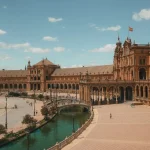
📷 Featured image by Ramon Albiol on Unsplash.