On this page
- Metro, Bus & Cercanías: Choosing the Right Network for Each Journey
- Getting Around on Foot: The Neighbourhoods Worth Walking Between
- Taxis, Rideshares & Electric Scooters in 2026
- Madrid’s Tourist Card vs. Single Tickets: What Actually Saves You Money
- 2026 Budget Reality: What Getting Around Madrid Actually Costs
- Arriving in Madrid: Airport, Train Stations & Bus Terminals Explained
- Day Trip Logistics: Using Madrid as Your Base
- Practical Safety, Etiquette & Local Habits That Will Make Your Life Easier
- Frequently Asked Questions
Madrid in 2026 is busier than ever — and more navigable than most visitors expect, until they aren’t prepared. The city expanded its low-emission zone (ZBE) restrictions in late 2024, new AVE connections reshuffled which station serves which route, and the tourist tax finally arrived in the capital in 2025. Getting any of these things wrong costs you time, money, or both. This guide cuts through the noise and tells you exactly how to move around Madrid without friction, waste, or guesswork.
Metro, Bus & Cercanías: Choosing the Right Network for Each Journey
Madrid’s public transport network is one of the best in Europe, but it runs as three overlapping systems — and confusing them is the most common beginner mistake.
The Metro
The Metro has 13 lines and covers virtually every neighbourhood a tourist is likely to visit. Trains run from 6:00 to 1:30 the following morning, with frequencies of 3–5 minutes during peak hours. The system is clean, air-conditioned, and easy to navigate even with zero Spanish. Use the Metro for any journey that crosses multiple neighbourhoods — say, Sol to Retiro, or Chueca to the Prado. A single Metro journey uses one flat-fare ticket regardless of distance within Zone A (the city core). Line 8 is the only line that goes directly to Barajas Airport, though it requires a supplement — more on this below.
The EMT Bus Network
The bus is slower than the Metro but much better for moving laterally across central Madrid — think Gran Vía to Paseo de la Castellana without going underground. The night bus network (Búho lines, prefixed N) runs after Metro closes and covers most of the centre. The Circular line (bus 27 and the tourist-adjacent Circular routes) is genuinely useful for seeing the city from street level. Bus stops show real-time arrivals on digital screens and via the Madrid Metro app.

Cercanías Commuter Rail
Cercanías is the regional rail network, operated by Renfe. Tourists most often use it to reach Alcalá de Henares, El Escorial (via a connecting bus), and Atocha–Chamartín transfer journeys. Since Chamartín was fully rebranded as Madrid Chamartín–Clara Campoamor in 2021 and then expanded further in 2025, it now handles more AVE long-distance arrivals than Atocha — so knowing how to use Cercanías to move between the two stations takes on real practical value.
Getting Around on Foot: The Neighbourhoods Worth Walking Between
Madrid’s historic centre is deceptively compact. Tourists regularly over-rely on the Metro for journeys that are genuinely better on foot — 15 minutes walking in fresh air versus descending, waiting, riding two stops, and ascending again.
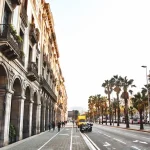
The central axis from Plaza Mayor to Retiro Park takes around 25 minutes at an easy pace, passing the Prado, the Thyssen, and the Reina Sofía along the Paseo del Arte corridor. This walk along Calle Atocha and the Paseo del Prado is one of the best in the city — wide pavements, lined with horse chestnut trees that shade you from the summer heat, the low hum of conversation from terraza tables spilling onto the street.
Walking between neighbourhoods like Malasaña, Chueca, and Lavapiés is entirely practical. The distance between Malasaña’s epicentre (Calle del Pez) and Chueca’s main square is roughly 10 minutes on foot. Lavapiés to La Latina is 12 minutes. These are also the neighbourhoods where walking is more rewarding than riding — you see the painted building facades, smell the cumin and olive oil drifting from restaurant kitchens at midday, and get the actual texture of the city.

The main caveat: Madrid’s summers (June through September) mean temperatures routinely hitting 36–40°C. Plan long walks for mornings before 11:00 or evenings after 19:00. The city’s Madrid Río parkway along the Manzanares river is shaded and well-paved — a legitimate alternative route that connects Arganzuela with Casa de Campo and Carabanchel.
Taxis, Rideshares & Electric Scooters in 2026
Taxis
Madrid’s official taxis are white with a red diagonal stripe. They’re metered, regulated, and generally honest. You can hail them on the street, find them at ranks near major attractions and stations, or book via the TaxiMadrid app (the official app used by the Gremio del Taxi cooperative). Fares start at €2.50 during daytime and €3.15 at night and on weekends. Airport runs from Barajas to the city centre carry a fixed supplement of €5.50 on top of the meter. Tips are not mandatory — rounding up to the nearest euro is the norm.
Rideshare Apps
Uber and Cabify both operate legally in Madrid as VTC (vehicle with driver) services. Pricing is dynamic and surge-based, meaning rush hour or a rainy Saturday night can make them significantly more expensive than a taxi. For airport pickups, however, they often beat the taxi queue in terms of wait time. Bolt expanded its Madrid operations in 2025 and is currently the most competitively priced option for short city rides.
Electric Scooters
After the chaos of 2019–2022, Madrid’s shared scooter landscape is now tightly regulated. As of 2026, licensed operators include TIER, Lime, and Voi. You must have a valid driving licence or moped licence to use them legally (checked at registration). Scooters cannot be ridden on pavements — pavement riding is a €500 fine — and parking in non-designated areas generates automatic charges on your account. They work well for short intra-neighbourhood trips and are impractical for anything involving a hill or a luggage bag.

Madrid’s Tourist Card vs. Single Tickets: What Actually Saves You Money
This is the question every visitor wrestles with, and the answer depends entirely on how you move around.
The Tarjeta Turística (Tourist Travel Pass)
The tourist card gives unlimited Metro, bus, and Cercanías Zone A travel for 1, 2, 3, 5, or 7 consecutive days. As of 2026, prices sit at approximately €8.40 for 1 day, €14.20 for 2 days, €18.40 for 3 days, €26.30 for 5 days, and €35.40 for 7 days (Zone A, adult pricing). There is also a Zone T option that extends to the wider region including Toledo and Guadalajara, which costs roughly 30% more. The card requires a contactless payment or cash purchase at Metro ticket machines — it is not available as a smartphone-only option yet, though CRTM has signalled this will change by late 2026.
Single Tickets and the Tarjeta Multi
A single Zone A Metro journey costs €1.50 to €2.00 depending on the number of stations (the surcharge kicks in beyond 5 stations). The Tarjeta Multi is a rechargeable card that lets you load 10 trips for €12.20 — effectively €1.22 per journey, and it works on buses too. For visitors staying 3–5 days who plan to use public transport 3–4 times daily, the tourist card breaks even. For shorter stays or visitors who walk a lot, the Tarjeta Multi loaded with 10 trips is usually cheaper and doesn’t require consecutive-day use.
2026 Budget Reality: What Getting Around Madrid Actually Costs
Prices below reflect 2026 figures, post the national transport subsidy adjustment that took effect in January 2026 (the 50% discount on Cercanías was reduced to 30% for non-residents, which affects tourists using Cercanías heavily).

- Budget traveller: Using the Tarjeta Multi with 10-trip blocks, averaging €1.22 per Metro or bus journey. Walking intensively. Total daily transport spend: €3–€5.
- Mid-range traveller: Using the 3-day tourist card (€18.40), mixing Metro with occasional taxi for late nights. One taxi per evening: €6–€10. Total daily transport spend: €12–€18.
- Comfortable traveller: Cabify or Uber for most journeys, no queuing, door-to-door. Average ride €9–€15 within central Madrid. Total daily transport spend: €25–€40.
Airport transfer costs in 2026:
- Metro Line 8 (Barajas T1–T4 to Nuevos Ministerios): €5.00 flat fare supplement included in any ticket type, including the tourist card
- Official taxi, fixed supplement + meter: typically €28–€35 total from Terminals 1–3; €32–€40 from Terminal 4
- Rideshare (Bolt/Cabify): €22–€35 depending on time of day
- Aerobús (private express coach to central stops): €5.00 fixed price as of 2025 — still the cheapest door-to-city-centre option if you’re not carrying heavy luggage
Madrid tourist tax: Introduced in October 2025, the Madrid tourist tax applies to all tourist accommodation and is charged per person per night. Rates range from €0.75 (hostels and budget accommodation) to €4.00 (5-star hotels and luxury apartments). This is separate from transport but worth factoring into your daily budget — it is not always included in booking platform price displays.
Arriving in Madrid: Airport, Train Stations & Bus Terminals Explained
Adolfo Suárez Madrid–Barajas Airport
Barajas is one of Europe’s largest airports and genuinely confusing on first arrival. Terminal 4 (T4) is physically separate from Terminals 1, 2, and 3 and requires either a short shuttle bus or the Metro (one stop on Line 8). Most Iberia long-haul flights use T4; budget carriers including Vueling, Ryanair, and easyJet predominantly use T1 and T2. Check your terminal before planning your route. The Metro ride from T4 to Nuevos Ministerios (the main interchange for central Madrid) takes about 25 minutes.
Train Stations: Atocha vs. Chamartín
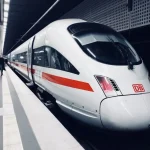
Knowing which station serves your route has become more important since the Chamartín expansion in 2025. As a general guide: Atocha handles AVE high-speed trains to Barcelona, Valencia, Seville, Málaga, and southern/eastern Spain. Chamartín now handles AVE services to A Coruña, Valladolid, Bilbao, and the new Extremadura line completed in late 2025. Both stations are on the Metro. Atocha is on Line 1 (Atocha Renfe stop); Chamartín is on Lines 1 and 10.

Estación Sur Bus Terminal
Madrid’s main intercity bus station is Estación Sur de Autobuses in Méndez Álvaro, served by Metro Line 6. It handles most routes to southern Spain. ALSA, AVANZA, and Socibus all depart from here. The separate Moncloa interchange serves buses to El Escorial, Segovia (via Autocares Herranz), and the Sierra de Guadarrama — useful if you’re day-tripping northwest of the city.
Day Trip Logistics: Using Madrid as Your Base
Madrid sits at the geographic centre of the Iberian Peninsula, which makes it an exceptional base for day trips. Travel times by high-speed or regional rail put several cities within easy reach.
- Toledo: Renfe high-speed Avant train from Atocha — 33 minutes, roughly €14–€16 each way in 2026. Trains run frequently. Toledo is compact enough to explore in 5–6 hours on foot.
- Segovia: Renfe Avant from Chamartín — 28 minutes, around €13–€15 each way. Note: Segovia’s train station is 2.5 km from the old city; local buses or taxis cover this. Alternatively, buses from Moncloa take 75 minutes but drop you centrally.
- Ávila: Cercanías or Avant from Chamartín — 49–90 minutes depending on service, €12–€18. Ávila’s city walls are visible from the train as you arrive — the medieval ring of stone rising out of the Castilian plateau is a genuine visual jolt.
- Cuenca: AVE from Atocha — 55 minutes to Cuenca Fernando Zóbel station (which is 6 km from the old city; taxis available). Around €20–€30 each way. Half-day minimum recommended.
- Aranjuez: Cercanías C-3 from Atocha — 48 minutes, €4 each way with the 30% Cercanías discount. Easiest budget day trip from Madrid.

Book train tickets on the Renfe app or website. In 2026, the Renfe app finally supports Apple Pay and Google Pay for payment — previously a persistent frustration for foreign visitors. Seats sell out on summer weekends, so same-day travel to Toledo or Segovia in July or August is a gamble.
Practical Safety, Etiquette & Local Habits That Will Make Your Life Easier
Pickpocket Awareness
Madrid is a safe city by any reasonable measure, but pickpocketing is a genuine issue in specific locations: the Metro (especially Line 1 and the Sol interchange during peak hours), the Gran Vía, and around the Rastro flea market on Sunday mornings. The method is almost always distraction-based — a “helpful” stranger, a fake map, a sudden crowd press. Keep phones in front pockets, use bags that close securely, and be especially alert on escalators where someone behind you has easy access to a backpack.
The ZBE Low-Emission Zone
If you’re renting a car — or being picked up by a private vehicle — the ZBE (Zona de Bajas Emisiones) now covers most of the M-30 ring and parts of the M-40 corridor. Foreign-registered vehicles are required to display an environmental badge (etiqueta medioambiental) or they risk fines of €100+. Rental cars are always badged. Private vehicles from other countries need to check compliance before entering. Most tourists have no reason to drive in Madrid anyway — the combination of Metro and walking genuinely covers everything.
Timing and the Spanish Daily Rhythm
Madrid runs late by northern European or North American standards, and fighting this rhythm is a losing battle. Lunch is 14:00–16:00. Dinner rarely before 21:00 — restaurants that open at 19:00 are mostly catering to tourists, and the atmosphere reflects that. Museum peak hours are 10:00–13:00; returning after 16:00 typically means shorter queues. The Prado and Reina Sofía both offer free entry during specific hours (the Prado: 18:00–20:00 Monday to Saturday, 17:00–19:00 Sunday) — these are the worst hours to visit if you want space, but the best hours if you want to save money.

Language Basics
English is widely spoken in tourist areas, hotels, and most restaurants in central Madrid. Metro staff speak limited English but can handle basic directions. Outside the centre — say, in Vallecas, Carabanchel, or Usera — English proficiency drops significantly. A few words of Spanish go a very long way: ¿Dónde está…? (Where is…?), Una entrada, por favor (One ticket, please), and La cuenta, por favor (The bill, please) cover the vast majority of tourist interactions.
Frequently Asked Questions
Is Madrid easy to navigate without speaking Spanish?
Yes, for the most part. The Metro system has English signage throughout, and major tourist areas have English-speaking staff. The Mi transporte app and Google Maps both work well in Spanish and English. You may hit language barriers in outer neighbourhoods or at local bus stops, but the core tourist circuit is well set up for non-Spanish speakers.
How do I pay for the Metro in Madrid in 2026?
You need either a physical Tarjeta Multi (rechargeable card, bought at any Metro ticket machine for a €2.50 card fee) or the Tarjeta Turística. Contactless card payment is now accepted at Metro barriers on most lines as of mid-2025, but the system has reliability issues — always have a physical card as backup. Bank card tap-to-pay is not yet fully universal across all stations.
What is the cheapest way to get from Barajas Airport to central Madrid?
The Metro Line 8 combined with a Zone A tourist card or a purchased supplemented ticket is the cheapest option at €5.00 total. The Aerobús express coach runs for the same price (€5.00 as of 2025) and drops you at Atocha, Recoletos, Cibeles, and Moncloa — more useful if you’re staying outside the Metro catchment area. Both take around 30–40 minutes depending on traffic and transfers.

Do I need to book Madrid attractions in advance?
For the Prado, Reina Sofía, and Thyssen, booking online in advance is strongly recommended during summer (June–September) and around Easter. In 2026, the Prado in particular operates timed-entry slots that frequently sell out 3–5 days ahead in peak season. Royal Palace entry is also timed and sells out on summer weekends. For most other sites, same-day entry is usually fine except on public holidays.
Has Madrid introduced a tourist tax, and how does it work?
Yes. Madrid’s tourist tax (tasa turística) launched in October 2025 and applies to all overnight stays in tourist accommodation, including hotels, hostels, and short-term rental apartments. Rates range from €0.75 per person per night in budget accommodation to €4.00 in luxury categories. It is collected by the accommodation provider at check-in or check-out and is separate from your room rate — not always shown upfront on booking platforms, so factor it in when comparing prices.
Explore more
Best Neighborhoods in Madrid, Spain — Area-by-Area Guide
The Best Day Trips from Madrid: Unforgettable Escapes Near the City
Shopping in Madrid, Spain — Best Markets and Stores
📷 Featured image by Eduardo Rodriguez on Unsplash.