On this page
- The Green North: Galicia, Asturias, and the Cantabrian Coast
- Inland Spain: Castile’s Meseta, Medieval Towns, and Empty Landscapes
- The Desert, the Wetlands, and the Volcanic Islands: Spain’s Wildest Terrain
- Spain’s Food Diversity Beyond Paella and Tapas
- The Cultural Calendar: Festivals That Have Nothing to Do With the Beach
- 2026 Budget Reality: What It Costs to Explore Beyond the Tourist Trail
- Getting Around Spain’s Lesser-Known Regions in 2026
- Frequently Asked Questions
💰 Click here to see Spain Budget Breakdown
💰 Prices updated: October, 2026. Budget figures are estimates — always verify before travel.
Exchange Rate: $1 USD = €0.88
Daily Budget (per person)
Shoestring: €60.00 – €90.00 ($68.18 – $102.27)
Mid-range: €120.00 – €180.00 ($136.36 – $204.55)
Comfortable: €220.00 – €470.00 ($250.00 – $534.09)
Accommodation (per night)
Hostel/guesthouse: €15.00 – €50.00 ($17.05 – $56.82)
Mid-range hotel: €70.00 – €130.00 ($79.55 – $147.73)
Food (per meal)
Budget meal: €7.00 ($7.95)
Mid-range meal: €25.00 ($28.41)
Upscale meal: €80.00 ($90.91)
Transport
Single metro/bus trip: €3.00 ($3.41)
Monthly transport pass: €24.00 ($27.27)
Most people planning a trip to Spain in 2026 still search for the same things: a beach in Málaga, a weekend in Barcelona, maybe a day trip to Granada. And those are all worthwhile. But if that’s the entirety of your mental map of Spain, you’re missing a country that stretches from Atlantic rainforests to near-desert plains, from volcanic islands to medieval walled Cities that see a fraction of the tourist numbers they deserve. Spain is the second-largest country in the EU by area, and the contrast between its regions is sharper than most visitors ever experience.
The Green North: Galicia, Asturias, and the Cantabrian Coast
The Spain that most people picture — terracotta rooftops, blazing sun, dry hillsides — is largely southern and eastern Spain. Head northwest and the landscape changes completely. Galicia feels closer to Ireland than Andalucía. The air smells of salt and pine, the hills stay green year-round, and the coastline is carved into dramatic rías (coastal inlets) that look more like Norwegian fjords than anything you’d expect to find in Spain.
Santiago de Compostela is the obvious anchor point. The cathedral’s granite facade, dark with age and damp, looms over the Praza do Obradoiro in a way that genuinely stops you in your tracks. But Galicia beyond Santiago is just as compelling — the fishing village of Combarro, the wild Rías Baixas wine country, the dramatic coastline of the Costa da Morte.
Move east into Asturias and you hit the Picos de Europa, a mountain range that sits just 20 kilometres from the sea. You can swim in the morning and hike at altitude in the afternoon. The region’s villages, like Llanes and Cudillero, are compact, colourful, and almost entirely free of the mass tourism infrastructure that defines the Costa del Sol.
The Cantabrian coast between Santander and San Sebastián is similarly underappreciated. Surfing beaches, prehistoric cave art at Altamira, and a string of small towns where the sobremesa — the long, unhurried conversation after a meal — still feels like a genuine cultural practice rather than a performance for tourists.
Inland Spain: Castile’s Meseta, Medieval Towns, and Empty Landscapes
The meseta — the vast central plateau that covers much of Castile — is an acquired taste. It’s flat, austere, and in summer, brutally hot. But it has a particular kind of beauty that rewards patience. Driving through it at dusk, with the light turning the wheat fields amber and the silhouette of a ruined castle on the horizon, is one of those Spain experiences that never makes it onto an Instagram grid but stays with you anyway.
Towns like Cuenca, Sigüenza, Zamora, and Ávila sit within this landscape and each one punches well above its tourist profile. Cuenca’s casas colgadas — the hanging houses built into the edge of a gorge — are genuinely extraordinary. Ávila’s medieval walls are the most complete in Europe and you can walk the full circuit on top of them. Zamora has more Romanesque churches per square kilometre than anywhere else on the continent.
Extremadura, further south and west, takes the emptiness even further. It’s one of the least densely populated regions in Europe, and that’s exactly why it works. The Roman ruins at Mérida — including a theatre still used for performances in summer — rival anything in Italy for scale. The town of Cáceres is an almost entirely intact medieval city. UNESCO-listed and yet quiet enough that you can wander its stone streets in the early morning and hear nothing but pigeons.
The Desert, the Wetlands, and the Volcanic Islands: Spain’s Wildest Terrain
Spain contains the only true desert in Europe. The Tabernas Desert in Almería (inland from the coast, not part of the beach strip) is a badlands landscape of eroded gullies and dried riverbeds that looks like Arizona. It averages less than 200mm of rainfall per year. Spaghetti westerns were filmed here for a reason — it’s that extreme.
At the opposite end of the spectrum, the Doñana National Park in Andalucía is one of Europe’s most important wetland ecosystems. Flamingos, Iberian lynx, and hundreds of bird species occupy a landscape of marshes, dunes, and pine forests at the mouth of the Guadalquivir river. Access is controlled to protect the habitat, and guided tours book up weeks in advance, especially in spring migration season.
Then there’s the Canary Islands — technically part of Spain, sitting off the west coast of Africa. These are not beach resorts with a Spanish flag. Each island has a distinct character. Lanzarote is a UNESCO Biosphere Reserve, its landscape shaped entirely by volcanic eruptions in the 18th century. La Palma, still recovering from the 2021 eruption, offers some of the darkest skies in the northern hemisphere and an astrophysics tourism scene that has genuinely grown in 2025 and 2026. La Gomera is so small and steep that it developed its own whistling language — silbo gomero — still taught in schools today.
Spain’s Food Diversity Beyond Paella and Tapas
Spanish food culture is intensely regional, and eating your way through different regions reveals how little “Spanish food” actually means as a single category. In Galicia, the focus is seafood — percebes (barnacles), pulpo a feira (octopus with paprika and olive oil), and empanada gallega filled with tuna and onion. The wine is Albariño, crisp and mineral, not Rioja.
In Asturias, the signature dish is fabada — a thick stew of white beans, chorizo, and black pudding that is the opposite of beach-holiday food. It’s designed for cold, wet weather, and it tastes exactly right eaten in a stone-walled restaurant in October with the rain hitting the windows.
The Basque Country has a food culture so serious it barely needs explaining — more Michelin stars per capita than anywhere else on earth, a pintxos bar culture in San Sebastián that functions as a kind of competitive sport, and a tradition of all-male gastronomic societies (txokos) that has been cooking seriously since the 19th century.
But even away from the culinary hotspots, regional specificity holds. Murcia grows some of the best vegetables in Europe and its huerta (market garden) cuisine is built around them. The Canary Islands have mojo sauces, wrinkled potatoes, and gofio (a toasted grain flour) — none of which appears anywhere on mainland Spain’s menus.
The Cultural Calendar: Festivals That Have Nothing to Do With the Beach
Spain’s festival culture is extreme and often genuinely baffling to outsiders, which is part of what makes it interesting. Las Fallas in Valencia in March involves eleven months of construction culminating in three days of noise, fire, and the burning of enormous papier-mâché sculptures in the street. It’s not a tourist event with a viewing area — it occupies the entire city.
Semana Santa (Holy Week) in Seville is the most famous version of something that happens simultaneously across dozens of Spanish cities, each with their own distinct brotherhoods, costumes, and procession routes. The experience in smaller cities like Zamora, Cuenca, or Cartagena is more intimate and often more atmospheric than the internationally famous version.
In Catalonia, the castellers — human tower builders — compete at festivals throughout the year in a tradition that is part sport, part community ritual. In the Canary Islands, the Carnival of Santa Cruz de Tenerife rivals Rio in scale. In Asturias, bagpipes (yes, bagpipes) are a legitimate part of Celtic cultural heritage, not a novelty act.
2026 Budget Reality: What It Costs to Explore Beyond the Tourist Trail
One practical advantage of moving beyond the main tourist circuits is cost. The price gap between popular and lesser-visited destinations in Spain has widened since 2024, partly because Barcelona and Málaga have introduced or increased tourist taxes, and partly because accommodation costs in the main cities have risen sharply.
- Budget travel (hostel dorm, self-catering, local bars): €45–65 per day in cities like Zamora, Cáceres, or Lugo. The same budget in Barcelona or San Sebastián gets you considerably less.
- Mid-range (private room in a good guesthouse or rural hotel, sit-down meals, entry fees): €90–130 per day across most of inland Spain and the green north.
- Comfortable travel (boutique hotel, full restaurant meals, wine, day trips): €160–220 per day. In Extremadura or Castile, this buys an experience that would cost significantly more in Andalucía’s main tourist centres.
The Canary Islands sit in a different bracket — flights add cost, but the islands themselves remain affordable for accommodation and food compared to mainland coastal resorts. Lanzarote and La Palma in particular have avoided the aggressive price inflation visible in Tenerife’s south.
Tourist taxes in 2026: Barcelona charges €3.25–€6.75 per person per night depending on accommodation category. Madrid introduced a city tourist levy in late 2025 at €1–€2 per night. Most smaller cities and rural areas still charge nothing.
Getting Around Spain’s Lesser-Known Regions in 2026
Spain’s high-speed rail network (AVE and Avlo) has expanded further since 2024. The Galicia extension now makes Santiago de Compostela reachable from Madrid in under three hours. The Extremadura line connecting Madrid to Cáceres and Mérida, long delayed, became fully operational in 2025 and has changed the accessibility of that region significantly.
For the Cantabrian coast and Asturias, Renfe’s Media Distancia trains connect the main towns, but the coastal road is genuinely scenic and car hire makes sense if you want to explore at your own pace. Expect to pay €30–50 per day for a small car from a regional airport like Asturias (OVD) or Santander (SDR).
The Canary Islands require a flight from mainland Spain. Vueling, Iberia, and Ryanair all serve the main islands from Madrid and Barcelona. Inter-island flights are short (40–60 minutes) and reasonably priced if booked in advance — €30–70 one-way is realistic for most routes.
For the rural interior of Spain, the honest advice is that a car is often the only practical option. Bus services exist but are infrequent. The upside is that driving in Extremadura, the La Mancha plateau, or the Sierra de Gredos involves almost no traffic, clear roads, and landscapes that make the driving itself worthwhile.
Frequently Asked Questions
What part of Spain is least touristy?
Extremadura consistently ranks as the least visited region in mainland Spain despite having two UNESCO World Heritage cities (Cáceres and Mérida). Inland Castile — particularly Zamora, Sigüenza, and Soria — also sees very low tourist numbers relative to the quality of what’s there. These areas reward independent travellers with lower prices and more authentic experiences.
Is northern Spain very different from southern Spain?
The differences are significant enough to feel like separate countries. The north is green, cool, and wet, with a Celtic-influenced culture in Galicia and Asturias. Architecture, food, language, and climate all differ sharply from Andalucía. Rainfall, landscape, and cuisine in Galicia have more in common with Portugal’s northwest than with Seville.
Can you visit Spain’s lesser-known regions without a car?
For city-based destinations like Cáceres, Mérida, Salamanca, or Santiago de Compostela, yes — improved rail connections in 2025 and 2026 make these reachable by train from Madrid. For rural areas, coastal villages in Asturias, or exploring the Picos de Europa, a hire car is practically essential. Local bus networks exist but are built for residents, not tourists.
What is the best time of year to visit inland Spain?
Spring (April–June) and autumn (September–October) are strongly preferable. Inland Spain, particularly Extremadura and Castile, experiences extreme heat in summer — regularly above 40°C — and bitter cold in winter. The shoulder seasons offer comfortable temperatures, lower accommodation prices, and the landscape at its most photogenic, especially in spring when wildflowers cover the dehesa.
Are the Canary Islands really part of Spain?
Yes — the Canary Islands are a fully autonomous community of Spain, part of the EU, and use the euro. They sit roughly 1,100 kilometres southwest of the Spanish mainland, closer to Morocco. Despite their geographical position off the African coast, they function entirely as Spanish territory. Each of the seven main islands has a distinct character and geography.
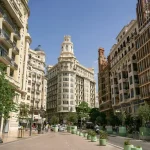
📷 Featured image by Nathan McBride on Unsplash.