On this page
- What Makes Galicia Different From the Rest of Spain
- The Cities Worth Your Time
- The Rías Baixas — Galicia’s Coastal Heartland
- Inland Galicia — Forests, Monasteries, and the Río Sil Canyons
- The Camino de Santiago in 2026 — What’s Changed
- What to Eat and Drink in Galicia (and Where)
- Day Trip or Overnight? Planning Your Galicia Visit
- Getting to and Around Galicia in 2026
- 2026 Budget Reality — What Galicia Actually Costs
- Practical Tips Before You Go
- Frequently Asked Questions
💰 Click here to see Spain Budget Breakdown
💰 Prices updated: October, 2026. Budget figures are estimates — always verify before travel.
Exchange Rate: $1 USD = €0.88
Daily Budget (per person)
Shoestring: €60.00 – €90.00 ($68.18 – $102.27)
Mid-range: €120.00 – €180.00 ($136.36 – $204.55)
Comfortable: €220.00 – €470.00 ($250.00 – $534.09)
Accommodation (per night)
Hostel/guesthouse: €15.00 – €50.00 ($17.05 – $56.82)
Mid-range hotel: €70.00 – €130.00 ($79.55 – $147.73)
Food (per meal)
Budget meal: €7.00 ($7.95)
Mid-range meal: €25.00 ($28.41)
Upscale meal: €80.00 ($90.91)
Transport
Single metro/bus trip: €3.00 ($3.41)
Monthly transport pass: €24.00 ($27.27)
Most of Spain‘s visitor pressure in 2026 is still concentrated in the south and east. Barcelona has its tourist caps, Seville swells in spring, and the Canary Islands are debating entry fees. Meanwhile, Galicia sits quietly in Spain’s northwest corner, genuinely undervisited outside the Camino de Santiago crowd, offering coastline that rivals Portugal’s Alentejo, food that rivals San Sebastián’s, and a cultural identity so distinct it barely feels like the same country. If you’ve been burned by overpriced tapas bars and queues for monuments, this is the region worth your attention in 2026.
What Makes Galicia Different From the Rest of Spain
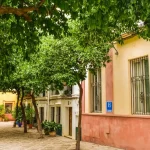
Galicia is not the Spain of postcards. There are no whitewashed villages, no olive groves, no flamenco bars. The landscape is green almost to the point of absurdity — Atlantic rain keeps it that way — and the light in summer has a softness you don’t find in the Meseta. Walking through the old quarter of Pontevedra on a grey morning, the granite buildings slick with moisture and the smell of the sea drifting up from the estuary, you could easily mistake yourself for somewhere in Brittany or the west of Ireland.
That Celtic thread is real, not marketing. Galician culture has its own language (galego), its own bagpipes (the gaita), and its own mythology of witches, spirits, and the dead. The queimada ritual — where aguardiente is set alight in a clay bowl while someone recites an incantation — is still performed at festivals, and not just for tourists. Galicia’s sense of self runs deep.
The region covers four provinces: A Coruña, Lugo, Ourense, and Pontevedra. Each has a different personality. The coast is dramatic and fragmented, cut by the long sea inlets called rías. The interior is rural, hilly, and surprisingly wild. Lugo province alone has more Roman walls, Celtic castros (hillforts), and thermal springs than most regions of Spain will see in a lifetime.

The Cities Worth Your Time
Santiago de Compostela
The cathedral city is the obvious entry point, and for good reason. The old town is a UNESCO World Heritage Site and one of the best-preserved medieval urban centres in Europe. The cathedral itself is extraordinary — the baroque facade on the Praza do Obradoiro stops people mid-step, even those who have seen it in photographs a hundred times. Inside, on feast days, you can watch the enormous Botafumeiro incense burner swing on its arc across the transept, trailing smoke and filling the nave with a scent that is somewhere between resin and incense wood.
Beyond the cathedral, Santiago is a working university city with a genuine café culture. The covered market, Mercado de Abastos, is one of the best in Spain — local farmers sell produce from the stalls on the ground floor, while the seafood section above is where restaurants buy their catch.
A Coruña
An hour north of Santiago by bus or train, A Coruña is a proper Atlantic city built on a peninsula, surrounded on three sides by water. The galerías — the glass-enclosed balconies that line the seafront — are an architectural signature you won’t find anywhere else in Spain. The Tower of Hercules, a Roman lighthouse still in working order, stands at the northern tip and gives you a full panorama of the coast on a clear day.
Pontevedra
This is the hidden gem that Galicia regulars point to. The old town is almost entirely car-free — a pedestrianisation scheme started in 2000 and has been extended so thoroughly that the centre now feels like a continuous outdoor living room. Granite squares, covered arcadas, tapas bars packed with locals in the evening. It’s the kind of place you wander without purpose and keep finding new corners.

Vigo
Vigo is the largest city in Galicia and the most industrial-feeling, built on a steep hillside around a working port. It’s not traditionally a tourist destination, but it has one of Spain’s best fish markets and a neighbourhood called Bouzas where you can eat freshly steamed mussels directly from the boats. In 2026, Vigo’s waterfront regeneration is well advanced, and the new Museo do Mar extension has made the city a more interesting cultural stop than it was even three years ago.
The Rías Baixas — Galicia’s Coastal Heartland
The four southern inlets — Rías de Vigo, Pontevedra, Arousa, and Muros-Noia — make up the Rías Baixas, the most visited stretch of coast in Galicia. The water is calmer here than on the exposed Atlantic coast further north, the beaches are long and sandy, and the area produces nearly all of Spain’s Albariño wine. The combination of good beaches, excellent seafood, and drinkable local wine keeps this area busy in July and August, but outside peak summer it’s remarkably quiet.
The Salnés peninsula, between the Rías de Arousa and Pontevedra, is the Albariño heartland. The town of Cambados has an impressive ruined pazo (manor house) in its main square and more wine producers per square kilometre than almost anywhere in Spain. The local bodega association runs a wine festival each August — it’s genuinely worth timing a visit around it if you’re a wine traveller.
For beaches, the Illa de Arousa and the stretch around O Grove offer the most sheltered swimming on the coast. The beach at Praia de A Lanzada, exposed to the open Atlantic, is longer and wilder — on a windy afternoon, the spray and the light off the water are extraordinary.
Inland Galicia — Forests, Monasteries, and the Río Sil Canyons
Most visitors to Galicia stick to the coast or the Camino corridor. This is a significant mistake. The interior of the region — particularly the provinces of Lugo and Ourense — contains some of the most dramatic and least-visited landscapes in Spain.
The Cañóns do Sil, in the southeast of Galicia on the border with Castilla y León, is where the Río Sil has carved a canyon up to 500 metres deep through the slate mountains. The canyon walls are terraced with ancient vineyards — the Ribeira Sacra wine region — and the only way to properly see the scale of it is by boat from the village of Os Peares, or by hiking the trails above the rim. The silence up there, broken only by wind and the occasional sound of a boat far below, is the kind of quiet that’s increasingly hard to find in Europe.
The monastery of Santo Estevo de Ribas de Sil, built directly into the canyon wall, has been converted into a Parador hotel. Even if you’re not staying, the cloisters are open to visitors and the setting is surreal — three stacked Romanesque and Gothic cloisters looking out over a sheer drop to the river.
Lugo city, often bypassed, deserves a half-day at minimum. Its Roman walls — a full 2.1-kilometre circuit, walkable on top — are the best-preserved in the world. The city is compact and unpretentious, with a Wednesday market that has been running in some form since Roman times. Ourense, further south, has natural thermal springs that feed directly into pools by the river — free to use, open year-round, and genuinely therapeutic after a long day of walking.

The Camino de Santiago in 2026 — What’s Changed
Pilgrim numbers on the Camino hit another record in 2025, and 2026 is on pace to match them. The Francés route — the classic path from Saint-Jean-Pied-de-Port over the Pyrenees — now requires advance booking for the most popular albergues between April and October. Walking in without a reservation and expecting a bed is no longer a realistic plan on the busy sections.
In response to the pressure, the Xunta de Galicia (the regional government) has been actively promoting the lesser-used routes. The Camino Primitivo, which runs from Oviedo through the mountains of Asturias into Galicia, remains significantly quieter. The Camino do Inverno — the winter route through the interior, passing through Ourense — has been better signposted and has new albergue infrastructure since 2024. The Camino Inglés, starting from Ferrol or A Coruña, is the shortest route to earn the Compostela certificate (requiring at least 100 kilometres on foot) and is still underused relative to its quality.
The digital pilgrim passport (Credencial) is now fully functional as an app-based system alongside the physical card. Most albergues and churches along the route accept the digital stamp, though some traditional hospitaleros still prefer to stamp the paper version. Carry both if you want to avoid any friction at the Pilgrim Office in Santiago when collecting your certificate.
What to Eat and Drink in Galicia (and Where)
Galician food is built around the sea and the land in equal measure. The region produces the best shellfish in Europe — this is not hyperbole, it’s a geological fact. The cold, nutrient-rich Atlantic water and the sheltered rías create ideal conditions for mussels, oysters, clams, scallops (vieiras), barnacles (percebes), and spider crab (centolla). A plate of freshly steamed berberechos (cockles) with a glass of cold Albariño is one of the simplest and most satisfying things you can eat anywhere in Spain.
What to order:
- Pulpo á feira — octopus on a wooden board, dressed with olive oil, coarse salt, and smoked paprika. The canonical version comes from the inland town of O Carballiño, where octopus festivals have been held since the 19th century.
- Caldo galego — a broth of turnip greens, white beans, and pork. Humble food that tastes like the landscape it comes from.
- Empanada gallega — a flat pie filled with tuna, sardines, or meat. Sold by the slice in bakeries across the region and better eaten standing up at a market than sitting in a restaurant.
- Tarta de Santiago — the almond cake marked with the cross of Saint James. Every bakery in Santiago makes one; quality varies enormously. The ones from Confitería Casa Mora on Rúa do Vilar are consistently excellent.
Where to eat well: In Santiago, the streets around the Mercado de Abastos — particularly Rúa das Ameas — have a concentration of good seafood restaurants and tapas bars. In Pontevedra, the old town’s covered arcades shelter a row of bars where a wine and a small plate costs €2–3 at lunch. In Vigo, head to the Rúa Pescadería near the fish market for the freshest possible product.
Albariño is the wine to drink, but don’t ignore the reds. Mencía from the Ribeira Sacra — grown on those steep canyon terraces — is one of Spain’s most interesting red varieties, and it’s significantly cheaper here than in international wine shops.
Day Trip or Overnight? Planning Your Galicia Visit
Galicia is not a day trip destination from anywhere outside the region itself. The closest major Spanish cities are Oviedo (about 3 hours by car) and Porto in Portugal (about 1.5 hours from Vigo). From Madrid, the AVE to Santiago takes roughly 2 hours 20 minutes — which puts Galicia in a long-weekend category rather than a day-trip one.
A realistic minimum for a first visit to Galicia is four nights. This gives you two nights in Santiago (enough to see the city and do a day trip to Pontevedra or the Rías Baixas), and two nights on the coast or in the interior. A week allows you to add the canyon country in Ourense or walk the final stage of the Camino from Sarria.
If you’re based in Porto and have only one day, Vigo is technically doable by train — the Comboio regional crosses the border in about 40 minutes from Valença. But you’ll see only Vigo, which is the least representative part of Galicia. Better to stay overnight and get further into the region.
Getting to and Around Galicia in 2026
By Air
Santiago de Compostela Airport (SCQ) handles more routes than it did three years ago, with Ryanair, Iberia, and Vueling covering Madrid, Barcelona, London Stansted, Dublin, Brussels, and several German cities. Vigo Airport (VGO) handles a smaller network but is convenient for the Rías Baixas. A Coruña Airport (LCG) is the smallest of the three but useful if you’re focused on the north coast.
By AVE
The high-speed line from Madrid to Santiago was the transformative infrastructure project of 2021, and it has made Galicia significantly more accessible. In 2026, Renfe operates multiple daily AVE services on the Madrid–Ourense–Santiago corridor, with journey times around 2 hours 20 minutes to Santiago and 2 hours flat to Vigo. From Madrid, tickets range from €29 to €90 depending on how far in advance you book.
Getting Around Within Galicia
The cities are connected by reasonably frequent regional trains and the ALSA bus network. The journey between Santiago and Vigo takes about 1 hour 20 minutes by train, Santiago to A Coruña about 35 minutes. The interior — the canyon country, inland Lugo province — is much harder without a car. If you plan to explore beyond the main cities and coastal towns, renting a car is the practical choice. Roads in rural Galicia are narrow and winding, but traffic outside summer is light.
2026 Budget Reality — What Galicia Actually Costs
Galicia remains one of the better-value regions in Spain, though prices have risen in line with the rest of the country over the past two years.
- Budget (pilgrim / backpacker): €45–65 per day. Albergue beds on the Camino cost €8–15 per night. Eating the menú del día (set lunch with starter, main, wine, and dessert) costs €12–15 in most towns. You can cover a day in Galicia comfortably on this budget.
- Mid-range: €100–150 per day. A comfortable guesthouse or casa rural runs €60–90 per night for a double room. Dinner at a decent restaurant with wine costs €25–40 per person. This budget gives you proper meals and a private room without stretching.
- Comfortable: €200+ per day. Parador hotels (there are four in the region, including the one in the canyons and the famous Hostal dos Reis Católicos on the Praza do Obradoiro in Santiago) start at €150–250 per night. Galicia’s top seafood restaurants charge €50–80 per person for a full meal with wine.
Tourist taxes in Galicia remain lower than Catalonia or the Balearics. Santiago introduced a modest per-night levy in 2025 — currently €1–2 per person per night depending on hotel category — but there are no visitor entrance fees to the city itself. Lugo’s Roman walls, Ourense’s thermal pools by the river, and most church interiors in the region are free to enter.
Practical Tips Before You Go
- Weather: Galicia’s reputation for rain is earned. Even in summer, expect at least a few grey days. The driest period is July and August, but June and September offer better value and fewer crowds with only marginally more rain. Pack a waterproof layer regardless of when you visit.
- Language: Galician (galego) is co-official with Spanish and used daily. Most signage is in galego, and many locals will default to it. Spanish works perfectly well everywhere — this is not the Basque Country where Spanish can occasionally feel unwelcome. A few words of galego (like gracias becoming grazas) are appreciated.
- When to visit: July and August are busy on the coast and in Santiago, especially around the Feast of Saint James on 25 July, when the city fills entirely. September is arguably the best month — the coast is warm, the vineyards are harvesting, and the pilgrim numbers drop. Winter is quiet everywhere except Santiago, and the interior landscape is at its most dramatic.
- Mobile coverage: Good in cities and on main roads, patchy in rural areas and canyon country. Download offline maps if you’re hiking or driving remote routes.
- Galicia Card: A tourist discount card launched region-wide in 2024, giving reductions at museums, Parador restaurants, and some boat tours. Available at tourist offices and online. Worth buying if you’re staying more than three days and plan to use cultural attractions.
Frequently Asked Questions
Is Galicia worth visiting if you’re not doing the Camino de Santiago?
Absolutely. The Camino draws pilgrims, but Galicia’s coastline, food scene, interior landscapes, and cities stand entirely on their own. Many visitors who originally came for the Camino return specifically to explore the Rías Baixas or the canyon country of Ourense. The region has more than enough to justify a trip without walking a single kilometre of the pilgrimage route.
What is the best time of year to visit Galicia?
September and early October offer the best combination of good weather, reduced crowds, and seasonal interest — the wine harvest is underway, the coast is still warm enough to swim, and Santiago feels like itself again after the summer pilgrim peak. June is also excellent. Avoid the last two weeks of July if you dislike crowds.
How do I get from Madrid to Galicia?
The AVE high-speed train is the easiest option. Madrid Puerta de Atocha to Santiago de Compostela takes approximately 2 hours 20 minutes. Trains also serve Vigo and Ourense on the same line. Book through Renfe’s website in advance — prices drop significantly with early booking and can be as low as €29 each way on promotional fares.
Is Galicia expensive compared to other parts of Spain?
Galicia is generally cheaper than Barcelona, Madrid, or San Sebastián. Accommodation, restaurant meals, and transport within the region all come in below the national average for cities. The main exception is premium seafood — percebes (barnacles) and centolla (spider crab) are genuinely expensive anywhere in Spain due to the labour involved in harvesting them.
Do I need to speak Spanish to travel in Galicia?
Spanish works everywhere in Galicia. English is spoken in Santiago and the main tourist areas, less so in rural towns and the interior. The local language, galego, is widely used but never expected of visitors. Learning a few basic phrases in either galego or Spanish will be warmly received, particularly in smaller towns and family-run restaurants.
📷 Featured image by Catrin Ellis on Unsplash.