On this page
- What Makes Cádiz Different From Every Other Andalusian City
- The Old Town — Navigating the Labyrinth on Foot
- Cádiz’s Beaches — Which One Is Actually Worth Your Time
- Where to Eat and Drink Like a Gaditano
- Day Trip or Overnight? How Long You Actually Need
- Getting to Cádiz in 2026 — Trains, Buses, and Driving
- Getting Around Once You’re There
- 2026 Budget Reality — What Everything Costs
- Practical Tips Most Visitors Miss
- Frequently Asked Questions
💰 Click here to see Spain Budget Breakdown
💰 Prices updated: October, 2026. Budget figures are estimates — always verify before travel.
Exchange Rate: $1 USD = €0.88
Daily Budget (per person)
Shoestring: €60.00 – €90.00 ($68.18 – $102.27)
Mid-range: €120.00 – €180.00 ($136.36 – $204.55)
Comfortable: €220.00 – €470.00 ($250.00 – $534.09)
Accommodation (per night)
Hostel/guesthouse: €15.00 – €50.00 ($17.05 – $56.82)
Mid-range hotel: €70.00 – €130.00 ($79.55 – $147.73)
Food (per meal)
Budget meal: €7.00 ($7.95)
Mid-range meal: €25.00 ($28.41)
Upscale meal: €80.00 ($90.91)
Transport
Single metro/bus trip: €3.00 ($3.41)
Monthly transport pass: €24.00 ($27.27)
Seville and Málaga are genuinely wonderful Cities, but in 2026 they are also genuinely exhausting during peak season. Crowds on the Alcázar queues stretch past an hour even with pre-booked tickets, and the beachfront hotels around Málaga’s historic centre now charge prices that would embarrass Barcelona. The ripple effect has been good news for Cádiz — a city that serious Spain travellers have known about for years, and that everyone else is finally starting to discover. If you are planning a trip to Andalusia this year and wondering where to point your compass, this guide is for you.
What Makes Cádiz Different From Every Other Andalusian City
Cádiz sits on a narrow peninsula that juts into the Atlantic Ocean like a thumb pressed into the water. On a clear morning, you can stand in the old town and see the sea on three sides simultaneously. That is not a metaphor — it is the literal geography of the place, and it shapes everything about life here.
The city is widely accepted as the oldest continuously inhabited city in Western Europe, founded by the Phoenicians around 1100 BCE. That is a number so large it loses meaning, but the physical evidence is everywhere. The streets are not laid out in the neat Roman grid you find in cities like Mérida or Zaragoza. They twist and compress and suddenly open into small squares with no apparent logic, because they were mapped by civilisations that predate Rome entirely.
Cádiz is also a working port city, and it has been one for three thousand years. During the 16th and 17th centuries, virtually all of Spain’s trade with the Americas passed through this harbour. The wealth that flooded in built the golden cupola of the cathedral, the baroque mansions along Calle Ancha, and the watchtowers that dot the old town — merchants built them to spot their ships returning across the Atlantic. That history is visible without needing a museum to explain it.

The population is roughly 115,000 people, which makes it compact enough to walk everywhere but large enough to have a genuine local culture that does not revolve around tourism. The gaditanos — the people of Cádiz — are known throughout Spain for their sharp humour and their carnival, which some Spaniards argue is the best in the country. There is an ease to life here that cities twice the size struggle to manufacture.
The Old Town — Navigating the Labyrinth on Foot
The old town of Cádiz is officially called the Casco Antiguo, and it occupies the western tip of the peninsula. Streets here are sometimes barely wide enough for two people to pass side by side. The walls are painted in faded ochre, dusty white, and the kind of pale yellow that only exists in places where the sun has been working on things for several centuries.
The Cathedral of Cádiz is the obvious anchor point. Its famous golden dome is not actually gold — it is covered in glazed yellow tiles that catch the light in a way that convinced generations of sailors it was something more precious. The interior is enormous and relatively uncluttered compared to the baroque excess you find in Seville. The composer Manuel de Falla is buried in the crypt, which is open to visitors. Admission in 2026 costs around €7 for adults. Climbing the tower gives you one of the best urban views in Andalusia.
From the cathedral, the logical next move is to walk north along the Paseo Campo del Sur, the seafront promenade that curves along the Atlantic-facing flank of the old town. This is where the wind picks up — the Atlantic here is not the gentle Mediterranean, and even in summer a strong levante or poniente can push you sideways. The smell of salt and seaweed is constant. It is one of those sensory details that Cádiz shares with no other Andalusian city.
The Plaza de la Mina and the adjacent Museo de Cádiz are worth half a morning. The museum holds a collection of Phoenician sarcophagi — two in particular, carved from white marble in a vaguely Egyptian style — that are extraordinary. They date from the 4th and 5th centuries BCE and were pulled from the harbour. Admission is free for EU citizens and €1.50 for non-EU visitors under Spain’s 2025 museum pricing revision.
The Mercado Central on Plaza de las Flores is not optional. It is a 19th-century iron-and-glass market building where fishermen sell their catch from that morning. Arrive before noon. The noise — stallholders calling prices, the slap of fish on ice, conversations conducted at a volume the rest of Europe reserves for emergencies — is exactly what markets used to sound like before tourism turned them into food halls.
Cádiz’s Beaches — Which One Is Actually Worth Your Time
Cádiz has multiple beaches, and the differences between them matter more than most travel guides admit.
La Caleta is the small, crescent-shaped beach inside the old town itself, tucked between two 18th-century sea castles. It is photogenic and historically significant — it appears in the James Bond film Die Another Day and was used by local fishermen for centuries. But it is also small, gets crowded by 11am in summer, and faces west into the Atlantic, which means the current can be strong and the water choppier than the beaches further along the coast. Good for a morning swim; less good for a full beach day.
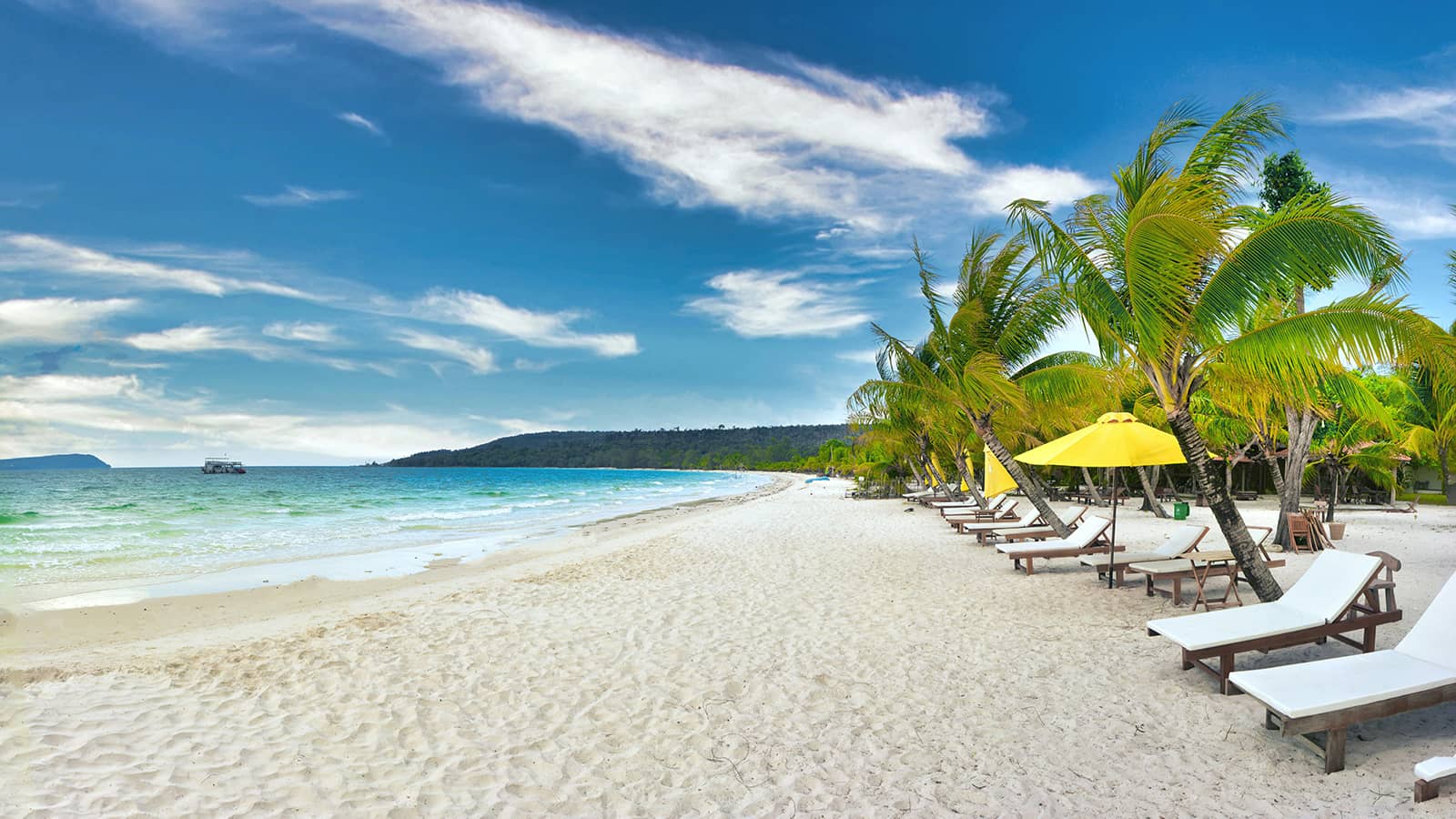
Playa de la Victoria is the main urban beach, stretching for around 4 kilometres along the eastern side of the newer part of the city. This is where gaditanos actually spend their summers. It is wide, well-maintained, faces south into calmer water, and is backed by a seafront boulevard with beach bars (chiringuitos) serving fried fish and cold Cruzcampo. The water is Atlantic, which means it is noticeably cooler than the Costa del Sol — typically 20–23°C in high summer rather than 25–27°C. That difference is real, and it sorts people into clear camps.
If you have access to a car, the beaches outside the city deserve serious attention. Playa de Bolonia, roughly 70 kilometres south near Tarifa, is one of the most beautiful beaches in Spain — a wide arc of pale sand backed by low dunes with a Roman archaeological site (Baelo Claudia) at one end. It can get windy, which keeps it from being overrun. Playa de los Caños de Meca, near Barbate, is a favourite among Spanish surfers and people who prefer their beaches without sunbed rental.
Where to Eat and Drink Like a Gaditano
The food in Cádiz is built on two things: proximity to the Atlantic and an obsession with frying. The local technique — fritura gaditana — involves coating small fish and seafood in a specific type of flour before frying at very high heat. Done correctly, the result is almost completely grease-free, just a thin, shattering crust around a piece of fish that still tastes of the sea. Done badly (as it often is in tourist-facing restaurants near La Caleta), it is exactly what you are worried it will be.
For a proper fritura, head to El Faro de Cádiz on Calle San Félix — a Cádiz institution that has been operating since the 1960s and still sources its fish daily from the Mercado Central. A full shared plate of mixed fried fish for two runs around €18–22. The restaurant has a formal dining room and a more casual bar section; the bar section is where the locals eat, and it is fine to order the same menu standing up.
La Candela on Calle Feduchy is excellent for more creative cooking that still roots itself in local ingredients — the chef works with atún de almadraba, the bluefin tuna caught using an ancient trap-fishing method in the waters near Barbate each spring. This tuna is to Spain what the best seasonal produce is to any serious food culture: talked about for months, expensive, and genuinely worth it if you are there at the right time (May and June are the peak weeks).
For cheap eating, the Mercado Central has a ring of small bars around its perimeter where you can get a glass of local manzanilla sherry and a small plate of tortillitas de camarones — shrimp fritters — for around €3–4. This is the most honest food experience in the city.
On the drinks side: Cádiz is close enough to the sherry triangle (Jerez de la Frontera is 35 kilometres away) that manzanilla and fino sherry are treated as everyday drinks rather than novelties. A glass costs €1.50–2.50 in a local bar. If you have been ordering Estrella Damm and ignoring the sherry, you have been doing it wrong.
Day Trip or Overnight? How Long You Actually Need
Cádiz works as a day trip from Seville — the journey takes about 1 hour 45 minutes by direct train, and you can cover the cathedral, the mercado, a beach swim, and a proper lunch in around eight hours. If that is all the time you have, a day trip is completely valid and you will leave satisfied.
However, Cádiz is a city that changes significantly in the evening. The old town after 8pm — when the day-trip crowds have gone back to Seville on the 6pm train — feels like an entirely different place. The tapas bars fill with local families. The light on the cathedral turns amber and then pink. The seafront at sunset, with the Atlantic horizon completely unobstructed, is one of the better things you can witness in southern Spain.
One overnight stay is the sweet spot for most travellers. Two nights is comfortable and gives you time to rent a bike, explore the lesser-known squares in the Barrio del Pópulo, and take a half-day trip to Jerez or the beaches at Bolonia. Three or more nights makes sense if you are using Cádiz as a base for exploring the broader Costa de la Luz and the towns of the Sierra de Grazalema.
Getting to Cádiz in 2026 — Trains, Buses, and Driving
The most practical route for most international visitors is to fly into Seville (SVQ) or Málaga (AGP) and travel to Cádiz by train or bus.
From Seville: Renfe runs frequent direct trains (the MD and the newer Avant services) taking between 1 hour 40 minutes and 2 hours. Tickets cost €10–17 depending on the service and how far in advance you book. The Cádiz railway station sits at the edge of the old town — you walk out of the station and are effectively already there.
From Málaga: There is no direct train. The standard route is to take the train to Seville (around 2 hours by Alvia) and change there, or take a Comes bus which runs the coastal route in approximately 3.5–4 hours with stops. In 2026, the long-discussed AVE extension to Cádiz via the bay bridge remains in planning stages; the current Renfe service is not high-speed but it is reliable.
By car: The A-4 motorway connects Seville to Cádiz directly in around 1 hour 20 minutes in normal traffic. Driving is useful if you plan to visit the beaches south of the city, but within Cádiz itself a car is a liability. The old town has almost no parking, and the newer parts of the city operate a paid parking zone (ORA) that fills early in summer. Park at the station or at one of the underground car parks near Avenida Cayetano del Toro if you are staying overnight.
From Madrid: There is no direct high-speed service to Cádiz. The fastest option is the AVE to Seville (2 hours 20 minutes) followed by the Renfe connection to Cádiz. Total journey time is around 4 hours with a good connection.
Getting Around Once You’re There
The old town is entirely walkable. Nothing in the Casco Antiguo is more than about 20 minutes on foot from anything else, and most of the main sights cluster within a 10-minute walk of the cathedral.
For Playa de la Victoria and the newer part of the city, the local bus system is simple and cheap — a single ride costs €1.10 in 2026 and the routes along the main avenues run frequently enough that you rarely wait more than ten minutes. The buses are numbered and the stops are clearly marked.
Cycling is increasingly viable. Cádiz expanded its dedicated cycle lane network in 2024 and 2025, and the flat terrain of the peninsula makes it genuinely pleasant rather than the aggressive urban experience you get in hillier Andalusian cities. Rental bikes are available from several shops near the train station for around €10–12 per day.
Taxis are widely available and reasonably priced. A ride from the train station to La Caleta beach costs around €5–7. The Cabify and Bolt apps both operate here if you prefer that to hailing from the street.
2026 Budget Reality — What Everything Costs
Cádiz remains meaningfully cheaper than Seville, Granada, or any city on the Costa del Sol. That gap has narrowed slightly in the past two years as the city’s profile has risen, but it is still substantial.
Accommodation
- Budget: Hostel dorm beds in the old town run €18–28 per night. Several well-regarded hostels have opened in the Barrio del Pópulo since 2023.
- Mid-range: A double room in a solid 3-star hotel or guesthouse (hostal) costs €65–110 per night in high season (July–August). Expect €45–75 in shoulder season.
- Comfortable: Boutique hotels in converted townhouses charge €130–190 per night in high season. There are no five-star international chain hotels in the old town, which is not a problem.
Food and Drink
- Coffee and pastry at a local bar: €2–3
- Set lunch menu (menú del día): €10–14 for two courses, bread, and a drink
- Tapas and drinks for two at a mid-range bar: €20–30
- Dinner at a serious restaurant (El Faro, La Candela): €35–55 per person with wine
Activities and Entrance Fees
- Cathedral of Cádiz: €7 adults
- Museo de Cádiz: Free (EU) / €1.50 (non-EU)
- Torre Tavira (camera obscura and views): €8
- Day trip to Jerez sherry bodega tour: €15–25 depending on operator
Cádiz does not currently charge a tourist tax (tasa turística). Several Andalusian cities discussed implementing one in 2025, but as of 2026 Cádiz has not done so — a small practical advantage over Seville and Málaga, where the tax adds €1–3 per person per night.
Practical Tips Most Visitors Miss
The wind is serious. Cádiz is one of the windiest cities in mainland Spain. The levante (an easterly wind from North Africa) and the poniente (an Atlantic westerly) can arrive with almost no warning and reach speeds that make beach umbrellas genuinely dangerous. Check the wind forecast before you commit to a full beach day. Apps like Windy.com give hour-by-hour data for the peninsula.
Carnival timing changes everything. The Cádiz Carnival, held in February, is one of the great Spanish festivals and one of the few still dominated by locals rather than organised for tourist consumption. The satirical singing groups (chirigotas) perform in the streets for free for nearly two weeks. If you are in Andalusia in February, this is worth rearranging your itinerary for. Hotels book up months in advance during Carnival week.
The afternoon shutdown is real. Most small shops, many restaurants, and some attractions in the old town close between roughly 2pm and 5pm. Supermarkets and chain businesses stay open, but if you are planning to visit the market or pick up supplies from local shops, do it in the morning.
Swimming conditions vary more than people expect. La Caleta can have a red flag (no swimming) on days when Playa de la Victoria is perfectly calm, because they face different directions. Always check the flag before entering the water. The local Policía Local monitors this and they are not flexible about it.
The Torre Tavira is underrated. Most visitors go to the cathedral tower for views, which is perfectly good. But the Torre Tavira — a 45-metre watchtower that was the official lookout point for the port in the 18th century — has a camera obscura that projects a live real-time image of the city onto a curved screen in the darkened tower room. It sounds gimmicky but is genuinely extraordinary, particularly when a ship is moving across the harbour below.
Frequently Asked Questions
Is Cádiz worth visiting for more than a day trip?
Yes, particularly if you want to experience the city after the day-trip crowds return to Seville. One overnight stay reveals a quieter, more local version of Cádiz — the old town in the evening, the seafront at sunset, and the proper morning market experience are all things that a day trip misses.
When is the best time to visit Cádiz?
May, June, and September are the strongest months. The weather is warm, the beaches are usable, and the crowds are manageable. July and August are hot and busy, but the city handles summer better than inland Andalusian cities because the Atlantic breeze keeps temperatures from reaching the extremes you get in Seville. February is worth considering for Carnival.
Is the water cold at Cádiz beaches?
Colder than the Costa del Sol or Costa Blanca. Atlantic water temperatures typically sit around 17–19°C in late May and June, rising to 20–23°C in August. Most people find it refreshing rather than uncomfortable, but if cold water bothers you, the Mediterranean beaches further east will suit you better.
How far is Cádiz from Seville?
Approximately 120 kilometres by road. By direct Renfe train the journey takes 1 hour 40 minutes to 2 hours. By car on the A-4 motorway, expect around 1 hour 20 minutes in normal traffic. It is a straightforward connection and one of the easier rail journeys in Andalusia.
Do people speak English in Cádiz?
Less than in Seville or Málaga, which is worth knowing. In the old town near tourist sights, staff at hotels and major restaurants generally manage fine in English. At local bars, the Mercado Central, and smaller shops, Spanish is the working language. Basic Spanish phrases go a long way and are genuinely appreciated.
📷 Featured image by Alexey Larionov on Unsplash.