On this page
- The Old Town Beyond the Cathedral
- The Cathedral in 2026: What’s Actually Changed
- Where to Eat and Drink in Santiago
- Museums and Culture Worth Your Time
- Day Trips from Santiago
- Getting to Santiago de Compostela in 2026
- Getting Around the City
- 2026 Budget Reality
- Day Trip or Overnight?
- Practical Tips for Non-Pilgrims
- Frequently Asked Questions
💰 Click here to see Spain Budget Breakdown
💰 Prices updated: October, 2026. Budget figures are estimates — always verify before travel.
Exchange Rate: $1 USD = €0.88
Daily Budget (per person)
Shoestring: €60.00 – €90.00 ($68.18 – $102.27)
Mid-range: €120.00 – €180.00 ($136.36 – $204.55)
Comfortable: €220.00 – €470.00 ($250.00 – $534.09)
Accommodation (per night)
Hostel/guesthouse: €15.00 – €50.00 ($17.05 – $56.82)
Mid-range hotel: €70.00 – €130.00 ($79.55 – $147.73)
Food (per meal)
Budget meal: €7.00 ($7.95)
Mid-range meal: €25.00 ($28.41)
Upscale meal: €80.00 ($90.91)
Transport
Single metro/bus trip: €3.00 ($3.41)
Monthly transport pass: €24.00 ($27.27)
Santiago de Compostela has a reputation problem — not a bad one, exactly, but a narrow one. Most travel content frames the city as the finish line of the Camino de Santiago, which means millions of people who arrive by plane, train, or rental car feel slightly out of place, as if they missed the point. In 2026, with pilgrim numbers at record highs following the Holy Year (Año Santo Compostelano) in 2027 already generating pre-hype, the city is busier and more tourist-conscious than ever. But Santiago rewards the unhurried visitor who didn’t walk 800 kilometres to get there — sometimes even more so, because you have the energy to actually look around.
The Old Town Beyond the Cathedral
Most visitors exit whatever transport they arrived on, walk straight to the Praza do Obradoiro, take a photo, and consider the job done. That square is spectacular — the granite façade of the cathedral towers above you with a weight that feels genuinely ancient — but the old town is a full living thing, not just a backdrop for it.
Start at Praza das Praterías, the cathedral’s oldest square, where a fountain of horses sits in the middle and locals actually use the stone benches. Then find your way to Rúa do Franco and Rúa da Raíña, the twin streets running south from the cathedral. They’re lined with pulperías (octopus restaurants), wine bars, and pastry shops selling tarta de Santiago. The cobblestones are uneven and worn smooth. Rain turns the granite silver. On a wet morning in November or February, the smell of damp stone and fresh bread from a nearby bakery is one of those details that lodges itself in memory.
Walk further south to Praza de Mazarelos, the only surviving medieval city gate, which most tourists never find. Head east to the Barrio de San Pedro, a quiet neighbourhood of old stone houses where you’ll see laundry hanging from windows and children on bicycles — the Santiago that exists when the pilgrims have moved on.
The covered market, Mercado de Abastos, is worth a full hour on any morning. Galician vendors sell percebes (barnacles), razor clams, Padrón peppers, and tetilla cheese. Buy something to eat on the spot — several stalls will cook what you just bought at the counter next to them.
The Cathedral in 2026: What’s Actually Changed
The Pórtico da Gloria — the 12th-century stone portal carved by Master Mateo — completed a major restoration phase in 2023, and by 2026 it is fully accessible again with timed visits of 25 people at a time. These slots are booked online through the cathedral’s official website and sell out days in advance during summer and Semana Santa. If you’re visiting between June and September, book before you travel.
The main cathedral interior is free to enter, but several areas charge separately: the Museo Catedral (€12), the rooftop tour (€15, outstanding views across the old town’s zinc rooftops and chimney stacks), and the crypt beneath the main altar. The famous Botafumeiro — the enormous silver thurible swung in wide arcs across the transept — only operates during specific high masses. Check the cathedral’s schedule on its official website; it doesn’t run at every service, and showing up randomly gives you maybe a 30% chance of seeing it.
One change worth knowing: the cathedral introduced a crowd management system in 2025 that limits the number of people inside the main nave during certain hours. Arrive before 9:00 or after 17:00 on summer weekdays to walk through without feeling like you’re in a queue.
Where to Eat and Drink in Santiago
Galician food is one of Spain’s most distinct regional cuisines, and Santiago is the best place in the region to eat it without going to a tourist trap. The rule of thumb: avoid any restaurant displaying the word “menú” in large illuminated letters directly on Rúa do Franco. Walk one street back and the quality immediately jumps.
Casa Marcelo on Rúa das Hortas has been a Santiago institution for years — chef Marcelo Tejedor runs a creative, market-led tasting menu that doesn’t feel like performance art. It’s the kind of meal where you finish and immediately wonder what you’re eating for dinner tomorrow. Reserve well ahead.
For something more casual, A Curtidoría on Rúa da Conga is a modern Galician wine bar with natural wines, small plates, and a room full of Santiago residents on weekend evenings. The pulpo á feira (octopus with olive oil, paprika, and coarse salt on a wooden board) is the dish to order here. The octopus is tender where it should be and has the faintest char at the edges.
For coffee and pastry, Café de Altamira near Praza das Praterías serves the best tarta de Santiago in the city — the almond filling is denser and less sweet than the tourist versions on Rúa do Franco. The café itself hasn’t changed much since the 1970s. Sit at the wooden bar and watch the morning regulars.
For wine specifically: Albariño is the grape of Galicia, but in Santiago you’re close enough to the Ribeiro and Ribeira Sacra regions that good lists also feature Mencía reds and Treixadura whites. Ask for something from Ribeira Sacra if you want a red — it’s underrated and pairs well with the richer seafood dishes.
Museums and Culture Worth Your Time
The Museo das Peregrinacións e de Santiago on Praza das Praterías is better than its name suggests. It traces the history of the pilgrimage from Roman roads to Instagram, with serious archival material on medieval cartography and an unexpectedly moving section on why people still walk. Entry is €2.40, and it’s free on Sundays. Give it 90 minutes.
On the opposite end of the cultural spectrum, the Centro Galego de Arte Contemporánea (CGAC), designed by Álvaro Siza in 1993, is one of the most elegant museum buildings in Spain. The permanent collection focuses on Galician and international contemporary art, and the temporary exhibitions in 2026 are strong — check the programme before you visit. Entry is free.
A 20-minute walk or short taxi ride from the old town, the Cidade da Cultura de Galicia is an enormous cultural campus designed by Peter Eisenman that opened in phases between 2011 and 2024. It’s divisive architecturally — the wavy granite rooflines either look like genius or like a half-finished building depending on your angle — but the Galician public library and the Museo Centro Gaiás inside are genuinely worth visiting. The panoramic views back toward the old town from the complex’s highest point are among the best in Santiago.
Day Trips from Santiago
Santiago sits in the heart of Galicia, which means that within an hour’s drive or less, you can reach coastline, fishing villages, and wine country that most people visiting Spain never see.
Rías Baixas Coast
The Atlantic coast west of Santiago — the Rías Baixas — is an indented, fjord-like coastline with small beaches, fishing ports, and the vineyards that produce Albariño. Cambados, about 45 minutes by car, is a beautiful old stone town on the Ría de Arousa with a ruined church in its main square and wine cellars along every street. The Albariño festival in August draws crowds, but any other time it’s quiet and genuinely lovely.
Padrón
Padrón, 25 kilometres south of Santiago and reachable by regional train in under 30 minutes, is famous for two things: the peppers that bear its name (pementos de Padrón, the small green ones, usually mild but occasionally fiercely hot) and the fact that the apostle James is said to have arrived here by boat. The town itself is small and unhurried. The market on Saturdays is where Galician families stock up on peppers and cheese.
Fisterra
Many pilgrims continue from Santiago to Fisterra (Finisterre) on the coast, 90 kilometres west — the traditional “end of the world” and once the perceived edge of the known Western world. For non-walkers, it’s an easy bus journey (about 1.5 hours with Monbus) or a scenic drive. The lighthouse at the cape, with the Atlantic crashing against the rocks below and the wind loud enough that conversation requires effort, is one of those places that earns its reputation.
Getting to Santiago de Compostela in 2026
By air: Santiago de Compostela Airport (SCQ) has expanded its connections significantly in the last two years. In 2026, direct routes from London (Heathrow and Gatwick), Dublin, Amsterdam, Frankfurt, and several other European cities operate seasonally. Ryanair, Iberia Express, and Vueling all serve the airport. The journey into the city centre takes about 20–25 minutes by taxi (around €25–30) or by the Empresa Freire bus service (€3, runs every 30 minutes during the day).
By AVE/high-speed train: The Avant and Alvia services from Madrid take just under 2.5 hours since the high-speed line through Galicia was completed. From Madrid Chamartín, trains run multiple times daily. A standard fare bought two weeks in advance costs around €50–70. From A Coruña, there are regular regional trains (about 40 minutes, under €10). The Santiago station (Santiago de Compostela) is a 20-minute walk from the old town, or a short taxi ride.
By bus: ALSA operates long-distance services from Madrid (around 8–9 hours, €25–45) and other major cities. For regional travel within Galicia, Monbus is reliable and cheap.
Getting Around the City
Santiago’s old town is compact. Almost everything you want to see sits within a 15-minute walk of the cathedral. The stone streets are uneven and often wet — good walking shoes with grip matter more here than almost anywhere else in Spain.
Taxis are plentiful and reasonable. A ride from the station to the cathedral costs around €8–10. The city has a small public bike-share system, but the hilly terrain and wet weather make cycling less appealing here than in flatter Spanish cities. For day trips to the coast or Padrón, renting a car from the airport or the city centre is the most flexible option — expect to pay €35–55 per day for a compact car.
2026 Budget Reality
Santiago is noticeably cheaper than Barcelona or San Sebastián, but prices have risen steadily since 2023. Here’s what to expect in 2026:
Accommodation
- Budget: Hostel dormitory in the old town, €18–28 per night. Several pilgrim hostels (albergues) accept non-pilgrims with advance booking.
- Mid-range: A clean, well-located 3-star hotel or guesthouse (pension), €70–110 per night double.
- Comfortable: A 4-star hotel in or near the old town, €130–200 per night. The Parador de Santiago — a 15th-century royal hospital converted into a luxury parador — charges €200–350 per night but is one of the most extraordinary hotel buildings in Spain.
Food and Drink
- Budget: Menú del día (set lunch, 3 courses with wine), €12–16 at neighbourhood restaurants.
- Mid-range: À la carte dinner at a good Galician restaurant, €25–40 per person with wine.
- Comfortable: Tasting menu at Casa Marcelo or similar, €65–90 per person without wine pairing.
Entry Fees
- Cathedral main nave: free
- Pórtico da Gloria timed visit: €6
- Museo Catedral full access: €12
- Cathedral rooftop: €15
- Museo das Peregrinacións: €2.40 (free Sundays)
- CGAC: free
- Cidade da Cultura: free (some exhibitions charged separately)
Day Trip or Overnight?
Santiago is reachable as a day trip from A Coruña (40 minutes by train) or, at a stretch, from Porto in northern Portugal (about 2.5 hours by bus or car). But a day trip misses most of what makes the city worth visiting.
Two nights is the honest minimum if you want to see the cathedral properly, explore the old town without rushing, eat one serious Galician dinner, and visit the Mercado de Abastos in the morning. Three nights lets you add a day trip to the coast or Padrón, and gives the city time to settle into something more than a checklist.
If you’re basing yourself in Galicia rather than flying in for a short break, Santiago works well as a hub — the train and bus connections to A Coruña, Vigo, and the smaller coastal towns are regular and affordable.
Practical Tips for Non-Pilgrims
Timing: July and August are the busiest months by a wide margin. The cathedral is crowded, accommodation is more expensive, and the city hums with the particular energy of mass tourism. September is significantly better — warm enough, quieter, and the light in the evenings over the granite squares is beautiful. November through February is wet and grey but the city has a different character entirely: students fill the bars, prices drop, and you can stand alone in Praza do Obradoiro at 08:00 with nobody else around.
The 2027 Holy Year: 2027 is the next Año Santo Compostelano (when the feast of St. James, July 25th, falls on a Sunday). This happens roughly every 6–11 years and draws enormous numbers of pilgrims and visitors. If you’re planning a trip in 2027, book accommodation 6–12 months in advance. If you want to avoid the crush, 2026 is still relatively calm by comparison.
Weather: Galicia is the wettest corner of Spain. Bring a compact waterproof jacket regardless of season. The rain here is often light but persistent — the kind that soaks you over two hours rather than drenching you in five minutes. On the upside, the rain is why everything is so green, and why the stone city looks the way it does.
Dress code at the cathedral: Shoulders and knees must be covered. A light scarf carried in a bag solves the problem without requiring a wardrobe change.
Frequently Asked Questions
Do I need to have walked the Camino to visit Santiago de Compostela?
Not at all. Santiago is an independent city with its own history, food culture, museums, and surrounding region worth exploring. Pilgrims are a visible part of the city’s atmosphere, but they don’t define the experience for everyone else. The city welcomes all visitors regardless of how they arrived.
How many days should I spend in Santiago de Compostela?
Two nights is the workable minimum for seeing the cathedral, exploring the old town, and eating properly. Three nights gives you time for a day trip to the coast or Padrón. More than four nights is only necessary if you’re using Santiago as a base for exploring wider Galicia, which is a perfectly reasonable approach.
What is the best time of year to visit Santiago?
September is the best combination of good weather and manageable crowds. July and August are peak season with higher prices and more tourists. Winter visits (November–February) suit people who want a quieter, atmospheric experience — the city is genuinely beautiful in the rain, and accommodation costs drop significantly.
Is Santiago de Compostela expensive compared to other Spanish cities?
Cheaper than Barcelona, Madrid, or San Sebastián, but prices have risen since 2023. Accommodation and restaurant meals are roughly comparable to mid-sized Spanish cities like Salamanca or Bilbao. A comfortable two-night trip with good meals and entrance fees costs around €250–350 per person excluding transport.
Can I see the Botafumeiro at the cathedral?
Yes, but not at every mass. The Botafumeiro — the giant thurible swung dramatically across the transept — operates on specific feast days and at the Pilgrim Mass on certain Fridays and Sundays. Check the cathedral’s official website (catedraldesantiago.es) for the current schedule before your visit, and arrive at least 30 minutes early to secure a position inside.
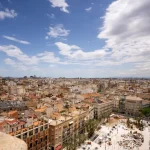
📷 Featured image by Christian Lue on Unsplash.