On this page
- Spring Celebrations: Feria de Abril and Las Fallas
- Holy Week Traditions: Semana Santa Across Spain
- Summer Madness: La Tomatina and San Fermín
- Autumn Regional Festivals: Catalonia and Galicia
- Christmas and Winter Celebrations
- Music and Arts Festival Circuit
- Planning Your Festival Trip: Timing and Logistics
- 2026 Budget Guide for Festival Season
- Frequently Asked Questions
Spain’s festival calendar has exploded in popularity since 2024, with international visitor numbers at major events increasing by 40%. This surge means accommodation books out months earlier, and new tourist management systems now control access to the most famous celebrations. Here’s your complete guide to experiencing Spain’s most spectacular festivals in 2026.
Spring Celebrations: Feria de Abril and Las Fallas
Seville’s Feria de Abril transforms the city into a flamenco wonderland each April. Women in polka-dot dresses glide between ornate casetas (private tents) while the clip-clop of horse hooves echoes on cobblestones. The festival runs for six days, typically beginning two weeks after Easter Sunday.
The fair operates on an invitation system for most casetas, but public ones welcome everyone. These spaces buzz with families sharing tapas, elderly men playing cards, and impromptu flamenco performances that continue until dawn. The real magic happens after midnight when the formal atmosphere gives way to spontaneous dancing.
Valencia’s Las Fallas in March presents a completely different spectacle. Massive papier-mâché sculptures called fallas dominate every neighborhood plaza. These satirical monuments, some reaching four stories high, mock politicians, celebrities, and social issues with irreverent humor.
The festival culminates on March 19th with La Cremà, when every sculpture except the winning piece burns in coordinated bonfires across the city. The acrid smell of smoke mixes with gunpowder from the daily mascletà firework displays that shake windows throughout Valencia’s historic center.
Both festivals require advance planning. Seville’s hotel prices triple during Feria week, while Valencia’s accommodation fills completely by December for the following March’s celebration.
Holy Week Traditions: Semana Santa Across Spain
Semana Santa represents Spain’s most solemn yet spectacular religious celebration. Each region interprets Holy Week differently, creating distinct experiences across the country.

Seville’s Semana Santa processions move through narrow streets in haunting silence broken only by saetas—improvised flamenco laments sung from balconies. Hooded penitents called nazarenos carry massive wooden floats bearing religious imagery. Some processions take twelve hours to complete their routes.
The smell of incense and orange blossoms permeates the spring air as crowds pressed against barriers watch in respectful silence. Children collect melted candle wax as traditional souvenirs while families claim viewing spots with folding chairs hours before processions arrive.
Málaga offers a more theatrical interpretation. Their throne bearers compete to demonstrate strength and skill, swaying massive floats in rhythmic movements called levantás. The port city’s maritime influence shows in nautical-themed processions honoring the Virgin of Hope.
Zamora’s Semana Santa, recognized by UNESCO, maintains medieval simplicity. No music accompanies their processions—only the sound of bare feet on stone and whispered prayers. This creates an intensely spiritual atmosphere missing from larger celebrations.
León’s unique contribution involves Los Picaos, extreme penitents who walk the stations of the cross with chains around their ankles and crosses on their backs. This tradition, dating to the 16th century, draws visitors seeking authentic religious fervor.
Summer Madness: La Tomatina and San Fermín
Buñol’s La Tomatina transforms this small Valencia province town into a red battlefield each August. The world’s largest tomato fight lasts exactly one hour, but its preparation and cleanup span the entire week.
Over 20,000 participants cram into Plaza del Pueblo, waiting for the 11am rocket that signals the start. Trucks dump 150 tons of specially grown tomatoes into the square while participants pelt each other with juicy ammunition. The acrid scent of crushed tomatoes mingles with laughter and shrieks of delight.

Rules exist for safety: crush tomatoes before throwing, remove jewelry, wear closed shoes, and stop immediately when the final rocket sounds. Local fire trucks hose down participants and streets afterward, leaving everything surprisingly clean.
Since 2025, La Tomatina requires tickets purchased months in advance through the official website. The €15 entry fee includes cleanup facilities and souvenir tomato seeds.
Pamplona’s San Fermín festival centers on the daily encierro—bulls running through cobblestone streets chasing hundreds of risk-takers. The eight-minute run from Santo Domingo corrals to the bullring creates intense adrenaline rushes for participants and spectators.
The festival extends far beyond bull runs. Gigantes y cabezudos (giant puppet parades) entertain families each afternoon. Traditional Basque sports competitions showcase regional athletic traditions. Peñas (social clubs) host public parties with free drinks and endless chorizo sandwiches.
White-clad revelers wearing red neckerchiefs fill every bar, plaza, and street corner. The party literally never stops—when one bar closes, another opens. The sound of traditional folk music echoes from every direction while the smell of grilled meat and spilled wine creates San Fermín’s distinctive atmosphere.
Autumn Regional Festivals: Catalonia and Galicia
La Mercè festival transforms Barcelona each September into a showcase of Catalan culture. Human towers called castells rise impossibly high in city squares while fire-breathing dragons dance through crowds during the correfoc (fire run).
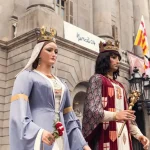
The festival celebrates Barcelona’s patron saint through massive street parties, open-air concerts, and traditional folk performances. Gegants (giant figures) parade through Gothic Quarter streets while sardana dancers form circles in front of the cathedral. The distinctive sound of gralla woodwinds accompanies most performances.
Catalonia’s unique traditions shine during La Mercè. Castell competitions see teams building human pyramids eight or nine levels high, with small children climbing to the top. The tension is palpable as structures sway precariously before either completing successfully or collapsing in controlled falls.

Santiago de Compostela’s Festival of the Apostle in July combines religious pilgrimage with Celtic celebration. Bagpipe music echoes through granite streets as pilgrims complete their Camino journeys. The festival’s highlight involves a massive botafumeiro (incense burner) swinging from Santiago Cathedral’s rafters, filling the space with aromatic smoke.
Galician festivals emphasize their Celtic heritage through music and dance. Gaita (bagpipe) performances create haunting melodies while traditional muiñeira dances tell stories through intricate footwork. Local seafood festivals throughout coastal towns celebrate octopus, scallops, and percebes (goose barnacles) with communal outdoor banquets.
Christmas and Winter Celebrations
Spanish Christmas celebrations extend from December 8th through January 6th, creating nearly a month of festivities. Each region contributes unique traditions that differ significantly from northern European customs.
Madrid’s Christmas markets around Plaza Mayor sell traditional belén (nativity scene) figures alongside roasted chestnuts and hot chocolate. The Three Kings parade on January 5th sees elaborate floats distributing candy to children lining Gran Vía and major avenues.
Catalonia’s Caganer tradition adds humorous bathroom-oriented figures to nativity scenes, while Caga Tió (defecating log) ceremonies see children beating decorated logs with sticks to make them “poop” presents. These scatological traditions shock visitors but delight local families.
Andalusia’s Christmas processions feature zambombas—improvised flamenco performances in neighborhood bars. Families gather around makeshift drums created from earthenware pots covered with animal skins, singing traditional villancicos (Christmas carols) with flamenco rhythms.
Valencia’s massive New Year’s Eve celebration in City of Arts and Sciences features international DJs alongside traditional fireworks. The sound of popping cava corks mingles with countdown chants while fireworks reflect off futuristic architecture.
Winter also brings unique regional celebrations like San Antón bonfires in rural areas, where communities burn Christmas trees and old furniture while sharing wine and roasted sausages around communal fires.

Music and Arts Festival Circuit
Spain’s festival circuit has evolved dramatically since 2024, with new venues and expanded international lineups attracting global audiences. The sound of electronic beats now competes with traditional folk music across the country.
FIB (Festival Internacional de Benicàssim) remains Spain’s premier music festival, typically held in July. Four days of international acts perform on Mediterranean beaches while 40,000 festival-goers camp nearby. The salt air carries music across Castellón province while food trucks serve paella and sangria to hungry crowds.
Primavera Sound in Barcelona and Madrid has become Europe’s most important indie music showcase. The festival split between both cities in 2025, allowing extended programming and reduced environmental impact. Advanced sound technology ensures crystal-clear audio even for massive outdoor crowds.
Sónar Barcelona pushes electronic music boundaries with experimental performances in unconventional venues. The festival combines advanced technology with artistic innovation, creating immersive experiences that engage all senses. Advanced light shows synchronized with beats create otherworldly atmospheres in darkened concert halls.
Traditional music festivals maintain strong followings. Festival Folk Zamora celebrates Celtic and medieval music traditions, while Festival Flamenco de Jerez showcases pure flamenco without commercial compromise. These events preserve authentic Spanish musical heritage while attracting serious aficionados.
New additions to the 2026 circuit include sustainable festivals emphasizing zero-waste policies and renewable energy. Several events now require reusable cup deposits and ban single-use plastics entirely.
Planning Your Festival Trip: Timing and Logistics
Festival timing in Spain follows predictable patterns, but overlap can create difficult choices. Spring festivals concentrate in March through May, summer events dominate June through August, while autumn celebrations extend September through November.
Accommodation booking strategies vary by festival size and location. Major events like San Fermín and La Tomatina require reservations 6-8 months ahead. Smaller regional festivals allow more flexible planning, often with availability 2-3 months prior.

Transportation challenges multiply during peak festivals. High-speed AVE trains book completely for San Fermín week, while Valencia’s airport sees massive delays during Las Fallas. New 2026 regulations require advance train reservations for festival periods, eliminating walk-up ticket sales.
Packing considerations depend entirely on festival type. La Tomatina requires clothes you’ll discard afterward, while Semana Santa demands respectful attire for religious processions. San Fermín participants need closed-toe shoes and white clothing with red accessories.
Weather significantly impacts festival experiences. Spring festivals risk rain cancellations, summer events create heat exhaustion risks, while autumn celebrations often feature perfect temperatures but unpredictable conditions.
Local customs require research beforehand. Some festivals involve active participation, others demand respectful observation. Understanding expectations prevents cultural missteps and enhances enjoyment.
2026 Budget Guide for Festival Season
Festival costs vary dramatically by event, location, and accommodation choices. Budget planning requires understanding both obvious expenses and hidden costs that catch visitors unprepared.
Budget Festival Experience (€50-80 per day)
- Hostel accommodation: €15-25 per night
- Festival entry fees: €0-15 (many traditional festivals remain free)
- Food from local markets and street vendors: €15-25 per day
- Local public transport: €5-10 per day
- Basic festival merchandise: €10-20
Mid-Range Festival Experience (€120-180 per day)
- Hotel or apartment rental: €60-90 per night
- Festival tickets and reserved seating: €25-50
- Restaurant meals and local specialties: €40-60 per day
- Taxi and rideshare transport: €15-25 per day
- Quality souvenirs and festival gear: €30-50
Comfortable Festival Experience (€250-400 per day)
- Luxury hotel or premium apartment: €150-250 per night
- VIP festival access and premium experiences: €75-150
- Fine dining and wine tastings: €80-120 per day
- Private transport and guided tours: €50-100 per day
- Professional photography and exclusive merchandise: €75-150

Additional costs often surprise visitors. Luggage storage during festivals ranges €8-15 daily. Costume rentals for themed festivals cost €30-75. Professional festival photography packages start around €100. Travel insurance covering festival activities adds €15-30 to trip costs.
Money-saving strategies include staying in nearby towns with train connections, buying groceries for breakfast and lunch, sharing accommodation with friends, and choosing free traditional festivals over commercial music events.
Frequently Asked Questions
When should I book accommodation for major Spanish festivals?
Book 6-8 months ahead for San Fermín, La Tomatina, and Feria de Abril. Spring festivals like Las Fallas require 4-6 months advance booking, while smaller regional festivals allow 2-3 months planning time.
Are Spanish festivals family-friendly or adults-only events?
Most traditional festivals welcome families, with special children’s activities during Semana Santa and Las Fallas. La Tomatina and San Fermín bull runs are adult-oriented due to safety concerns, though families enjoy other festival activities.
Do I need to speak Spanish to enjoy Spanish festivals?
Basic Spanish phrases help, but festivals create inclusive atmospheres where gestures and smiles work well. Many younger locals speak English, and festival spirit transcends language barriers at community celebrations.
What’s the difference between free traditional festivals and paid music festivals?
Traditional festivals like Semana Santa and local saint celebrations remain free with voluntary donations. Commercial music festivals charge €50-200+ per day. Traditional events emphasize cultural participation while music festivals focus on entertainment consumption.
How has festival access changed in 2026 compared to previous years?
New crowd control measures limit access to popular festivals like La Tomatina through mandatory advance tickets. Digital apps now manage viewing areas for Las Fallas cremation ceremonies. These changes improve safety but require earlier planning.
📷 Featured image by Junior Verhelst on Unsplash.