On this page
- Why the Second Cities Now Make More Sense
- Valencia — Mediterranean Pace With Real Infrastructure
- Seville — Southern Depth at a Lower Price Point
- Málaga — The One Everyone Mentions, and Why It Still Earns It
- Bilbao — The Underrated Northern Option
- Las Palmas de Gran Canaria — Year-Round Climate, Atlantic Time Zone
- 2026 Budget Reality — What It Actually Costs to Live and Work in These Cities
- The Legal Side — Visas, NIE, and Registration in 2026
- Frequently Asked Questions
Barcelona and Madrid are not secrets anymore. In 2026, both cities are dealing with serious anti-tourism pressure, rising rents driven partly by short-term rental restrictions, and co-working spaces that fill up weeks in advance. If you are planning to work Remotely from Spain for one to six months, anchoring yourself in either capital is not the smart move it once was. The good news is that Spain has several cities that offer faster internet, lower costs, better quality of life, and — in some cases — a warmer welcome for people who are actually trying to settle in and contribute rather than party for a week.
Why the Second Cities Now Make More Sense
Spain’s digital nomad visa, introduced under the Ley de Startups, has been running long enough since 2023 that the infrastructure around it has matured significantly. Immigration lawyers in Valencia, Málaga, Seville, and Bilbao now handle these applications routinely. Local banks in these cities are more comfortable opening accounts for visa holders. Telecoms like Movistar, Orange, and Yoigo all offer strong 5G coverage in every city on this list.
Beyond the visa ecosystem, Spain’s AVE high-speed rail network means these cities are genuinely connected. Valencia to Madrid takes under two hours. Seville to Madrid is two and a half hours. You are not isolated by choosing somewhere smaller. What you gain is lower rent, less noise, and in several cases a coastline that Barcelona residents pay a premium to access.
Spain’s short-term rental regulations have tightened across most large cities, which has pushed more landlords toward medium-term furnished leases — exactly what a nomad working a four-month stretch needs. The supply of three-to-six-month furnished apartments has actually improved in the second cities compared to 2024.
Valencia — Mediterranean Pace With Real Infrastructure
Valencia is where a lot of experienced nomads quietly end up after their first stint in Barcelona. The city has a real, functioning economy — it is not just tourism. The port, the ceramics industry, the tech sector around the Parc Tecnològic, and a strong university presence mean that the city has fast internet, reliable public services, and residents who are not exhausted by visitors.
The Turia riverbed park — a 9-kilometre green corridor running through the middle of the city — means you can cycle from your apartment to almost anywhere without touching a main road. On a warm February morning, which Valencia gets regularly, the sound of parakeets overhead and the smell of orange blossom from the city’s famous trees make the park feel genuinely unlike anywhere else in Europe.
Connectivity is strong. Valencia’s airport has expanded its international routes since 2025, with direct connections to the UK, Germany, Netherlands, and several Eastern European cities. The city’s fibre broadband penetration is among the highest in Spain, and average speeds in furnished apartments are consistently above 500 Mbps.
Valencia also has a functioning expat and nomad community that is large enough to find people easily but not so large that it has become a bubble. Language exchange events, maker spaces, and professional networking meetups run in English and Spanish throughout the week.
Seville — Southern Depth at a Lower Price Point
Seville has a reputation problem it does not deserve. People assume that because it is deeply traditional — flamenco, Semana Santa, bullfighting culture, those narrow streets in the Triana neighbourhood — it must be slow or behind. The opposite is true for remote workers. Seville has very good fibre coverage, a growing tech and startup scene around the Cartuja technology park on the island between the two branches of the Guadalquivir, and rents that are still meaningfully lower than Valencia, let alone Barcelona.
The practical appeal: a furnished one-bedroom apartment in a decent central neighbourhood costs less here than almost any comparable city in Spain’s top tier. Groceries at a local mercado are visibly cheaper than in Madrid. The bus and metro system covers the city well, and cycling infrastructure has expanded significantly since 2024.
The honest downside is the summer. July and August in Seville are genuinely difficult — regularly hitting 40°C or above, and the city empties of locals. If your work schedule is flexible, plan your Seville stint for October through May. The winters are mild enough to sit outside for lunch in January, and spring brings the jacaranda trees into purple bloom across the city’s plazas.
Seville also has a particular quality that is harder to quantify: the city takes its culture seriously. The clatter of castanets drifting out of a tablao on a Thursday evening, the elaborate rituals of a mid-morning coffee break at a traditional bar — these are not performances for tourists. They are just life here, and being around that for a few months has a grounding effect that open-plan co-working spaces cannot replicate.
Málaga — The One Everyone Mentions, and Why It Still Earns It
Yes, Málaga is talked about constantly in nomad circles. It has been on every “best remote work city” list since 2022. The reason it keeps appearing is that the fundamentals are genuinely strong, not because of hype.
The city has a real tech cluster. Google opened a cybersecurity centre in Málaga, and that decision pulled a wave of supporting businesses, talent, and infrastructure behind it. Málaga’s Palacio de Congresos regularly hosts international professional conferences. This is a city that takes itself seriously as a European business destination, not just a beach town.
What has changed since 2024 is that the rental market in Málaga has tightened considerably. Prices have risen faster here than in Valencia or Seville, partly because of the city’s international profile and partly because Andalusia’s short-term rental crackdown pushed demand toward medium-term leases without increasing supply proportionally. Budget well for this. A one-bedroom furnished apartment in the central Soho or Centro districts now typically runs €900–€1,300 per month for a seasonal contract.
The airport is Málaga’s strongest card. It connects directly to more northern European cities than almost any other Spanish airport outside the big two. If your work involves periodic travel back to clients in London, Amsterdam, or Frankfurt, the flight options from Málaga are exceptional.
Bilbao — The Underrated Northern Option
Bilbao gets overlooked because it does not fit the Spain-in-the-sun narrative. It is in the Basque Country, it rains regularly, and it does not have a beach. What it has is arguably the highest quality of life of any city in Spain — strong salaries, excellent public services, very low street crime, outstanding food culture, and a population with a high proportion of professionals and university graduates.
For nomads who find the southern heat genuinely uncomfortable, or who come from northern European climates and want something familiar, Bilbao is the answer. The Guggenheim effect has made the city internationally recognisable, but the day-to-day reality is a mid-sized industrial city that reinvented itself extremely well and now functions as a calm, efficient, liveable place.
Bilbao’s fibre broadband infrastructure is among the best in Spain. Euskaltel, the Basque telecoms provider, offers very competitive rates and strong service quality. The city’s metro system, designed by Norman Foster, is clean and reliable. Bilbao Airport connects directly to most major European hubs.
The food culture here deserves a specific mention because it is not incidental. The pintxos bars in the Casco Viejo — small, precise bar snacks that are an art form in themselves — mean that eating well on a budget is not just possible, it is unavoidable. A plate of five pintxos and a glass of txakoli white wine at a standing bar costs around €8–€10 and constitutes a genuinely excellent lunch.
Las Palmas de Gran Canaria — Year-Round Climate, Atlantic Time Zone
Las Palmas sits in the Atlantic off the coast of West Africa, but it is as Spanish as Salamanca — same currency, same legal system, same digital nomad visa rules. What is different is the climate and the time zone.
The Canary Islands run on Western European Time in winter, which is the same as the UK and Portugal, and one hour behind mainland Spain. This makes Las Palmas the best option in Spain for nomads working with North American clients in eastern time zones, or for anyone who wants to maximise daylight working hours during European winter months. Temperatures sit between 18°C and 24°C year-round. There is no difficult season here.
The city itself — Las Palmas is a proper city of around 400,000 people, not a resort — has a functioning local economy, strong university presence, and a nomad community that has been established long enough to have proper roots. The Vegueta old town is genuinely beautiful, with colonial architecture and a daily street life that has nothing to do with tourism.
Rents are lower than mainland Spain’s major cities for equivalent quality. A well-located one-bedroom apartment with ocean views can be found for €800–€1,100 per month on a seasonal contract. Flight connections from the UK and Germany are frequent and affordable.
2026 Budget Reality — What It Actually Costs to Live and Work in These Cities
The figures below reflect honest 2026 costs for a single person working remotely, renting a furnished one-bedroom apartment on a seasonal contract, and living at a reasonable standard. These are monthly totals.
Budget Tier (€1,800–€2,400/month total)
- Best cities at this level: Seville, Las Palmas
- Rent: €650–€850
- Groceries: €200–€280
- Eating out (2–3 times per week): €150–€200
- Transport (public): €40–€60
- Utilities + internet: €80–€120
- Health insurance (non-EU): €80–€150
Mid-Range Tier (€2,400–€3,200/month total)
- Best cities at this level: Valencia, Bilbao
- Rent: €900–€1,200
- Groceries: €250–€320
- Eating out (4–5 times per week): €200–€300
- Transport (mix of public and occasional taxi): €80–€120
- Utilities + internet: €100–€140
- Health insurance: €80–€150
Comfortable Tier (€3,200–€4,500/month total)
- Best cities at this level: Málaga (central), Valencia (premium areas)
- Rent: €1,200–€1,800
- Groceries: €300–€400
- Eating out freely: €350–€500
- Transport + car hire or scooter: €150–€250
- Utilities + internet: €120–€160
- Health insurance: €80–€150
These figures do not include the one-time costs of establishing yourself legally (see below), or costs specific to the digital nomad visa application process.
The Legal Side — Visas, NIE, and Registration in 2026
Spain’s digital nomad visa, established under the Ley de Startups (Law 28/2022), remains the primary route for non-EU remote workers in 2026. The income threshold has been updated: applicants must demonstrate a minimum monthly income of approximately €2,646 (200% of Spain’s minimum interprofessional wage as of 2026). This figure is checked annually, so confirm the exact current amount with an immigration lawyer before applying — it has moved slightly each year since 2023.
The visa is valid for one year initially and renewable for two-year periods, with a path to long-term residency after five years. Family members can be included in the application. Processing times at Spanish consulates abroad have improved since 2024 but still vary significantly by country — the UK, US, and most EU-adjacent consulates are typically processing in 8–14 weeks.
EU and EEA citizens do not need the digital nomad visa but must register as residents if staying beyond 90 days. This means obtaining an NIE (Número de Identidad de Extranjero) and registering on the Padrón Municipal at your local town hall. The NIE is essential for signing a rental contract, opening a bank account, and registering with Spain’s tax authority (Agencia Tributaria).
For anyone working as a freelancer or self-employed person while in Spain — regardless of visa type — registering as autónomo with the Seguridad Social is required if you are earning income from Spanish clients or if you intend to stay long enough to become a Spanish tax resident (183 days or more in a calendar year). The autónomo monthly social security fee in 2026 is calculated on a tiered basis linked to net income, starting at approximately €230/month for lower income brackets.
Health insurance requirements: non-EU digital nomad visa applicants must show private health insurance with coverage in Spain for the duration of their visa. EU citizens on the Padrón can access Spain’s public health system after registration, though coverage takes time to activate. Private health insurance from providers like Sanitas, Adeslas, or Asisa costs approximately €80–€150 per month for a healthy adult under 45, depending on coverage level.
One practical note: the cities on this list all have dedicated immigration offices (Oficina de Extranjería) and established legal professionals who work specifically with digital nomad visa cases. Processing and support infrastructure in these cities has meaningfully improved since the visa’s early chaotic rollout period in 2023–2024.
Frequently Asked Questions
Do I need a digital nomad visa if I’m an EU citizen working remotely from Spain?
No. EU and EEA citizens can live and work in Spain without a specific visa. However, if you stay beyond 90 days, you must register as a resident: get an NIE number, register on the local Padrón, and if you earn income while based in Spain, understand your tax residency obligations. Staying 183 days or more in a calendar year makes you a Spanish tax resident.
Which city on this list has the fastest and most reliable internet?
All five mainland cities have strong fibre coverage, but Valencia and Bilbao consistently score highest in independent speed tests for furnished apartment connections. Las Palmas also performs well. When viewing a rental, always ask the landlord for the current fibre contract provider and download speed — this is now standard practice and any landlord marketing to remote workers should be able to answer immediately.
Can I bring my family on the digital nomad visa?
Yes. Spain’s digital nomad visa allows you to include a spouse or partner and dependent children in the same application. The income threshold increases with each dependent added — approximately 75% of the minimum wage per dependent on top of the base requirement. Each family member will receive their own residence card linked to the primary applicant’s visa status.
Is it better to fly in and sort my NIE in person, or apply before I arrive?
For the digital nomad visa, you must apply at a Spanish consulate in your home country before arriving — you cannot apply in-country. For EU citizens who just need an NIE, arriving first and then booking an NIE appointment in Spain is fine. Appointments at Oficinas de Extranjería in Valencia, Seville, and Bilbao are generally easier to get than in Barcelona or Madrid in 2026.
How do the cities on this list compare for safety?
All five cities are safe by European standards. Bilbao consistently ranks among the safest cities in Spain overall. Seville and Valencia have very manageable petty theft rates in central areas — the usual advice about bag security applies, but neither feels threatening. Las Palmas has a few rougher districts near the port that are worth being aware of, but the areas popular with residents and nomads are calm and well-policed.
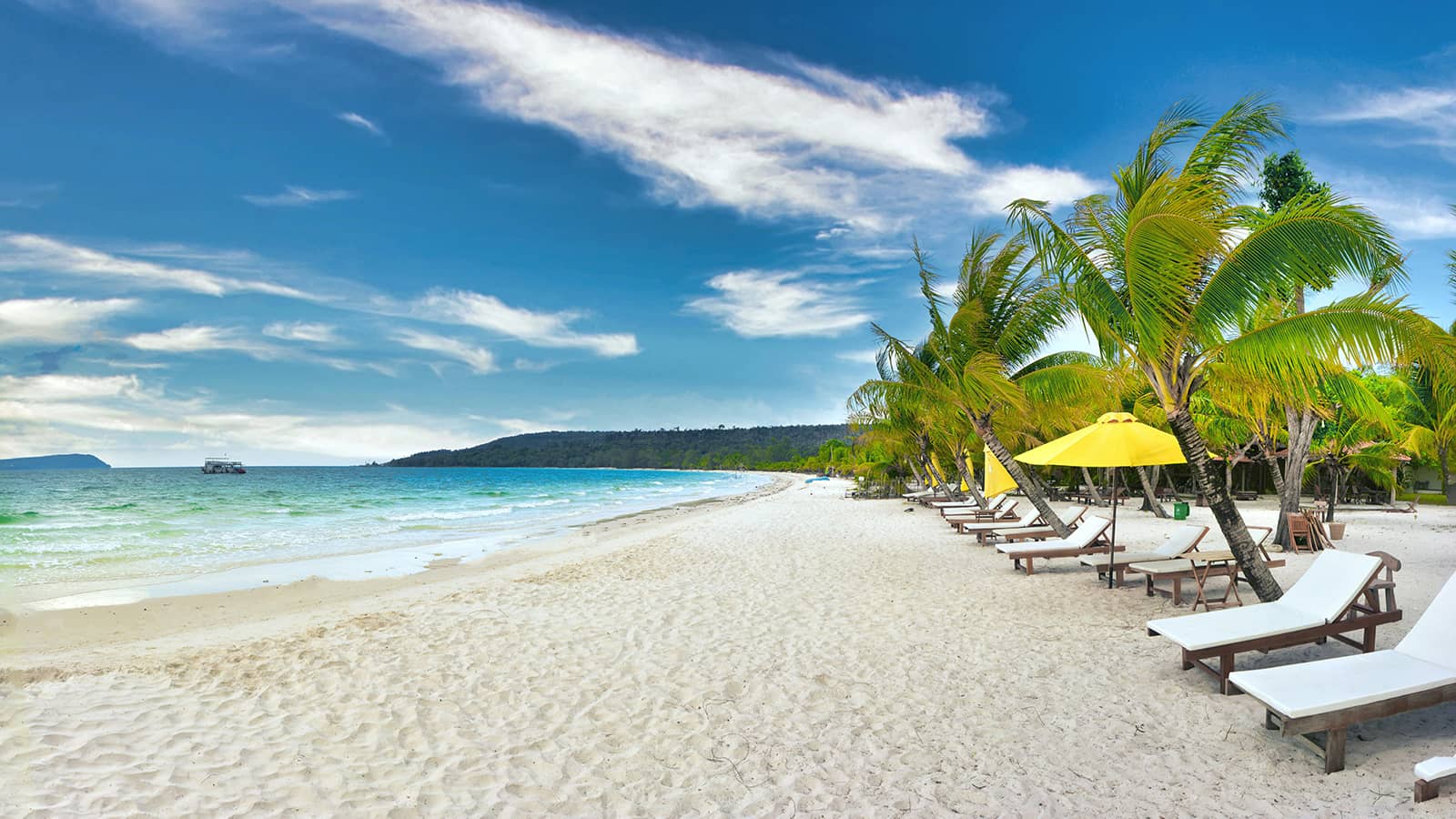
📷 Featured image by Samuel Harrington on Unsplash.