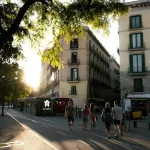
You land in Spain at 7:00 pm, hungry after a long travel day, and the kitchens you pass are dark. Or you arrive for dinner at 8:00 pm and find an empty Dining room with staff still setting tables. In 2026, this is still the most common food-related surprise for first-time visitors. Spain runs on a different meal clock, and once you understand it, the whole day makes more sense.
Spain’s Daily Meal Clock at a Glance
Spaniards eat up to five times a day, but only two meals are “big.” Here is the typical rhythm:
- Desayuno (breakfast): 7:00 to 9:30 am. Light and quick.
- Almuerzo or segundo desayuno (second breakfast): 10:30 am to 12:00 pm. A small sandwich or tortilla slice.
- Aperitivo: 12:30 to 2:00 pm, mostly on weekends. Vermouth, olives and small bites.
- Comida (lunch): 2:00 to 4:00 pm. The main meal of the day.
- Merienda (afternoon snack): 5:00 to 6:30 pm. Common for children and many adults.
- Cena (dinner): 9:00 to 11:00 pm. Lighter than lunch.
The gap between 4:00 pm and 8:30 pm is real. Many traditional kitchens close, restart their stoves, and reopen for the evening.
Why Spain Eats Late
The biggest reason is the clock itself. Spain sits on the same longitude as the UK and Portugal, yet it uses Central European Time, the same as Germany and Poland. In 1940, Franco moved the clocks forward to align with Nazi Germany, and the change was never reversed. So when the clock says 2:00 pm, the sun is where it would be at 1:00 pm in London. In summer, the sun does not set until after 9:30 pm in much of the country.
Work culture added to this. For decades, many Spaniards worked a jornada partida, a split day with a long midday break. People went home or to a nearby bar for a proper lunch, then returned to work until 7:00 or 8:00 pm. Dinner could not happen before that. Add the heat of an Andalusian or Castilian afternoon, when nobody wants to be outside, and the late schedule feels natural rather than strange.
Breakfast and the Second Breakfast
Spanish breakfast is small. Most people have a café con leche and a tostada, which is toasted bread with olive oil and crushed tomato, or with butter and jam. Others choose a pastry or a napolitana, a flaky chocolate-filled bun. Nobody expects eggs and bacon.
Because breakfast is light, hunger returns by mid-morning. That is why the second breakfast, called almuerzo in Spain, is a firm tradition. Workers step out around 10:30 or 11:00 am for a bocadillo (a baguette sandwich) filled with jamón, tortilla or pork loin. The sound of a coffee machine hissing and plates clinking at that hour is the true start of the Spanish working day.

Note that the word almuerzo means “lunch” in much of Latin America. In Spain, it usually refers to this mid-morning meal, although some people also use it for a hearty midday meal in rural areas.
La Comida: The Main Meal
Lunch is the centre of the Spanish food day. A traditional comida has a first course (soup, salad, lentils, vegetables or rice), a second course (fish or meat), dessert or fruit, and coffee. Bread is always on the table. Wine or beer is common, though less so on workdays than it once was.
The classic format is the menú del día, a fixed-price weekday lunch. It exists because workers needed a filling, affordable midday meal, and it remains one of the best-value food traditions in Europe. Dishes follow the season and the region: cocido stew in cold months in Madrid, gazpacho and grilled fish in the south in summer, bean stews in Asturias.
After the plates are cleared comes the sobremesa, the time spent talking at the table once the food is done. There is no direct English word for it. A sobremesa can last 20 minutes or two hours. Rushing it is considered odd, and asking for the bill too early can feel abrupt.
Merienda and Aperitivo
Two smaller traditions bridge the long gaps between meals. The aperitivo comes before lunch, especially on Saturdays and Sundays. The ritual is a small glass of vermouth over ice with an orange slice and an olive, or a cold caña of beer, with salted almonds, anchovies, potato chips or pickled vegetables. The smell of vermouth and briny olives drifting from a busy doorway at 1:00 pm is one of the most Spanish moments you can have.
The merienda sits between lunch and dinner. For children it is a sandwich, yogurt or bollería (pastry) after school. For adults it might be a coffee and a slice of cake, or a hot chocolate with churros in winter. It exists for a simple reason: with lunch ending at 4:00 pm and dinner at 10:00 pm, six hours is a long time.
Dinner and Regional Differences
Dinner usually starts around 9:00 pm on weekdays and 10:00 pm on Fridays and Saturdays. It is lighter than lunch: a tortilla española, a salad, grilled vegetables, cured meats, fish or a plate of shared raciones. Many families keep dinner simple because they ate heavily at midday.
Timing shifts across the country:
- Andalusia and the south: The latest meals, especially in summer, when dinner at 10:30 pm is normal.
- Madrid and central Spain: The classic pattern above. Nightlife begins after dinner, so late meals feed late evenings.
- Catalonia, Valencia and the Basque Country: Slightly earlier. Dinner around 8:30 to 9:30 pm is common, and Basque social life often centres on pintxos in the evening before a later meal.
- Galicia and Asturias: Also a bit earlier, especially in smaller towns.
- Canary Islands: Closer to a UK schedule, because the islands use Western European Time, one hour behind the mainland.
What Has Changed Since 2024
Spain’s meal clock is bending, though it has not broken. Fewer workers now take a two-hour midday break. More companies have adopted a continuous workday, especially in big cities, so lunch has shortened to 60 or 90 minutes on weekdays. Younger Spaniards in cities often eat dinner a little earlier than their parents did, around 8:30 or 9:00 pm.
Tourism has also shaped the map. In heavily visited districts of Madrid, Barcelona, Seville and the Balearic resorts, more kitchens now serve food all day. This helps visitors, but it is the exception, not the rule. Spain has also argued at EU level for ending the twice-yearly clock change, yet in 2026 the clocks still move. The time zone question, and the late-meal habit that comes with it, remains a lively national debate.
2026 Budget Reality
Eating on the Spanish schedule can save money, because the best-priced meal of the day is lunch. Typical 2026 costs per person:
- Budget (€20–€30 per day): Coffee and tostada (€2.50–€4), a bocadillo (€3.50–€6), a weekday menú del día in a smaller city or neighbourhood (€12–€14), and a light dinner of a couple of tapas or a sandwich (€5–€10).
- Mid-range (€40–€65 per day): Breakfast (€4–€6), menú del día in a major city (€14–€18), a merienda coffee and cake (€5–€7), and a sit-down dinner of shared raciones with a drink (€18–€30).
- Comfortable (€90–€150+ per day): Brunch or aperitivo (€10–€20), a long à la carte lunch (€35–€60), and dinner with wine at a full-service table (€45–€80).
Prices run higher in Madrid, Barcelona, San Sebastián and the islands, and lower in inland cities and smaller towns. Weekend lunches do not usually include the menú del día, so à la carte costs rise.
Adjusting Your Own Day
You do not have to eat at midnight to enjoy Spain, but a few small changes help. Have a proper breakfast of coffee and toast, then a mid-morning snack, as locals do. This stops the hunger that makes 1:00 pm feel too far away. Plan your sightseeing so the middle of the afternoon is for resting, not for finding food.
If you are travelling with children or have an early bedtime, shift slowly. Try lunch at 1:30 pm, a merienda at 5:30 pm, and a light dinner around 8:30 or 9:00 pm. This keeps you close enough to the Spanish rhythm to find open kitchens without feeling exhausted. In summer, the later sunset makes the late schedule easier. A 9:30 pm dinner in warm evening air, with church bells ringing the hour in the distance, feels far less late than it sounds on paper.
Frequently Asked Questions
What time is lunch in Spain?
Lunch, called la comida, usually runs from 2:00 to 4:00 pm. Many locals sit down closer to 2:30 pm. Some kitchens start serving at 1:00 pm, but they may be empty until later. It is the largest meal of the day, often with several courses, bread, a drink and coffee.
What time is dinner in Spain?
Dinner, la cena, normally starts between 9:00 and 11:00 pm. It is usually lighter than lunch, with tapas, a tortilla, salad or grilled fish. On weekends and in summer, people often sit down after 10:00 pm. Families with children and people in the north may eat a little earlier.
Can you eat dinner early in Spain?
Yes, but options narrow. Many traditional kitchens close between 4:00 and 8:00 pm and reopen around 8:30 or 9:00 pm. Bars serving snacks and drinks stay open, and some businesses in busy tourist areas keep kitchens running all day. Expect fewer locals and a quieter atmosphere before 8:30 pm.
What is the Spanish menú del día?
The menú del día is a fixed-price weekday lunch with a starter, a main course, dessert or coffee, bread and a drink. In 2026, it usually costs €13 to €18, depending on the city. It is served roughly from 1:00 to 4:00 pm and is rarely offered at dinner.
Why do Spaniards eat so late?
Spain uses Central European Time even though its geography matches the UK and Portugal, so the sun sets later by the clock. Split work shifts, hot summers and a strong social dining culture also push meals later. Franco moved the clocks forward in 1940, and the habit stuck.