On this page
- Spanish Dining Hours: The Clock That Runs Everything
- Greetings and Physical Contact: Reading the Room Correctly
- The Siesta Mindset: What It Actually Means in 2026
- Noise, Volume, and Public Behaviour: Knowing When Spain Is Loud and When It Is Not
- Dress Codes and Religious Sites: Practical Rules, Not Suggestions
- Tipping Culture: What Is Expected in 2026
- 2026 Budget Reality: Cultural Experiences and What They Cost
- Frequently Asked Questions
Spain welcomed a record 94 million international visitors in 2025, and the pressure is showing. Several cities — Barcelona, Seville, and San Sebastián among them — have introduced or tightened tourist conduct rules heading into 2026, including new fines for anti-social behaviour in residential areas. Respecting Spanish customs is no longer just polite. In some cases, it is legally required. Beyond the rules, though, the real reward of understanding Spanish traditions is access: locals warm up fast to visitors who make even a small effort to meet them halfway.
Spanish Dining Hours: The Clock That Runs Everything
Nothing signals “tourist” faster in Spain than eating lunch at noon or looking for dinner at 6pm. Spanish mealtimes are not a quirk — they are a Cultural framework that shapes how the entire day is organised, and adapting to them will change your experience of the country completely.
Lunch is the main meal of the day and happens between 2pm and 4pm. Restaurants fill up around 2:30pm. Before 2pm, many kitchens are not ready, and showing up at 1pm may get you a polite explanation that the kitchen is still preparing. Dinner runs from 9pm to 11pm, with 9:30pm being a perfectly normal reservation time for a family with children. Restaurants serving food before 8:30pm in most of Spain are catering specifically to tourists.
Breakfast is light — a café con leche and a tostada with olive oil and tomato, eaten standing at a bar between 8am and 10am. There is often a mid-morning almuerzo (a small snack, often a bocadillo) around 11am to bridge the gap before lunch.
The practical impact: if you plan your sightseeing around Northern European or American meal schedules, you will be eating alone in half-empty restaurants serving food that was cooked hours earlier. Shift your schedule, and you eat fresh food surrounded by locals.
Greetings and Physical Contact: Reading the Room Correctly
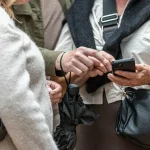
The two-cheek kiss (dos besos) is the standard greeting between women and between a man and a woman in most of Spain. It is not actually a kiss — both people lean in and touch cheek to cheek, starting with the right cheek, making a small kissing sound in the air. No lip contact, no firm press. Getting it wrong is not offensive, but hesitating awkwardly or extending a stiff hand to someone moving in for a greeting can create an uncomfortable moment.

Between two men who do not know each other well, a handshake is standard. Among friends, some Spanish men do embrace, especially in southern regions like Andalusia. The key is to follow the other person’s lead rather than initiating a greeting style you are unsure about.
A few specific situations to know:
- Meeting someone for the first time in a social setting: two-cheek kiss for women greeting anyone, handshake between unfamiliar men.
- Business introductions: handshake is appropriate for everyone, regardless of gender, in a formal professional context.
- Greeting a group: go around and greet each person individually. Waving at a group or saying a general “hello” to the room is considered cold.
- Basque Country and Catalonia: the two-cheek kiss is practised here too, though the Basque Country can feel slightly more reserved overall. Do not let regional differences alarm you — follow the other person’s cue.
Using first names immediately is normal in Spain. Formal titles like “Señor” or “Señora” are rarely used in everyday social interaction unless you are addressing an elderly person or in a highly formal context. Spaniards tend to be warm and informal quickly.
The Siesta Mindset: What It Actually Means in 2026
The siesta has evolved. In major cities like Madrid and Barcelona, the classic two-hour afternoon shutdown barely exists for most businesses. Shops and offices in urban centres largely operate on continuous hours. However, in smaller towns, village centres, and even some mid-sized cities across Andalusia, Extremadura, and Castile, the siesta shutdown between roughly 2pm and 5pm is very much real.
What does this mean practically? Hardware shops, pharmacies (outside the rota system), independent clothing stores, and local offices may close entirely during these hours. Banging on a closed door or expressing frustration that a shop is shut at 3pm on a Tuesday will not get you anywhere.
The siesta is not purely about sleep — it is about the rhythm of the day. The heat in southern Spain between June and September makes midday rest sensible, not lazy. Andalusian summers regularly reach 38°C to 42°C, and the streets genuinely empty out between 2pm and 5pm. Embracing this rhythm — using those hours for your own rest, a long lunch, or indoor sightseeing — makes the rest of your day far more pleasant.

The evening comes alive after 6pm. Streets, plazas, and promenades fill up again. This is the time for the paseo — the traditional evening stroll — where families walk together, neighbours catch up, and the social life of the town unfolds in public. Joining a paseo, even just walking at a relaxed pace along the main street, puts you directly inside one of Spain’s most enduring daily traditions.
Noise, Volume, and Public Behaviour: Knowing When Spain Is Loud and When It Is Not
Spain is a noisy country. Bars spill conversation into the street. Families eat dinner loudly at outdoor tables. Festivals are thunderous by design. Accepting this — and not treating it as a problem to complain about — is part of understanding Spanish public life.
That said, there are spaces where quiet is expected and enforced. Churches and cathedrals are obvious examples, but the rule extends to:
- Hospital and medical waiting areas
- Museum rooms containing major religious art
- Residential streets late at night — this is where 2026 conduct rules bite hardest, particularly in Barcelona’s Gràcia and Barceloneta neighbourhoods, where noise complaints from residents have led to enforceable quiet zones after midnight
Eating or drinking while walking is generally acceptable, but in some historic centres it draws disapproval. Sitting on steps of monuments to eat is increasingly restricted — particularly around the Sagrada Família and the Alhambra, where wardens will ask you to move. In 2026, Seville introduced spot fines of up to €750 for behaviour deemed disrespectful in UNESCO heritage zones.
Shouting across a plaza to get someone’s attention, taking phone calls on speaker in restaurants, or playing music from a phone without headphones are all considered poor form. Spain is sociable, but it is sociable in specific, understood ways.
Dress Codes and Religious Sites: Practical Rules, Not Suggestions
Spain remains a country with a strong Catholic heritage, and its religious buildings — which are often its most spectacular architecture — maintain dress standards that are actively enforced. At the Seville Cathedral, the Sagrada Família, the Cathedral of Santiago de Compostela, and hundreds of smaller churches across the country, you will not be admitted with bare shoulders or shorts above the knee.

This applies regardless of the outside temperature. Carrying a light scarf or a pair of long linen trousers in your bag when visiting religious sites costs nothing and prevents the frustration of being turned away at the door. Some sites sell or rent cover-ups at the entrance, but they are often flimsy and sometimes cost €2 to €5.
Away from religious sites, Spain is fairly relaxed about dress. Beach towns in summer expect swimwear on the beach but not in shops or restaurants immediately above the seafront. In cities, most restaurants and bars have no formal dress code, though very smart or expensive establishments expect smart casual at minimum. Walking into a quality restaurant in flip-flops and a beach cover-up will not get you thrown out, but you may sense the temperature drop at the door.
Tipping Culture: What Is Expected in 2026
Tipping in Spain is genuinely optional, and the culture around it has not shifted significantly toward the American or UK model despite tourism growth. Service is included in the price of what you order — servicio incluido is standard, even if it is not always printed on the bill.
That said, leaving something small is appreciated and common among locals for good service:
- Cafés and bars: rounding up to the nearest euro, or leaving small coins — €0.20 to €0.50 — is typical.
- Sit-down restaurants: 5% to 10% for a meal you genuinely enjoyed. Leaving €2 to €5 on a €30 bill is generous by local standards.
- Taxis: rounding up the fare is common. Tipping a specific percentage is not expected.
- Hotels: leaving €1 to €2 per night for housekeeping is a kind gesture but not obligatory.
What feels like a normal tip in the US or UK can read as condescending in Spain — leaving €20 on a €25 bill, for instance, may cause awkwardness rather than gratitude. Match the local scale, not the one from home.
2026 Budget Reality: Cultural Experiences and What They Cost
Understanding Spanish culture often has a price attached when you move beyond everyday life into organised experiences. Here is what to expect in 2026:
Flamenco Performances
- Budget: Free or €5 to €10 in a bar hosting an informal tablao night — check local listings in Seville, Granada, or Jerez de la Frontera
- Mid-range: €25 to €45 for a dedicated flamenco venue with seating and one drink included
- Comfortable: €60 to €120 for a premium tablao show with dinner included, particularly in Madrid or Seville

Guided Cultural and Heritage Tours
- Budget: €10 to €18 for walking tours (tip-based tours are largely regulated out of existence in major cities by 2026)
- Mid-range: €30 to €55 for small-group guided tours of sites like the Alhambra or the Alcázar of Seville
- Comfortable: €80 to €200 for private guided experiences, including skip-the-line access and in-depth commentary
Entry to Religious Sites
- Seville Cathedral: €12 (general), €6 (reduced)
- Sagrada Família, Barcelona: €26 to €33 depending on access level (book well in advance in 2026 — sold out days or weeks ahead regularly)
- Cathedral of Santiago de Compostela: free entry to the main nave; Portico da Gloria tour: €6
Festivals and Local Events
- Most public festivals — Feria de Abril, Las Fallas street events, Semana Santa processions — are free to attend as a spectator
- Reserved grandstand seating for Semana Santa processions in Seville: €20 to €150 depending on position and day
- La Tomatina in Buñol: €10 to €12 for the official entry wristband (required since 2013 to control numbers)
Frequently Asked Questions
Is it rude to speak English in Spain instead of Spanish?
Not at all, but making a small effort — saying buenos días, por favor, and gracias — is noticed and appreciated. In tourist-heavy areas, English is widely spoken. In rural areas, a few words of Spanish go a long way and locals respond warmly to the attempt, even if you get it wrong.
Can I wear shorts and a T-shirt visiting Spanish churches?
Shorts above the knee and bare shoulders are not permitted in most Spanish churches and cathedrals. Some sites lend scarves or wraps at the entrance, but others will simply refuse entry — so don’t rely on it.
How do I know if a business is closed for siesta or just closed for the day?
Most businesses that close for siesta display their hours on the door — look for a split schedule like “10:00–14:00 / 17:00–20:30”. If no hours are posted, check Google Maps for the listing. In small towns, a handwritten sign often gives afternoon reopening times. If it is between 2pm and 5pm, assume siesta and return later.
Are there specific behaviours that could result in fines in Spain in 2026?
Yes. In cities including Barcelona, Seville, and Palma de Mallorca, fines apply for drinking alcohol in unauthorised public spaces, noise violations in residential areas at night, and disrespectful behaviour near heritage monuments. Fines range from €100 to €750 depending on the city and the offence. Rules vary by municipality, so check local regulations for wherever you are staying.
Do Spanish people actually expect tourists to follow local customs?
Spaniards are generally tolerant and welcoming, but there is a noticeable shift in attitude in 2026, particularly in over-touristed cities. Locals appreciate genuine effort and respond well to visitors who show curiosity and respect. Behaviour that disrupts daily life — blocking narrow streets, being loud in residential areas late at night, queue-jumping — generates real frustration and, increasingly, formal complaints.