On this page
- What Makes Cádiz Different From Every Other Andalusian City
- The Old City: Walking 3,000 Years of History
- Cádiz’s Food Scene: What to Eat and Where to Find It
- The Atlantic Beaches: More Than Just Sand
- Carnival: The Loudest, Most Irreverent Party in Spain
- Day Trip or Overnight? How to Plan Your Visit
- Getting to Cádiz in 2026
- Getting Around the City
- 2026 Budget Reality: What Cádiz Costs
- Frequently Asked Questions
💰 Click here to see Spain Budget Breakdown
💰 Prices updated: October, 2026. Budget figures are estimates — always verify before travel.
Exchange Rate: $1 USD = €0.88
Daily Budget (per person)
Shoestring: €60.00 – €90.00 ($68.18 – $102.27)
Mid-range: €120.00 – €180.00 ($136.36 – $204.55)
Comfortable: €220.00 – €470.00 ($250.00 – $534.09)
Accommodation (per night)
Hostel/guesthouse: €15.00 – €50.00 ($17.05 – $56.82)
Mid-range hotel: €70.00 – €130.00 ($79.55 – $147.73)
Food (per meal)
Budget meal: €7.00 ($7.95)
Mid-range meal: €25.00 ($28.41)
Upscale meal: €80.00 ($90.91)
Transport
Single metro/bus trip: €3.00 ($3.41)
Monthly transport pass: €24.00 ($27.27)
Cádiz has a problem with its reputation — or rather, the lack of one. Most visitors to Andalusia tick off Seville, Granada, and Córdoba, then fly home without ever making it to the Atlantic coast. In 2026, with Seville’s tourist numbers hitting record highs and accommodation prices rising sharply, Cádiz is quietly becoming the smartest alternative in the south. It’s older than Rome, surrounded on three sides by the Atlantic Ocean, and still feels like a city that belongs to the people who actually live there.
What Makes Cádiz Different From Every Other Andalusian City
Most Andalusian Cities face inward — their monuments, their plazas, their history all turned toward the interior. Cádiz faces the sea. The entire old city sits on a narrow peninsula jutting into the Atlantic, which means that even in the dead centre of town, you’re never more than a ten-minute walk from open water. That geographical reality shapes everything: the light, the humidity, the salt tang in the air, and the temperament of the people who live here.
Gaditanos — the locals — have a reputation throughout Spain for being sharp-witted, irreverent, and deeply unbothered by what other people think. This is the city that invented the most politically savage carnival in Europe. It’s also the city where flamenco singers from Seville come to drink and be among people who understand what duende really sounds like. Cádiz has genuine personality, and it hasn’t been smoothed over for tourist consumption.
The architecture reflects this, too. The city’s whitewashed buildings are streaked with the yellow of centuries of Atlantic salt. The old town’s grid of narrow streets opens suddenly onto mirador terraces with nothing between you and the horizon. It feels less like a museum piece and more like a living, breathing port city that simply happens to be ancient.
The Old City: Walking 3,000 Years of History
Founded by the Phoenicians around 1100 BCE, Cádiz claims the title of Europe’s oldest continuously inhabited city. That history is layered across the peninsula in ways that don’t announce themselves loudly — you have to look for them.
The Catedral de Cádiz is the obvious starting point. Its golden dome — actually made of yellow glazed tiles — is visible from across the bay and has become the city’s defining image. Inside, the composer Manuel de Falla is buried in the crypt. The climb to the Torre de Poniente bell tower costs around €6 and gives you one of the best panoramic views in southern Spain, with the bay on one side and the Atlantic stretching away on the other.
From the cathedral, follow the seafront paseo toward the Barrio del Pópulo, the oldest surviving medieval neighbourhood in Cádiz. The archways here — the Arco de los Blancos and the Arco de la Rosa — are remnants of the 13th-century city walls. Most visitors walk straight past them. Stop, look up, and notice the worn Latin inscriptions and the way the stone has darkened differently on each face from centuries of different wind direction.
The Museo de Cádiz on Plaza de Mina holds Phoenician sarcophagi that were found beneath the city streets — two of them, carved from white marble, depicting faces with an almost Egyptian stillness. They’re kept in a ground-floor room, and seeing them for the first time stops most people in their tracks. Entry is free for EU citizens; €1.50 for others.
The Castillo de Santa Catalina and Castillo de San Sebastián bracket the old city from opposite ends of the seafront. San Sebastián sits on a tiny island connected to the mainland by a narrow causeway — walking it at dusk, with the lighthouse at the end and waves breaking on both sides, is one of those Cádiz moments that doesn’t appear in any guidebook highlight but stays with you.
Cádiz’s Food Scene: What to Eat and Where to Find It
The food in Cádiz is almost entirely about the sea, and about frying. The city’s signature dish is pescaíto frito — small fish and seafood dipped in chickpea flour and fried in hot olive oil until the batter crackles and the fish inside stays soft and sweet. It’s served in paper cones and eaten standing at the counter of a freiduría. The best in the old city is generally considered to be Freiduría Las Flores on Plaza de las Flores — a local institution where the queue at lunch moves fast and the boquerones (anchovies) are done exactly right.
The Mercado Central de Abastos on Plaza de las Flores is the daily food market and worth visiting early in the morning before the fish stalls sell out. The vendors here supply both home kitchens and restaurant kitchens, so the quality is serious. You’ll find tortillitas de camarones — delicate shrimp fritters made with a near-transparent batter — being cooked at the market bars from around 9am.
For a sit-down meal, El Faro de Cádiz on Calle San Félix has been the city’s benchmark fine-dining address for decades. It’s not cheap (expect €40–€60 per person for a full meal with wine), but the kitchen takes local ingredients — urta fish, Sanlúcar prawns, local almadraba bluefin tuna — and treats them with real precision. Booking ahead is essential.
Cheaper and equally beloved is the tapas circuit around Calle Zorilla and Calle Plocia in the Barrio de la Viña. These are the streets where locals actually drink, not where tourists are pointed. A glass of dry local fino sherry paired with a plate of coquinas (tiny clams sautéed in garlic and white wine) costs about €4–€6 and is one of the great cheap pleasures of Spanish food culture.
The Atlantic Beaches: More Than Just Sand
Cádiz has beaches inside the city itself, which is unusual and genuinely wonderful. Playa de la Caleta, tucked into a small cove between the two castles in the old town, is the most atmospheric — small, crowded in summer, watched over by the castle of Santa Catalina and facing directly into the setting sun. Locals have been swimming here for centuries. The water is cold even in August (typically 20–22°C) because this is the Atlantic, not the Mediterranean.
For longer stretches of sand, the city’s main beaches run along the more modern, landward side of the peninsula. Playa de la Victoria is 3 kilometres of wide, clean beach backed by a palm-lined promenade. It’s well-serviced and popular with families. In 2026, the beach accessibility programme extended here, with improved ramp access and adapted equipment at several points along the shore.
Beyond the city limits, the beaches of the Costa de la Luz — particularly around Conil de la Frontera, Vejer de la Frontera, and Zahara de los Atunes — are among the most unspoiled in Spain. All are reachable by bus or car within an hour.
Carnival: The Loudest, Most Irreverent Party in Spain
Cádiz Carnival, held each February, is not the Carnival most tourists imagine. There are no feather headdresses, no synchronized samba dancers, no corporate-sponsored floats. What happens in Cádiz is stranger and more interesting: groups of singers called chirigotas and comparsas roam the streets performing original satirical songs that skewer politicians, corporations, and public figures with a sharpness that would make a professional satirist nervous. The performances are written specifically for that year, sharp with local references, and delivered with a combination of theatrical flair and genuine comic aggression.
The streets of the old city fill completely for ten days. The smell of fried food, the sound of competing groups tuning their instruments in doorways, the sight of entire families in coordinated costumes — it’s overwhelming in the best possible way. In 2026, Carnival ran from February 21 to March 3. Accommodation books out months in advance; if you plan to attend in 2027, start looking in September 2026.
Day Trip or Overnight? How to Plan Your Visit
Cádiz is 124 kilometres from Seville and connected by both train and bus, which makes it a technically feasible day trip. Whether it’s a wise one depends on what you want.
A day trip works if your priority is a single long walk through the old city, lunch at the market, and an hour at Playa de la Caleta. The train from Seville takes about 1 hour 45 minutes, and an early departure gives you a solid six to seven hours on the ground before the last comfortable train back.
An overnight stay — ideally two nights — changes the experience completely. The city empties of day visitors by early evening and takes on a different character after dark: quieter, more local, with the seafront promenades lit by the warm yellow of old street lamps and the sound of waves audible between the buildings. If you want to eat properly, drink in neighbourhood bars, and catch a sunset from the castle causeway, you need to stay.
Carnival, obviously, requires a minimum of two to three nights, and more if you want to see multiple nights of performances.
Getting to Cádiz in 2026
By train: Renfe operates regular services from Seville Santa Justa to Cádiz. The journey takes approximately 1 hour 40 minutes and runs multiple times daily. Fares typically range from €8 to €20 depending on how far ahead you book. From Madrid, the route requires a change in Seville; total journey time is around 4 hours.
The long-awaited high-speed AVE extension to Cádiz has been in planning for several years, but as of 2026, conventional Renfe services remain the standard option. Work on infrastructure improvements between Jerez de la Frontera and Cádiz continued through 2025, with phased upgrades expected to reduce journey times modestly by 2027.
By bus: ALSA and Socibus run services from Seville, Málaga, and Madrid. The Seville–Cádiz bus takes around 1 hour 45 minutes and often works out cheaper than the train for last-minute travel.
By car: The A-4 motorway connects Seville and Cádiz directly. Driving takes around 1 hour 30 minutes without traffic. Note that parking in the old city is extremely limited — use the underground car parks near the city entrance at Puerta de Tierra and walk in.
By air: The nearest airports are Jerez de la Frontera (35 kilometres away, about 30 minutes by car or bus) and Seville (100 kilometres). In 2026, Jerez handles a limited number of seasonal routes from the UK and Germany. Seville remains the more practical air hub for most international arrivals.
Getting Around the City
The old city of Cádiz is small enough to walk entirely. From the Puerta de Tierra city gate to the far tip of the peninsula at the lighthouse is about 2.5 kilometres — a 30-minute walk at a relaxed pace. Most of what you’ll want to see is within this area and easily connected on foot.
The city runs an electric bus service (Line 1) that loops through the peninsula and connects the old town to Playa de la Victoria and the newer residential districts. A single fare costs €1.40. Taxis are available and affordable by Spanish city standards — a trip across the old city rarely exceeds €8.
Cycling is increasingly viable. The city has extended its dedicated cycling infrastructure in recent years, and the seafront promenade offers a flat, scenic route. Bike rental is available near the main beach area at around €10–€15 per day.
2026 Budget Reality: What Cádiz Costs
Cádiz remains one of the more affordable cities in Andalusia, particularly compared to Seville or Málaga. Prices have risen since 2024, but the gap with Spain’s main tourist cities is still significant.
- Budget: Hostel dorm beds run €20–€35 per night in the old city. A menú del día (set lunch with three courses and a drink) costs €12–€16 at most local restaurants. Pescaíto frito at a freiduría: €4–€8 per person. Total comfortable daily budget: €60–€80.
- Mid-range: A double room in a central guesthouse or small hotel: €80–€130 per night. Dinner at a quality restaurant with wine: €25–€40 per person. Daily total: €120–€180.
- Comfortable: Boutique hotels in the old city, particularly those with sea views or rooftop terraces, run €150–€250 per night. A full meal at El Faro with wine: €50–€70 per person. Daily total: €220–€350.
There is no city-specific tourist tax in Cádiz as of 2026, unlike Seville and Barcelona where additional per-night levies apply. This may change; the regional government of Andalusia has been reviewing tourist tax frameworks across the province.
Museum entry is generally low or free. The cathedral tower is the most significant paid attraction at around €6. The beaches are free. The city’s most pleasurable hours — walking the seafront at sunset, watching the fishing boats come in, finding a bar in the Barrio de la Viña — cost nothing at all.
Frequently Asked Questions
Is Cádiz worth visiting for just one day?
Yes, but one day only works if you focus on the old city. Take an early train from Seville, walk the historic centre, eat lunch at the Mercado Central, and visit Playa de la Caleta before heading back. You’ll see the essence of Cádiz, but miss the city’s quieter, more local evening atmosphere that makes an overnight stay worthwhile.
What is the best time of year to visit Cádiz?
Late March to June and September to October offer the best combination of warm weather, manageable crowds, and good beach conditions. July and August are hot (28–34°C), busy, and accommodation prices peak. February is cooler but essential if you want to experience Carnival, which is unlike anything else in Spain.
Is Cádiz safe for tourists?
Cádiz is a safe city by any reasonable standard. Petty theft in crowded areas is possible, as in any tourist destination, but violent crime is rare. The old city is walkable at night without concern. The usual precautions — keep valuables secure, be aware in very crowded spaces during Carnival — apply.
How far is Cádiz from Seville, and how do I get there?
Cádiz is approximately 124 kilometres from Seville. The most convenient connection is by Renfe train from Seville Santa Justa, which takes around 1 hour 40 minutes and costs €8–€20 depending on the service and booking time. Buses are also available and slightly cheaper for last-minute travel.
What language is spoken in Cádiz, and will English be understood?
Spanish is the only official language in Cádiz. The local Andalusian accent is distinctive — fast, with dropped consonants — and can be difficult even for fluent Spanish speakers at first. English is understood in most hotels and tourist-facing businesses, but in neighbourhood bars and markets, some basic Spanish goes a long way and is genuinely appreciated.
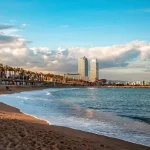
📷 Featured image by Zhu Yunxiao on Unsplash.