On this page
- The Iconic Landmarks Every Visitor Should See
- Barcelona’s Best Museums and Cultural Institutions
- The Neighborhoods Worth Exploring as Attractions Themselves
- Green Spaces, Viewpoints, and Hidden Escapes
- The Waterfront and Barceloneta
- Day-Trip Worthy Attractions Within Easy Reach
- Food Markets as Must-See Destinations
- Nightlife and Live Entertainment Worth Planning Around
- 2026 Budget Reality: What Attractions Actually Cost
- Practical Tips for Visiting Barcelona’s Attractions in 2026
- Frequently Asked Questions
💰 Click here to see Spain Budget Breakdown
💰 Prices updated: October, 2026. Budget figures are estimates — always verify before travel.
Exchange Rate: $1 USD = €0.88
Daily Budget (per person)
Shoestring: €60.00 – €90.00 ($68.18 – $102.27)
Mid-range: €120.00 – €180.00 ($136.36 – $204.55)
Comfortable: €220.00 – €470.00 ($250.00 – $534.09)
Accommodation (per night)
Hostel/guesthouse: €15.00 – €50.00 ($17.05 – $56.82)
Mid-range hotel: €70.00 – €130.00 ($79.55 – $147.73)
Food (per meal)
Budget meal: €7.00 ($7.95)
Mid-range meal: €25.00 ($28.41)
Upscale meal: €80.00 ($90.91)
Transport
Single metro/bus trip: €3.00 ($3.41)
Monthly transport pass: €24.00 ($27.27)
Barcelona in 2026 is not the same city it was five years ago. Anti-tourism protests, new visitor caps at major sites, and a city council actively limiting short-term rentals have reshaped how you need to plan a trip here. Timed entry slots for Sagrada Família now book out six to eight weeks in advance in summer. Park Güell’s ticketed zone fills up days ahead. If you show up without a plan, you will miss half of what makes this city extraordinary. This guide cuts through the noise and tells you exactly what’s worth your time — and how to actually see it.
The Iconic Landmarks Every Visitor Should See
These are not optional stops. They define the city’s visual identity and there’s a reason millions of people make the trip specifically for them.
Sagrada Família
Antoni Gaudí’s unfinished basilica has been under construction since 1882 and remains the most visited monument in Spain. By 2026, construction on the central tower of Jesus Christ — reaching 172 metres — is in its final phase, making this a genuinely historic moment to visit. The interior is unlike anything else in European religious architecture: light filters through stained glass in amber, red, and deep blue, turning the nave into something closer to a forest canopy than a church. Stand near the centre of the nave on a sunny morning and the effect is overwhelming in the best possible way. Tickets cost €26–€36 depending on whether you add the tower lifts. Book directly at the official website, minimum six weeks ahead in summer.
Park Güell
The ticketed Monumental Zone — the terraces, dragon staircase, and hypostyle hall — costs €10 and requires a timed slot. The surrounding parkland is free and largely ignored by tourists, which means you can walk through pine-scented paths above the city with almost no crowds. The view from the main terrace over Barcelona to the sea is the kind that stays with you. Come for the 9:00 slot if you want the terrace before tour groups arrive.
Casa Batlló and Casa Milà (La Pedrera)
Both sit on Passeig de Gràcia within four blocks of each other. Casa Batlló (€35–€49 with evening experience) is theatrical — the interior feels like being inside a whale, with curved bone-white walls and a spine-like staircase. La Pedrera’s rooftop, with its warrior-like chimneys, is best visited at dusk when the stone turns golden. Trying to see both in one day is possible but exhausting. Most people prefer one done properly over two done quickly.

Arc de Triomf and the Palau de la Música Catalana
The Arc de Triomf is free, photogenic, and underrated as a starting point for exploring El Born on foot. The Palau de la Música, a UNESCO World Heritage site designed by Lluís Domènech i Montaner, is best experienced during a live concert rather than a guided tour. The stained-glass inverted dome above the stage is one of the most extraordinary architectural details in any concert hall in the world. Check their 2026 schedule and book a performance — tickets from around €20.
Barcelona’s Best Museums and Cultural Institutions
Barcelona’s museum scene rewards people who go beyond the obvious. The big names are worth it, but so are a handful of smaller institutions that almost never appear on top-ten lists.
Museu Picasso
Set across five connected medieval palaces in El Born, the Picasso Museum holds over 4,250 works — the most significant collection of his early work anywhere. The Las Meninas series alone justifies the visit. Tickets cost €14; free on the first Sunday of each month and Thursday evenings after 17:00, though queues for free slots can be long. Book online regardless.
Museu Nacional d’Art de Catalunya (MNAC)
Perched on Montjuïc, the MNAC holds the finest collection of Romanesque art in the world — rescued from Pyrenean churches in the early 20th century. The building itself, the Palau Nacional, is worth visiting for its dome and panoramic terrace alone. Entry is €12. The view over the city from the front steps at sunset is one of the best free viewpoints in Barcelona.
MACBA and the Raval Arts District
The Museu d’Art Contemporani de Barcelona sits in the middle of El Raval and anchors a cluster of cultural spaces including the CCCB (Centre de Cultura Contemporània de Barcelona) next door. The MACBA’s permanent collection covers post-war European and Catalan art. Entry is €12. The plaza in front — always full of skateboarders — has been a Barcelona landmark in its own right since the 1990s.
Born Cultural Centre
Inside a stunning 19th-century iron market building, the Born Cultural Centre contains the excavated ruins of an entire neighbourhood destroyed during the 1714 siege of Barcelona. You walk above the ruins on elevated walkways. Entry is €6, and it’s consistently undervisited, which makes it a genuine discovery for most people who find it.

The Neighborhoods Worth Exploring as Attractions Themselves
In Barcelona, the act of walking through the right neighbourhood is itself the attraction. These are not just places to sleep — they’re destinations.
Gothic Quarter (Barri Gòtic)
The medieval core of the city, built over Roman ruins. The Roman temple of Augustus — hidden inside a medieval courtyard — is one of the best-preserved Roman structures in Spain. The Barcelona Cathedral and Plaça de Sant Felip Neri are anchor points, but the real pleasure is getting lost in the narrow lanes between them. Go in the early morning before the tour groups arrive and the streets feel like they belong to a different century.
El Born
Adjacent to the Gothic Quarter but sharper, more local, and better for eating and drinking. The streets around Carrer del Rec and Carrer del Parlament are lined with independent boutiques, wine bars, and small restaurants. El Born is where Barcelona’s creative class actually lives and socialises.
Gràcia
A former independent village absorbed by the city in the 19th century, Gràcia still functions like a town within a city. Its squares — Plaça del Sol, Plaça de la Vila de Gràcia, Plaça de la Virreina — are full of locals at all hours. The Festa Major de Gràcia in August, when residents decorate entire streets with elaborate handmade installations, is one of the most extraordinary free events in Spain.
Poblenou
Barcelona’s former industrial district has been transformed over the past decade into a hub for technology companies, design studios, and independent restaurants. The Rambla del Poblenou — quieter and more residential than La Rambla — gives you a sense of real Barcelona life. The area is also home to some of the city’s best new restaurants opening in 2025 and 2026.
Green Spaces, Viewpoints, and Hidden Escapes
Barcelona’s most atmospheric viewpoints are not the ones on every tourist map.
Bunkers del Carmel
The remains of Civil War anti-aircraft batteries sit on a hill in the Carmel neighbourhood with a 360-degree view over the entire city, the sea, and on clear days, the mountains behind. It’s entirely free, accessible by bus or a 20-minute walk from the Guinardó metro stop, and increasingly popular — arrive before 18:00 in summer to get a spot on the circular ruins.

Montjuïc
The hill southwest of the city holds the MNAC, the Olympic stadium from 1992, the Fundació Joan Miró (tickets €14), the Castell de Montjuïc with its brutal history and harbour views, and the Jardins de Laribal — terraced gardens almost nobody visits. The cable car from Barceloneta costs €12.50 one way. The Fundació Miró alone is worth a half-day.
Parc de la Ciutadella
Barcelona’s main urban park, adjacent to El Born, is where locals come to row boats on the lake, picnic under palm trees, and escape the city without leaving it. The monumental cascade fountain — a young Gaudí helped design the decorative elements — sits at the park’s edge and is completely free to see.
The Waterfront and Barceloneta
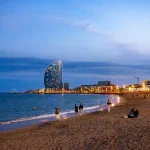
The Barcelona seafront was rebuilt for the 1992 Olympics and it shows — it’s polished, wide, and busy. Barceloneta beach is the closest to the centre and the most crowded. In summer, the sand is packed from mid-morning onwards and petty theft is a known issue, so leave valuables at your accommodation.
What’s actually worth your time on the waterfront: the Barceloneta market for a pre-beach coffee, the Passeig Marítim for an early morning run or bike ride before the crowds arrive, and the Port Olímpic area for a quieter stretch of beach further from the tourist centre. The Aquàrium Barcelona (tickets €23) and the Museu d’Història de Catalunya inside the Palau de Mar are both solid options if the beach is overpowering.
Day-Trip Worthy Attractions Within Easy Reach
Montserrat
The serrated mountain 50 kilometres northwest of Barcelona is accessible by FGC train from Plaça Espanya to Monistrol, then rack railway or cable car to the monastery. Total journey time: about 90 minutes. The Benedictine monastery, the Black Madonna statue, and the hiking trails above the monastery (the Sant Joan trail takes about 45 minutes) make this a genuinely full day. Train and rack railway combined costs around €35 return with the all-inclusive tourist ticket.
Sitges
40 minutes south by R2 Sud train from Passeig de Gràcia, Sitges is a coastal town known for beautiful beaches, a well-preserved old town, the Carnival festival in February, and a long-established LGBTQ+ community. Day-trippers should aim to arrive by 10:00 in summer. Train tickets cost around €4.50 each way.

Penedès Wine Country
The wine region an hour southwest of Barcelona is the source of most of Spain’s cava. Several wineries — including Freixenet and Torres — offer tours and tastings, typically €15–€30. Accessible by train to Vilafranca del Penedès or Sant Sadurní d’Anoia. The Torres winery introduced a new immersive visitor experience in 2025 that has become one of the most popular day trips from Barcelona.
Food Markets as Must-See Destinations
Barcelona’s markets are working food destinations, not tourist performances — though some have blurred that line in recent years.
La Boqueria
La Rambla’s famous market has become heavily touristified — many of the stalls near the entrance cater almost entirely to visitors. That said, push to the back third of the market and you’ll find fishmongers, cheese vendors, and butchers who have been here for decades and sell to local chefs. Best visited before 09:00 on a weekday. Entrance is free.
Mercat de Santa Caterina
Designed by Enric Miralles with an extraordinary mosaic-tiled roof, Santa Caterina in El Born is everything La Boqueria should be — functional, beautiful, and used by the neighbourhood. The prepared food stalls inside are a genuine lunch option, not a tourist trap.
Mercat de l’Abaceria (Mercat de Gràcia)
In the Gràcia neighbourhood, this market mixes vintage clothing, second-hand books, fresh produce, and artisan food stalls. Open on weekends. Less known to visitors but very much part of the neighbourhood’s identity.
Nightlife and Live Entertainment Worth Planning Around
Barcelona’s night culture runs later than almost anywhere in Europe. Dinner before 21:00 marks you immediately as a tourist. Bars fill after 23:00. Clubs don’t reach capacity until 02:00.
The Palau de la Música Catalana hosts everything from chamber music to flamenco — check their 2026 schedule. The Sala Apolo on Carrer Nou de la Rambla books some of Europe’s best electronic and indie acts. For jazz, Jamboree in the Gothic Quarter has had live performances almost every night since 1960. Rooftop terraces worth noting: the Terrazza del Hotel Arts and the rooftop bar at Casa Fuster in Gràcia both offer extraordinary city views without the usual tourist-trap pricing — a cocktail runs €14–€18. The El Born and Gràcia bar districts run until 03:00 most nights; the Raval has a rougher edge and a younger, more underground crowd.
2026 Budget Reality: What Attractions Actually Cost
Prices in Barcelona have risen sharply since 2023 and the new tourist tax layers add up fast. Here’s what to realistically budget for attraction entry in 2026:

- Sagrada Família: €26–€36 (basic entry to tower access)
- Park Güell Monumental Zone: €10
- Casa Batlló: €35–€49
- Casa Milà / La Pedrera: €25–€35
- Picasso Museum: €14 (free slots available)
- MNAC: €12
- Fundació Joan Miró: €14
- Aquàrium Barcelona: €23
- Born Cultural Centre: €6
- Palau de la Música (concert): €20–€80+
Budget daily estimate (attractions only): €20–€30 if selective and using free slots
Mid-range daily estimate: €40–€70 with two to three paid attractions
Comfortable daily estimate: €80–€120+ including premium experiences, guided tours, and evening performances
The Barcelona Card (available from €52 for 3 days) covers metro travel and gives discounts — but rarely free entry — to major attractions. Do the maths based on your itinerary before buying it.
Practical Tips for Visiting Barcelona’s Attractions in 2026
A few things have changed since 2024 that directly affect how you visit:
- Booking windows: Sagrada Família now recommends booking 6–8 weeks ahead from June to September. Casa Batlló and La Pedrera can usually be booked 2–3 weeks out, but don’t risk it in peak season.
- Photography rules: Interior photography remains permitted at most attractions without flash. Sagrada Família asks visitors not to use tripods.
- Pickpocketing: La Rambla, La Boqueria entrance, and the Gothic Quarter remain the highest-risk areas. Use a front-facing bag or money belt. Phone theft from café tables has increased in 2025–2026.
- Language: Catalan is the first language in Barcelona. Signs are in Catalan first, Spanish second. A simple gràcies (thank you in Catalan) goes a long way.
- Opening hours: Many museums are closed on Mondays. Check individual websites before visiting — post-pandemic scheduling has not fully standardised.
- Getting there: The L9 Sud metro line connects El Prat airport directly to the city centre. Journey time is around 35 minutes; tickets cost €5.50 one way. The Aerobus runs every 5–10 minutes for €7.25 and is often faster to central stops.
Frequently Asked Questions
What is the single most important attraction to see in Barcelona?
Sagrada Família is the one site that genuinely cannot be replicated anywhere else on earth. If your time is extremely limited, this is the non-negotiable. The interior experience — especially in morning light — is far more powerful than any photograph suggests. Book in advance and budget at least two hours inside.
How far in advance do I need to book Barcelona’s top attractions?
For Sagrada Família in summer (June to September), book six to eight weeks ahead. Park Güell timed slots sell out two to three weeks out. Casa Batlló and La Pedrera can often be booked one to two weeks in advance, but last-minute tickets disappear quickly. Outside peak season, one week is usually sufficient for most sites.

Is the Barcelona Card worth buying in 2026?
It depends entirely on your itinerary. The card (from €52 for three days) covers unlimited metro travel and offers discounts — not free entry — at most attractions. If you’re planning to use public transport frequently and visit four or more paid attractions, it can save money. Calculate your specific planned costs before committing.
What are the best free attractions in Barcelona?
The Bunkers del Carmel viewpoint, the Gothic Quarter’s Roman ruins, Barceloneta beach, Parc de la Ciutadella, the exterior of all Gaudí buildings, the MACBA plaza, and the Mercat de Santa Caterina all cost nothing to visit. Several museums also offer free entry on the first Sunday of each month and on Thursday evenings.
Is Barcelona safe for tourists visiting attractions in 2026?
Barcelona is generally very safe, but pickpocketing is a persistent issue in tourist-heavy areas including La Rambla, the Gothic Quarter, La Boqueria, and on the L1 and L3 metro lines. Use a front-pocket wallet or crossbody bag, keep phones off café tables, and be alert in crowded spaces. Violent crime targeting tourists is rare.
Explore more
Passeig de Gràcia & Beyond: Barcelona’s Top Shopping Streets for Every Style
Eixample Explained: Your Guide to Gaudi, Shopping, and Modernism
📷 Featured image by Colin + Meg on Unsplash.