On this page
- Before You Pack Your Bag: The 2026 Barcelona Weekend Reality
- Arriving in Barcelona: Getting from the Airport Without Losing an Hour
- Day 1: Gaudí, the Gothic Quarter, and Your First Vermouth
- Day 2: El Born, Eixample, and the Modernista Trail
- Day 3: Montjuïc, the Markets, and a Slow Farewell
- Where to Stay for a 3-Day Barcelona Visit
- Getting Around During Your 3 Days
- Eating and Drinking Without Falling into Tourist Traps
- 2026 Budget Breakdown: What a Barcelona Weekend Actually Costs
- Practical Tips for a Barcelona Weekend in 2026
- Frequently Asked Questions
💰 Click here to see Spain Budget Breakdown
💰 Prices updated: October, 2026. Budget figures are estimates — always verify before travel.
Exchange Rate: $1 USD = €0.88
Daily Budget (per person)
Shoestring: €60.00 – €90.00 ($68.18 – $102.27)
Mid-range: €120.00 – €180.00 ($136.36 – $204.55)
Comfortable: €220.00 – €470.00 ($250.00 – $534.09)
Accommodation (per night)
Hostel/guesthouse: €15.00 – €50.00 ($17.05 – $56.82)
Mid-range hotel: €70.00 – €130.00 ($79.55 – $147.73)
Food (per meal)
Budget meal: €7.00 ($7.95)
Mid-range meal: €25.00 ($28.41)
Upscale meal: €80.00 ($90.91)
Transport
Single metro/bus trip: €3.00 ($3.41)
Monthly transport pass: €24.00 ($27.27)
Before You Pack Your Bag: The 2026 Barcelona Weekend Reality
Barcelona remains one of Europe’s most visited cities, and in 2026 that means one unavoidable truth: popular spots sell out fast, tourist taxes have increased again, and the city has introduced new crowd-management measures around Sagrada Família and Park Güell. None of this should put you off. A three-day weekend in Barcelona is still one of the best short breaks you can take in Europe — you just need to book smarter than you might have done five years ago. This itinerary is built around that reality. It front-loads the must-book attractions, builds in breathing room, and routes you through the parts of the city where locals still outnumber tourists.
Arriving in Barcelona: Getting from the Airport Without Losing an Hour
Barcelona–El Prat (BCN) is the entry point for most visitors. In 2026, the city finally completed the long-delayed extension of metro Line 9 Sud, which now connects Terminal 1 directly to Torrassa in around 35 minutes for €5.50 per journey. This is the cheapest and most reliable option from T1. From Terminal 2, you can catch the Aerobus (€7.65 one-way, €13.30 return) to Plaça de Catalunya in about 35 minutes — it runs every 5–10 minutes and drops you in the centre of the city.
Taxis from the airport run on a fixed urban rate in 2026: roughly €39–€45 to most central destinations. Rideshares are cheaper but not always available at peak times. If you’re arriving with heavy bags or late at night, the taxi rank at arrivals is straightforward and metered fares have clear signage. Avoid unlicensed drivers who approach you inside the terminal — this is still a problem at El Prat.
Day 1: Gaudí, the Gothic Quarter, and Your First Vermouth
Morning: Sagrada Família
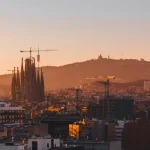
Start your first full day early. Your pre-booked slot at Sagrada Família should be 9:00 or 9:30 — before the mid-morning heat and before four tour groups arrive simultaneously. From the outside, the basilica looks like something carved by a fever dream: stone spires stained with age at the bottom and blindingly clean at the top where construction continues. Inside, the light through the stained glass on a clear morning is extraordinary — amber and green columns of colour falling across the nave floor. Allow 90 minutes minimum.

After the basilica, walk or take the metro to the Gothic Quarter (Barri Gòtic). The smell of fresh bread from corner bakeries drifts through the narrow medieval streets before the crowds build. Walk down Carrer del Bisbe, pass the Roman temple of Augustus (free entry), and find yourself at the Plaça de Sant Jaume. Don’t rush. The Gothic Quarter rewards wandering without a destination.
Afternoon: El Raval and Vermouth Hour
Cross La Rambla into El Raval for lunch. The streets around Carrer del Parlament and Carrer de la Riera Baixa are full of neighbourhood restaurants with set lunch menus (menú del día) running €13–€17 — three courses, bread, and a drink included. This is how Barcelona locals eat at midday, and it is the single best-value meal you’ll have in the city.
By 13:30, find a stool at a bar in the Raval for vermouth — vermut in Catalan. This is a genuine ritual here: a glass of house vermouth with an olive or anchovy on the side, usually under €3. It marks the transition between morning and afternoon. Then rest at your hotel through the early afternoon if you can — Barcelona’s evenings run late, and you need your energy.
Evening: Barceloneta Sunset and Dinner in El Born
Walk down to Barceloneta for the early evening. The beach itself is crowded, but the light on the water at around 19:30 in summer is worth it — the sky turns a deep amber behind the city skyline. Walk back up through El Born for dinner. Carrer del Parlament, Carrer del Rec, and the streets immediately around the Basílica de Santa Maria del Mar are full of good restaurants that don’t primarily cater to tourists. Dinner before 21:00 will usually get you a table without a reservation; after that, book ahead.
Day 2: El Born, Eixample, and the Modernista Trail
Morning: El Born and Palau de la Música
Day 2 belongs to El Born and the Eixample. Start at the Palau de la Música Catalana — Domènech i Montaner’s concert hall is arguably the most spectacular piece of Modernista architecture in Barcelona, and it doesn’t get the same attention as Gaudí’s work. Guided tours run from 9:00 (€22 in 2026, book online). The main hall, with its inverted stained-glass skylight, is genuinely jaw-dropping in a way that photos don’t capture.

From there, walk through El Born’s market hall — the Mercat de Santa Caterina on Avinguda de Francesc Cambó is the locals’ alternative to La Boqueria, with a mosaic tiled roof and no tourist pricing. Buy fruit, olives, cheese, and jamón for a mid-morning snack. The atmosphere inside is calm, the prices are honest, and the vendors actually make eye contact.
Afternoon: Eixample and the Modernista Buildings
Take the metro to Passeig de Gràcia for the afternoon. The three landmark Modernista buildings — Casa Batlló (€35–€49, book ahead), Casa Milà/La Pedrera (€29), and Casa Amatller (€19, smaller and less crowded) — are within a few minutes’ walk of each other on what’s sometimes called the “Block of Discord.” You don’t need to enter all three. La Pedrera’s rooftop at golden hour is worth every euro; the wave-like limestone exterior and twisted iron chimneys look like sculptures from a planet with different physics.
Walking the Eixample grid is its own experience — the wide octagonal intersections, the tall plane trees on Passeig de Gràcia, the window displays of Catalan fashion designers alongside international brands. The neighbourhood feels different from the medieval tangle of the Gothic Quarter: deliberate, airy, slightly grand.
Evening: Gracia for Dinner
Head uphill to Gràcia for the evening. This is Barcelona’s most genuinely neighbourhood-feeling district — small squares like Plaça de la Vila de Gràcia and Plaça del Sol fill up with locals having after-work drinks from around 19:00. Dinner options on and around Carrer de Verdi and Travessera de Gràcia run from casual pizza to serious Catalan cooking. Prices here are noticeably lower than in the tourist belt around Las Ramblas.
Day 3: Montjuïc, the Markets, and a Slow Farewell
Morning: Montjuïc by Cable Car
Your last full morning: take the cable car from Barceloneta beach up to Montjuïc — the Telefèric del Port runs every 15 minutes (€12.50 one-way, €18 return in 2026) and the views over the port and the city stretching back to the Collserola hills are some of the best in Barcelona. At the top, the Castell de Montjuïc has 360-degree views and costs just €5 to enter. On a clear morning you can see the whole curve of the Mediterranean coast.
The Fundació Joan Miró is also on Montjuïc (€16 in 2026) — a serious art museum in a beautiful white building designed by Josep Lluís Sert. If you have an interest in 20th-century Spanish art, this is better than a rushed visit to the MNAC. The gardens on the hillside around the Teatre Grec are quiet and shaded — worth a slow walk before heading back down.

Late Morning: Mercat de Sant Antoni
Come back down via the Montjuïc funicular (included with metro T-Casual card) and head to the Mercat de Sant Antoni in the Eixample. This is not La Boqueria — Sant Antoni was fully renovated and is now the city’s most beloved food market. On weekends there’s also a book and coin market running around the outside of the building. Grab a coffee and a croissant de mantequilla at one of the market bars — flaky, buttery, and nothing like the croissants you get in hotel breakfast buffets.
Afternoon: Farewell Lunch and Departure
For your last meal, stay in the Sant Antoni or Eixample Esquerra (left side of the Eixample) area. Carrer del Consell de Cent and the surrounding streets have excellent restaurants where you can sit outside, take your time over a long lunch, and feel like you’re actually in the city rather than passing through it. By 16:00 you can comfortably head to the airport for evening flights.
Where to Stay for a 3-Day Barcelona Visit
For a three-day weekend, location matters more than for a longer trip. You want to be within walking distance of the Gothic Quarter or El Born, or at least on a direct metro line. The following areas work well across different budgets.
- El Born / Sant Pere: The best base for a first Barcelona visit. Central, safe, walkable to Barceloneta, the Gothic Quarter, and Eixample. Mid-range hotels here run €130–€220 per night in 2026.
- Eixample: Better for travellers who want more comfort and quieter streets. Excellent metro connections. Good mix of budget and four-star hotels. Mid-range: €110–€190 per night.
- Gràcia: A neighbourhood feel with lower prices, but a 15–20 minute metro or walk to the main sights. Good for second or third visits. Budget guesthouses from €65 per night.
- Barceloneta: Only for those who specifically want the beach on their doorstep. Noisy on summer nights. Not ideal for a winter weekend visit.
Getting Around During Your 3 Days
Barcelona’s metro is excellent. Buy a T-Casual card (10 trips for €12.15 in 2026) from any metro station machine — it covers metro, bus, and the Montjuïc funicular within zone 1. For three days, two cards between two people is usually enough. The metro runs until midnight Sunday–Thursday and 24 hours on Fridays and Saturdays.

Walking is genuinely viable for large parts of this itinerary. El Born to the Gothic Quarter is under 10 minutes. Passeig de Gràcia to Gràcia is a 20-minute walk. Barceloneta to El Born is 15 minutes along the seafront. Save the metro for Montjuïc and anything north of the Diagonal.
Bicing, Barcelona’s bike-share system, requires a short-term subscription (€3 for 24 hours via the app in 2026) and is a fast way to move between the seafront and the Eixample. Electric bikes are available at most docking stations. Cycling on Las Ramblas is not permitted.
Eating and Drinking Without Falling into Tourist Traps
The streets immediately off Las Ramblas — particularly on the El Raval side — are full of restaurants with photos on the menus and prices that bear no relation to what locals pay. Avoid them. The following areas consistently deliver good food at honest prices.
- Carrer del Parlament (Sant Antoni): A long street of neighbourhood restaurants and bars. Busy with locals at lunch and dinner. Strong on natural wine bars and creative Catalan cooking.
- El Born backstreets: Carrer del Rec, Carrer dels Carders, and Carrer de la Ribera. International options alongside Catalan classics. Busier at dinner but rarely the same crowd as Las Ramblas.
- Gràcia: Carrer de Verdi and surrounding streets. Cheaper, younger crowd, more tapas bars and local spots.
- Mercat de Santa Caterina: For breakfast or a midday snack with produce from the market stalls themselves.
- Mercat de Sant Antoni: Weekend brunch, coffee, fresh produce, and some of the city’s best pintxos bars on the surrounding streets.
For drinks: cerveza (beer) typically costs €2.50–€4 in a neighbourhood bar. House wine by the glass runs €2–€4. Anywhere near Las Ramblas charges double. A glass of cava — Catalonia’s own sparkling wine — is often under €4 in a local bar and is a much better choice than overpaying for a cocktail with a view.
2026 Budget Breakdown: What a Barcelona Weekend Actually Costs
Prices in Barcelona have risen consistently since 2023, and the 2026 tourist tax increase (now €4 per person per night in most central hotels, up from €3.25 in 2024) adds a visible line to your accommodation bill. Here’s what three days realistically costs per person:
- Budget tier (hostel dorm, menú del día, metro, 2 paid attractions): Approximately €90–€120 per day including accommodation.
- Mid-range (3-star hotel, restaurant lunches and dinners, metro, 3–4 paid attractions): Approximately €180–€260 per day including accommodation.
- Comfortable (4-star hotel, mix of restaurants and one splurge dinner, taxis occasionally, 4–5 attractions): Approximately €320–€450 per day including accommodation.

Attraction entry fees for a full three-day itinerary typically run €80–€120 per person if you visit Sagrada Família, La Pedrera, Palau de la Música, Castell de Montjuïc, and Fundació Joan Miró. Book online to avoid queue time — Barcelona’s paid attractions have almost entirely moved to timed-entry systems in 2026.
Practical Tips for a Barcelona Weekend in 2026
- Pickpocketing: Still the primary safety issue for tourists. Las Ramblas, metro Line 3 near Liceu, and Barceloneta beach are the highest-risk areas. Use a crossbody bag or a money belt. Don’t have your phone in your back pocket on the metro.
- Tipping: Not obligatory in Spain. Rounding up or leaving small change (€1–€2) after a sit-down dinner is common and appreciated. Service charges are sometimes added to tourist restaurant bills — check before tipping on top.
- Language: Catalan is the first language in Barcelona. Signage, menus, and much of daily life operates in Catalan first, Spanish second. Saying gràcies (thank you in Catalan) is genuinely appreciated and often gets a warmer response than gracias. English is widely spoken in central areas.
- SIM cards: An EU SIM card works across Spain at domestic rates. If you’re arriving from outside the EU, buy a local SIM at the airport (Orange and Vodafone both have kiosks at T1 and T2 arrivals). Expect to pay €15–€25 for a 10–15 GB data SIM for a week.
- Siesta hours: Less relevant in central Barcelona than in smaller Spanish cities, but many independent shops still close between 14:00 and 17:00. Plan errands or shopping for morning or after 17:30.
- Water: Tap water in Barcelona is safe to drink. It has a slightly chlorinated taste that some people find off-putting — a reusable bottle with a filter is the practical solution. Many restaurants will bring tap water if asked.
- Tourist tax: The Barcelona tourist tax (Taxa Turística) is charged by your hotel and added to your bill. In 2026 it ranges from €4–€7.50 per night depending on hotel category. Budget for it — it’s not included in most online booking prices.
Frequently Asked Questions
Is 3 days enough time for Barcelona?
Three days covers Barcelona’s main highlights comfortably if you plan ahead and book timed-entry tickets for Sagrada Família and La Pedrera in advance. You won’t see everything — no one does in three days — but you’ll get a genuine feel for the city’s different neighbourhoods, architecture, food scene, and pace of life.

What is the best time of year for a Barcelona weekend break?
May, June, and September offer the best balance of good weather, long daylight hours, and slightly thinner crowds than peak July–August. March and April are also excellent — cooler but very walkable, with lower accommodation prices. December and January are quiet and cheap, though some beach-facing businesses close or reduce hours.
How much money do I need for 3 days in Barcelona?
Budget travellers can manage on €90–€120 per day all-in. Mid-range visitors spending on comfortable hotels, restaurant meals, and paid attractions should plan for €180–€260 per day per person. A comfortable experience with a four-star hotel and no major compromises runs €320–€450 per day per person in 2026.
Do I need to book Sagrada Família in advance?
Yes — without exception for a weekend visit. Weekend slots at Sagrada Família sell out weeks in advance in 2026, particularly for morning entry times. Book through the official Sagrada Família website only. Tickets start at €26 for basic entry, with tower access costing more. Arriving without a ticket means you won’t get in.
Is Barcelona safe for tourists?
Barcelona is a safe city overall, but pickpocketing is a persistent and organised problem in tourist-heavy areas. Las Ramblas, Barceloneta beach, and crowded metro carriages are the main risk points. Keep bags in front of you, don’t leave phones on café tables, and use a hotel safe for your passport. Violent crime against tourists is rare.
Explore more
Unforgettable Barcelona Excursions: Your Ultimate Guide
Your Ultimate Guide to Barcelona’s Public Transport System
Eixample Explained: Your Guide to Gaudi, Shopping, and Modernism
📷 Featured image by Taisia Karaseva on Unsplash.