On this page
- What Makes Zaragoza Worth Stopping For
- The Old City: Where Zaragoza’s History Lives
- Food and Drink: The Real Aragonese Table
- Day Trip or Overnight? Making the Right Call
- Getting to Zaragoza in 2026
- Getting Around the City
- 2026 Budget Reality: What Things Actually Cost
- Practical Tips Before You Go
- Frequently Asked Questions
💰 Click here to see Spain Budget Breakdown
💰 Prices updated: August, 2026. Budget figures are estimates — always verify before travel.
Exchange Rate: $1 USD = €0.86
Daily Budget (per person)
Shoestring: €50.00 – €90.00 ($58.14 – $104.65)
Mid-range: €90.00 – €180.00 ($104.65 – $209.30)
Comfortable: €220.00 – €450.00 ($255.81 – $523.26)
Accommodation (per night)
Hostel/guesthouse: €15.00 – €50.00 ($17.44 – $58.14)
Mid-range hotel: €70.00 – €130.00 ($81.40 – $151.16)
Food (per meal)
Budget meal: €7.00 ($8.14)
Mid-range meal: €25.00 ($29.07)
Upscale meal: €80.00 ($93.02)
Transport
Single metro/bus trip: €1.50 ($1.74)
Monthly transport pass: €30.00 ($34.88)
Most people on the Madrid–Barcelona corridor stare out the AVE window as Zaragoza flashes past and think nothing of it. In 2026, that’s starting to change — but not fast enough. The city still gets skipped by travellers who assume anything between Spain’s two giants must be a consolation prize. It isn’t. Zaragoza has a Roman foundation, a skyline that stops you mid-sentence, a food scene built around ingredients most tourists never taste, and almost none of the crowds that have made Barcelona and Madrid harder to enjoy. If you’re building an itinerary along this corridor, Zaragoza deserves a real look.
What Makes Zaragoza Worth Stopping For
Zaragoza is the capital of Aragon, a region with its own distinct identity — neither Castilian nor Catalan, and proud of that fact. The city sits at the confluence of the Ebro, Huerva, and Gállego rivers, and that geography shaped everything: the Roman settlement of Caesaraugusta, the Moorish taifa kingdom, the Christian reconquest, and the stubborn, self-reliant character the locals call maña. Zaragozans (called maños) don’t perform their city for visitors. They live in it, which gives the place an authenticity that over-touristed Cities have long since traded away.
With around 700,000 people, Zaragoza is Spain’s fifth-largest city. It’s big enough to have a serious cultural life — major museums, a university, a genuine nightlife — but compact enough that you can walk from the Roman forum ruins to the banks of the Ebro in under fifteen minutes. The city also hosted Expo 2008, which brought a cluster of striking contemporary architecture to the riverfront that contrasts sharply with the medieval core. That tension between old and new is part of what makes the place interesting.
The Old City: Where Zaragoza’s History Lives
The historic centre is layered in a way that rewards slow walking. Start at La Seo del Salvador, the cathedral that anchors the Plaza del Pilar. It has a Mudéjar apse — recognised as a UNESCO World Heritage element — that incorporates brickwork, ceramic tiles, and geometric patterns in a style unique to Aragon. Stand close to the exterior wall and run your eye along the tilework. The precision of it, built without modern tools, is genuinely unsettling in the best way.
Across the same plaza stands the Basílica del Pilar, Zaragoza’s most iconic building. Its eleven domes reflected in the Ebro on a clear morning produce the kind of image you see on postcards but assume must be enhanced. It isn’t. The interior holds Goya’s first major commission — ceiling frescoes painted before he became the court painter everyone studies. The basilica is free to enter, though you pay a small fee to take the elevator up to one of the towers for the rooftop view.
Beneath the plaza, the Museo del Foro de Caesaraugusta lets you walk through the excavated Roman forum underground — the original street level of the city Augustus founded in 14 BC. Four separate underground museums in the city follow the Roman grid: the forum, the thermal baths, the river port, and the theatre. The theatre, discovered only in 1972, could seat 6,000 people and is one of the largest Roman theatres found in Spain.
The Aljafería Palace, sitting slightly outside the medieval core, is the city’s other major monument. It’s an 11th-century Moorish palace built by the taifa kings of Zaragoza, later adapted by the Catholic Monarchs, and today it houses the Aragonese regional parliament. The interior courtyard, with its horseshoe arches and carved stucco, feels closer to the Alhambra than anything most people expect to find in a city this far north. Arrive when it opens to have the courtyard to yourself — by mid-morning, school groups fill it.
Food and Drink: The Real Aragonese Table
Aragonese food doesn’t travel well, which is exactly why you should eat it here. The cooking is defined by the products of the Ebro valley — ternasco de Aragón (milk-fed lamb with protected designation of origin), borage (a leafy green vegetable almost unknown outside the region), white asparagus from the Ebro banks, and Empeltre olives. Meat is treated simply: roasted or grilled over wood, seasoned with little more than salt and olive oil from the Sierra de Albarracín. The result is food that tastes like the ingredient rather than the technique.
For a sit-down meal, the streets around Calle del Temple and Plaza de Santa Marta in the old quarter are the most reliable hunting ground. Casa Lac, which claims to be Spain’s oldest restaurant (founded in 1825), serves traditional Aragonese dishes in a room that has barely changed in a century. For something more modern, Cancook has held a Michelin star since 2018 and offers a tasting menu built entirely around Aragonese ingredients — book well in advance.
The tapas culture here runs on cañas and montaditos, but the snack that defines Zaragoza is the morcilla de Aragón — a dry, spiced blood sausage that tastes nothing like its Burgos cousin. Try it sliced and grilled at any bar in the El Tubo district, the tight grid of streets north of Plaza del Pilar where bar-hopping is the default evening activity. On a Thursday or Friday night, the smell of woodsmoke and frying garlic drifts through the narrow lanes as the bars fill up around 9pm.
Wine comes from Campo de Borja, Cariñena, and Calatayud — three Aragonese DOs that produce serious Garnacha at prices that haven’t yet caught up with their quality. A house wine in El Tubo will cost you €1.50–€2 a glass. Ask for a Garnacha de Calatayud and you’ll likely get something made from vines over 50 years old.
Day Trip or Overnight? Making the Right Call
This question matters because the answer isn’t obvious. Zaragoza is only 1 hour 20 minutes from Madrid and 1 hour 40 minutes from Barcelona by AVE, which makes it technically viable as a day trip from either city. But doing it as a day trip means rushing the Aljafería and skipping El Tubo entirely — and El Tubo at night is half the point.
If you’re travelling between Madrid and Barcelona anyway, stopping over for one night is the most logical arrangement. You break the journey, store your bags at the station (luggage lockers are available at Zaragoza Delicias), spend the afternoon in the old city, eat properly in the evening, sleep, and catch an early AVE onward the next morning. The total cost of a night in a mid-range hotel plus dinner and breakfast adds less to your trip than another night in either Madrid or Barcelona would.
Two nights is the sweet spot if you want to add day trips. From Zaragoza, the Monasterio de Piedra — a medieval monastery surrounded by waterfalls and tufa formations in a natural park — is 1 hour 20 minutes by car or organised tour. The medieval town of Tarazona, known for its Mudéjar architecture and labyrinthine Moorish quarter, is 45 minutes by bus. Neither requires a car if you plan ahead, but having one opens up the wider Aragonese landscape considerably.
Solo travellers and digital nomads are increasingly using Zaragoza as a base for longer stays. The city has fast internet, coworking spaces concentrated around the university district, and a cost of living that is roughly 35–40% lower than Barcelona. Spain’s digital nomad visa, which was updated in early 2025 with a simplified income verification process, makes this a more viable long-term option than it was two years ago.
Getting to Zaragoza in 2026
The AVE is the obvious choice and it works extremely well. Zaragoza Delicias station is served by high-speed trains on the Madrid–Barcelona line throughout the day, with departures roughly every 30–60 minutes during peak hours. In 2026, Renfe’s dynamic pricing means booking 2–3 weeks ahead is the difference between paying €15 and €60 for the same journey. The Renfe app is functional but check Omio or the Renfe website directly for the full timetable — third-party aggregators sometimes miss early morning services.
Zaragoza Airport (ZAZ) operates a limited number of routes, mainly domestic connections to the Canary Islands and Balearics, plus a handful of European destinations. Ryanair added a Zaragoza–London Stansted service in late 2024 that has continued into 2026 with reasonable frequency in summer. For most international travellers, however, flying into Madrid or Barcelona and taking the AVE remains the practical entry point.
Long-distance buses run from Madrid (Alsa, approximately 3.5 hours, from around €10) and Barcelona (around 3 hours, from €8) for travellers on tighter budgets. The bus station is adjacent to Delicias, so the arrival experience is the same.
Getting Around the City
The old city is entirely walkable. The distance from Delicias station to Plaza del Pilar is about 3 kilometres — a 35-minute walk that takes you along the Ebro riverfront, or a 10-minute tram ride. Tram Line 1 runs from the station through the city centre and is clean, punctual, and costs €1.35 per journey with a contactless card. Day passes cost €4.60 and make sense if you’re visiting the Aljafería (which is slightly outside the pedestrian centre) and the Expo 2008 riverfront district on the same day.
Zaragoza has an extensive public bike system called Bizi Zaragoza. A 24-hour pass costs €2 and gives unlimited 30-minute journeys across the city’s flat terrain. The riverside paths along the Ebro are wide and well-maintained, making cycling between the old city and the contemporary architecture of the Expo site a genuine pleasure rather than a survival exercise. In 2026, the system is cashless — you register via the Bizi app or at any kiosk with a contactless card.
Taxis and rideshare (Cabify operates here; Uber does not) are cheap by Spanish standards. A cross-city journey rarely exceeds €8–10. Driving into the old city is not recommended — parking is metered, confusing, and unnecessary given the tram and bike options.
2026 Budget Reality: What Things Actually Cost
Zaragoza remains one of Spain’s most affordable provincial capitals, though prices have risen since 2023 in line with national inflation. Here’s a realistic breakdown:
- Accommodation (per night, central location):
- Budget (hostel dorm or basic pension): €18–€30
- Mid-range (3-star hotel, double room): €65–€95
- Comfortable (4-star or design hotel): €110–€160
- Food and drink:
- Menú del día (3 courses, wine included, lunch): €13–€16
- Tapas and drinks per person (El Tubo evening): €15–€25
- Full dinner at a mid-range restaurant: €25–€40 per person
- Cancook tasting menu: approximately €75–€90 per person
- Sights:
- Basílica del Pilar: free entry (tower: €3)
- La Seo: €4
- Roman museums combined ticket: €9
- Aljafería Palace: €5 (free on Sundays)
- Transport:
- AVE from Madrid (booked 2+ weeks ahead): €15–€35
- AVE from Barcelona (booked 2+ weeks ahead): €20–€40
- Tram day pass: €4.60
- Bizi bike 24-hour pass: €2
A realistic daily budget for a solo traveller doing Zaragoza properly — museum entry, a menú del día, an evening in El Tubo, and a mid-range hotel — sits around €90–€120. That’s significantly less than the equivalent day in Barcelona or Madrid in 2026.
Practical Tips Before You Go
When to visit: April to June and September to October are the best months. Summers in Zaragoza are brutal — the city sits in a natural wind corridor and regularly hits 38–40°C in July and August, with a dry heat that doesn’t relent at night. January and February can be equally uncomfortable due to the cierzo, a cold northwesterly wind that funnels down the Ebro valley and is specific to this area. Locals dress for it like an event.
Fiestas del Pilar: If you visit in mid-October (around 12 October), you’ll land in Zaragoza’s main festival week, celebrating the Virgen del Pilar. The city fills with Aragonese jotas (regional folk music and dance), flower offerings at the basilica, and outdoor concerts. Hotel prices roughly double during this week — book months ahead or arrive the week before when the atmosphere is already building but prices are normal.
Language: Spanish is universal. A small minority also speaks Aragonese (aragonés), a Romance language distinct from both Spanish and Catalan, though you’re unlikely to encounter it unless you travel into the Pyrenean valleys. English is spoken in hotels and tourist-facing businesses but less reliably in neighbourhood bars — basic Spanish goes a long way here.
Tourist tax: As of January 2026, Aragon implemented a regional tourist accommodation tax. The rate for a 3-star hotel is €0.80 per person per night; 4-star is €1.50. It’s paid at checkout and won’t appear in your online booking price — just be aware of it.
Safety: Zaragoza has a low petty crime rate by Spanish standards. The El Gancho neighbourhood (southwest of the old city) has historically had a rougher reputation but has gentrified considerably since 2020. Standard urban awareness applies everywhere, but there are no areas to actively avoid during daylight hours.
Frequently Asked Questions
Is Zaragoza worth visiting or is it just a stopover city?
Zaragoza is genuinely worth visiting in its own right. The Aljafería Palace, the Roman underground museums, the Basílica del Pilar, and the El Tubo food and bar scene make for a full one-to-two day itinerary. Its position on the AVE corridor makes it a natural stopover, but treating it as only that means missing the best of what it offers.
How much time do you need in Zaragoza?
One full day covers the main monuments and an evening in El Tubo. Two days lets you move at a slower pace and add the Aljafería and the Expo riverfront. Three days is ideal if you want to include a day trip to Monasterio de Piedra or Tarazona without feeling rushed. Fewer than five hours makes the city feel like a checkbox.
What is Zaragoza famous for in Spain?
Zaragoza is best known for the Basílica del Pilar, one of Spain’s most visited religious sites, and for its Aragonese Mudéjar architecture (UNESCO-listed). It’s also known as the birthplace of Francisco de Goya and for the annual Fiestas del Pilar in October, which is one of Spain’s largest popular festivals.
Is Zaragoza expensive compared to other Spanish cities?
No — it’s one of Spain’s most affordable provincial capitals. Accommodation, food, and transport all cost noticeably less than in Barcelona, Madrid, or Seville. A mid-range daily budget of €90–€120 per person covers a hotel, meals, sightseeing, and local transport comfortably, even with 2026 price levels factored in.
What is the best way to get from Madrid or Barcelona to Zaragoza?
The AVE high-speed train is the best option from both cities. Journey time is around 1 hour 20 minutes from Madrid and 1 hour 40 minutes from Barcelona. Booking 2–3 weeks in advance on the Renfe website gives the best prices. Long-distance buses are slower but significantly cheaper for budget-conscious travellers.
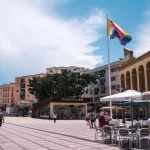
📷 Featured image by Petr Beneš on Unsplash.