On this page
- What Kind of City Is Córdoba?
- The Mezquita-Catedral: What to Actually Expect
- The Jewish Quarter: More Than a Postcard
- The Patios of Córdoba: What They Actually Are
- Where to Eat and Drink in Córdoba
- Getting to Córdoba and Getting Around
- Day Trip or Overnight?
- 2026 Budget Reality
- Practical Tips for Visiting Córdoba in 2026
- Frequently Asked Questions
💰 Click here to see Spain Budget Breakdown
💰 Prices updated: July, 2026. Budget figures are estimates — always verify before travel.
Exchange Rate: $1 USD = €0.88
Daily Budget (per person)
Shoestring: €50.00 – €140.00 ($56.82 – $159.09)
Mid-range: €90.00 – €240.00 ($102.27 – $272.73)
Comfortable: €220.00 – €450.00 ($250.00 – $511.36)
Accommodation (per night)
Hostel/guesthouse: €15.00 – €50.00 ($17.05 – $56.82)
Mid-range hotel: €70.00 – €130.00 ($79.55 – $147.73)
Food (per meal)
Budget meal: €7.00 ($7.95)
Mid-range meal: €25.00 ($28.41)
Upscale meal: €80.00 ($90.91)
Transport
Single metro/bus trip: €3.00 ($3.41)
Monthly transport pass: €23.00 ($26.14)
Córdoba is one of Spain’s most-visited Cities, yet it still manages to surprise people who think they know what to expect. In 2026, the pressure on the Mezquita-Catedral has increased noticeably — timed entry slots now sell out days in advance during peak season, and the Judería’s narrow lanes can feel genuinely claustrophobic on a Saturday morning in July. If you’re planning a visit, knowing the mechanics of the city before you arrive makes the difference between a frustrating queue experience and one of the best days in Andalucía.
What Kind of City Is Córdoba?
Córdoba sits in the dead centre of Andalucía, roughly 150 kilometres north of Málaga and 140 kilometres northeast of Seville. It sits in the Guadalquivir river valley, surrounded by the Sierra Morena mountains to the north, and it bakes harder than almost anywhere in mainland Spain. Summer temperatures regularly hit 42–44°C. That heat shapes everything: the city’s architecture, its patio culture, its obsession with shade and water, and the fact that locals take their siesta seriously.
This is not a beach city. It has no cosmopolitan buzz like Barcelona, no tapas-bar energy like San Sebastián. What Córdoba has is layer upon layer of civilisation stacked on top of each other — Roman, Visigoth, Moorish Caliphate, medieval Christian — all visible within a few hundred metres of each other. At its peak in the 10th century, Córdoba was the largest city in Western Europe, home to around 500,000 people. That history lives in the stones here in a way that feels genuinely tangible rather than reconstructed.
The city centre is compact and walkable. The historic core — the medina — rewards slow exploration. Locals are unhurried. The pace outside of tourist areas is decidedly Andalusian: unhurried coffee in the morning, long lunches, life after dark. Córdoba is not performing for visitors. It is simply itself, which is either charming or frustrating depending on your expectations.
The Mezquita-Catedral: What to Actually Expect
The Mezquita-Catedral is one of the most remarkable buildings in Europe, full stop. Nothing quite prepares you for the forest of 856 columns inside — alternating red-and-white striped arches stretching in every direction, the light low and golden even on a bright morning. Standing at the entrance and looking down the nave, there is a genuine moment of disorientation: the building feels infinite, like the columns go on forever. The smell of cool stone and faint incense settles on you as your eyes adjust.
What most visitors miss is the transition zone — the point where the Moorish hypostyle hall gives way abruptly to the Renaissance cathedral inserted into its heart in the 16th century. King Charles I reportedly said, when he saw what had been built, “You have destroyed something unique to build something ordinary.” Stand at that boundary and you can feel the architectural argument happening in real time.
Timed Entry in 2026
Since early 2025, the Mezquita-Catedral has operated on a fully timed-entry system with no walk-up purchases available at the door during peak hours (9:00–17:00). In 2026, slots are released 30 days in advance and routinely sell out for weekend mornings within 48 hours during spring and autumn. The morning slot (9:00–10:00) is the best: far fewer people, cooler temperatures, and the low light through the arched windows is extraordinary.
Tickets must be purchased through the official cathedral website. Third-party resellers are active but charge a significant premium — typically €5–8 above the official price. The official adult entrance fee in 2026 is €13. Under-10s enter free. The cathedral still offers free access for morning prayer from 08:30–09:00 on weekdays, which is not a tourist visit — it is a religious service — but it does allow a brief, quiet look at the interior.
The Courtyard of Oranges
The Patio de los Naranjos — the old ablutions courtyard of the mosque — is included in your ticket and worth at least 20 minutes of your time. The scent of orange blossom in April is almost overwhelming. In summer, the shade of the trees and the sound of the central fountain make it feel like a different world from the hot streets outside.
The Jewish Quarter: More Than a Postcard
The Judería, Córdoba’s old Jewish quarter, wraps around the western side of the Mezquita. It was one of the most important Jewish communities in medieval Europe — Maimonides, the philosopher and physician, was born here in 1138. A bronze statue of him stands in the small plaza that bears his name, worn smooth on the foot by years of tourists rubbing it for luck.
The streets are genuinely medieval: Calle de los Judíos is barely wide enough for two people to pass with a pushchair. Whitewashed walls are hung with terracotta pots of bright geraniums. In the morning, before 10:00, these lanes are quiet enough to hear your own footsteps. By 11:30 on a busy day, they are a slow-moving procession of people with phones raised.
The Synagogue
Córdoba’s synagogue, on Calle de los Judíos, is one of only three surviving medieval synagogues in Spain. It dates from 1315 and is tiny — a single prayer room no bigger than a large living room — but the Mudéjar plasterwork on the upper gallery walls is intricate and beautiful. Entry costs €0.30 for EU citizens and €1.50 for non-EU visitors (a symbolic fee maintained since 2024). It is often overlooked because people assume it is a museum rather than an authentic historic site. It is both.
Zoco and the Callejón de las Flores
The Zoco Municipal, a former souk, now houses craft workshops and a small flamenco venue. The Callejón de las Flores — a narrow alley with a framed view of the Mezquita bell tower between flower-draped walls — is photographed constantly and worth seeing despite (or because of) the crowds. Go early or at dusk when the light is softer and the tour groups have gone.
The Patios of Córdoba: What They Actually Are
Córdoba’s famous patios are private courtyards inside residential homes. They are not parks or tourist installations. Neighbours have maintained and decorated them for generations — ceramic tiles, jasmine and bougainvillea climbing the walls, lemon trees, roses, the sound of water from a central well or fountain. Visiting them feels like being invited into someone’s home, because you essentially are.
Around 50–60 patios open to the public throughout the year, particularly concentrated in the San Basilio neighbourhood, just southwest of the Mezquita. Most charge a small entry fee of €2–4 or are donation-based. A handful remain free. You can pick up a printed patio map from the tourist office on Calle Rey Heredia or follow the Route of the Patios signs posted through the neighbourhood.
The Festival de los Patios
The Festival de los Patios takes place every May — in 2026, it runs from 2–16 May. During this period, participating patios compete for prizes, and many private homes that never otherwise open their doors do so for the full two weeks. Entry to festival patios is free. The competition has been running since 1918 and is listed as UNESCO Intangible Cultural Heritage. This is not a performance staged for tourists — the families who enter genuinely care about winning, and the rivalry between neighbours is affectionate but real. The patios are at their visual peak: maximum flowers, maximum colour, maximum smell of jasmine and rose.
Visiting during the festival requires patience with crowds, particularly on weekends. Weekday mornings between 09:00 and 12:00 are far more relaxed. The neighbourhood itself — San Basilio and the adjacent streets of Santiago — becomes a slow, sweet-smelling labyrinth during those two weeks.
Where to Eat and Drink in Córdoba
Córdoban food is Andalusian but with its own character. Salmorejo — the thicker, creamier cousin of gazpacho, topped with jamón and hard-boiled egg — was invented here, and no version you eat anywhere else will be as good as the one served in a tiled bar in the old town. Rabo de toro (oxtail braised until it falls apart) is the other essential, and flamenquín — a rolled pork loin fried in breadcrumbs — appears on nearly every menu.
Specific Places Worth Your Time
- Casa Pepe de la Judería (Calle Romero 1) — the terrace has views over the Mezquita roofline. Reliable salmorejo, strong wine list. Book ahead for dinner.
- Taberna Casa Salinas (Puerta de Almodóvar) — a proper neighbourhood bar with no tourist-menu nonsense. Montilla wine by the glass, decent jamón, local regulars at the bar. One of the better places to eat cheaply and well.
- Restaurante El Churrasco (Calle Romero 16) — more expensive, excellent rabo de toro. The interior is a converted 17th-century house; tiles everywhere, low lighting, the sound of a slow kitchen. Worth the splurge once.
- Mercado Victoria (Paseo de la Victoria) — a covered market with around 20 food stalls. Good for lunch grazing: ceviche, sushi, local jamón, craft beer. Busy at weekends but well-managed. Open from 11:00.
Montilla-Moriles Wine
Córdoba sits at the edge of the Montilla-Moriles wine region, which produces a dry, nutty fino-style wine made from Pedro Ximénez grapes. It is not Sherry — it is not fortified — and it is noticeably lighter. Most bars serve it in small glasses called catavinos. Asking for “una copa de fino de Montilla” in a traditional taberna will get you a knowing nod and a very good glass of something local for around €1.50–2.00.
Getting to Córdoba and Getting Around
By AVE from Madrid or Seville
Córdoba is on Spain’s main AVE high-speed rail corridor between Madrid and Seville. From Madrid Puerta de Atocha, the journey takes approximately 1 hour 45 minutes. From Seville Santa Justa, it is 45–50 minutes. From Málaga (via a change at Antequera-Santa Ana or occasionally direct), the journey is around 1 hour. Fares vary significantly by booking date; advance prices from Seville can be as low as €10–15. Booking through Renfe’s app or website directly gives the best fares.
Córdoba’s train station is about 1.5 kilometres from the historic centre — a 20-minute walk or a short taxi ride (€6–8). A single bus fare is €1.30. The No. 3 and No. 16 city buses both connect the station to the old town.
By Car
Driving into the historic centre is not recommended and increasingly difficult. The medina streets were built for donkeys, not cars. Parking outside the historic zone and walking in is far easier. The underground car park at Plaza de Colón charges around €2 per hour, and it is a 15-minute walk to the Mezquita.
Getting Around Within Córdoba
The historic centre is walkable. The Mezquita, Judería, Alcázar de los Reyes Cristianos, and the main patio neighbourhoods are all within a 15-minute walk of each other. In summer, wear light clothing, carry water, and plan your outdoor walking for before 11:00 or after 18:00. The midday heat between June and August is not comfortable for sightseeing.
Day Trip or Overnight?
Córdoba is one of the most common day trips from Seville (45 minutes by AVE), and it works — just about. If you are making a day trip, you can realistically cover the Mezquita, a walk through the Judería, the Alcázar gardens, and one or two patios. That is a full, satisfying day.
But Córdoba at night is a different place. The Mezquita is lit from outside after dark and its exterior — the old Roman bridge, the Guadalquivir river reflection — is genuinely beautiful in the evening. The tabernas fill with locals after 21:00. The heat breaks, the streets cool, and the city relaxes into itself. The tourist crowds thin sharply after 19:00.
If you can stay one night, do. It changes the experience from a highlights reel to an actual encounter with the place. Two nights is comfortable if you want to visit Medina Azahara (the ruined 10th-century palace complex 8 kilometres west of the city) or take a day trip into the Sierra Morena. Three nights is only necessary if you are deliberately slowing down or visiting during the Patio Festival in May.
2026 Budget Reality
Córdoba is notably more affordable than Seville or Granada. Accommodation and restaurant prices have risen since 2024 — broadly in line with Spain-wide inflation — but the city remains good value compared to the rest of Andalucía’s tourist circuit.
Accommodation
- Budget (hostel dorm or basic pension): €18–35 per person per night
- Mid-range (small hotel or guesthouse in or near the historic centre): €70–130 per room per night
- Comfortable (boutique hotel with patio, Judería location): €140–220 per room per night
Food and Drink
- Budget: Tapas and wine at a neighbourhood bar: €8–14 per person for lunch
- Mid-range: Set menú del día (starter, main, dessert, drink): €13–16
- Comfortable: Full dinner with wine at a restaurant like El Churrasco: €35–55 per person
Attractions
- Mezquita-Catedral: €13
- Alcázar de los Reyes Cristianos: €5
- Synagogue: €0.30–1.50
- Medina Azahara: €1.50 (EU citizens free on certain days)
Tourist Tax — 2026 Update
As of January 2026, Córdoba introduced a modest overnight tourist levy of €1 per person per night for most accommodation categories, rising to €2 for four- and five-star hotels. This follows similar measures introduced in other Andalusian cities in 2024–2025. It is charged directly by the hotel or accommodation and is not applied to day visitors.
Practical Tips for Visiting Córdoba in 2026
- Best months to visit: April, May, October, and November. March is good but can be rainy. June–September is brutally hot; manageable if you adapt your schedule around the heat.
- Digital entry: The Mezquita and Alcázar both require digital tickets (QR code on your phone). Screenshots work; no printed ticket necessary. Download before you arrive in case of patchy Wi-Fi in the medina.
- Dress code: The Mezquita is an active Catholic cathedral. Shoulders and knees must be covered inside. Scarves available at the entrance if needed.
- Water: Carry a refillable bottle. There are public drinking fountains throughout the historic centre, and the tap water is safe and cold.
- Sunday afternoons: Many shops and some restaurants in the old town close. The Judería streets are quieter, which is either ideal or inconvenient depending on what you need.
- Accessibility: The Mezquita is largely accessible with a wheelchair or pushchair, though the Judería streets are cobbled and uneven. The Alcázar gardens have accessible paths but the interior stairways are steep.
Frequently Asked Questions
How many days do you need in Córdoba?
One full day covers the main highlights — the Mezquita, Judería, and a walk through the patio neighbourhood. Two days is comfortable and allows you to visit the Alcázar, eat well, and explore at a relaxed pace. Three days works well if you plan to visit Medina Azahara or travel into the Sierra Morena.
When is the best time to visit the Mezquita in Córdoba?
The 9:00 morning slot on a weekday is best. The light is better, the crowds are significantly smaller, and the temperature is cooler. In 2026, this slot sells out fast during April, May, and October. Book at least two weeks in advance, ideally 30 days ahead for spring and autumn weekends.
Is Córdoba worth visiting outside the Patio Festival?
Absolutely. The patios open year-round, the Mezquita is extraordinary in any month, and the city is far more relaxed outside May. Autumn — particularly October — is arguably the best time to visit for weather, crowd levels, and the quality of light in the medina streets.
Can you visit Córdoba as a day trip from Seville?
Yes. The AVE takes 45–50 minutes and runs frequently. A day trip gives you enough time for the Mezquita, the Judería, and lunch. However, staying overnight changes the experience considerably — the city has a different, quieter character after the day-trip crowds leave in the late afternoon.
What is Medina Azahara and is it worth visiting?
Medina Azahara is a partially excavated 10th-century palace complex built by Caliph Abd al-Rahman III, about 8 kilometres west of Córdoba. The on-site museum is excellent, and the ruins convey the extraordinary scale of what was once the most powerful court in Western Europe. Allow half a day. It requires a car, taxi, or the official shuttle bus from the city.
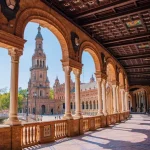
📷 Featured image by Sandesh Athreya B D on Unsplash.