On this page
- Wait — Is That Spanish or Something Else?
- What Catalan Actually Is
- Where You’ll See and Hear Catalan in Barcelona
- Key Catalan Phrases Every Traveler Should Know
- How Barcelona Locals Actually Switch Between Languages
- Regional Language Politics — What Travelers Should Understand Without Getting Dragged In
- Catalan vs. Spanish: Spotting the Differences on the Street
- Catalan in Broader Catalonia — Day Trips Where It Matters More
- 2026 Budget Reality for Barcelona
- Frequently Asked Questions
Wait — Is That Spanish or Something Else?
You land in Barcelona, step onto Las Ramblas, and the first thing you notice on a shop sign is Benvinguts. Not Bienvenidos. You open a restaurant menu and half the dishes are written in something that looks vaguely like Spanish but isn’t quite. A PA announcement at the metro starts in a language that sounds different before switching to Spanish and then English. If you spent six months studying Spanish before your trip, this moment can genuinely throw you. In 2026, with Barcelona receiving more visitors than ever and Catalan language policy having grown more prominent in recent years, Travelers deserve a straight answer about what they’re actually hearing — and what to do about it.
What Catalan Actually Is
Catalan is not a dialect of Spanish. Full stop. This is the most important thing to understand before you arrive in Barcelona, and getting it wrong in conversation with a local can cause an awkward moment faster than almost anything else.
Catalan is a fully independent Romance language — meaning it descends directly from Latin, just as Spanish, French, Italian, and Portuguese do. It developed in the eastern Pyrenees region during the early medieval period and was the dominant language of the Crown of Aragon, a major Mediterranean power that controlled territory from modern-day Spain to Sicily from the 12th to the 15th centuries. At its height, Catalan was a language of kings, poets, and trade documents. It was never a peasant tongue or a regional quirk.
Today, approximately 10 million people speak Catalan across four territories: Catalonia (northeast Spain), the Valencia region (where the local variety is called Valencian), the Balearic Islands, and a small area of southern France called Northern Catalonia. There is also a Catalan-speaking pocket in Sardinia called L’Alguer (Alghero in Italian). For a language that many tourists have never heard of, its footprint is substantial.

Linguistically, Catalan sits somewhere between Spanish and French, but it is closer to neither. It shares vocabulary with both but has its own grammar, its own sounds, and its own written tradition stretching back to the 12th century. The poet Ramon Llull wrote in Catalan in the 1200s. The language has its own literature, its own academy (the Institut d’Estudis Catalans), and its own standardized spelling rules. Calling it a dialect of Spanish is, to a Catalan speaker, roughly equivalent to calling Portuguese a dialect of Spanish — technically flattering to no one.
Where You’ll See and Hear Catalan in Barcelona
Catalan is everywhere in Barcelona, though how loudly depends on which part of the city you’re in and who you’re talking to.
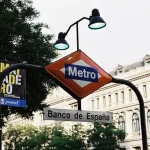
Street signs are officially bilingual throughout Catalonia, but in Barcelona the Catalan name usually comes first and is often the only name displayed. The street Carrer de Ferran won’t say Calle de Fernando below it. Metro stop announcements cycle through Catalan, then Spanish, then English — in that order, which tells you something about priority. The Generalitat (the Catalan regional government) has made a consistent policy push since 2022 to increase Catalan visibility in public spaces, and that has only continued through 2025 and into 2026.
In markets, the price tags might say preu instead of precio. Museum audio guides start in Catalan by default at many institutions. Theater performances and films at local cinemas frequently play in Catalan without subtitles. Regional television — TV3 — broadcasts entirely in Catalan and is watched by millions.
On the street, you’ll hear a mix. In the tourist-heavy Gothic Quarter, people mostly speak Spanish and English to visitors as a matter of habit. But walk into a bakery in the Gràcia neighborhood or take the metro out to Sarrià, and you’ll hear conversations flowing entirely in Catalan — the soft, rounded vowels, the distinctive l·l sound, the words ending in consonants that Spanish would never tolerate. The language has a slightly more clipped, compact sound than Castilian Spanish. Less rolling, fewer dramatic vowels.
Key Catalan Phrases Every Traveler Should Know
You are not expected to speak Catalan as a visitor. Every Catalan speaker in Barcelona also speaks Spanish — it is co-official — and most younger residents speak workable English. But making even a small effort in Catalan produces a warmth that Spanish alone often doesn’t. Locals notice. It signals respect.
Here are the most useful phrases, written with pronunciation guides for English speakers:
- Bon dia — Good morning. Pronounced bon DEE-ah. Use this until about 1pm.
- Bona tarda — Good afternoon. Pronounced BOH-nah TAR-dah. From around 1pm to dusk.
- Bona nit — Good night. Pronounced BOH-nah NEET.
- Gràcies — Thank you. Pronounced GRAH-see-es. The accent on the first syllable is important — it sounds less like the Spanish gracias than you might expect.
- De res — You’re welcome. Pronounced deh RREZ. Literally “it’s nothing.”
- Si us plau — Please. Pronounced see oos PLOW (rhymes with “cow”). This is one Catalans use to spot who’s made an effort.
- Perdona — Excuse me / Sorry. Pronounced per-DOH-nah. Same as Spanish, usefully.
- Quant val? — How much does it cost? Pronounced kwant BAL.
- No entenc — I don’t understand. Pronounced no en-TENK.
- Parla anglès? — Do you speak English? Pronounced PAR-lah ang-LESS.
- Benvingut / Benvinguda — Welcome (to a man / to a woman). Pronounced ben-vin-GOOT / ben-vin-GOO-dah. You won’t use this yourself, but you’ll see it on signs everywhere.
One phonetic note worth remembering: the Catalan letter ç (as in gràcies) makes an “s” sound, not a “th” sound like the Castilian Spanish equivalent. And the letter x often makes a “sh” sound — so eixample (the famous Barcelona neighborhood) is pronounced eh-SHAM-pleh, not “ex-am-pleh.”
How Barcelona Locals Actually Switch Between Languages
The reality of language in Barcelona is fluid in a way that no guidebook phrase list fully captures. Most people born in the city are genuinely bilingual in Catalan and Spanish, and many younger residents add English as a functional third language. The switch between them happens constantly, mid-sentence sometimes, depending on who just walked into the conversation.
This practice — called codi alternança in Catalan linguistics, or code-switching in English — is not confusion or laziness. It is a natural feature of bilingual societies. You might hear two colleagues speaking Catalan together, and the moment a third person joins who they sense is a Spanish speaker, one of them will shift mid-thought without stopping or commenting on it. This social fluidity is a skill, and Barcelonins are exceptionally good at it.
For travelers, the practical implication is this: if you speak Spanish, use it. Nobody is going to make you feel bad for not knowing Catalan. Locals are used to Spanish-speaking visitors and will switch without hesitation. If your Spanish is weak, English is widely understood in the tourist zones and reasonably available in neighborhoods like Eixample, Gràcia, and Barceloneta. The further you get from the center — into Nou Barris or Sant Andreu — the more useful even broken Spanish becomes.
What locals do notice is when visitors assume that Catalan is just “bad Spanish” or speak slowly in Spanish as if the person didn’t understand because they responded in Catalan. That creates friction. Catalan speakers choose to speak Catalan for reasons that have nothing to do with not understanding you.
Regional Language Politics — What Travelers Should Understand Without Getting Dragged In
You will almost certainly encounter some version of the language debate during a trip to Barcelona. A taxi driver might volunteer an opinion. A hostel owner might mention recent legislation. Someone at a dinner table might use the word independència. Here is the essential background without the editorializing.
Catalan was suppressed under Franco’s dictatorship (1939–1975). Public use of the language was banned or severely restricted for decades. This is not ancient history — it is within living memory for people in their 60s and 70s, and its effects on the emotional weight Catalans attach to their language are impossible to overstate. The recovery of Catalan as a public, official language after Franco’s death was a deliberate political and cultural project, and that project continues today.
The 2017 independence referendum and its aftermath left deep divisions that have not fully healed, though the political climate in 2026 is considerably less volatile than it was between 2017 and 2020. Catalan language policy remains a live issue: new laws in 2023 and 2024 pushed for greater Catalan use in schools, workplaces, and public administration, and those debates continue in the Catalan parliament.
As a traveler, you are a guest in this conversation, not a participant. If someone raises the topic, listening respectfully costs nothing. Expressing strong opinions — in either direction — is generally a mistake. What you can say, honestly: “I didn’t know Catalan had such a long history. That’s interesting.” That lands well with almost everyone.
Catalan vs. Spanish: Spotting the Differences on the Street
Once you know what to look for, distinguishing Catalan from Spanish on signs and menus becomes straightforward. Here are the most reliable visual and auditory markers:
On Signs and Written Text
- Catalan uses ·l (a raised dot between two L’s) — for example, col·legi (school). Spanish never does this.
- Catalan uses ny where Spanish uses ñ — so Catalunya instead of Cataluña.
- Catalan frequently ends words in consonant clusters: Barcelona is the same, but port (port), camp (field), blanc (white) — Spanish would say blanco.
- The word for “street” is carrer in Catalan, calle in Spanish. If a street sign says C/ Ferran, the C stands for carrer.
- Articles are el / la / els / les in Catalan, not el / la / los / las in Spanish. Small difference, but consistent.
Spoken Differences
- Catalan has sounds that Spanish doesn’t — particularly the schwa, a neutral “uh” vowel sound for unstressed a’s and e’s. The word Barcelona said by a native Catalan speaker often has a slightly swallowed first “a.”
- Catalan is generally spoken at a slightly faster pace than Castilian Spanish, with less elongation of vowels.
- There is no “th” sound in Catalan (the lisped Spanish c and z) — a useful clue when you’re trying to identify which language someone is speaking.
Catalan in Broader Catalonia — Day Trips Where It Matters More
Barcelona is cosmopolitan and accustomed to visitors. But if your trip takes you beyond the city — and the region around Barcelona is genuinely worth exploring — the language dynamic shifts noticeably.
In towns like Vic, Berga, or Ripoll in the interior of Catalonia, Catalan is the default language of daily life. Small shop owners may speak limited Spanish and almost no English. In the coastal town of Cadaqués, beloved by artists and long popular with European visitors, Catalan is spoken widely among permanent residents even as the tourism economy operates in multiple languages. The monastery of Montserrat, an easy day trip from Barcelona, conducts religious services in Catalan.
In these settings, a few Catalan phrases go considerably further than in Barcelona. Bon dia and si us plau and gràcies signal that you are aware you are in Catalonia, not just generic Spain. For day trips on the regional FGC train network or the RENFE regional lines, announcements and signage will be in Catalan first, and having a basic grasp of what proper and sortida (arrival and departure/exit) mean will help.
One genuinely useful phrase for rural Catalonia: Entén l’espanyol? — “Do you understand Spanish?” Pronounced en-TEN les-pan-YOL. It is polite, it acknowledges Catalan as the primary language, and it almost always produces a helpful response.
2026 Budget Reality for Barcelona
Barcelona’s costs have risen steadily since 2023, and 2026 brings a few new financial considerations that visitors should factor in before arrival.
The Barcelona tourist tax (taxa turística) was increased again in 2025 for cruise passengers and short-stay visitors. As of 2026, overnight visitors in the city pay a combined Generalitat de Catalunya tax plus a Barcelona city surcharge. The total nightly levy now ranges from approximately €3.25 to €6.50 per person per night depending on the category of accommodation — budget hostels sit at the lower end, five-star hotels and short-term holiday rentals at the higher. This is charged on top of your accommodation price and is rarely included in quoted rates, so account for it.
Daily Budget Tiers (2026)
- Budget traveler: €70–€95 per day. This covers a hostel dorm bed (€20–€35), eating at menú del día set lunches (€12–€16), using the T-Casual metro card (10 trips for €12.15), and free or low-cost sights like Parc Güell’s free zones and the beaches.
- Mid-range: €130–€190 per day. A private room in a 3-star hotel or apartment, sit-down meals for lunch and dinner, one paid attraction (Sagrada Família tickets are now €26–€40 depending on access level), and occasional taxis or ride-share.
- Comfortable: €250–€400+ per day. Four or five-star accommodation, full-service restaurants, private tours, and flexibility on transport.
Practical Price Benchmarks
- Coffee (café amb llet — Catalan for café con leche): €1.60–€2.50 at a local bar, €4–€6 at a tourist-facing café on Las Ramblas
- Beer (caña, 200ml draft): €2–€3.50
- Menú del día (3-course lunch with drink): €12–€18
- Taxi from El Prat Airport to city centre: approximately €35–€45 fixed rate (introduced 2024, still in effect 2026)
- Sagrada Família basic entry: €26 (book well in advance — walk-up availability is essentially zero)
Tipping in Barcelona follows Spanish conventions, not American ones. It is genuinely optional. Rounding up a bill or leaving €1–€2 for a sit-down meal is appreciated but not expected. Leaving nothing is not rude. Leaving 20% would confuse most servers.
Frequently Asked Questions
Will I have any problems in Barcelona if I only speak English?
No. In tourist areas, English is widely spoken and understood in hotels, restaurants, and major attractions. Outside the center, Spanish is more useful than English, but most young people have at least functional English. The only real difficulty comes in very local neighborhoods or small towns outside Barcelona, where Spanish is a better fallback than English.
Do I need to learn Catalan before visiting Barcelona?
No — but learning five or six basic phrases is worth the twenty minutes it takes. Catalan speakers in Barcelona all speak Spanish too, so you will never be stuck. The phrases matter for the impression they make, not for practical necessity. Think of it as a courtesy rather than a requirement.
Is it rude to speak Spanish in Barcelona?
Not at all. Spanish is a co-official language in Catalonia and is spoken fluently by virtually everyone in Barcelona. Locals deal with Spanish-speaking visitors constantly and switch without complaint. What occasionally causes friction is dismissing Catalan as unnecessary or referring to it as a dialect of Spanish — that is where the real offense lies, not in using Spanish itself.
What language are Barcelona’s street signs in?
Primarily Catalan. Street names are official in Catalan throughout Catalonia, so you will see Carrer (street), Passeig (promenade), Plaça (square), and Avinguda (avenue) rather than their Spanish equivalents. Metro signs and official public transport use Catalan first, followed by Spanish. Tourist-facing signage in attractions is usually in Catalan, Spanish, and English simultaneously.
Has anything changed about Catalan language rules for travelers in 2026?
No new rules directly affect tourists. However, since 2023, businesses operating in Catalonia are increasingly required to offer services in Catalan. In practice, this means some menus, receipts, and signage that previously defaulted to Spanish now appear in Catalan first. It does not restrict what language you can use as a visitor — it affects what businesses must offer, not what customers must speak.
📷 Featured image by Sasha Pleshco on Unsplash.