On this page
💰 Click here to see Spain Budget Breakdown
💰 Prices updated: August, 2026. Budget figures are estimates — always verify before travel.
Exchange Rate: $1 USD = €0.86
Daily Budget (per person)
Shoestring: €50.00 – €90.00 ($58.14 – $104.65)
Mid-range: €90.00 – €180.00 ($104.65 – $209.30)
Comfortable: €220.00 – €450.00 ($255.81 – $523.26)
Accommodation (per night)
Hostel/guesthouse: €15.00 – €50.00 ($17.44 – $58.14)
Mid-range hotel: €70.00 – €130.00 ($81.40 – $151.16)
Food (per meal)
Budget meal: €7.00 ($8.14)
Mid-range meal: €25.00 ($29.07)
Upscale meal: €80.00 ($93.02)
Transport
Single metro/bus trip: €1.50 ($1.74)
Monthly transport pass: €30.00 ($34.88)
Choosing a Canary Island in 2026 is harder than it sounds. Tenerife’s south coast gets genuinely packed in January, Gran Canaria has introduced a new overnight tourist tax that caught many visitors off guard this year, and Lanzarote sold out of rural casa rural accommodation for Easter before February was even over. The good news: there are seven distinct islands, and most people default to one or two of them, which means the others remain surprisingly unhurried. This guide cuts through the noise and matches you to the right island based on what you actually want from the trip.
The Seven Islands at a Glance
The Canary Islands sit roughly 100 kilometres off the northwest coast of Africa, politically Spanish but climatically closer to the Sahara. Each island has a genuinely different personality. Treating them as interchangeable is the most common mistake first-time visitors make.
- Tenerife — The biggest, the most visited, and the most varied. Mount Teide at 3,715 metres dominates the centre. The north and south feel like different countries.
- Gran Canaria — Called a “continent in miniature” for good reason: beach dunes in the south, misty pine forests in the centre, a cosmopolitan capital in Las Palmas in the north.
- Lanzarote — Volcanic, austere, and visually unlike anywhere else in Spain. César Manrique’s architectural legacy is woven into the landscape itself.
- Fuerteventura — The flattest and windiest island. Purpose-built for beaches and watersports, with very little else competing for attention.
- La Palma — The greenest island, still quietly recovering its tourism identity after the 2021 Tajogaite eruption. Extraordinary stargazing, deep forests, dramatic cliffs.
- La Gomera — Small, steep, and deeply rural. No airport-to-resort infrastructure. The kind of place serious hikers come to disappear for a week.
- El Hierro — Spain’s smallest and least visited inhabited island. A UNESCO Biosphere Reserve. Diving is world-class. Infrastructure is minimal by design.
Best Island for Beaches
Not all Canary Island beaches are the same — the sand colour, water temperature, wave strength, and crowd density vary significantly between islands and even between coasts on the same island.
Fuerteventura
If a long, empty beach is the priority, Fuerteventura wins without much argument. Cofete Beach on the Jandía peninsula stretches 14 kilometres with almost no services and sometimes almost no people — walking along it, you hear nothing but wind and Atlantic waves hitting dark volcanic sand. Corralejo in the north has 11 kilometres of white dunes protected as a natural park. Water temperatures in winter sit around 19–20°C, warm enough for swimming without a wetsuit.
Gran Canaria
Maspalomas and Playa del Inglés in the south offer the most infrastructure — sunbeds, beach bars, calm water. The famous sand dunes behind Maspalomas Beach are a genuine spectacle. For something quieter, Playa de Güigüí in the southwest is accessible only on foot (a serious 90-minute hike each way) or by boat, which keeps it genuinely uncrowded.
Tenerife
Tenerife’s best natural beach is arguably Playa de Benijo in the Anaga peninsula, with dramatic black sand and crashing waves. The resort beaches in Costa Adeje and Los Cristianos are calmer and better for families, but in high season they justify every overcrowding complaint you’ve heard.
Best Island for Hiking and Nature
The volcanic geology of the Canaries produces landscapes that are dramatic in a way that feels almost theatrical — lava fields that look freshly cooled, calderas you can walk into, cloud forests that drip with moisture even in summer.

Tenerife: Teide National Park
Teide is Spain’s most visited national park and the third tallest volcanic structure on Earth measured from the ocean floor. The walk from Montaña Blanca to the summit requires a free permit (book through the Red de Parques Nacionales website well in advance — summer permits sell out months ahead). At the base of the volcano, the Las Cañadas caldera is a stark red-and-ochre landscape that looks more like Mars than the Mediterranean. Early morning up there, the silence is total except for the crunch of volcanic gravel under your boots.
La Gomera: Garajonay National Park
Garajonay is a UNESCO World Heritage laurisilva forest — a relic of the subtropical forests that covered southern Europe millions of years ago. The paths wind through moss-covered trees with their roots gripping ancient rock. Visibility drops to metres inside cloud cover, which arrives most afternoons. This is not a landscape for sun-seekers; it’s for people who want to feel genuinely remote within a few kilometres of a village.
La Palma: Post-Eruption Trails
La Palma’s trail network has been largely rebuilt since the 2021 eruption. The Ruta de los Volcanes on the southern Cumbre Vieja now passes directly through the fresh lava fields of the Tajogaite eruption — a stark walk through black and red rock where steam still rises from vents on cooler mornings. The north of the island, unaffected by the eruption, has ancient laurisilva forests and the Caldera de Taburiente, a massive erosion crater accessible via multi-day trails.
El Hierro
El Hierro’s trail network is compact but extraordinary. The Camino de Jinama descends 1,000 metres of altitude in under 6 kilometres — the switchbacks are relentless, but the views down to the El Golfo valley below are the kind that stop your legs working for a moment. The island has endemic lizard species found nowhere else on Earth.
Best Island for Food and Wine
Canary Island food is distinct from mainland Spanish cuisine — it reflects the archipelago’s position between Europe, Africa, and the Americas, with ingredients and techniques that predate tourism entirely.
Gran Canaria: The Capital Food Scene
Las Palmas de Gran Canaria has a genuinely serious restaurant culture that gets overlooked because most tourists never leave the south. The Mercado del Puerto in Las Palmas is worth building an entire morning around — stalls of fresh fish, local cheeses, papas arrugadas with mojo rojo and mojo verde, and gofio, the toasted grain flour that is the bedrock of traditional Canarian cooking. For a proper sit-down meal, the area around Vegueta old town has several restaurants serving updated Canarian cuisine without the tourist markup.
Lanzarote: Wine in the Malpaís
Lanzarote’s wine region is one of the most visually arresting in the world. Viticulture here means planting each vine in a hollow pit dug into black volcanic ash (picón), surrounded by a low semicircular stone wall to catch night moisture. The result is a surreal moonscape of thousands of individual vine shelters. The local white wines from Malvasía grapes are mineral, dry, and unlike anything produced on the mainland. La Geria is the main wine valley — the Bodega Stratvs and Bodega El Grifo both run tastings.
Tenerife: Guachinches in the North
A guachinche is a type of informal restaurant unique to Tenerife’s Orotava Valley, where wine producers traditionally opened their homes to sell the season’s wine alongside simple home-cooked food. The official guachinche season runs roughly October to May. You eat whatever is cooked that day — roast pork, stewed chickpeas, fresh goat cheese — at shared tables, with local wine poured from a jug. It costs almost nothing and it is exactly as good as it sounds.
Best Island for Families with Kids
The practical requirements for a family trip are specific: calm water, reliable infrastructure, easy access to medical care if needed, and enough activities to prevent boredom after day two.
Tenerife’s south coast handles families better than anywhere else in the archipelago. Costa Adeje has calm, shallow water in sheltered coves, a well-developed promenade, and Siam Park — consistently rated among Europe’s top water parks. The airport at Reina Sofía (Tenerife South) is the most connected in the islands, with direct flights from across Europe, which simplifies arrival with tired children.
Gran Canaria is a strong second choice. Maspalomas and Puerto Rico have calm, sheltered beaches and a high density of family-friendly hotels with animation programmes. The Palmitos Park wildlife centre near Maspalomas is genuinely educational without being dull — bird shows, a dolphinarium, and a butterfly house spread across landscaped grounds.
For families who want something less resort-oriented, La Palma’s small towns are safe, walkable, and very welcoming to children. The pace is slow, the roads are quiet, and a visit to the Roque de los Muchachos Observatory at 2,400 metres altitude is a memorable experience for older kids interested in astronomy — the clear skies above La Palma are among the best in the northern hemisphere.
Best Island for Digital Nomads and Long Stays
The Canary Islands have a specific tax advantage that matters for longer stays: the archipelago operates under the ZEC (Zona Especial Canaria) framework and has lower VAT (called IGIC here, at 7% versus mainland Spain’s 21%), which affects the cost of almost everything from restaurant meals to rental contracts.
Las Palmas de Gran Canaria has positioned itself aggressively as a nomad hub since 2023 and in 2026 it remains one of the best mid-cost alternatives to Lisbon or Madeira for remote workers in the Atlantic. The city has fast fibre internet (most coworking spaces guarantee above 300 Mbps), a compact walkable urban core in the Triana and Guanarteme neighbourhoods, and a permanent population large enough to mean you’re not isolated in a resort bubble. Average monthly rent for a furnished one-bedroom in a central neighbourhood runs €750–€950 in 2026 — higher than 2023 but still well below the major mainland cities.
Spain’s Digital Nomad Visa, introduced in 2023, remained operational through 2025 and was updated in early 2026 with a slightly simplified income verification process. The minimum monthly income threshold is currently set at €2,646 (200% of the Spanish minimum wage). The Canary Islands’ tax office in Las Palmas has specific guidance for ZEC-related questions, which is relevant if you’re considering registering as a Spanish resident during a longer stay.
Lanzarote’s small towns, particularly Arrecife and Tías, attract a quieter category of long-stay visitor — people who want good internet and low cost rather than a coworking community. The island is small enough to cycle across and accommodation costs are lower than Gran Canaria.
Getting There in 2026
All seven main islands have airports except La Gomera, which is reached exclusively by ferry from Tenerife. Direct flights from the Spanish mainland operate to Tenerife North (TFN), Tenerife South (TFS), Gran Canaria (LPA), Lanzarote (ACE), Fuerteventura (FUE), La Palma (SPC), and El Hierro (VDE). Flight time from Madrid is approximately 2.5 hours; from Barcelona around 2 hours 45 minutes.
In 2026, Ryanair added a new direct route between Bilbao and Fuerteventura (seasonal, running November through April), and Vueling expanded its Gran Canaria service from Valencia with daily flights replacing its previous four-per-week schedule. Low-cost return fares from mainland Spain range from €60 to €180 depending on the season and how far in advance you book — Christmas and January are the most expensive windows.
Inter-island ferries run by Fred Olsen and Naviera Armas connect the islands. The most useful route for island-hopping is the Tenerife (Los Cristianos) to La Gomera crossing, which takes around 50 minutes. Fred Olsen’s fast ferry between Lanzarote and Fuerteventura (Corralejo to Playa Blanca) runs several times daily and takes 25 minutes — an easy way to combine both islands in one trip. There is no practical sea route connecting the eastern and western island groups; flying remains the only option between, say, La Palma and Lanzarote.
Day Trip or Overnight?
Some islands are genuinely well-suited to a day trip from a neighbouring base; others don’t reward a short visit.
Worth It as a Day Trip
- La Gomera from Tenerife — The 50-minute ferry from Los Cristianos to San Sebastián de La Gomera is a practical day trip. You can walk to Garajonay forest or explore the town and return the same evening. That said, a two-night stay reveals a completely different side of the island.
- Fuerteventura from Lanzarote — The 25-minute Fred Olsen crossing makes this easy. Corralejo dunes, a beach lunch, back by evening.
Needs an Overnight
- El Hierro — The flight from Tenerife is only 40 minutes, but the island’s remoteness and pace mean a day trip is a waste of the journey. Three nights minimum to appreciate it.
- La Palma — The north and south of the island are genuinely distinct and the roads between them are slow. Plan for at least four nights to cover the key areas without rushing.
- Tenerife itself — Even as a base island, Tenerife needs at least five days to move between the very different north and south coasts and get up to Teide properly.
2026 Budget Reality
Prices in the Canary Islands are lower than the Spanish mainland for most things, but they’ve risen since 2023 and the gap is narrowing. Here’s what to expect in honest terms.
Accommodation (per night, double room)
- Budget — Hostel dorm or basic guesthouse: €20–€40. Available mainly in Las Palmas (Gran Canaria), Santa Cruz de Tenerife, and Arrecife (Lanzarote). Very limited in El Hierro and La Gomera.
- Mid-range — 3-star hotel or Airbnb apartment in a resort area: €70–€120. This covers most Fuerteventura and Tenerife south coast options outside peak periods.
- Comfortable — 4-star hotel or well-equipped rural casa: €130–€220. Boutique rural properties in La Palma and La Gomera often deliver better value per euro here than mainstream resort hotels.
Food and Drink
- Coffee and pastry breakfast: €2.50–€4
- Menú del día (two courses, bread, drink) at a local restaurant: €10–€14
- Evening meal at a mid-range restaurant with wine: €25–€40 per person
- 500ml local beer (Dorada or Tropical) at a bar: €1.80–€2.50
Tourist Taxes (2026 update)
Gran Canaria introduced an overnight tourist tax in late 2025, now fully in effect in 2026. It ranges from €0.75 to €3 per person per night depending on accommodation category. Lanzarote and Fuerteventura have had their own eco-tax (the ITER fee) baked into accommodation costs for years. Tenerife’s municipal tourist levy, debated throughout 2024 and 2025, was approved in principle by Santa Cruz de Tenerife city council in early 2026, though it had not yet been implemented at the time of writing — confirm before you arrive.
Getting Around
- Car rental (small car, per day in low season): €25–€45. Prices jump to €50–€80 in winter peak on the eastern islands.
- Inter-island fast ferry (Tenerife–La Gomera): €33–€38 return
- Local bus (guagua): €1.25–€3 for most urban and intercity routes
Frequently Asked Questions
Which Canary Island is the warmest in winter?
Fuerteventura and Lanzarote receive the most consistent sunshine from November through February, with daytime temperatures averaging 21–23°C. Tenerife’s south coast is similarly warm, but the island’s mountains can bring cloud to the north. Gran Canaria’s Las Palmas gets more cloud in winter than the eastern islands. None of the islands get cold enough to rule out outdoor activity in winter.
Which Canary Island is least crowded?
El Hierro is the least visited island by a wide margin — it receives around 30,000 tourists per year compared to Tenerife’s 6 million plus. La Gomera and La Palma are also significantly quieter than the eastern islands. If avoiding crowds is a priority, the western islands are the clear choice, though infrastructure is more limited and accommodation must be booked ahead.
Can you island-hop between the Canary Islands easily?
Yes, but not all connections are equally simple. The eastern islands (Gran Canaria, Lanzarote, Fuerteventura) are well connected by fast ferry and short internal flights. Connecting to the western islands (La Palma, La Gomera, El Hierro) usually requires going through Tenerife. Full inter-island island-hopping works best planned around Tenerife as a hub.
Do I need a car in the Canary Islands?
It depends entirely on which island and what you plan to do. In Las Palmas or Tenerife’s resort strip, public transport is adequate. For La Palma, La Gomera, or exploring Lanzarote’s wine country and volcanic parks, a car is genuinely necessary — bus services outside main towns run infrequently. Car hire in the Canaries is straightforward and relatively affordable outside peak winter weeks.
What is the best Canary Island for first-time visitors?
Gran Canaria balances variety and accessibility better than any other island for a first visit. You get beaches, a proper city in Las Palmas, interior landscapes, good food, and reasonable prices. Tenerife offers more activities overall but its size and the stark north/south divide means first-timers sometimes feel they’ve only seen half the island by the time they leave.
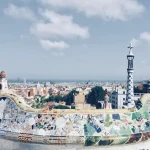
📷 Featured image by seyfettin dincturk on Unsplash.