On this page
- Northern Spain’s Wild Atlantic Coast: From Bilbao to Santiago
- The Volcanic Route: Canary Islands’ Best Island-Hopping Adventures
- Spain’s Secret Mountain Passes: Picos de Europa to Pyrenees
- The Modernist Trail: Gaudí and Beyond Through Catalonia
- Andalusia’s White Villages Circuit: Beyond the Tourist Triangle
- Central Spain’s Forgotten Castles and Medieval Towns
- Planning Your Spanish Road Trip: Practical 2026 Essentials
- Frequently Asked Questions
💰 Click here to see Spain Budget Breakdown
💰 Prices updated: October, 2026. Budget figures are estimates — always verify before travel.
Exchange Rate: $1 USD = €0.88
Daily Budget (per person)
Shoestring: €60.00 – €90.00 ($68.18 – $102.27)
Mid-range: €120.00 – €180.00 ($136.36 – $204.55)
Comfortable: €220.00 – €470.00 ($250.00 – $534.09)
Accommodation (per night)
Hostel/guesthouse: €15.00 – €50.00 ($17.05 – $56.82)
Mid-range hotel: €70.00 – €130.00 ($79.55 – $147.73)
Food (per meal)
Budget meal: €7.00 ($7.95)
Mid-range meal: €25.00 ($28.41)
Upscale meal: €80.00 ($90.91)
Transport
Single metro/bus trip: €3.00 ($3.41)
Monthly transport pass: €24.00 ($27.27)
Spain’s rental car market has transformed dramatically in 2026, with new digital booking platforms and expanded electric vehicle fleets making road trips more accessible than ever. Yet most travelers still stick to the Barcelona-Madrid-Seville triangle, missing the country’s most spectacular drives. These seven epic journeys reveal Spain’s Hidden corners, from volcanic landscapes to medieval mountain villages that GPS systems struggle to find.
Northern Spain’s Wild Atlantic Coast: From Bilbao to Santiago
The Cantabrian Corniche stretches 800 kilometers along Spain’s northern edge, delivering dramatic clifftop views that rival California’s Highway 1. Start in Bilbao after exploring the Guggenheim, then follow the A-8 autopista west through Santander and Oviedo before finishing in Santiago de Compostela.
The real magic happens on the smaller coastal roads. Take the CA-131 from Santander to Comillas, where Gaudí’s El Capricho villa sits like a fairy tale castle overlooking the Bay of Biscay. The sound of crashing waves follows you for hours as you wind through fishing villages where morning markets still sell the night’s catch directly from colorful wooden boats.
In Asturias, detour inland to the Lakes of Covadonga via the AS-262. This serpentine mountain road climbs through beech forests that turn golden in autumn, leading to pristine alpine lakes surrounded by limestone peaks. The drive takes two hours, but budget four for photo stops and the inevitable traffic jams caused by free-roaming cattle.
Galicia’s western coast offers the journey’s most dramatic finale. The AC-550 coastal road from A Coruña to Finisterre passes through eucalyptus groves and granite villages where old women still wear traditional black dresses. At Cabo Finisterre, Romans believed they’d reached the end of the world – standing on these cliffs as Atlantic storms roll in, you’ll understand why.

The Volcanic Route: Canary Islands’ Best Island-Hopping Adventures
Forget flying between the Canary Islands – the new 2026 fast ferry connections make island-hopping by car a genuine adventure. The upgraded Fred Olsen Express ferries now carry vehicles between all seven islands, with journey times reduced by 40% since 2024.
Begin in Tenerife, where the TF-21 climbs through pine forests to Teide National Park. This UNESCO World Heritage landscape resembles Mars more than Earth, with rust-colored volcanic cones scattered across high-altitude plains. The road peaks at 2,400 meters, where thin air makes every breath visible on cool mornings.
Ferry to La Palma for the island’s most spectacular drive: the LP-4 Roque de los Muchachos road. This engineering marvel spirals up the Caldera de Taburiente rim, reaching 2,426 meters at the observatory complex. On clear days, you can see four neighboring islands floating on the Atlantic horizon like distant dreams.
Lanzarote offers alien landscapes along the LZ-67 through Timanfaya National Park. Recent volcanic activity has created a moonscape of black lava fields punctuated by green lagoons. The smell of sulfur drifts through car windows as geothermal vents release steam into the desert air.
End in Gran Canaria’s mountainous interior, where the GC-210 connects traditional villages clinging to canyon walls. The drive from Las Palmas to Tejeda passes through climate zones ranging from coastal desert to cloud forest, showcasing the islands’ incredible biodiversity in just 90 minutes.
Spain’s Secret Mountain Passes: Picos de Europa to Pyrenees
Spain’s mountain roads challenge even experienced drivers, but the rewards justify every white-knuckled moment. This 1,200-kilometer journey connects the country’s three major mountain ranges via some of Europe’s most dramatic high-altitude passes.
Cross central Spain via the Sistema Central, stopping in the Sierra de Gredos. The AV-931 from Hoyos del Espino to the Plataforma de Gredos offers views across the entire Castilian plateau. Golden eagles circle overhead while mountain goats navigate impossible rocky ledges just meters from the road.

The Pyrenees provide the journey’s crescendo. The N-260 Trans-Pyrenean Highway runs 430 kilometers from Mediterranean to Atlantic, but take time for detours up side valleys. The GI-400 to Núria Sanctuary in Girona climbs through a landscape of granite peaks and glacial lakes, where the scent of wild herbs fills mountain air so pure it almost sparkles.
In Aragón, the A-136 through Ordesa National Park showcases limestone canyons that dwarf American counterparts. The road ends at the Pradera de Ordesa, where waterfall spray creates rainbows in afternoon sunlight. This UNESCO site limits daily visitors, so arrive before 9 AM during peak season.
Essential Mountain Driving Equipment
- Snow chains (mandatory November-April above 1,000m)
- Emergency blanket and first aid kit
- Paper maps as GPS backup
- Portable phone charger
- Water and high-energy snacks
The Modernist Trail: Gaudí and Beyond Through Catalonia
Catalonia’s modernist architecture extends far beyond Barcelona’s famous landmarks. This cultural road trip reveals hidden masterpieces scattered across small towns where Gaudí, Domènech i Montaner, and Puig i Cadafalch left their artistic stamps.
From Barcelona, take the C-25 to Vic, where the Modernist Route begins in earnest. The town’s market square features Casa Comella, a striking example of Puig i Cadafalch’s geometric style. Local cafés serve traditional coca bread topped with roasted peppers while church bells ring the hour from medieval towers.
Continue to Reus, Gaudí’s birthplace, via the AP-7. The city’s modernist quarter centers on Plaça del Mercadal, where Casa Navàs displays Domènech i Montaner’s intricate tilework. The building’s interior mosaics depict local flora in colors so vivid they seem to glow under Catalonia’s intense Mediterranean light.

The coastal route from Reus to Comillas follows the C-31 through vineyards and olive groves. In Comillas, Gaudí’s El Capricho villa represents his early work, featuring ceramic sunflowers that track the sun’s movement across Cantabrian skies. The building’s whimsical tower chimes with specially tuned bells that create haunting melodies in Atlantic breezes.
End in Astorga, León, where Gaudí’s Episcopal Palace showcases his later Gothic revival period. The fairy-tale structure houses a museum explaining Gaudí’s architectural evolution, with original drawings and models revealing his creative process. The palace’s spires pierce the Castilian sky like crystalline prayers frozen in stone.
Andalusia’s White Villages Circuit: Beyond the Tourist Triangle
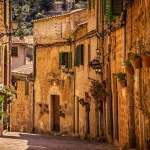
Andalusia’s pueblos blancos stretch across mountain ranges from Cádiz to Málaga, connected by winding roads that reveal a Spain unchanged since Moorish times. This circuit avoids the crowded Ronda-Arcos axis, exploring lesser-known villages where tourists remain welcome curiosities rather than economic necessities.
Begin in Olvera, perched on a rocky outcrop in Cádiz province. The A-384 climbs through olive groves that silver in morning light, leading to a village crowned by a Moorish castle and baroque church. The smell of orange blossoms drifts through narrow streets where elderly men play dominoes in whitewashed squares.
The A-374 connects Olvera to Setenil de las Bodegas, famous for houses built directly into cave overhangs. Some homes disappear entirely under rock formations, with living rooms carved from cliff faces. Local bars serve fino sherry in caves where temperature remains constant year-round, creating natural refrigeration that preserves Iberian ham for months.
Continue via mountain roads to Grazalema, where the CA-531 winds through Spain’s rainiest region. Despite receiving over 1,000mm annual precipitation, the village maintains typical Andalusian whitewashed architecture. Pinsapo fir forests surround the town – these Ice Age survivors exist nowhere else in Spain and create an almost Alpine atmosphere in Mediterranean Andalusia.

Finish in Zahara de la Sierra, where the CA-9123 provides views across the Zahara reservoir. This artificial lake created a stunning backdrop when completed in 1991, turning the formerly isolated village into one of Andalusia’s most photographed locations. Sunset reflections turn the water gold while church bells echo across the Sierra de Grazalema mountains.
White Villages Budget Breakdown (2026)
Accommodation per night:
- Rural guesthouse: €45-65
- Boutique hotel: €80-120
- Luxury cortijo: €150-250
Dining:
- Tapas lunch: €12-18
- Traditional restaurant dinner: €25-35
- Fine dining experience: €60-85
Central Spain’s Forgotten Castles and Medieval Towns
Castilla’s endless plains conceal some of Europe’s best-preserved medieval architecture, connected by roads that cross landscapes Don Quixote would recognize. This circuit explores UNESCO World Heritage sites and hidden gems where tourists remain outnumbered by storks nesting on ancient bell towers.
Start in Ávila, where the CM-110 provides the best approach views of the city’s complete medieval walls. These 2.5-kilometer ramparts remain intact after 900 years, encircling a granite city that glows amber in late afternoon sunlight. The smell of roasted suckling pig drifts from traditional restaurants where recipes haven’t changed since Teresa of Ávila’s time.
The N-403 crosses the Gredos mountains to Plasencia, where Extremadura’s most impressive cathedral dominates the old quarter. Construction began in 1498 but was never finished, creating a fascinating architectural hybrid of Gothic and Renaissance styles. Evening light streaming through unfinished windows creates dramatic shadows across stone floors polished smooth by centuries of pilgrim footsteps.
Continue to Cáceres via the N-521, where the old town preserves medieval and Renaissance palaces in their original urban context. Narrow streets echo with footsteps as evening paseos begin, while stork families chatter from massive nests perched atop noble family towers. The city’s honey-colored stone buildings glow like lanterns as street lights illuminate carved heraldic shields.
End in Mérida, where Roman ruins rival those in Italy. The theater and amphitheater host summer performances in settings unchanged since gladiator times. The sound of classical music drifts across ancient marble seats while bats emerge from Roman underground passages to hunt insects in warm Spanish nights.
Planning Your Spanish Road Trip: Practical 2026 Essentials
Spain’s road infrastructure received massive investments ahead of the 2030 EU climate targets, with new electric charging networks and digital toll systems transforming the driving experience. Understanding these changes ensures smooth travels across the peninsula.
Rental Cars and Documentation
International driving permits are mandatory for non-EU visitors, with digital versions now accepted since January 2026. All major rental companies offer electric vehicles, though availability remains limited in rural areas. Book hybrid models for mountain routes where charging stations remain sparse.
The new Via-T electronic toll system covers all autopistas, automatically charging registered vehicles without stopping. Tourist rental cars automatically receive temporary Via-T activation, with charges appearing on final bills.
Digital Tools and Navigation
Spain’s mountain regions still experience GPS blackouts, particularly in the Pyrenees and Picos de Europa. Download offline maps before departing cities, and carry paper backup maps for remote areas. The DGT traffic app provides real-time updates on road conditions and weather-related closures.
Fuel and Charging Infrastructure
Electric charging stations now exist every 50 kilometers on major routes, with rapid charging available in all provincial capitals. Rural areas rely on slower 22kW chargers, requiring 2-3 hours for full charges. Fuel costs average €1.45 per liter for unleaded, €1.38 for diesel in 2026.

Accommodation Booking Strategy
Rural Spain’s tourism boom means advance booking is essential, particularly for white villages and national park areas. Many family-run establishments don’t appear on international sites – contact local tourism offices for complete accommodation lists. Paradores state hotels offer consistent quality and strategic locations for touring, though prices have increased 15% since 2024.
Budget Planning for Spanish Road Trips
Daily costs per person (excluding accommodation):
- Budget traveler: €35-50
- Comfortable touring: €65-85
- Luxury experience: €120-180
Vehicle costs:
- Rental car: €25-45 per day
- Fuel/charging: €40-60 daily
- Tolls: €15-30 for major routes
- Parking in cities: €15-25 daily
Frequently Asked Questions
Do I need an international driving permit for Spain in 2026?
Yes, non-EU visitors must carry an international driving permit along with their home country license. Digital versions are now accepted, but physical permits remain recommended as backup for rural police encounters.
Are Spanish mountain roads safe for regular cars?
Most mountain routes are paved and well-maintained, suitable for standard rental cars. However, some high-altitude passes require snow chains November through April, and steep gradients challenge underpowered vehicles in summer heat.
How reliable is GPS navigation in rural Spain?
GPS coverage has improved significantly, but mountain valleys and remote villages still experience signal loss. Download offline maps and carry paper backups for areas beyond major towns.
Can I drive between Spanish islands?
Inter-island car ferries operate in the Balearics and Canaries, with expanded 2026 schedules making island-hopping practical. Book vehicle space in advance during summer months when ferries fill quickly.
What’s the best time of year for Spanish road trips?
Late spring (April-May) and early autumn (September-October) offer ideal weather and fewer crowds. Summer brings heat and traffic to coastal routes, while winter can close high mountain passes.
📷 Featured image by Jonny James on Unsplash.