On this page
- Santiago’s Historic Quarter: Beyond Cathedral Plaza
- Galician Gastronomy Hub: Markets, Taverns and Modern Cuisine
- Art and Museums: Contemporary Culture in Ancient Streets
- Green Santiago: Parks, Gardens and Urban Nature
- Day Trips from Santiago: Exploring Galicia’s Coast and Countryside
- Getting There and Around: AVE Connections and Local Transport
- Budget Breakdown: What Santiago Costs in 2026
- Planning Your Santiago Stay
- Frequently Asked Questions
💰 Click here to see Spain Budget Breakdown
💰 Prices updated: July, 2026. Budget figures are estimates — always verify before travel.
Exchange Rate: $1 USD = €0.88
Daily Budget (per person)
Shoestring: €50.00 – €140.00 ($56.82 – $159.09)
Mid-range: €90.00 – €240.00 ($102.27 – $272.73)
Comfortable: €220.00 – €450.00 ($250.00 – $511.36)
Accommodation (per night)
Hostel/guesthouse: €15.00 – €50.00 ($17.05 – $56.82)
Mid-range hotel: €70.00 – €130.00 ($79.55 – $147.73)
Food (per meal)
Budget meal: €7.00 ($7.95)
Mid-range meal: €25.00 ($28.41)
Upscale meal: €80.00 ($90.91)
Transport
Single metro/bus trip: €3.00 ($3.41)
Monthly transport pass: €23.00 ($26.14)
Santiago de Compostela has long lived in the shadow of its famous pilgrimage route, but this UNESCO World Heritage city offers far more than the final destination of the Camino. While millions arrive each year carrying their scallop shells and walking sticks, many miss the vibrant cultural capital that exists beyond the cathedral’s shadow—a city where Michelin-starred restaurants share cobblestoned alleys with centuries-old taverns, where contemporary art galleries occupy medieval buildings, and where the unique Galician identity flourishes in ways that have nothing to do with pilgrimage.
Santiago’s Historic Quarter: Beyond Cathedral Plaza
The Praza do Obradoiro draws the crowds, but Santiago’s medieval heart extends far beyond the cathedral’s imposing baroque facade. The old quarter spreads across nearly 200 hectares of granite streets, each neighbourhood revealing different layers of the city’s complex history.
Start at Rúa Nova, the historic commercial artery that connects the cathedral to the university district. Here, covered galleries called soportais shelter traditional shops selling everything from handmade ceramics to Galician folk instruments. The sound of rain pattering on these stone arcades creates an almost musical backdrop—a distinctly Galician experience that pilgrims rushing to the cathedral often miss.
The Quintana neighbourhood, climbing uphill from the cathedral’s eastern side, houses some of Santiago’s most atmospheric streets. Rúa da Conga and Rúa de San Paio wind between 15th-century stone houses, their narrow passages opening suddenly onto hidden plazas where locals gather for their evening paseo. The Monastery of San Paio de Antealtares, founded in the 9th century, maintains an active community of Benedictine nuns who still sell their handmade pastries through a traditional wooden turnstile.
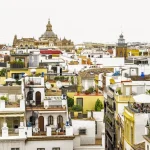
For a perspective few visitors discover, climb to the rooftop of the cathedral—tours run daily at €12 and book out quickly in 2026. From here, the red-tiled rooftops cascade down to the modern city, while the surrounding green hills of Galicia stretch to the horizon.
Hidden Squares and Secret Gardens
The Praza de Cervantes, Santiago’s former main square, maintains a quieter dignity than its famous neighbour. Surrounded by arcaded buildings dating from the 16th century, this plaza hosts the city’s weekend farmers market, where Galician producers sell everything from tetilla cheese to locally foraged mushrooms.
Behind the Faculty of Geography and History lies the Parque de Carlomagno, a small botanical garden that most visitors never discover. This pocket of green space showcases native Galician plant species, including ancient oak varieties that once covered the entire region.
Galician Gastronomy Hub: Markets, Taverns and Modern Cuisine
Santiago’s food scene extends far beyond serving meals to hungry pilgrims. As the political and cultural capital of Galicia, the city attracts the region’s finest chefs and producers, creating a dining landscape that rivals Spain’s more famous gastronomic destinations.
The Mercado de Abastos, housed in a striking granite and glass structure from the 1940s, serves as the heart of Santiago’s culinary culture. Local vendors have operated stalls here for generations, specializing in products that reflect Galicia’s unique position between ocean and mountain. The seafood section showcases the extraordinary diversity of the Galician coast: percebes (gooseneck barnacles) that cling to Atlantic rocks, sweet vieiras (scallops) from the Rías, and the prized rodaballo (turbot) that commands premium prices in Madrid’s finest restaurants.
The market’s upper level houses several small restaurants where vendors cook their products to order. Mariscos Apolo, run by the same family for over 40 years, serves what many consider Santiago’s finest seafood tapas. Their empanada de zamburiñas—flaky pastry filled with tiny scallops, onions, and peppers—represents Galician comfort food at its most refined.

Traditional Taverns and Modern Innovation
Santiago’s tavern culture predates the Camino by centuries. Tasca do Manolo, tucked into a basement on Rúa da Raíña, has served local wine from clay bowls since 1941. The walls remain blackened by decades of cigarette smoke, and regular customers still reserve their personal wine cups behind the bar. The atmosphere feels frozen in time, with the owner’s collection of vintage Galician folk music playing from an ancient sound system.
At the other end of the spectrum, Santiago’s modern dining scene has exploded in recent years. Chef Pepe Solla’s restaurant near the old town earned its Michelin star by elevating traditional Galician ingredients through contemporary techniques. His signature dish—caldeirada reimagined as a seafood consommé with molecular spherification—demonstrates how Santiago’s chefs honor tradition while embracing innovation.
The wine culture here focuses on local varieties that remain largely unknown outside Galicia. Albariño from the Rías Baixas provides the perfect match for the region’s shellfish, while Mencía reds from the Ribeira Sacra complement the hearty meat dishes of the interior. Wine bars like Vinoteca Bouza specialize in small-production Galician bottles that never make it to international markets.
Art and Museums: Contemporary Culture in Ancient Streets
Santiago’s cultural institutions reflect both its historical significance and its role as a modern European capital. The Centro Galego de Arte Contemporánea, designed by Portuguese architect Álvaro Siza, creates a striking dialogue between its minimalist lines and the medieval city surrounding it. The permanent collection focuses on Galician and Portuguese artists, providing context for the distinct cultural identity that separates this region from the rest of Spain.

The museum’s temporary exhibitions consistently rank among Spain’s most important contemporary art shows. In 2026, the programming includes a major retrospective of Galician sculptor Francisco Leiro, whose bronze figures draw inspiration from Celtic mythology and modern industrial forms.
The nearby Pazo de Fonseca houses the University of Santiago’s art collections, including medieval manuscripts that illuminate the scholarly tradition that has flourished here for over 500 years. The building itself represents one of Santiago’s finest examples of Renaissance architecture, its courtyard providing a peaceful refuge from the busy streets outside.
Street Art and Urban Culture
Santiago’s younger artists have claimed walls throughout the historic quarter for murals that blend traditional Galician motifs with contemporary urban art styles. The area around the Faculty of Fine Arts showcases some of the most sophisticated examples, where students and established artists collaborate on pieces that change seasonally.
The Sala Capital, a former bank building converted into an exhibition space, focuses on emerging artists from across the Atlantic arc—the cultural region stretching from Ireland to northern Portugal. This programming reflects Santiago’s position as a cultural bridge between Spain and the broader Celtic world.
Green Santiago: Parks, Gardens and Urban Nature
Santiago’s relationship with nature extends beyond the rural Galician landscape that surrounds it. The city maintains an impressive network of parks and gardens that provide residents and visitors with green refuges throughout the urban core.
The Alameda, Santiago’s central park, offers the city’s most famous views—the twin towers of the cathedral rising above a foreground of ancient oak trees. Local families gather here for evening strolls, while university students claim benches for outdoor study sessions. The park’s formal gardens showcase plants from around the world, but the native section demonstrates the extraordinary biodiversity of the Galician landscape.

From the Alameda’s highest point, you can hear the cathedral bells marking each hour, their bronze tones carrying across the entire city center. This soundscape, unchanged for centuries, provides one of Santiago’s most distinctive sensory experiences.
The Parque de Belvís, less known but equally beautiful, preserves a section of Santiago’s medieval walls alongside contemporary sculpture installations. The combination creates an outdoor museum where history and modern art coexist naturally.
River Walks and Urban Trails
The Río Sarela flows through Santiago’s southern districts, its banks converted into walking and cycling paths that connect the historic center to suburban neighborhoods. These sendas fluviais (river paths) provide escape routes from tourist crowds while showcasing the traditional Galician countryside that begins just minutes from the cathedral.
The Carballeira de Santa Susana, an ancient oak grove preserved within the urban area, demonstrates the sacred relationship between Galicians and their forest landscapes. These massive trees, some over 400 years old, create a natural cathedral that predates the stone one by millennia.
Day Trips from Santiago: Exploring Galicia’s Coast and Countryside
Santiago’s central location makes it an ideal base for exploring Galicia’s diverse landscapes, from dramatic Atlantic coastlines to mystical river canyons. The improved transportation infrastructure in 2026 has made previously difficult destinations easily accessible for day trips.
The Rías Baixas coast, just 45 minutes by car, offers some of Europe’s finest beaches and seafood. The fishing port of Muros maintains its traditional character, with colorful boats bobbing in a harbor surrounded by whitewashed houses. Local restaurants specialize in mariscadas—seafood platters that showcase the morning’s catch.
Inland, the Ribeira Sacra region provides one of Spain’s most dramatic landscape. The Río Sil has carved deep canyons through the granite landscape, creating terraced vineyards that cling to impossibly steep slopes. The monasteries of Santa Cristina de Ribas de Sil and San Pedro de Rocas, carved directly into cliff faces, demonstrate the hermetic traditions that flourished in these isolated valleys.

Coastal Villages and Celtic Heritage
The Costa da Morte (Coast of Death), despite its ominous name, offers some of Galicia’s most spectacular scenery. The lighthouse at Finisterre—considered the end of the world in medieval times—provides views across the Atlantic that pilgrims have contemplated for over a thousand years.
The village of Combarro, with its traditional hórreos (stone granaries) built over the water, preserves architectural traditions that date back to Celtic settlements. These structures, raised on stone pillars to protect grain from rodents and moisture, represent a building technique found nowhere else in Spain.
Getting There and Around: AVE Connections and Local Transport
The completion of the high-speed rail connection to Santiago in 2021 transformed access to Galicia’s capital. The AVE Galicia service connects Santiago directly to Madrid in 2 hours 30 minutes, with eight daily departures in each direction during 2026. The service extends to A Coruña, making it possible to explore multiple Galician cities during a single trip.
From Barcelona, the journey requires a connection in Madrid, with a total travel time of approximately 5 hours. The overnight train service, discontinued in 2020, has not been restored, making flying the most practical option from Spain’s eastern regions.
Santiago’s airport, just 10 kilometres from the city center, offers direct flights to major European cities including London, Paris, Frankfurt, and Rome. Ryanair and Vueling provide the most frequent connections to Spanish destinations, while Iberia operates the premium services to Madrid and Barcelona.

Local Transportation and Getting Around
Santiago’s historic center remains largely pedestrianized, making walking the most practical way to explore the old quarter. The city’s compact size means most attractions lie within a 15-minute walk of the cathedral.
The local bus system, operated by Tralusa, connects the historic center to outlying districts and provides access to hiking trails in the surrounding countryside. Line 6 runs to the airport every 30 minutes, costing €3 for a single journey.
Car rental makes sense for exploring rural Galicia, but driving in Santiago’s historic center is restricted to residents. Most hotels offer parking arrangements, though rates can reach €20 per day in central locations.
Budget Breakdown: What Santiago Costs in 2026
Santiago offers excellent value compared to Spain’s major tourist destinations, though prices have risen modestly since the AVE connection increased visitor numbers.
Accommodation
Budget (€30-60 per night): Hostels and pension-style accommodation near the university district. The Pension Estrela and Hostal Real provide clean, basic rooms with shared bathrooms. During peak summer months, budget options fill quickly.
Mid-range (€80-140 per night): Three-star hotels and boutique properties in converted historic buildings. Hotel Airas Nunes and Casa Felisa offer excellent locations within walking distance of major attractions.
Comfortable (€150-300 per night): Four and five-star properties including the Parador and Hotel Monumento San Francisco. These typically occupy restored historical buildings with modern amenities and central locations.
Food and Drink
Budget (€25-35 per day): Market stalls, traditional taverns, and university district cafés. The Mercado de Abastos provides excellent value for breakfast and lunch, while evening drinks in local bars cost €2-4.
Mid-range (€50-75 per day): Traditional restaurants serving menú del día (€15-22) plus evening tapas. Local wine typically costs €3-6 per glass, with bottles starting around €15 in restaurants.

Comfortable (€80-120 per day): Michelin-recommended restaurants and wine bars specializing in premium Galician products. Tasting menus at top establishments range from €65-95, excluding wine.
Activities and Transport
Most of Santiago’s attractions offer reasonable entry fees. Cathedral museum access costs €8, while the rooftop tours run €12. The Contemporary Art Center maintains free admission to its permanent collection. Local bus rides cost €1.35, and taxi rides within the historic center typically range from €6-12.
Planning Your Santiago Stay
The ideal length depends entirely on your interests and travel style. Santiago can be “done” in a day—see the cathedral, walk the historic quarter, grab lunch at the market—but this approach misses the city’s deeper cultural layers.
A day trip makes sense if you’re based in A Coruña or making a quick stop en route to Portugal. The AVE connection makes it possible to arrive from Madrid in the morning, explore the highlights, and return in the evening. However, this schedule leaves no time for the experiences that make Santiago special: lingering over dinner in a traditional tavern, discovering hidden squares during an evening walk, or exploring the contemporary art scene.
Recommended Stay Lengths
Two nights provides the ideal balance for most visitors. This allows time for the essential sights while leaving space for spontaneous discoveries. You can explore the historic quarter thoroughly, enjoy both traditional and modern dining experiences, and take one substantial day trip to the coast or countryside.
Three to four nights suits travelers who want to understand Santiago as a living city rather than just a historic destination. This duration allows for multiple day trips, deeper exploration of the food and wine scene, and time to experience the city’s rhythm beyond the tourist areas.

One week or more makes sense for travelers using Santiago as a base for exploring all of Galicia. The central location and excellent transport connections make it possible to reach any corner of the region while maintaining a single base.
Frequently Asked Questions
Do I need to walk the Camino to appreciate Santiago?
Not at all. While the pilgrimage adds spiritual significance for many visitors, Santiago offers rich cultural, gastronomic, and artistic experiences completely independent of the Camino. The city’s identity extends far beyond its role as a pilgrimage destination.
What’s the best time to visit Santiago?
Late spring (May-June) and early autumn (September-October) provide the most pleasant weather and fewer crowds. Summer brings peak pilgrim season and higher prices, while winter offers atmospheric experiences but frequent rain and limited daylight hours.
How much Galician/Spanish do I need to speak?
English is widely spoken in hotels and tourist areas, though less common in traditional taverns and markets. Basic Spanish phrases help significantly, while any attempt at Galician words is always appreciated by locals who take pride in their distinct language.
Is Santiago expensive compared to other Spanish cities?
Santiago offers better value than Barcelona, Madrid, or Seville, though prices have increased since the AVE connection. Accommodation and dining costs roughly 20-30% less than in Spain’s major tourist centers, while offering comparable quality experiences.
Can I easily visit both Santiago and the Portuguese border region?
Yes, the proximity makes combination trips very practical. Porto lies just 2.5 hours by car, while the scenic Minho region offers numerous stops along the way. Many travelers combine Santiago with the Portuguese pilgrimage routes or the historic cities of northern Portugal.