On this page
- Ancient Ruins on the Hill: Alcazaba, Gibralfaro & the Roman Theatre
- Málaga’s Museum Quarter: Picasso, Pompidou, CAC & Thyssen
- La Manquita: The Cathedral and Its Missing Tower
- The Port, Muelle Uno & the Beach Promenade
- Where to Eat and Drink: Markets, Tapas Bars & Local Neighbourhoods
- Hidden Málaga: What Most Visitors Never Find
- Day Trips Worth Every Kilometre
- Nightlife, Live Music & Flamenco in Málaga
- Shopping: What to Buy and Where to Find It
- 2026 Budget Breakdown: What Things Actually Cost
- Practical Tips for Visiting Málaga in 2026
- Frequently Asked Questions
Málaga has a reputation problem — and it’s the best kind. For years, millions of travelers landed at its airport and immediately drove to Marbella or hopped a train to Seville. In 2026, that’s finally changing. The city has matured into one of Spain’s most compelling urban destinations, with a museum scene that rivals Madrid, a food culture rooted in serious local pride, and a waterfront that no longer feels like an afterthought. The challenge now isn’t finding reasons to visit — it’s figuring out what to cut from your list.
Ancient Ruins on the Hill: Alcazaba, Gibralfaro & the Roman Theatre
Start here. The Alcazaba is a Moorish fortress palace built in the 11th century, and walking through its double-arched gates feels genuinely disorienting in the best way — you’re suddenly in a world of horseshoe arches, citrus-scented courtyards, and tiled fountains while the city hums below you. It’s not enormous, but it rewards slow exploration.
Directly below the entrance, the Roman Theatre (Teatro Romano) sits in a sunken plaza and is free to view from the street. Built in the 1st century BC, it was only rediscovered in 1951 during construction work. The interpretation centre beside it is small but well-done.
From the Alcazaba, a steep path leads up to Castillo de Gibralfaro, the 14th-century castle crowning the hill. The walk takes about 20 minutes and the views over the bullring, the port, and the Mediterranean coastline stretching east are genuinely arresting — one of those panoramas that makes you stop talking mid-sentence.
- Alcazaba entry: €3.50 (combined ticket with Gibralfaro: €5.50)
- Opening hours: Daily 9:00–20:00 (closes 18:00 in winter)
- Pro tip: Go in the morning. By noon it’s hot and crowded.
Málaga’s Museum Quarter: Picasso, Pompidou, CAC & Thyssen
No mid-size Spanish city has a museum scene like this. Four internationally significant institutions are within walking distance of each other — a situation that still surprises first-time visitors.
The Museo Picasso Málaga is the obvious anchor. Housed in the 16th-century Buenavista Palace, it holds over 200 works spanning Picasso’s entire career, donated and loaned by his family. It’s well-curated and never feels overwhelming. Entry is €12 for the permanent collection in 2026.
The Centre Pompidou Málaga occupies the Muelle Uno port area under its distinctive multicoloured cube. It’s a satellite of the Paris institution and rotates exhibitions from the French national collection. Entry is €9, and the programming in 2026 has leaned toward digital and installation art.
The Museo Carmen Thyssen Málaga focuses on 19th and early 20th-century Andalusian painting — a niche that sounds narrow but delivers some genuinely beautiful work. Entry is €10, and there’s a good café in the courtyard.
For contemporary art, CAC Málaga (Centre for Contemporary Art) is free and consistently shows high-quality international work. It’s housed in a converted wholesale market near the river and tends to attract a younger local crowd.
La Manquita: The Cathedral and Its Missing Tower
Málaga’s cathedral is nicknamed La Manquita — “the one-armed lady” — because its south tower was never finished. Construction began in 1528, money ran out (legend says the funds were redirected to American independence movements), and the second tower simply never happened. The asymmetry has become the city’s most beloved architectural quirk.
Inside, the cathedral is richly decorated with carved choir stalls, gilded chapels, and enormous pipe organs. Entry is €6 and includes audio guide. The roof terrace access (an additional €4) gives you a close-up of the ornate stonework and another angle on the city — it’s tighter and more intimate than the Gibralfaro views, but worth it for architecture lovers.
Immediately behind the cathedral, the Iglesia del Sagrario is a small Gothic church that most people walk straight past. Its Isabelline Gothic portal is extraordinary — heavily carved and remarkably preserved.
The Port, Muelle Uno & the Beach Promenade
Málaga’s port area was transformed over the past decade and the results have genuinely stuck. Muelle Uno is a leisure pier lined with restaurants, the Pompidou Málaga, and small boutiques — it gets busy on weekend evenings when malagueños come out for a paseo. The light at dusk here, when the sun drops behind the hills and the water goes gold, is the kind of thing that ends up on camera rolls and stays there.
The Paseo Marítimo (beach promenade) stretches east from the port along a string of urban beaches: La Malagueta, La Caleta, and El Palo. These are proper city beaches — sandy, busy, serviced by chiringuitos (beach bars) where you can eat espetos (sardines grilled on cane skewers over open fires) directly on the sand.

The Muelle Heredia area between the port and the river has developed further in 2025–2026 with new green space and the extended tram line now connecting it directly to the city centre and Atarazanas market.
Where to Eat and Drink: Markets, Tapas Bars & Local Neighbourhoods
Mercado de Atarazanas is the central covered market and the best single food stop in the city. The 19th-century iron-and-glass building (with a stunning stained glass window at its far end) houses stalls selling fresh fish, jamón, olives, cheese, and produce. Surrounding the market, small tapas bars open from mid-morning — order a glass of Málaga wine (a sweet, dark local wine) and whatever the fish stall beside you is selling. It costs almost nothing and tastes like the city distilled.
For evening eating, Calle Granada and the lanes around it form the historic tapas corridor. Bars like El Pimpi (touristy but iconic — its walls are covered in signed barrels from visiting celebrities) and smaller neighbourhood spots like Uvedoble Taberna are both within a short walk.
Locals head to El Palo, about 4 kilometres east along the coast, for the most authentic chiringuito experience. This is where you watch fishing boats come in while eating sardines that were in the sea that morning. Bus 11 from the city centre gets you there in under 15 minutes.
In the Soho district, south of Calle Alcazabilla, a cluster of creative restaurants has grown around the street art scene — this is where younger malagueños eat. Prices are reasonable and the menus move with the seasons.
Hidden Málaga: What Most Visitors Never Find
The Jardines de Pedro Luis Alonso sit in the shadow of the Alcazaba and are almost always empty. Small, geometrically planted, and genuinely peaceful — they’re the kind of garden that feels like a secret even though they’re completely public.
The Casa Natal de Picasso (Picasso’s birthplace) on Plaza de la Merced is often overlooked in favour of the main Picasso Museum. It’s smaller and cheaper (€3), but the apartment reconstruction and archive materials give you a different sense of his Málaga years.
The English Cemetery (Cementerio Inglés) near the Paseo de Reding is one of the oldest Protestant cemeteries in Spain, established in 1831. It’s quiet, historically layered, and almost entirely tourist-free. Entry is free, and the garden upkeep by volunteers makes it surprisingly beautiful.
For street art, the Soho neighbourhood has become Spain’s most concentrated open-air urban art zone. Works by international artists including Okuda San Miguel cover entire building facades — pick up a free map from the tourist office and do a self-guided walk.

Day Trips Worth Every Kilometre
Ronda — 100 km west, about 1 hour 45 minutes by bus or car. One of Andalusia’s most dramatic towns, built on a gorge. The Puente Nuevo bridge over the El Tajo ravine is the defining image. Go on a weekday to avoid the worst crowds. Direct buses run from Málaga bus station several times daily.
Nerja — 52 km east, around 1 hour by bus. A whitewashed coastal town with the Balcón de Europa viewpoint and the Nerja Caves (prehistoric cave art, stalactites, and a concert hall used for summer performances). Buses run every 30–60 minutes from Málaga’s bus station.
Antequera — 45 km north, 30 minutes by train. Dramatically underrated. It has one of the best preserved Renaissance towns in Andalusia, the prehistoric Menga dolmens (a UNESCO World Heritage Site), and the extraordinary El Torcal nature reserve with bizarre limestone rock formations just outside town.
Frigiliana — 60 km east, best reached by bus to Nerja then local connection. A hilltop white village that appears on every “most beautiful villages in Spain” list — for good reason. The tiled ceramic panels along its streets tell the history of the Moorish-Christian conflicts.
Marbella — 60 km west, around 1 hour by bus. Its old town (casco antiguo) is genuinely lovely and feels separate from the resort strip. The Plaza de los Naranjos is one of the nicest town squares in the region.
Nightlife, Live Music & Flamenco in Málaga
Málaga doesn’t compete with Seville or Granada for flamenco prestige, but it has its own serious scene. Kelipé Centro de Arte Flamenco near the Soho district runs regular shows with professional performers — not tourist tablaos but working flamenco artists performing for mixed audiences. The intimacy of the space (you can hear the stamp of heels resonating through the wooden floor) makes it genuinely affecting.
The La Malagueta beach bar strip comes alive from around 22:00 in summer — long sessions at outdoor terraces with DJs, live acoustic acts, and the kind of easy warm-evening energy that’s hard to manufacture elsewhere.
For live jazz and indie music, the area around Calle Beatas and Plaza de la Merced has several small venues. The Plaza de la Merced itself has outdoor seating from multiple bars — it’s where a lot of pre-night drinking happens and where locals gather late on weekends.

Soho has added several new late-night cocktail bars since 2024, and the district feels increasingly like Málaga’s creative nightlife hub without trying too hard.
Shopping: What to Buy and Where to Find It
Calle Marqués de Larios is the main pedestrian shopping street — a 19th-century marble-paved boulevard lined with international brands and a few good Spanish chains. It’s also the scene of Málaga’s legendary Christmas light installations, which in 2025 drew record attendance.
For local produce and edible souvenirs, the stalls around Mercado de Atarazanas are the obvious choice. Locally produced wine, olive oil, and dried fruits make practical gifts.
The Soho district has a growing number of independent boutiques — ceramics, jewellery, locally designed clothing. The area around Calle Tomás Heredia has the highest concentration of interesting independent shops.
Mercado de Salamanca in the residential Salamanca neighbourhood (take bus 1 from the centre) is a neighbourhood market used primarily by locals — fresh produce, deli items, and a very local atmosphere. It’s a contrast to the tourist-facing Atarazanas experience.
2026 Budget Breakdown: What Things Actually Cost
Málaga remains genuinely more affordable than Barcelona or Madrid, though prices have risen noticeably since 2023. Here’s what to budget realistically:
Budget Traveller (€60–80/day)
- Hostel bed: €22–35/night
- Meals: tapas and market food, €3–8 per serving
- Museums: CAC (free) + one paid museum (€9–12)
- Transport: bus/metro, €1.40 per journey or €10 multi-trip card
- Beer or wine at a bar: €2–3
Mid-Range Traveller (€120–180/day)
- Hotel or apartment: €80–130/night
- Lunch at a sit-down restaurant: €15–25 with wine
- Combined museum card: €18
- Alcazaba + Gibralfaro: €5.50 combined
- Taxi from airport to centre: €20–25
Comfortable/Luxury Traveller (€250+/day)
- Boutique hotel in historic centre: €160–300+/night
- Dinner at a top restaurant: €50–90 per person
- Private guided tour of Alcazaba: €80–120
- Tourist tax (city levy, 2026): €2–4 per person per night depending on accommodation type
Practical Tips for Visiting Málaga in 2026
Getting to and from the airport: The Málaga Maria Zambrano train station connects to the airport via the C1 Cercanías line — it takes 12 minutes and costs €1.80. The extended tram network as of late 2025 now links the historic centre more directly to the beach areas and Muelle Heredia, making the waterfront easier to access without a taxi.
Tourist tax: Málaga introduced its overnight visitor levy in 2024. In 2026, it stands at €2 per person per night for mid-range accommodation, up to €4 for luxury hotels. This is applied automatically at checkout.

Siesta hours: Smaller shops and some family restaurants still close from approximately 14:00 to 17:00. Major museums and tourist sites don’t observe this. Plan long lunches during this window — you’ll eat better and pay less than at dinner.
SIM cards and connectivity: Pick up a prepaid SIM at the airport (Vodafone, Orange, and Yoigo all have kiosks). Data is inexpensive — €10–15 gets you 30 days of usable data. The city has extensive free WiFi in public spaces and most cafés.
Language: Málaga speaks fast Andalusian Spanish — ‘s’ sounds are often dropped and words run together. English is widely spoken in tourist areas, but even a few words of Spanish are warmly received. Google Translate’s live camera function works well for menus.
Safety: Málaga city centre is generally safe. Pickpocketing occurs in crowded areas (Larios, Atarazanas market, the port) — use a front-facing bag or money belt in these spots. The beach areas at night are busier than they were five years ago and generally well-lit.
Water: Tap water is safe to drink throughout the city. Carry a refillable bottle — public drinking fountains are common in parks and near monuments.
Frequently Asked Questions
How many days do you need in Málaga?
Three full days is the practical minimum to cover the main museums, the Alcazaba, the waterfront, and a day trip. Four to five days lets you explore neighbourhoods properly, fit in two day trips, and eat more slowly. Málaga rewards a relaxed pace — rushing it means missing most of what makes it good.
Is Málaga worth visiting beyond the beach?
Completely. The museum quarter alone justifies a visit — four internationally significant institutions within walking distance of each other is unusual for a city this size. Add the Moorish fortress, Roman theatre, street art scene, and serious food culture, and the beach becomes a bonus rather than the point.
What is the best area to stay in Málaga city centre?
The historic centre (around Calle Granada and Plaza de la Merced) puts you within walking distance of virtually everything. The Soho district suits travellers who want a slightly younger, creative atmosphere. La Malagueta is best if beach proximity matters most to you. All three are safe and well-connected.
How do you get from Málaga airport to the city centre?
The Cercanías C1 train is the easiest option — 12 minutes, €1.80, runs every 20 minutes from Terminal 3. Taxis take about 20 minutes depending on traffic and cost €20–25 to the centre. Bus line A Express also connects the airport to the city for €4, useful if you’re staying near the Alameda Principal area.
When is the best time to visit Málaga?
March to May and September to November are the sweet spots. Temperatures are pleasant (18–26°C), crowds are lighter than summer, and prices are lower. July and August are hot (35°C+), busy, and expensive but have the most beach energy. The Semana Santa (Holy Week) processions in March or April are among Spain’s most impressive — book accommodation months in advance if visiting then.
Explore more
Calle Larios Shopping Guide: Málaga’s Premier Fashion Destination
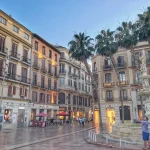
📷 Featured image by Yuliya Matuzava on Unsplash.